

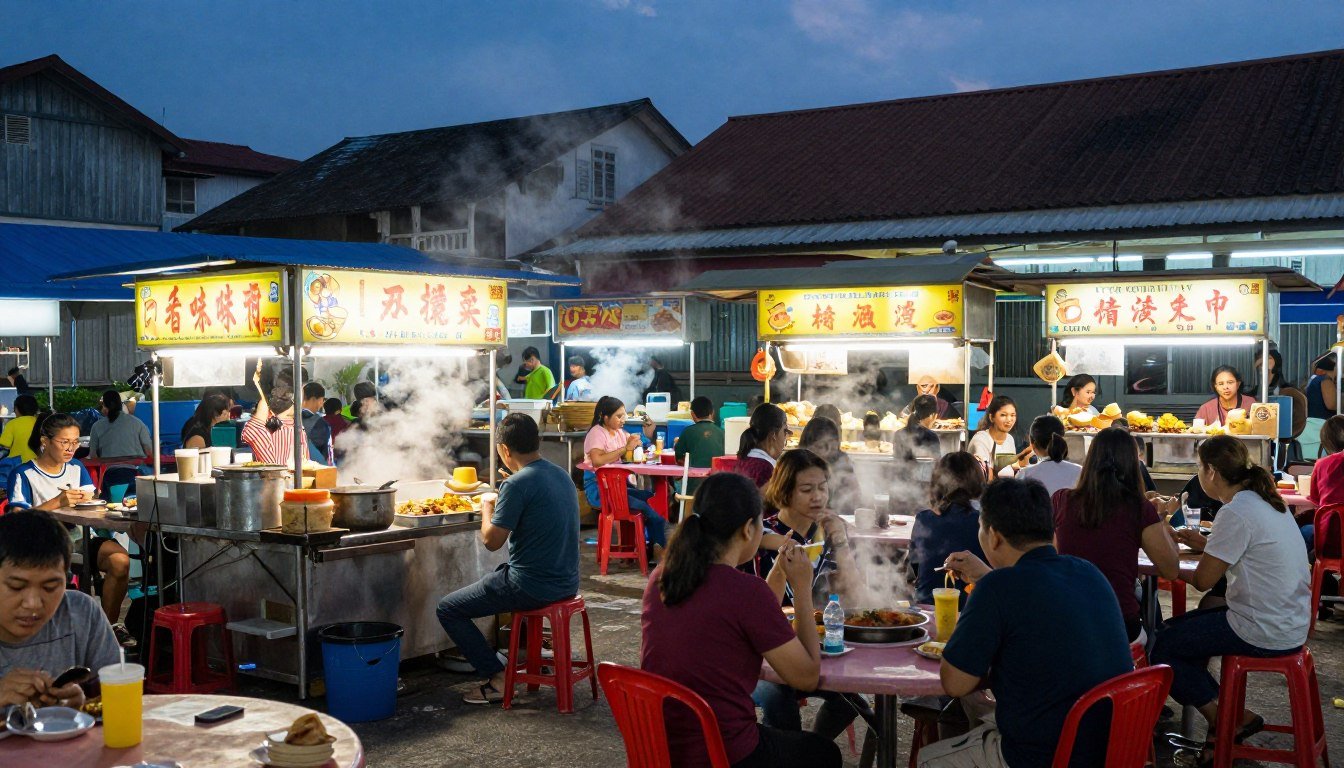
Penang has earned its reputation as Malaysia’s food capital. The island city draws food lovers from around the world. Street vendors and hawker stalls serve dishes that blend Chinese, Malay, and Indian influences.
This guide explores twenty essential street food dishes that define Penang’s culinary landscape in 2026. Each entry includes detailed descriptions, cultural background, and exact locations. You’ll find real photos, preparation videos, and interactive maps.
The hawker culture here represents generations of cooking expertise. Families pass down recipes through decades. Some stalls have operated in the same spot for over fifty years.
Experience Penang’s Food Scene Like a Local
Join our expert-led food tours and discover hidden gems that most tourists never find. Our local guides know the best stalls, perfect timing, and authentic stories behind each dish.
Char Koay Teow: Penang’s Most Iconic Noodle Dish
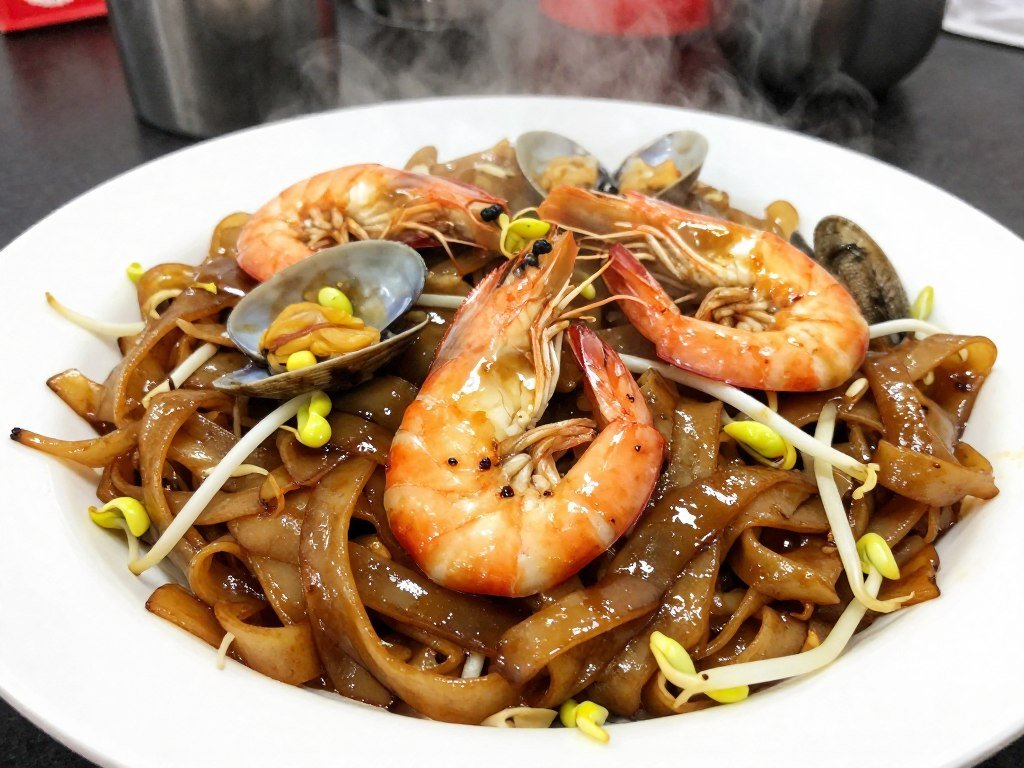
Char koay teow stands as Penang’s signature street food. This stir-fried rice noodle dish combines flat rice noodles with prawns, cockles, bean sprouts, and eggs. Vendors cook it over intense heat in a large wok.
The dish emerged among fishermen in the 1800s. Workers needed affordable, filling meals. Street vendors created this combination using readily available ingredients from the sea.
Traditional preparation requires high heat and quick movements. The wok must reach extreme temperatures. Cooks toss ingredients rapidly to achieve the characteristic smoky flavor called “wok hei.”
Key Ingredients
- Flat rice noodles (koay teow)
- Fresh prawns and cockles
- Bean sprouts and Chinese chives
- Duck eggs for richness
- Dark soy sauce and chili paste
What Makes It Special
The best char koay teow balances sweet, salty, and spicy flavors. Each bite should have a subtle smokiness. The noodles stay tender while the edges crisp slightly.
Different stalls offer variations. Some add Chinese sausage. Others include more seafood. The sauce ratio varies by vendor preference.
Where to Find the Best Char Koay Teow
Siam Road Char Koay Teow
This stall has operated since 1950. The current owner represents the third generation. Expect long queues, especially during breakfast hours.
Location: Siam Road, George Town
Hours: 9:00 AM – 5:00 PM (closed Mondays)
Lorong Selamat Char Koay Teow
Known for generous portions and extra cockles. The vendor uses duck eggs exclusively. Lines form before opening time.
Location: Lorong Selamat, George Town
Hours: 5:30 PM – 11:00 PM (closed Sundays)
Tiger Char Koay Teow
A newer stall gaining popularity. The chef trained under established masters. Prices remain reasonable despite quality ingredients.
Location: Lebuh Carnarvon, George Town
Hours: 11:00 AM – 7:00 PM (daily)
Siam Road Char Koay Teow – One of Penang’s most famous hawker stalls
Penang Assam Laksa: The Tangy Fish Noodle Soup
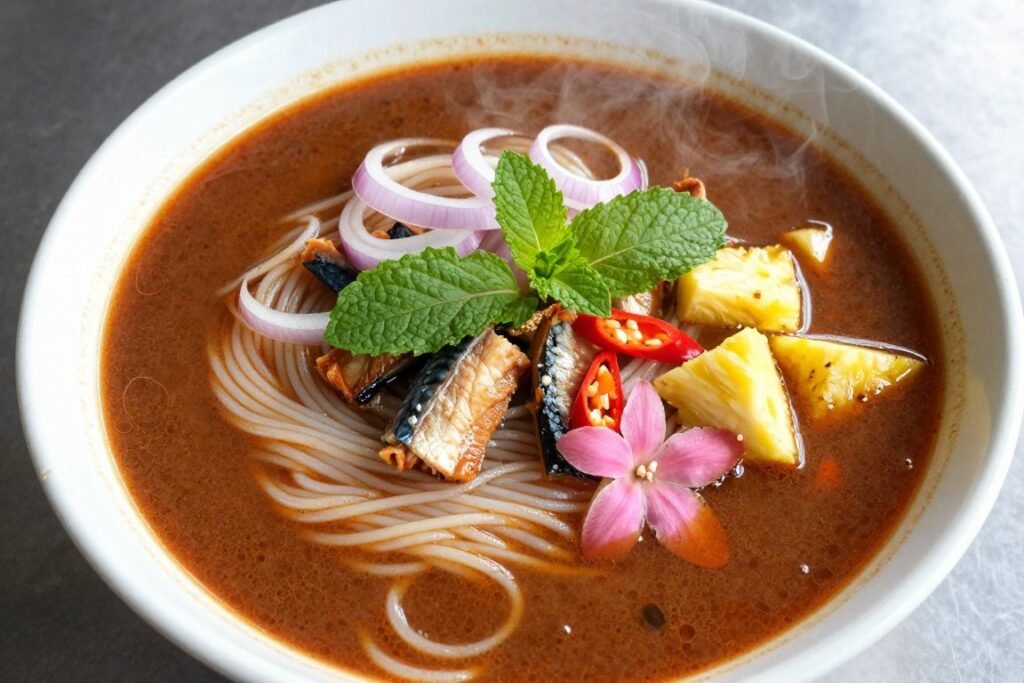
Assam laksa represents Penang’s Peranakan heritage. This sour fish soup uses tamarind as its base. Thick rice noodles swim in the tangy broth with flaked fish.
The name comes from two sources. “Assam” means tamarind in Malay. “Laksa” derives from Persian, meaning noodles. This fusion reflects Penang’s multicultural trading history.
CNN named this dish one of the world’s fifty most delicious foods. The complex flavor profile balances sour, sweet, spicy, and savory elements simultaneously.
Essential Components
- Mackerel fish boiled and flaked into the soup base
- Tamarind paste creating the signature sourness
- Thick round rice noodles with chewy texture
- Fresh mint leaves and Vietnamese coriander
- Pineapple chunks adding natural sweetness
- Torch ginger flower (bunga kantan) for aroma
- Prawn paste (hae ko) stirred in before eating
- Fresh red chilies and sliced onions as garnish
The preparation requires hours of work. Vendors simmer fish bones to create the stock. They blend lemongrass, galangal, and dried chilies into paste. The result delivers intense flavor depth.
Cultural Significance
Assam laksa originated in Peranakan households. The Peranakan people are descendants of Chinese immigrants who married Malays. Their cuisine blends both culinary traditions.
Each family recipe varies slightly. Some add more torch ginger. Others prefer stronger tamarind tang. The dish evolved through generations of home cooking before reaching hawker stalls.
Top Assam Laksa Locations
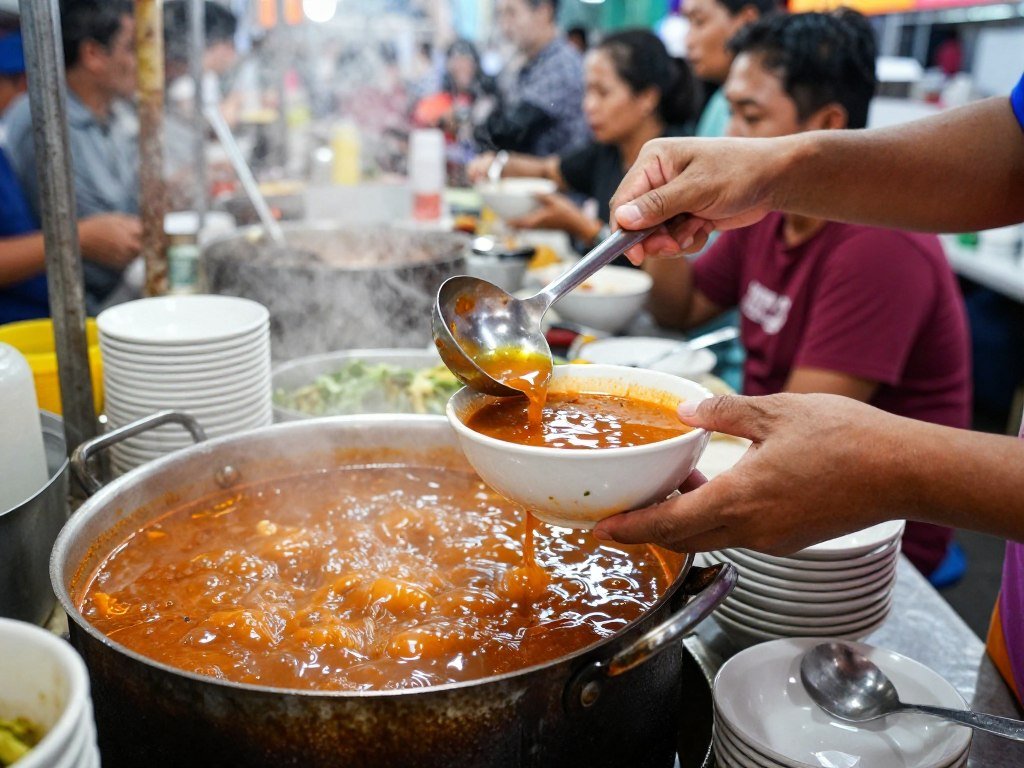
Air Itam Laksa – Located near Kek Lok Si Temple, this stall serves pilgrims and tourists. The queue moves quickly despite constant crowds. The broth here tastes more sour than sweet.
Penang Road Famous Laksa – Operating since the 1950s, this vendor maintains traditional methods. They use only fresh mackerel, never frozen. The mint leaves come from their own garden.
Pro Tip: Request extra prawn paste on the side if you enjoy stronger umami flavor. Add it gradually to control the intensity. First-timers should start with the standard amount.
Air Itam Laksa – Famous laksa stall near Kek Lok Si Temple
Nasi Kandar: The Ultimate Rice and Curry Experience
Nasi kandar defines Indian Muslim cuisine in Penang. This meal features steamed rice with various curries and side dishes. Diners choose from an array of meat, seafood, and vegetable options.
Tamil Muslim traders brought this concept in the 1800s. They carried rice and curry in baskets on poles. “Kandar” means pole in Malay, referencing this carrying method.
Modern nasi kandar restaurants display dozens of dishes. Customers point to their selections. Staff ladle gravies over rice, mixing flavors intentionally.
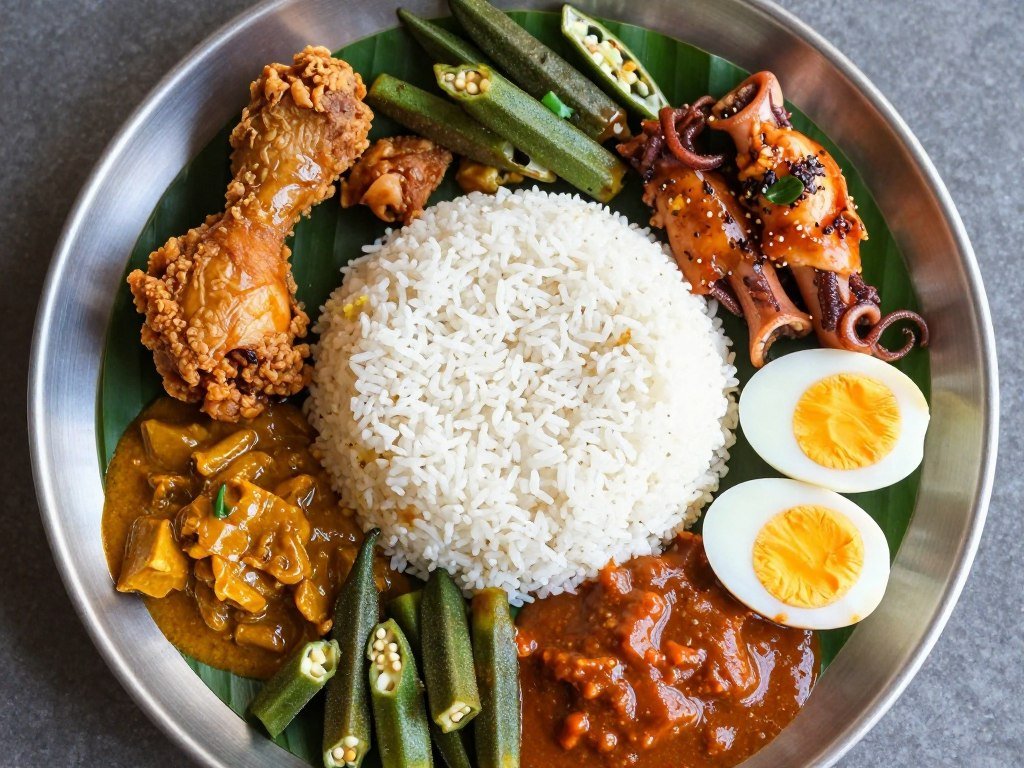
Popular Nasi Kandar Components
Meat Options
- Fried chicken with crispy skin
- Beef rendang in coconut gravy
- Mutton curry with potatoes
- Fish head curry (specialty item)
- Prawns in spicy sambal
Vegetable Sides
- Okra in tomato curry
- Cabbage with spices
- Bitter gourd for balance
- Hard-boiled eggs in curry
- Fried bitter bean (petai)
The magic happens when gravies combine. Each curry has distinct spicing. When mixed on the plate, they create new flavor combinations. Regular customers know exactly which gravies complement each other.
Understanding the Gravies
Most nasi kandar shops offer three main gravies. The white curry contains coconut milk and spices. The brown curry features tamarind and dried spices. The red curry brings heat from chilies.
Skilled servers know how to balance the sauces. They consider which dishes you selected. The goal is harmony rather than competition between flavors.
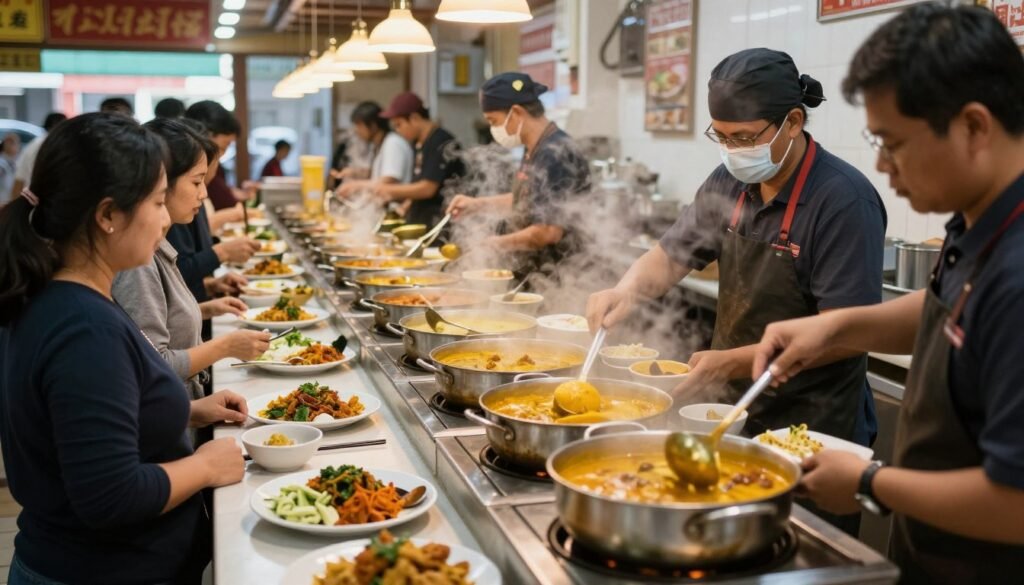
Must-Visit Nasi Kandar Restaurants
Line Clear Nasi Kandar
Operating since 1947, this outdoor restaurant draws massive crowds. They stay open twenty-four hours. The squid curry and fried chicken rank as customer favorites.
Location: Jalan Penang, George Town
Hours: 24 hours daily
Specialty: Squid curry, fried chicken
Nasi Kandar Deen Maju
Known for unique gravy combinations. The staff expertly mixes flavors. Portions are generous. Expect to spend more here than at typical hawker stalls.
Location: Jalan Gurdwara, George Town
Hours: 10:00 AM – 10:00 PM
Specialty: Mixed gravies, fish head curry
Nasi Kandar Beratur
The name means “queue up” in Malay. Lines form early each evening. They sell out regularly. The fried chicken receives particular praise from locals.
Location: Jalan Dato Keramat, George Town
Hours: 5:00 PM – 12:00 AM
Specialty: Fried chicken, beef rendang
Hokkien Mee: Prawn Noodle Soup Excellence
Hokkien mee showcases Penang’s Chinese Hokkien community. This prawn noodle soup combines yellow noodles with rice noodles. The broth simmers for hours using prawn shells and pork bones.
Hokkien immigrants created this dish in the early 1900s. They adapted traditional Chinese noodle soups to local ingredients. The result became distinctly Penang.
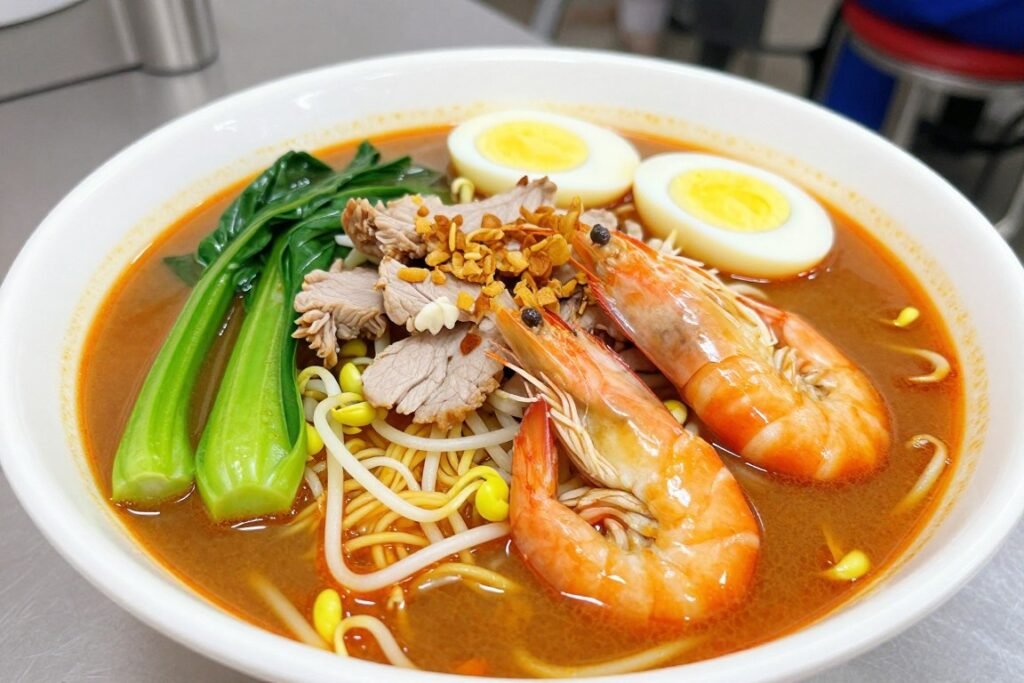
The broth defines quality in hokkien mee. Vendors boil prawn shells and heads for hours. They add pork bones and dried shrimp. The liquid develops deep umami character and orange color.
Standard Toppings
- Fresh prawns blanched in the hot soup just before serving
- Sliced pork belly or lean pork pieces for protein
- Hard-boiled eggs cut in half for richness
- Water spinach (kangkung) adding fresh green crunch
- Bean sprouts providing texture contrast
- Fried shallots contributing aromatic oil
- Fresh lime wedges for acidity balance
- Sambal chili paste on the side for heat
Some stalls add unique elements. Pork intestines appear at traditional spots. Crispy pork lard gives extra richness. Fish cake slices stretch the meal.
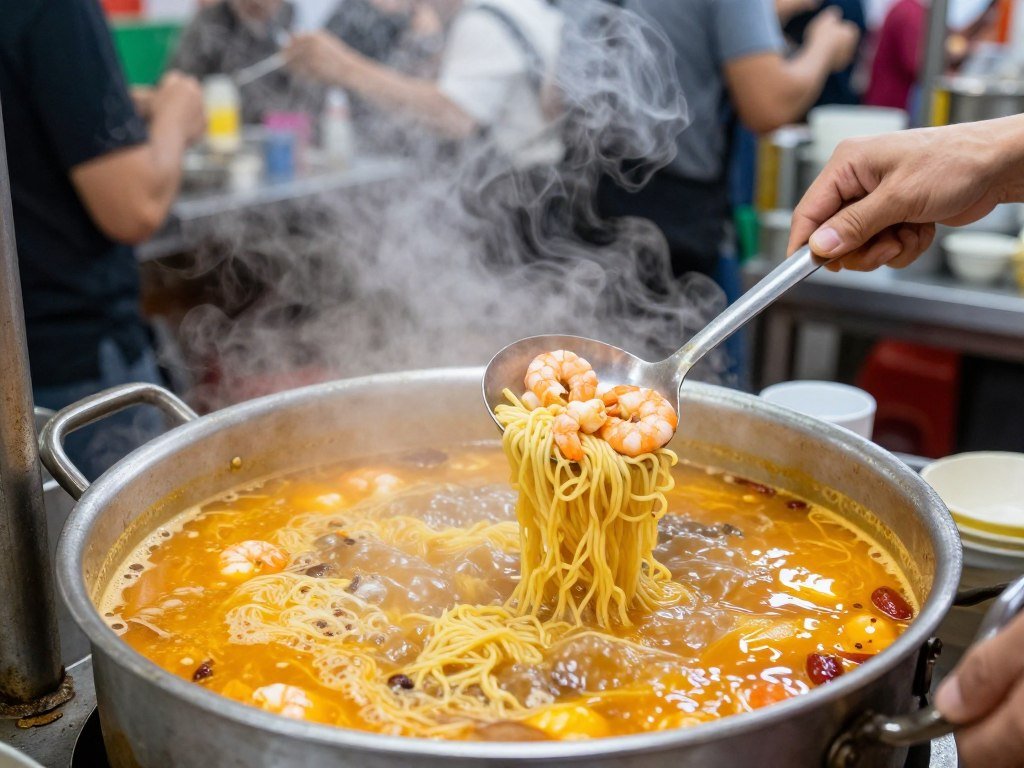
Best Hokkien Mee Hawker Stalls
Kim Hock Hokkien Mee operates from early morning until mid-afternoon. The stall has served customers since 1960. Their broth tastes sweeter than competitors due to extra prawn shells.
Location: Jalan Brick Kiln, George Town
Hours: 7:00 AM – 2:00 PM (closed Thursdays)
Lee Fah Hokkien Prawn Mee opens only for breakfast. They prepare limited portions daily. When the soup sells out, they close. Arriving before 9 AM guarantees availability.
Location: Pasar Air Itam (Air Itam Market)
Hours: 6:30 AM – 11:00 AM (daily)
Get Your Free Penang Street Food Map
Download our comprehensive PDF guide with all 20 dishes, interactive maps, vendor details, and insider tips. Join 15,000+ food lovers exploring Penang’s hawker scene.
Lor Bak: Five-Spice Meat Rolls
Lor bak brings Chinese festival food to everyday eating. This dish features minced pork wrapped in bean curd skin. Vendors deep-fry the rolls until golden and crispy.
The name translates to “braised meat” in Hokkien dialect. Despite the name, modern preparation emphasizes frying rather than braising. The confusion stems from historical cooking methods.
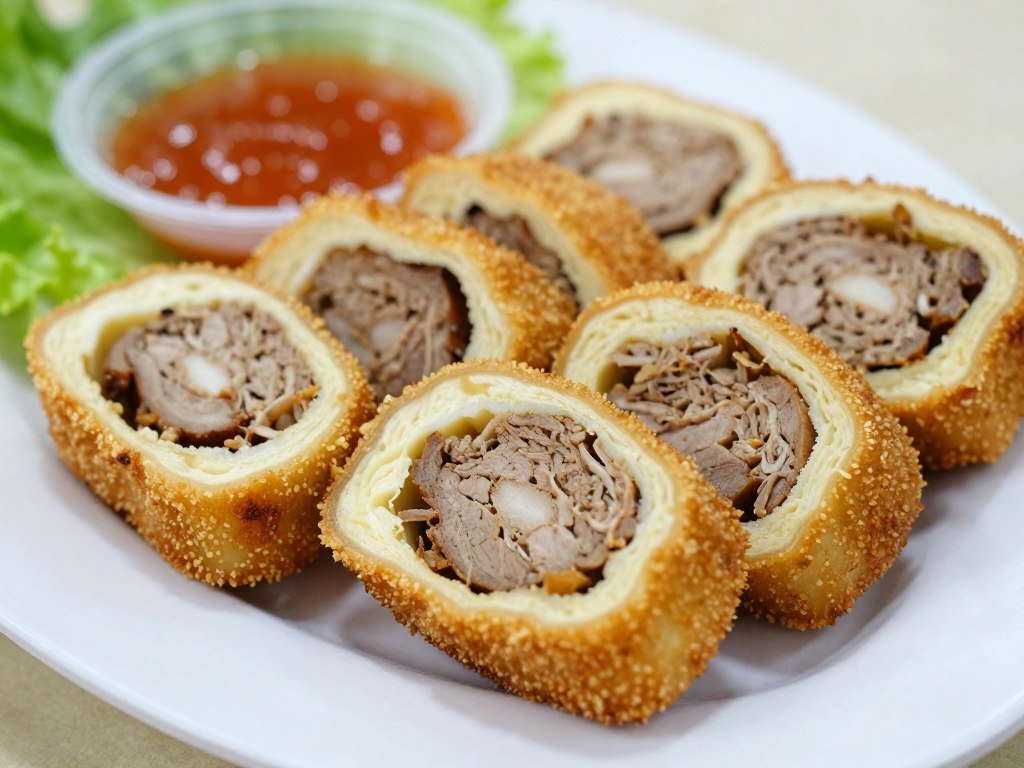
Five-spice powder defines the flavor. This Chinese spice blend contains star anise, cloves, cinnamon, Sichuan pepper, and fennel. The mixture creates distinctive aromatic character.
Complete Lor Bak Platter
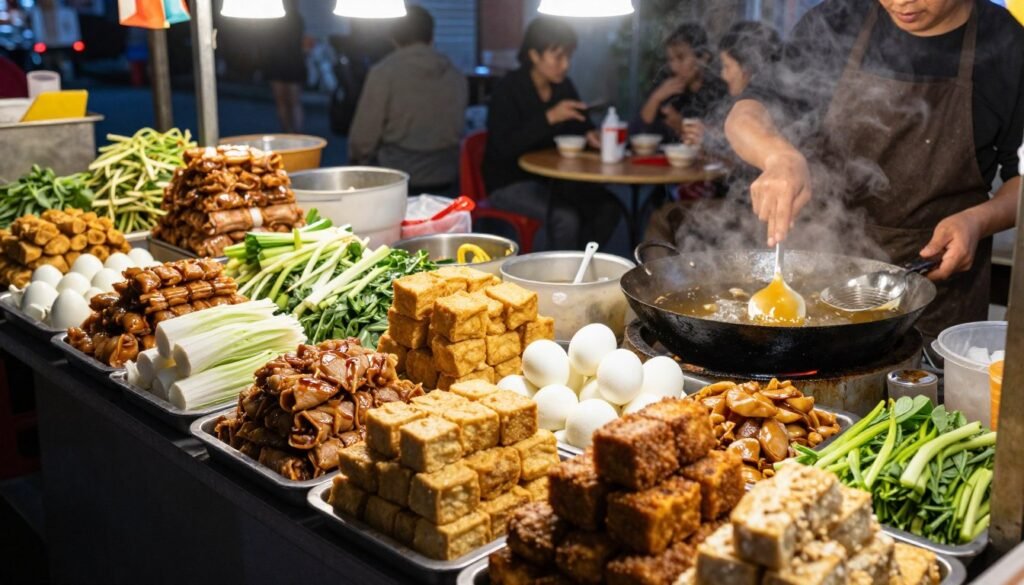
A typical lor bak order includes several items beyond the signature rolls. Vendors serve these components together as a complete meal.
- Deep-fried five-spice pork rolls wrapped in bean curd skin
- Fried tofu squares soaking up the flavors
- Hard-boiled eggs coated in five-spice batter then fried
- Deep-fried crab sticks for seafood variety
- Fried bitter gourd providing bitter contrast
- Sweet sauce made from fermented beans for dipping
- Fresh lettuce leaves wrapping everything together
Diners wrap the fried items in lettuce. They dip everything in sweet sauce. The combination of hot, crispy, sweet, and fresh creates textural variety.
Where to Try Lor Bak
Kimberly Street Lor Bak operates from late afternoon into the evening. This family business started in the 1960s. The current generation maintains original recipes. Lines form before opening time.
Location: Kimberly Street, George Town
Hours: 4:00 PM – 9:00 PM (closed Mondays and Thursdays)
Restoran Swee Kong serves lor bak as part of a larger menu. The restaurant opens for breakfast and lunch. Their portions are generous compared to street stalls.
Location: Lebuh Carnarvon, George Town
Hours: 9:00 AM – 3:00 PM (closed alternate Thursdays)
Cendol: Shaved Ice Dessert Paradise
Cendol provides relief from tropical heat. This shaved ice dessert combines coconut milk with palm sugar syrup. Green pandan-flavored jelly noodles give the dish its name.
The dessert originated in Java, Indonesia. Traders brought it to Penang centuries ago. Local vendors adapted the recipe using available ingredients.
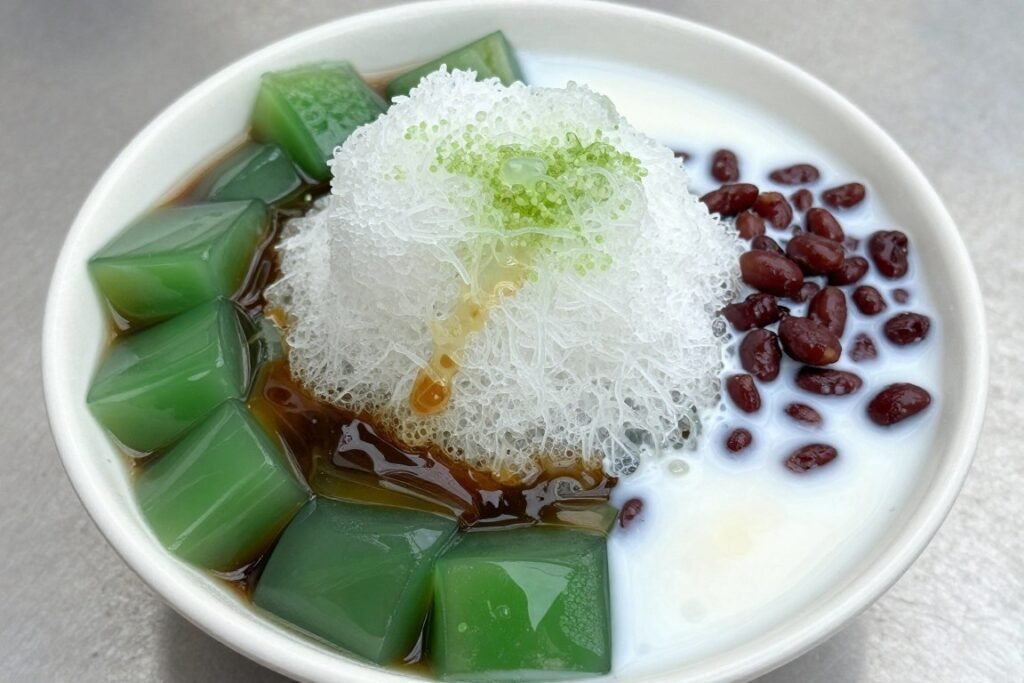
Making cendol requires specific skills. Vendors push rice flour dough through a special mold. The dough drops into ice water, forming worm-like strands. These green jellies taste mildly of pandan leaves.
Essential Cendol Elements
Base Components
- Finely shaved ice creating snow-like texture
- Green cendol jelly made from rice flour and pandan
- Thick coconut milk adding creaminess
- Gula melaka (palm sugar syrup) for sweetness
Optional Add-ons
- Red beans for additional texture
- Sweet corn kernels for crunch
- Grass jelly cubes providing different chew
- Durian flesh for adventurous eaters
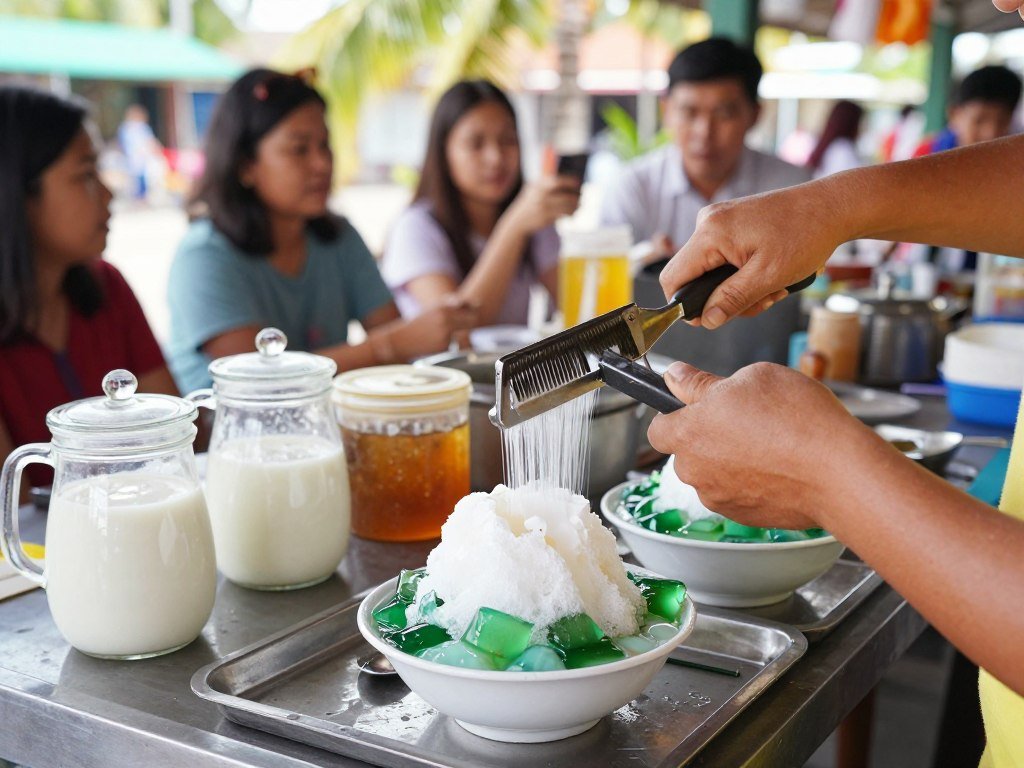
The best cendol balances all elements. The ice should be fine, not chunky. Coconut milk must be fresh and thick. Palm sugar syrup needs the right concentration.
Famous Cendol Vendors
Penang Road Famous Teochew Chendul has served customers since 1936. Four generations have operated this stall. They use a secret ratio for the coconut milk mixture. The queue moves constantly throughout the day.
Location: Penang Road (near Komtar)
Hours: 12:00 PM – 6:00 PM (closed Mondays)
Kek Seng Coffee Shop Cendol operates inside a traditional coffee shop. The vendor maintains old-school preparation methods. They shave ice by hand rather than using machines.
Location: Jalan Dato Keramat, George Town
Hours: 10:00 AM – 5:00 PM (daily)
Rojak: Fruit and Vegetable Salad
Rojak demonstrates Penang’s love for contrasting flavors. This salad combines fruits and vegetables with thick prawn paste sauce. The name means “mixture” in Malay.
Two main varieties exist in Penang. Penang rojak uses fruits. Indian rojak features fried items. This section focuses on traditional Penang-style fruit rojak.
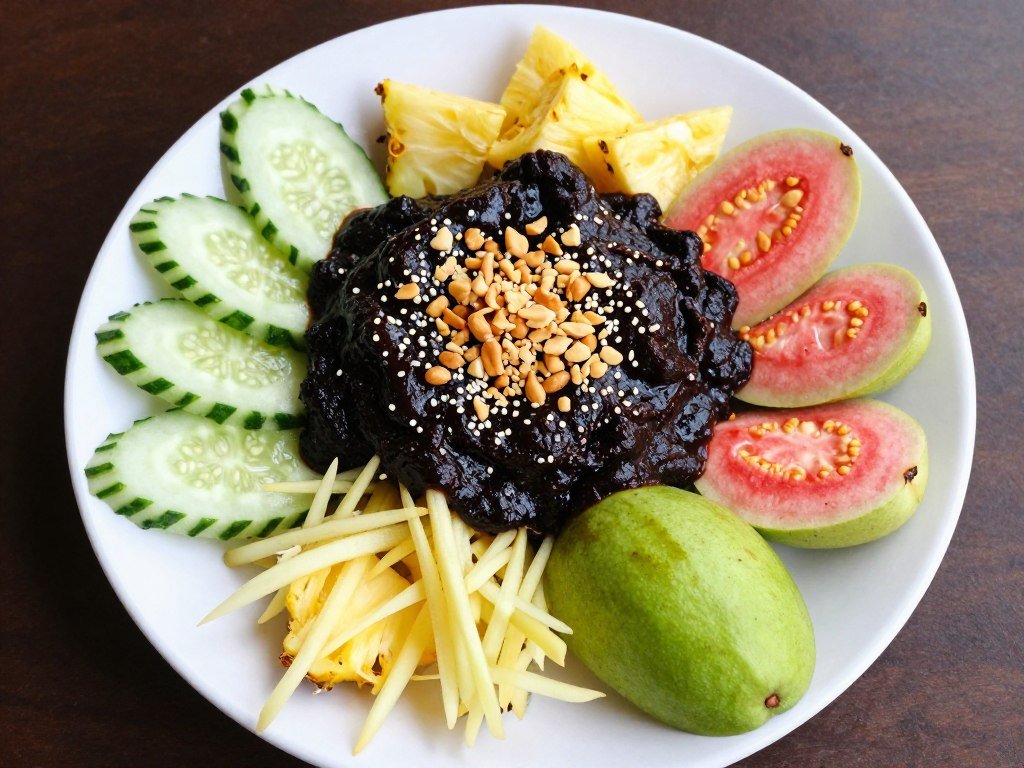
The sauce makes rojak special. Vendors grind roasted peanuts with palm sugar. They add fermented shrimp paste and tamarind. The result tastes sweet, salty, sour, and savory simultaneously.
Common Rojak Ingredients
- Cucumber providing cool crunch and fresh water content
- Pineapple contributing sharp sweetness and acidity
- Jicama (bangkuang) adding mild sweetness and crisp texture
- Green mango offering sour bite and firm flesh
- Guava bringing aromatic quality and graininess
- Water apple (jambu air) for light crispness
- Bean curd puffs soaking up the sauce
- Chinese cruller (youtiao) adding fried element
- Torch ginger flower providing floral notes
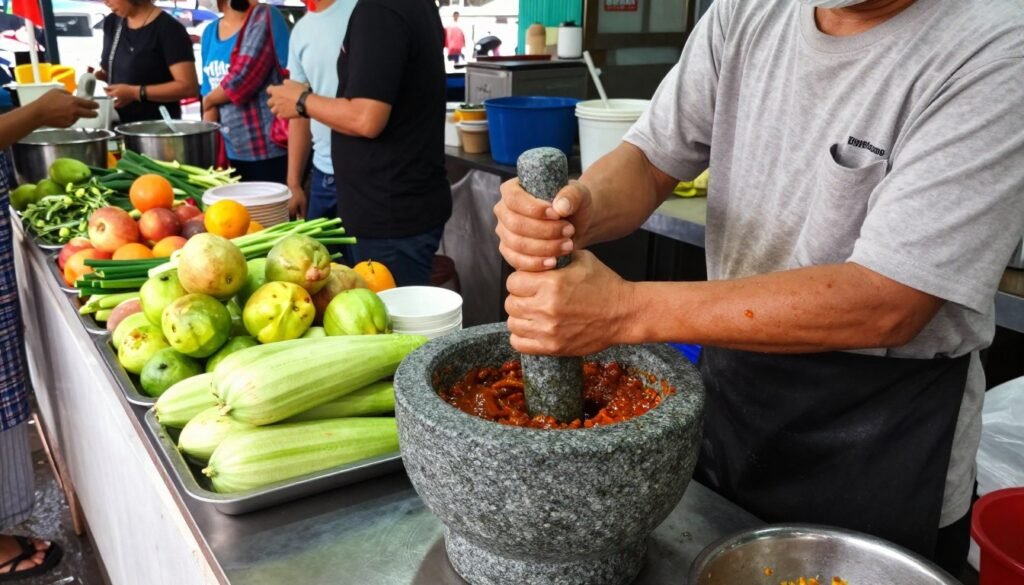
Vendors prepare rojak to order. They cut ingredients fresh. The sauce is ground using a large mortar and pestle. This traditional method releases oils from peanuts better than machines.
Best Rojak Locations
Kimberley Street Penang Rojak operates alongside the lor bak stall. The vendor has worked here for over thirty years. They use extra torch ginger flower in their sauce.
Location: Kimberly Street, George Town
Hours: 4:00 PM – 9:00 PM (closed Mondays and Thursdays)
Gurney Drive Hawker Centre Rojak offers multiple rojak vendors in one location. Competition keeps quality high. Each stall has slight variations in sauce consistency.
Location: Gurney Drive, George Town
Hours: 6:00 PM – 12:00 AM (daily)
Apom Manis: Sweet Rice Flour Pancakes
Apom manis represents traditional Malay breakfast food. These small pancakes cook in special molds over charcoal. The batter uses rice flour and coconut milk.
The name describes the dish perfectly. “Apom” refers to the cooking style. “Manis” means sweet in Malay. Vendors have made these for generations.
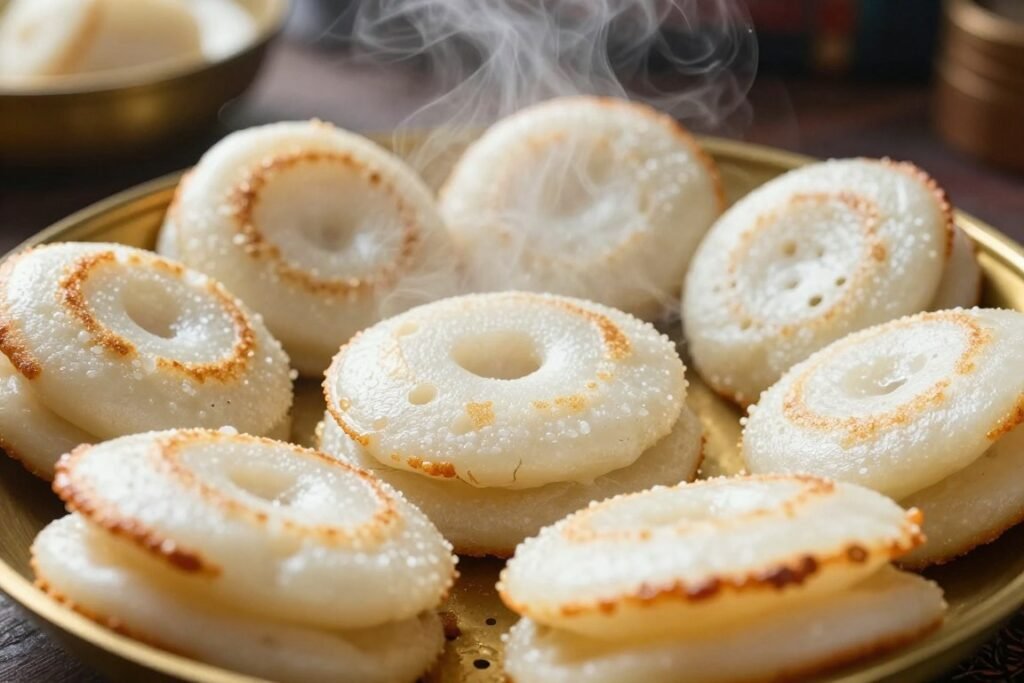
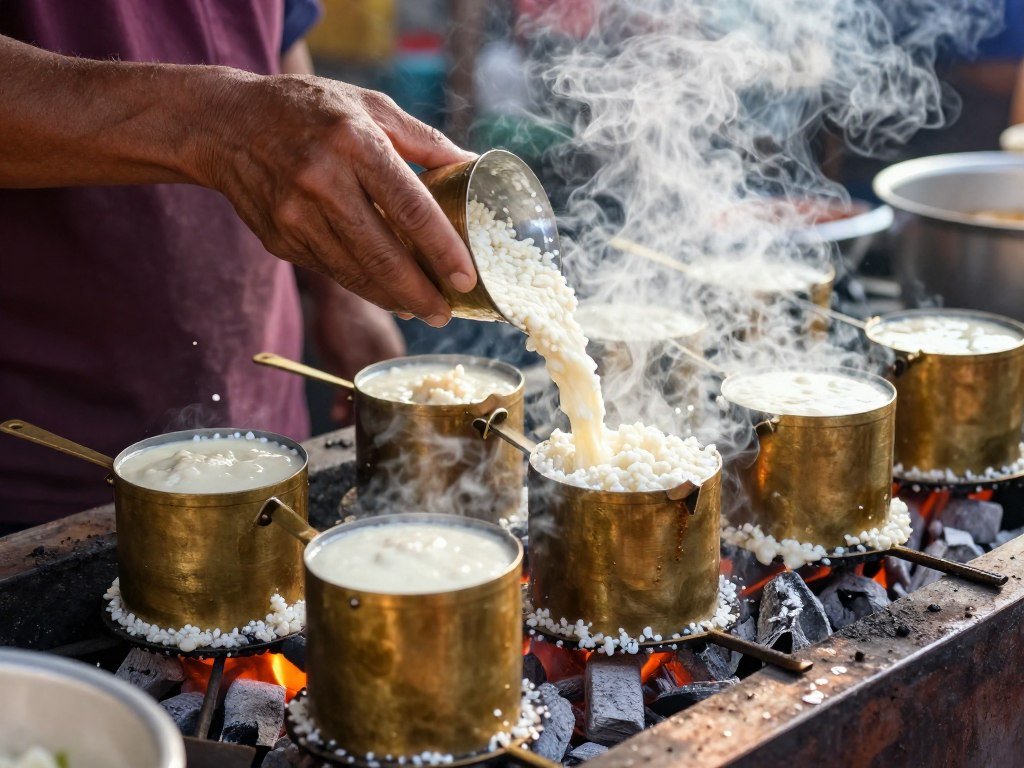
Making apom requires specific equipment. Brass molds sit over hot charcoal. The vendor pours batter into each mold. Heat creates bubbles that form the texture.
Apom Variations
Traditional apom manis contains no filling. The pancake itself provides sweetness. Modern vendors offer variations with additions.
- Plain apom manis with subtle coconut flavor
- Sweet corn apom with kernel pieces throughout
- Peanut apom featuring crushed roasted peanuts
- Chocolate apom for children and tourists
- Cheese apom blending sweet and savory
The cooking process takes skill. Temperature must stay consistent. Timing determines texture. Undercooked apom stays gooey. Overcooked apom becomes dry.
Where to Find Apom Manis
Lorong Selamat Market Apom operates during morning hours. The vendor arrives before dawn to prepare charcoal. Fresh batches emerge continuously. Locals buy dozens at a time.
Location: Lorong Selamat Market, George Town
Hours: 6:00 AM – 10:00 AM (daily)
Pulau Tikus Market Apom Stall offers the widest variety of flavors. They experiment with new combinations monthly. Traditional plain apom remains the bestseller.
Location: Pulau Tikus Market, George Town
Hours: 7:00 AM – 11:00 AM (closed Mondays)
Curry Mee: Spicy Coconut Curry Noodles
Curry mee delivers comfort in a bowl. This noodle soup combines coconut milk curry with two types of noodles. The broth balances spicy heat with creamy richness.
Chinese and Indian influences merge in this dish. The curry paste uses Indian spices. Noodles come from Chinese tradition. Coconut milk reflects Malay cooking.
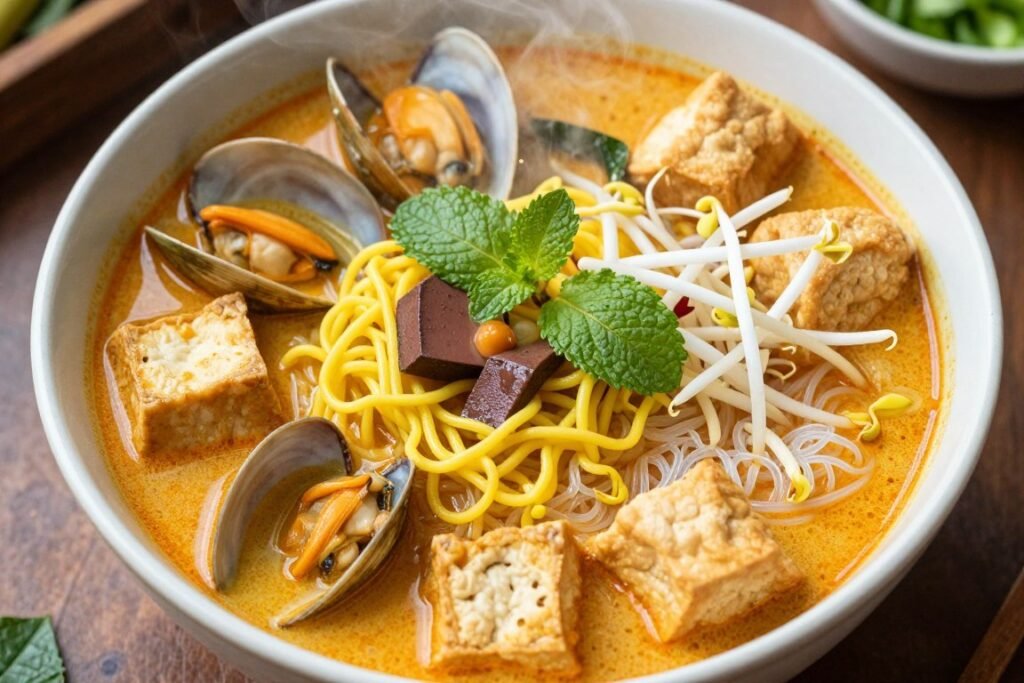
Each vendor guards their curry paste recipe. Most include lemongrass, galangal, dried chilies, and turmeric. They fry the paste until fragrant before adding coconut milk.
Standard Curry Mee Components
Noodles and Broth
- Yellow egg noodles for texture
- Thin rice vermicelli (bee hoon)
- Coconut milk curry base
- Curry spice paste fried in oil
Toppings
- Blood cockles (see hum)
- Fried tofu puffs
- Bean sprouts for crunch
- Cuttlefish or squid pieces
- Mint and laksa leaves
The broth should taste rich but not heavy. Good curry mee balances coconut cream with spices. The heat level varies by stall. Some serve it mild, others fiery.
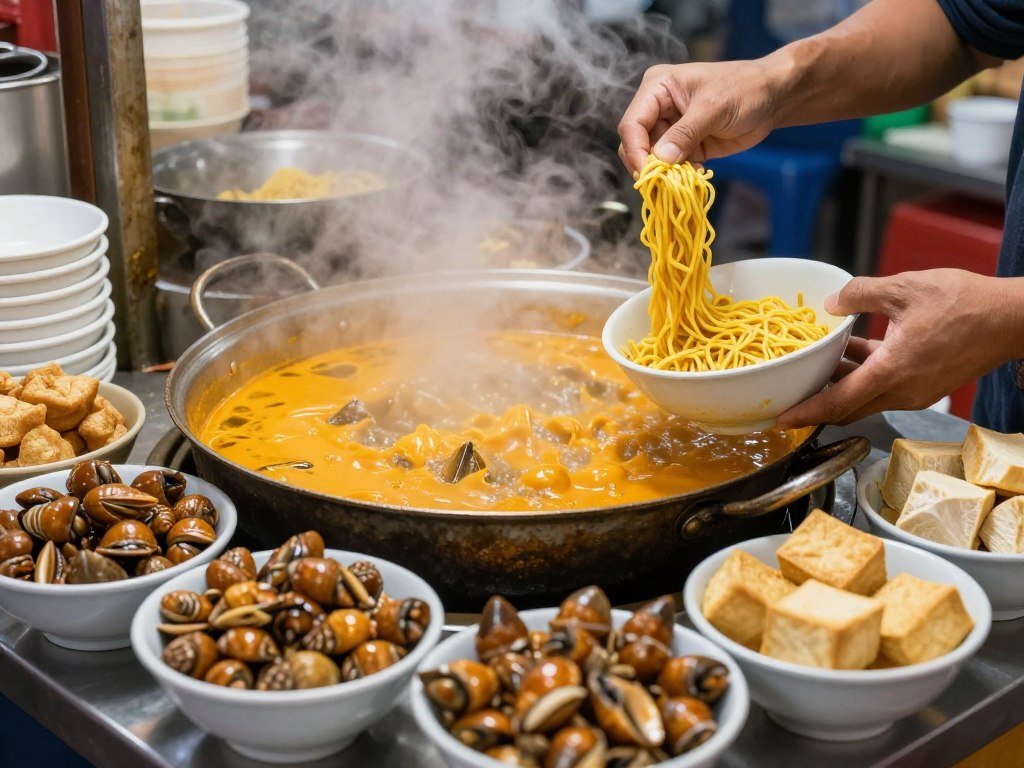
Top Curry Mee Hawker Stalls
Chulia Street Curry Mee has operated for decades. The original owner’s son now runs operations. They make curry paste daily from scratch. The broth tastes spicier than competitors.
Location: Lebuh Chulia, George Town
Hours: 7:00 AM – 1:00 PM (closed Thursdays)
Rope Walk Curry Mee opens only for breakfast. They prepare limited portions. When ingredients run out, they close for the day. The queue forms early.
Location: Jalan Pintal Tali (Rope Walk), George Town
Hours: 6:30 AM – 11:00 AM (daily)
Pasembur: Indian Rojak Specialty
Pasembur represents Indian Muslim street food creativity. Also called Indian rojak, this dish combines fried items with sweet potato gravy. The variety of textures creates unique eating experience.
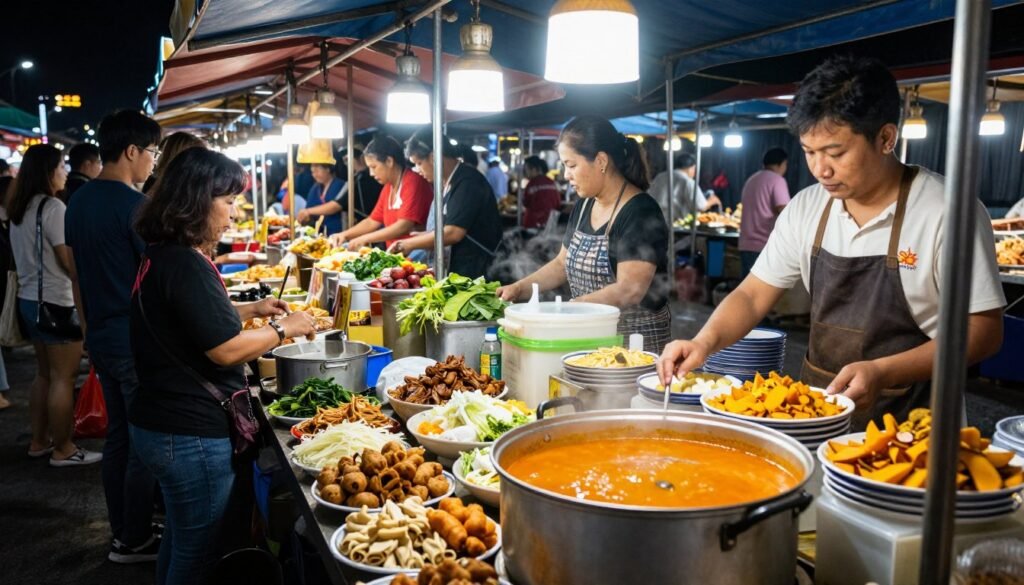
Tamil Muslims developed pasembur in Penang. The name may derive from “pasar,” meaning market. Vendors sell this at night markets throughout the city.
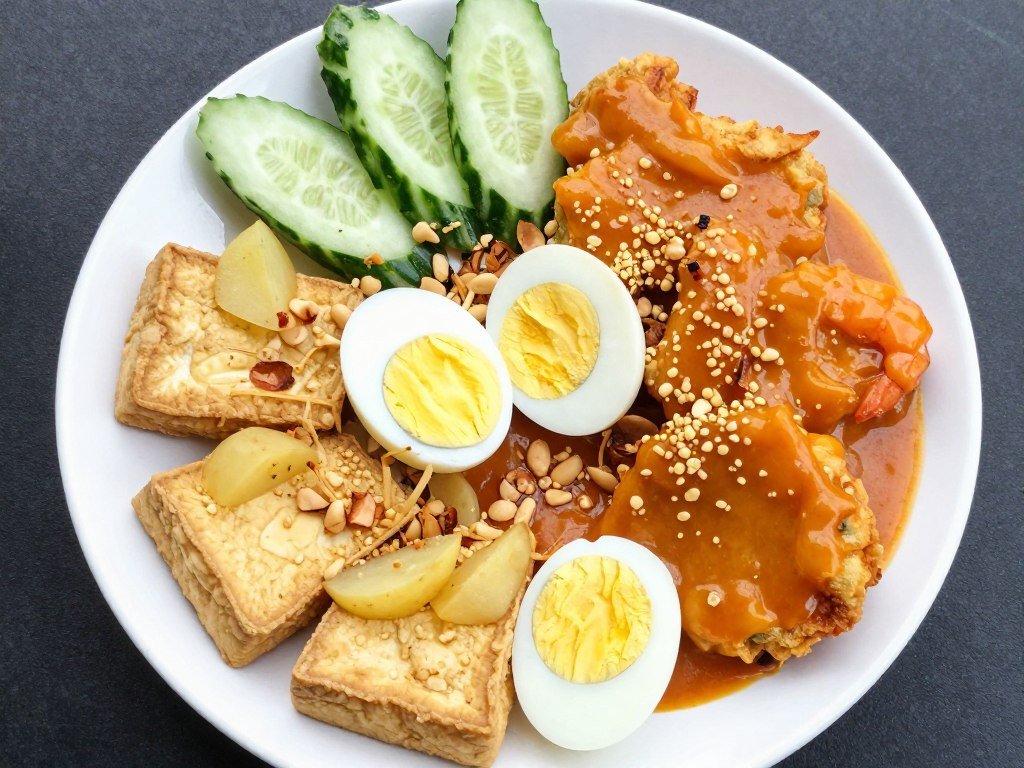
The gravy defines pasembur quality. Vendors boil sweet potatoes until soft. They blend the potatoes with spices and tamarind. The result delivers sweet, tangy, and mildly spicy flavor.
Typical Pasembur Ingredients
- Fried tofu pieces soaking up the sweet gravy
- Boiled potatoes providing starchy substance
- Fresh cucumber adding cool crunch
- Hard-boiled eggs cut into quarters
- Fried prawn fritters for seafood element
- Jellyfish strips bringing unique texture
- Bean sprouts for fresh bite
- Sweet potato gravy coating everything
- Crushed peanuts adding richness
- Fried shallots for aromatic finish
Vendors assemble pasembur to order. They arrange components on a plate. The sweet potato sauce goes on last. Peanuts and shallots provide final garnish.
Best Pasembur Vendors
Hameediyah Restaurant Pasembur operates as part of a larger Indian Muslim restaurant. They serve pasembur all day. The portions are generous. Quality stays consistent.
Location: Lebuh Campbell, George Town
Hours: 10:00 AM – 10:00 PM (daily)
Taman Tun Sardon Night Market Pasembur appears only on Thursday evenings. The vendor prepares everything fresh on-site. Long queues form throughout the evening.
Location: Taman Tun Sardon, George Town
Hours: 6:00 PM – 11:00 PM (Thursdays only)
Chee Cheong Fun: Steamed Rice Noodle Rolls
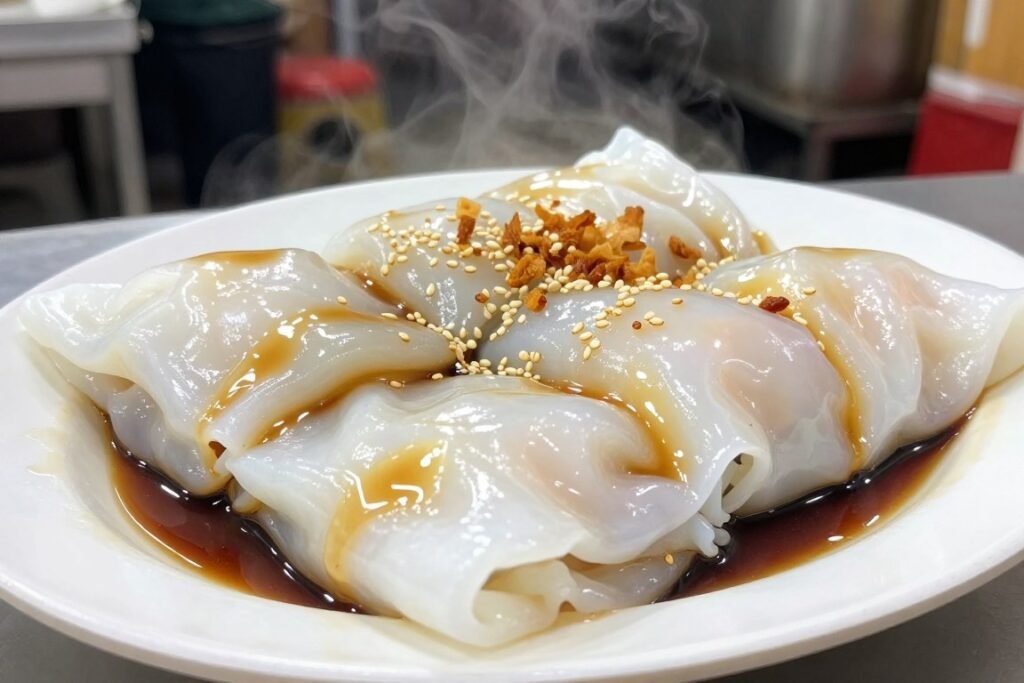
Chee cheong fun brings Cantonese dim sum to Penang streets. These steamed rice noodle rolls have silky texture. Vendors serve them with sweet sauce and sesame seeds.
The dish arrived with Cantonese immigrants. Original versions appeared in dim sum restaurants. Street vendors adapted the concept for quick service.
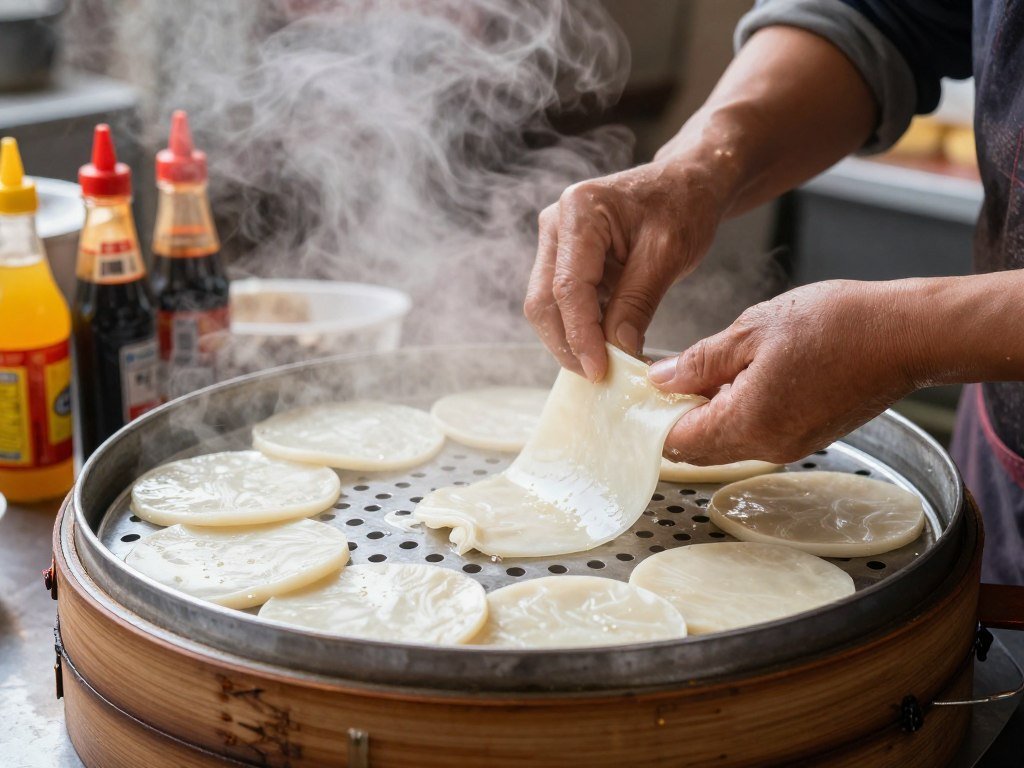
Making chee cheong fun requires practice. Vendors spread rice flour batter on cloth. They steam it until set. The noodle peels off in sheets.
Chee Cheong Fun Variations
Penang vendors offer several filling options. Plain versions contain no filling. Others include various ingredients.
- Plain chee cheong fun showcasing noodle quality
- Prawn filling adding sweetness and bite
- Char siew (barbecued pork) for savory richness
- Vegetable filling with carrots and mushrooms
- Seafood combination with prawns and fish
The sauce makes the difference. Traditional sweet sauce combines soy sauce with sugar. Some add hoisin for depth. Sesame paste creates nutty flavor.
Where to Try Chee Cheong Fun
Joo Hooi Cafe serves excellent chee cheong fun alongside other breakfast items. The noodles are exceptionally smooth. They make small batches throughout the morning.
Location: Jalan Penang, George Town
Hours: 6:00 AM – 12:00 PM (daily)
Lebuh Keng Kwee Chee Cheong Fun specializes in this dish exclusively. The vendor learned from dim sum chefs. Quality matches restaurant standards at hawker prices.
Location: Lebuh Keng Kwee, George Town
Hours: 7:00 AM – 11:00 AM (closed Mondays)
Taste All These Dishes with Expert Local Guides
Our curated food tours take you to the best hawker stalls, avoiding tourist traps. Small groups of maximum 8 people ensure personal attention. We handle the ordering, explain the history, and navigate the crowds so you can focus on eating.
Wan Tan Mee: Wonton Noodles
Wan tan mee showcases Cantonese noodle expertise. This dish features springy egg noodles with pork wontons. The dry version tosses noodles in dark soy sauce.
Cantonese immigrants brought this dish from southern China. They adapted it using local ingredients. Penang’s version has distinctive characteristics.
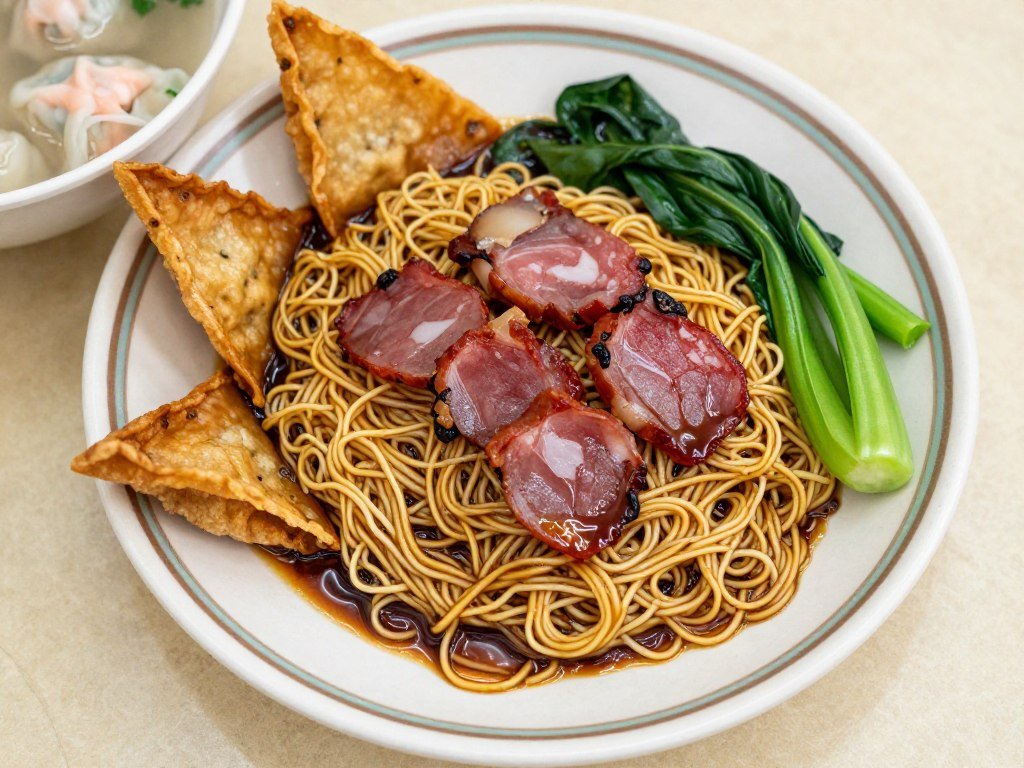
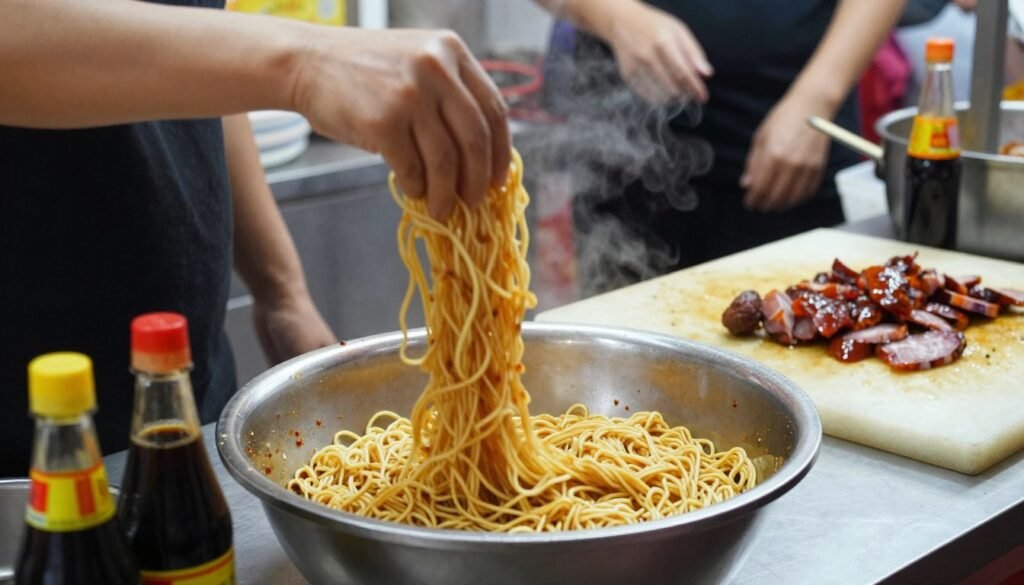
The noodles require specific preparation. Vendors use fresh egg noodles made daily. They blanch noodles briefly. Dark soy sauce and lard oil coat the strands.
Components of Wan Tan Mee
Noodle Plate
- Fresh egg noodles with bounce
- Dark soy sauce for color
- Lard oil adding richness
- Char siew (barbecued pork) slices
- Blanched leafy vegetables
Accompaniments
- Deep-fried wontons crispy outside
- Soup bowl with boiled wontons
- Pickled green chilies
- Chili sauce on the side
Quality wan tan mee has specific texture. Noodles must be al dente, not soft. The sauce coats without pooling. Char siew should have caramelized edges.
Best Wan Tan Mee Locations
Tai Tong Restaurant serves wan tan mee alongside other breakfast dishes. The restaurant opened in 1960. They make char siew in-house daily. The wontons contain generous prawn filling.
Location: Burma Road, George Town
Hours: 7:00 AM – 2:00 PM (closed Tuesdays)
Kafe Heng Huat specializes in traditional Cantonese noodles. Their wan tan mee follows old recipes. The portion sizes satisfy hungry eaters.
Location: Jalan Macalister, George Town
Hours: 6:30 AM – 1:00 PM (daily)
Mee Goreng: Indian Fried Noodles
Mee goreng represents Indian Muslim stir-fry mastery. This fried noodle dish uses yellow noodles tossed with vegetables and meat. The sauce provides sweet, spicy, and tangy notes.
Tamil Muslim vendors created this dish in Penang. They combined Indian spices with Chinese noodles. The result became uniquely Malaysian.
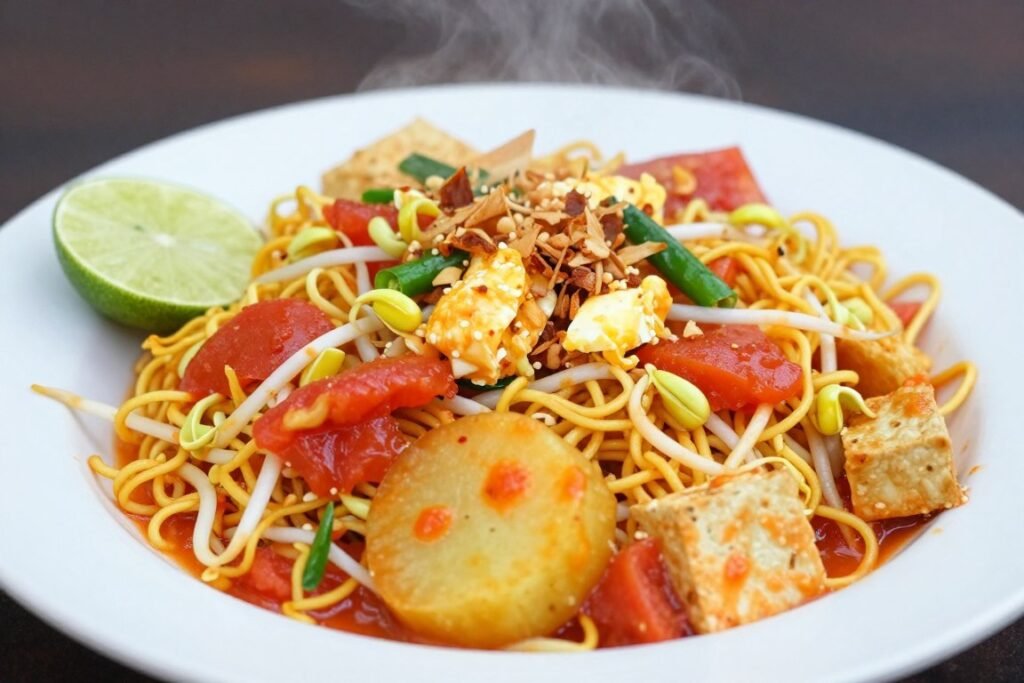
The sauce distinguishes mee goreng from Chinese fried noodles. Vendors use tomato ketchup and chili sauce as base. They add soy sauce and spices. The mixture creates distinctive flavor.
Standard Mee Goreng Ingredients
- Yellow egg noodles as the foundation
- Tomato-based sauce with chilies for color and tang
- Boiled potatoes cut into chunks
- Fried tofu squares for protein
- Bean sprouts adding fresh crunch
- Eggs scrambled into the noodles
- Tomato slices for acidity
- Fresh lime juice squeezed before eating
- Green chilies for those wanting extra heat
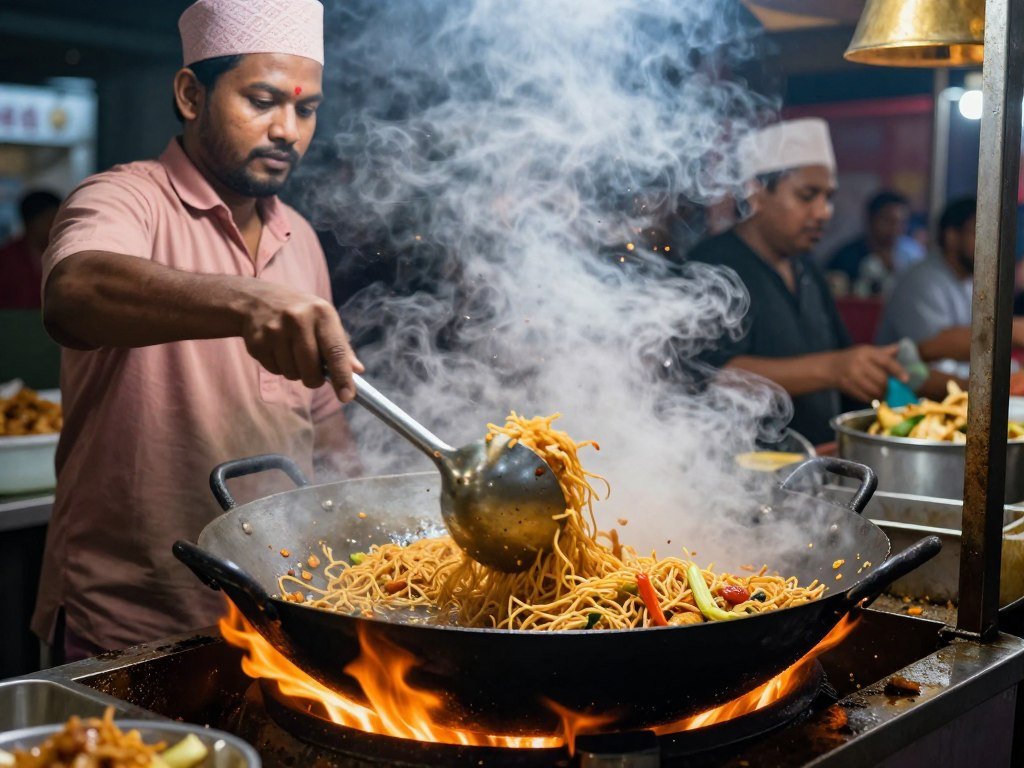
Vendors cook mee goreng over high heat. The wok must stay very hot. They toss ingredients quickly. The noodles should have slight char without burning.
Where to Find Mee Goreng
Transfer Road Mee Goreng operates from evening into late night. The stall draws crowds after sunset. They offer extra-spicy versions for heat seekers.
Location: Transfer Road, George Town
Hours: 6:00 PM – 2:00 AM (daily)
Restoran Kassim Mustafa serves mee goreng as part of their menu. The restaurant stays open twenty-four hours. Quality remains consistent at all times.
Location: Jalan Larut, George Town
Hours: 24 hours (daily)
Otak-Otak: Grilled Fish Cake
Otak-otak brings Malay spice paste expertise to street food. This grilled fish cake wraps in banana leaves. The filling combines fish with aromatic herbs and spices.
The name means “brain” in Malay. The texture resembles brain tissue. Despite the name, the dish contains only fish and spices.
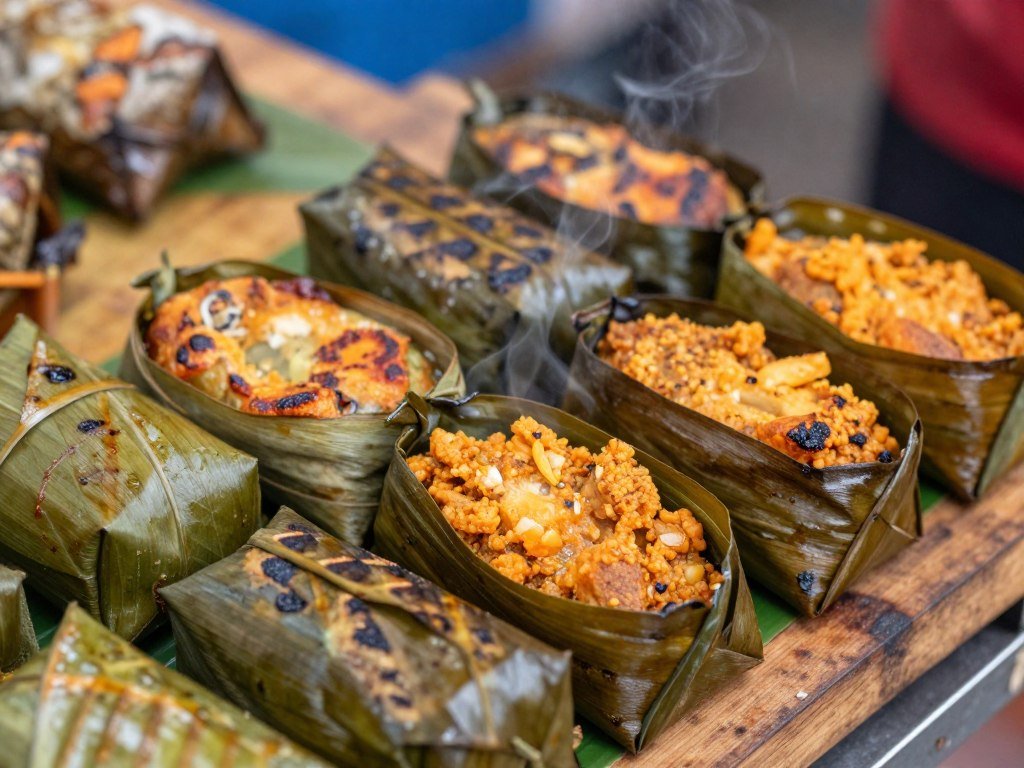
Making otak-otak requires fresh fish. Vendors pound mackerel into paste. They mix the fish with curry spices and coconut milk. Banana leaves wrap individual portions.
Otak-Otak Preparation Process
- Fresh mackerel fish pounded into smooth paste
- Curry spice mixture ground from scratch
- Coconut milk blended with fish and spices
- Banana leaves cut into rectangular pieces
- Fish mixture spread on banana leaves
- Leaves folded and secured with toothpicks
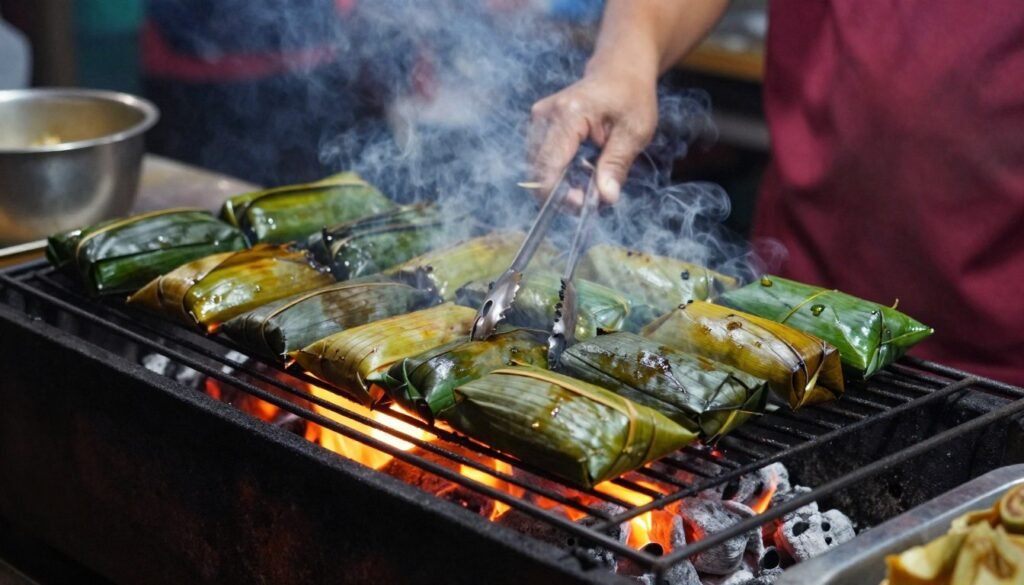
- Parcels grilled over charcoal fire
- Cooking until leaves char and fish cooks through
Charcoal grilling gives distinctive flavor. The banana leaves impart subtle taste. Smoke penetrates the fish cake. The result has layered aromatic quality.
Best Otak-Otak Vendors
Pulau Tikus Market Otak-Otak prepares fresh batches throughout the morning. They use family recipes passed down generations. The spice level hits medium heat.
Location: Pulau Tikus Market, George Town
Hours: 7:00 AM – 12:00 PM (closed Mondays)
Bayan Baru Night Market Otak-Otak appears at the Thursday night market. The vendor makes everything on-site. Grilling happens as customers order.
Location: Bayan Baru Night Market, Penang
Hours: 6:00 PM – 11:00 PM (Thursdays only)
Popiah: Fresh Spring Rolls
Popiah demonstrates Penang’s love for fresh vegetables. These spring rolls use thin wheat crepes. Vendors fill them with cooked turnip, vegetables, and condiments.
The dish originated in Fujian, China. Hokkien immigrants brought it to Penang. Local versions developed unique characteristics.
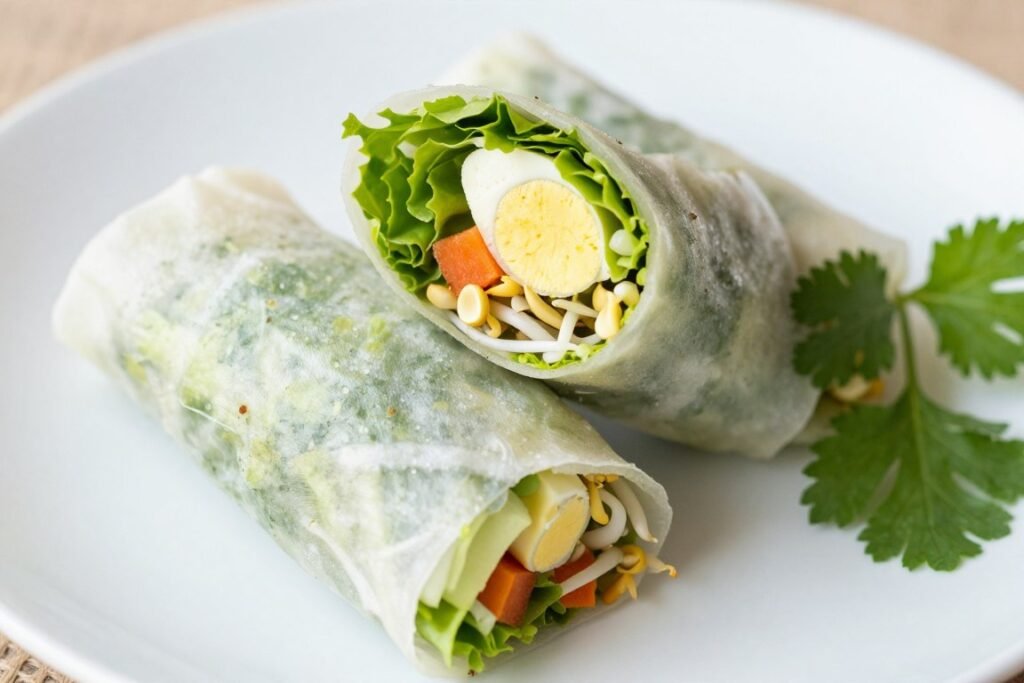
Making popiah takes time. Vendors cook turnip with dried shrimp for hours. They prepare multiple components separately. Assembly happens to order.
Popiah Components
The Wrapper and Base
- Thin wheat crepe made fresh
- Sweet sauce spread on wrapper
- Garlic chili paste for heat
- Hoisin sauce adding depth
The Filling
- Cooked turnip (jicama) shredded
- Fresh lettuce leaves
- Bean sprouts blanched
- Shredded omelette strips
- Crushed peanuts
- Fried shallots
- Fresh coriander
The wrapper requires skill to make. Vendors spread batter on a hot plate. They peel off the crepe when cooked. The wrapper must be thin but not tear.
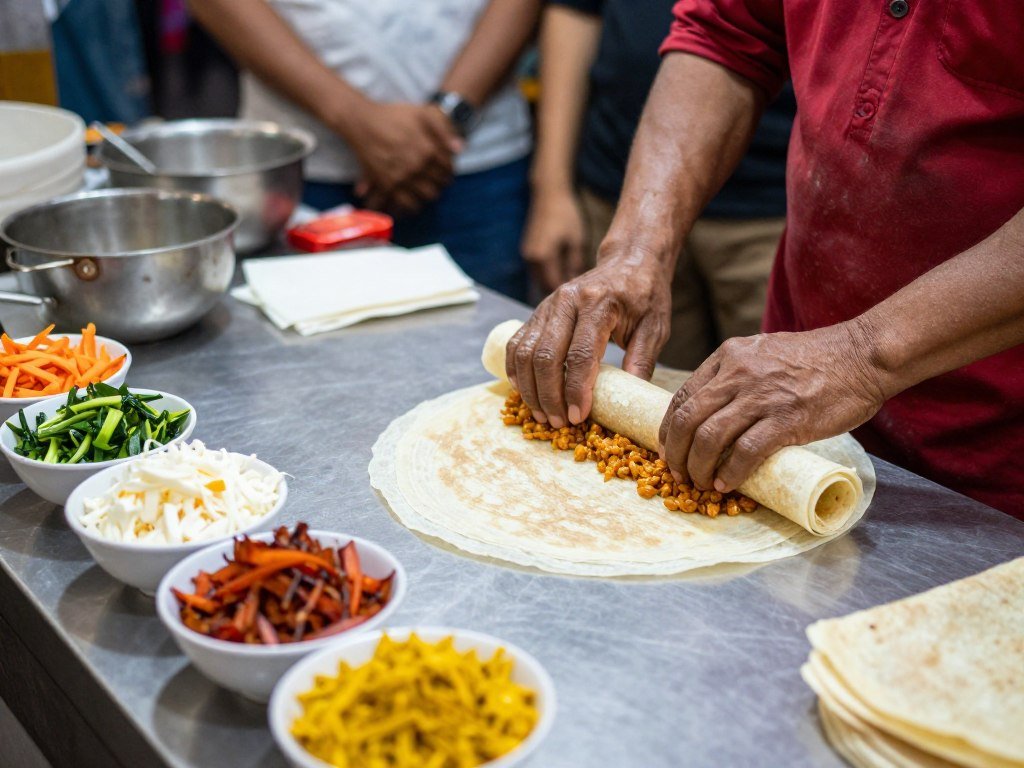
Famous Popiah Locations
Kimberley Street Popiah has served customers for decades. The current vendor learned from her mother. They make wrappers fresh every morning. The turnip filling cooks for four hours.
Location: Kimberly Street, George Town
Hours: 10:00 AM – 4:00 PM (closed alternate Sundays)
Lorong Seratus Tahun Popiah offers both fried and fresh versions. The fried popiah provides crispy alternative. Fresh popiah remains the bestseller.
Location: Lorong Seratus Tahun, George Town
Hours: 11:00 AM – 6:00 PM (daily)
Tau Sar Pneah: Green Bean Biscuits
Tau sar pneah represents traditional Penang confectionery. These flaky biscuits contain sweet mung bean paste. Multiple pastry layers create distinctive texture.
Teochew bakers created this specialty. The recipe requires careful technique. Each biscuit involves hand-folding pastry layers.
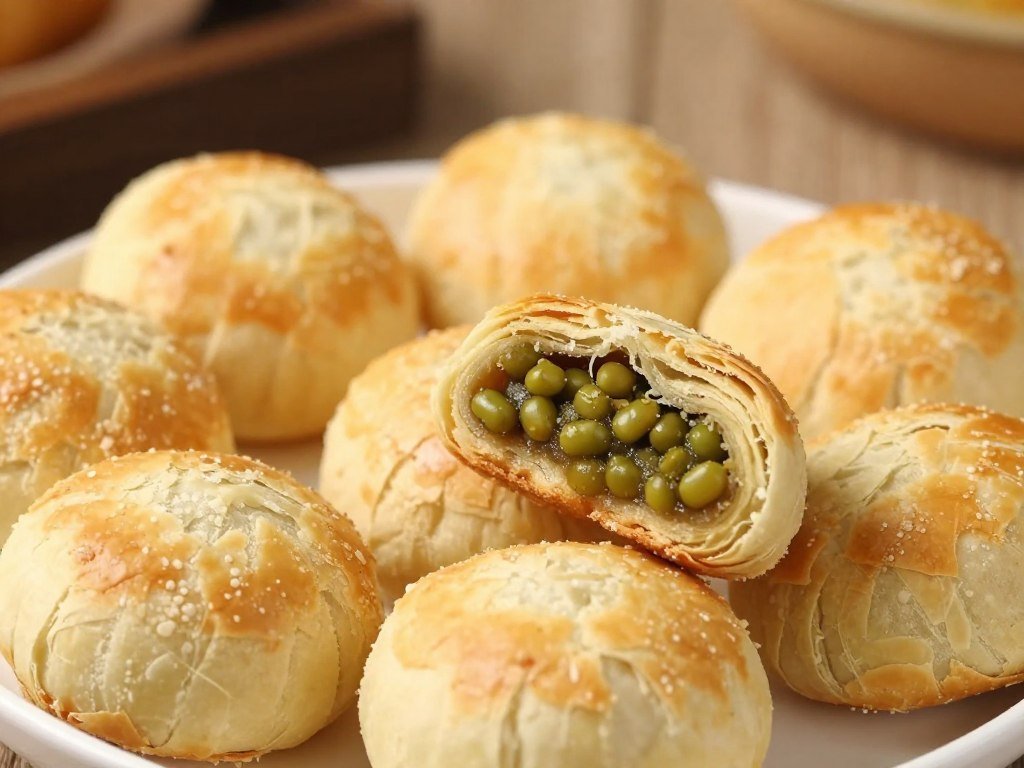
Making tau sar pneah demands patience. Bakers fold oil pastry repeatedly. They create dozens of thin layers. The filling uses mung beans cooked with sugar.
Production Process
- Mung beans soaked overnight then steamed until soft
- Beans mashed and cooked with sugar into paste
- Water dough and oil dough prepared separately
- Doughs combined and folded multiple times
- Pastry rolled thin and cut into circles
- Bean paste portioned and wrapped in pastry
- Biscuits shaped and placed on trays
- Baking until golden and flaky throughout
Traditional versions remain popular. Modern bakeries offer variations with different fillings. Some add yam or red bean.
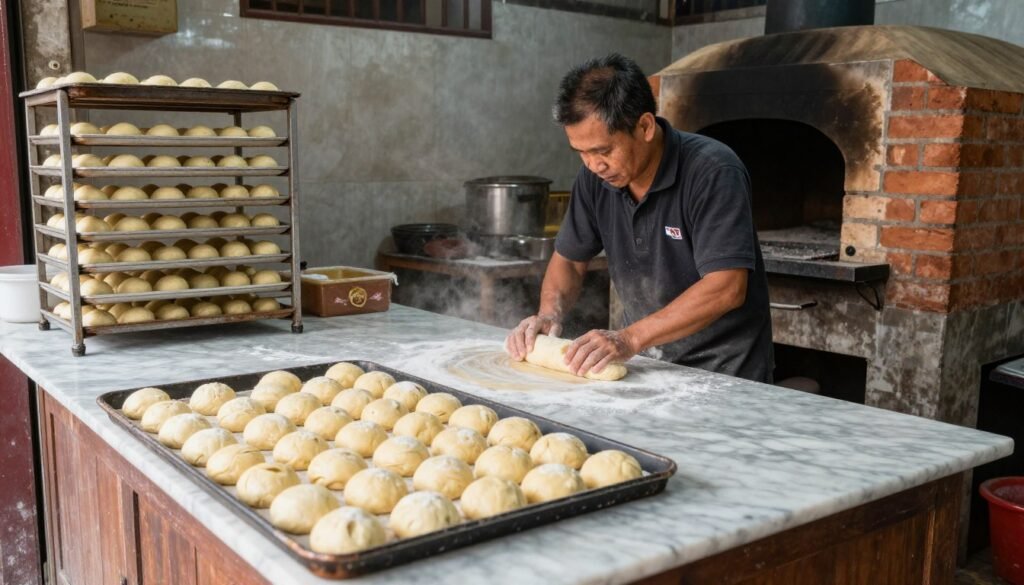
Best Tau Sar Pneah Bakeries
Him Heang bakes tau sar pneah since 1948. They maintain traditional methods. The biscuits stay fresh for weeks when stored properly. Locals buy boxes as gifts.
Location: Jalan Burma, George Town
Hours: 9:00 AM – 6:00 PM (closed Mondays)
Ghee Hiang operates as Penang’s oldest bakery. Founded in 1856, they perfected the recipe over generations. Their tau sar pneah sets the standard.
Location: Jalan Masjid Kapitan Keling, George Town
Hours: 9:00 AM – 6:00 PM (daily)
Char Koay Kak: Fried Radish Cake
Char koay kak brings Teochew breakfast tradition to Penang streets. This dish features fried radish cake cubes. Vendors stir-fry them with eggs and preserved radish.
The dish uses steamed radish cake as base. Cooks cut the cake into cubes. High-heat frying creates crispy edges while keeping centers soft.
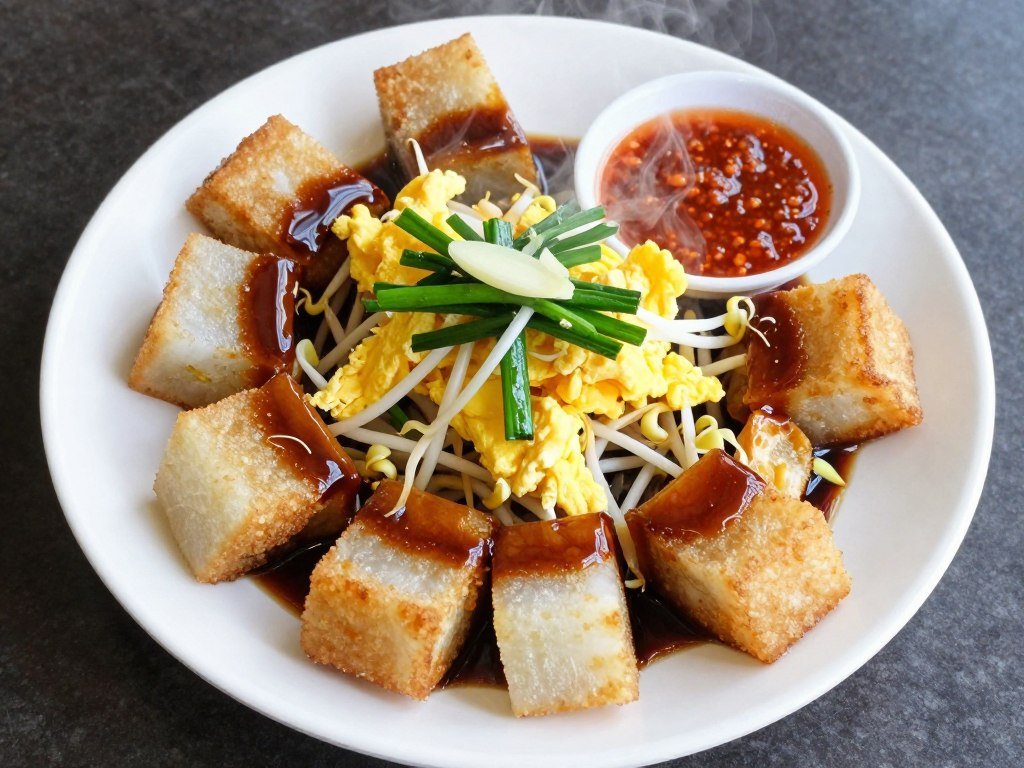
Making the radish cake requires advance preparation. Vendors steam rice flour mixed with shredded white radish. The mixture sets into firm cake overnight.
Char Koay Kak Ingredients
- Steamed radish cake cut into bite-sized cubes
- Duck eggs or chicken eggs scrambled in
- Preserved radish (chai poh) for salty crunch
- Bean sprouts adding fresh texture
- Garlic chives cut into short pieces
- Dark soy sauce for color and flavor
- Chili sauce served on the side
The cooking technique matters greatly. Vendors use extremely high heat. The wok must be very hot. They toss ingredients quickly to avoid sticking.
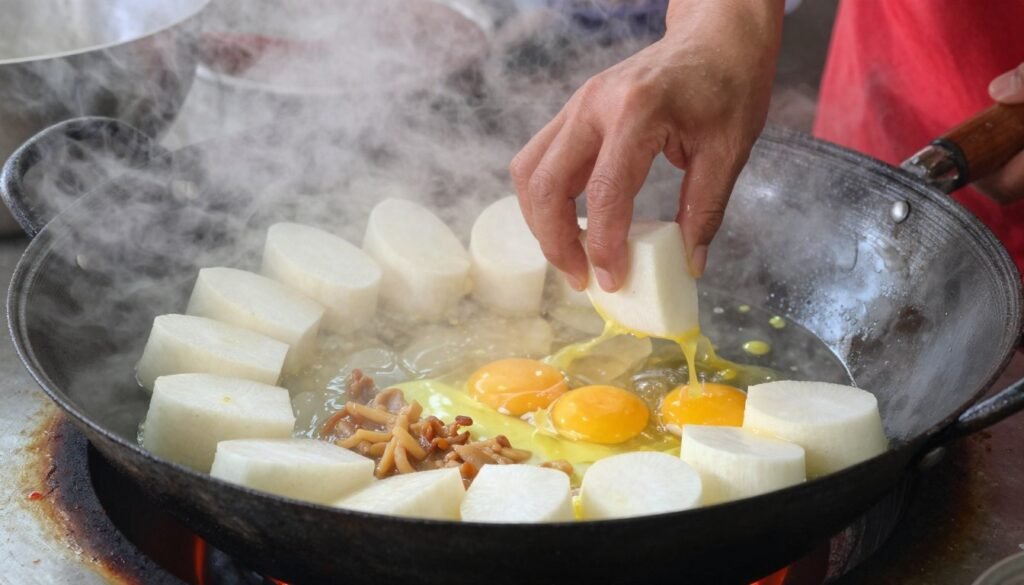
Where to Try Char Koay Kak
Lim Brothers Char Koay Kak operates at Pulau Tikus market. Two brothers run the stall together. They’ve worked here for over twenty years. The queue starts forming before they open.
Location: Pulau Tikus Market, George Town
Hours: 6:30 AM – 11:00 AM (closed Tuesdays)
Sin Hwa Coffee Shop Char Koay Kak serves this dish alongside other breakfast items. The vendor uses duck eggs exclusively. The flavor profile differs from chicken egg versions.
Location: Jalan Pasar, George Town
Hours: 7:00 AM – 12:00 PM (daily)
Oh Chien: Oyster Omelette
Oh chien combines fresh oysters with egg and starch. This fried dish achieves the perfect balance of crispy and creamy textures. The chili sauce adds essential heat.
Hokkien immigrants brought this dish concept. Penang’s abundant oyster supply made it popular. Each hawker develops signature techniques.
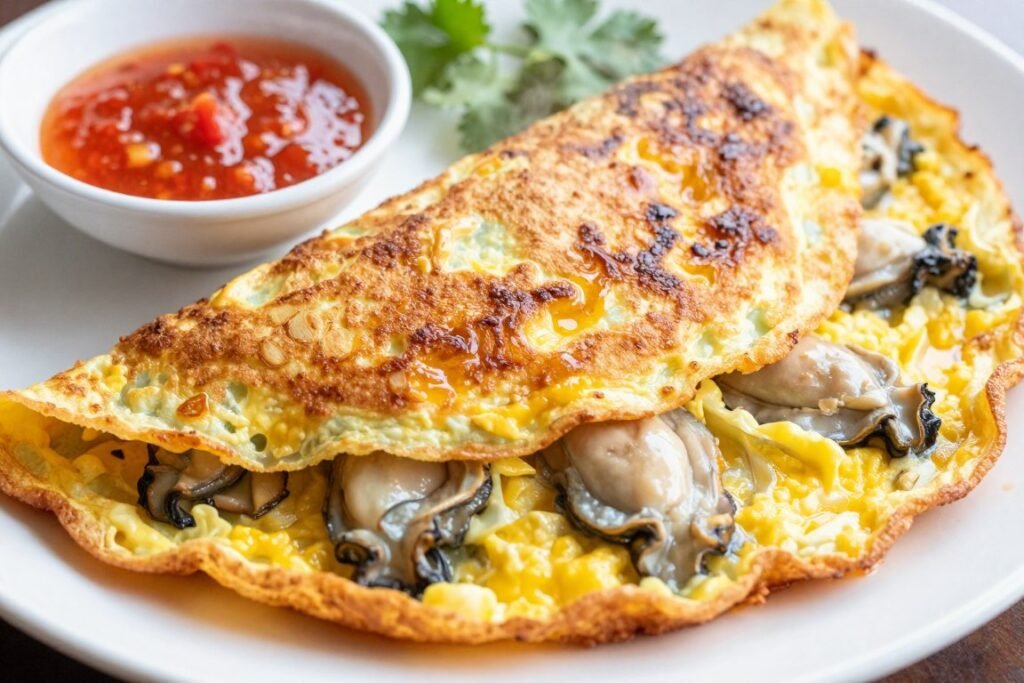
The cooking method creates unique texture. Vendors mix eggs with sweet potato starch. Fresh oysters go into hot oil. The starch mixture follows. High heat produces crispy edges with soft interior.
Oh Chien Components
Main Ingredients
- Fresh oysters from local waters
- Duck or chicken eggs beaten
- Sweet potato starch creating texture
- Bean sprouts for crunch
Accompaniments
- Chili sauce with garlic
- Fresh coriander leaves
- Some vendors add scallions
- Lime wedges optional
Fresh oysters make the difference. Quality vendors source oysters daily. The oysters must be plump and sweet. Size matters less than freshness.
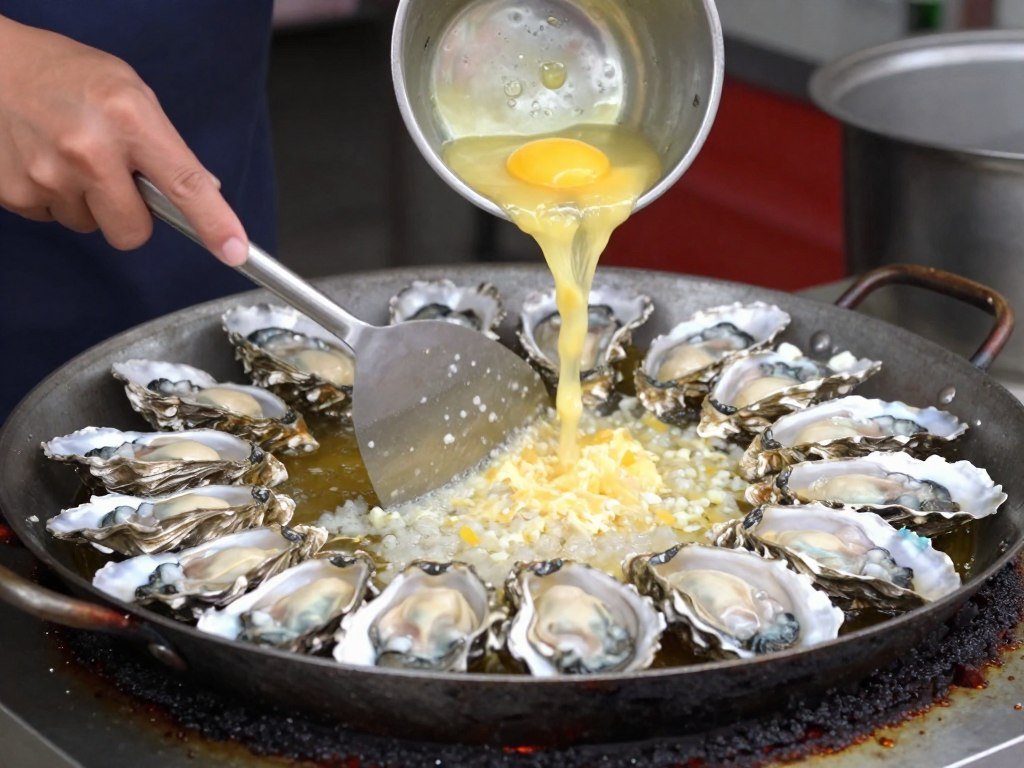
Top Oh Chien Locations
New Lane Hawker Centre Oh Chien draws crowds every evening. Multiple stalls compete in this location. The quality stays high due to competition.
Location: Lorong Baru (New Lane), George Town
Hours: 6:00 PM – 12:00 AM (daily)
Sia Boey Oh Chien operates near the heritage site. They’ve served this dish for three generations. The oysters come from nearby fishing villages.
Location: Prangin Mall area, George Town
Hours: 5:30 PM – 11:00 PM (closed Mondays)
Ice Kacang: Shaved Ice Mountain
Ice kacang provides ultimate cooling refreshment. This dessert piles shaved ice high with colorful toppings. Sweet syrups and condensed milk complete the treat.
The name means “bean ice” in Malay. Original versions contained only red beans. Modern ice kacang includes multiple components.
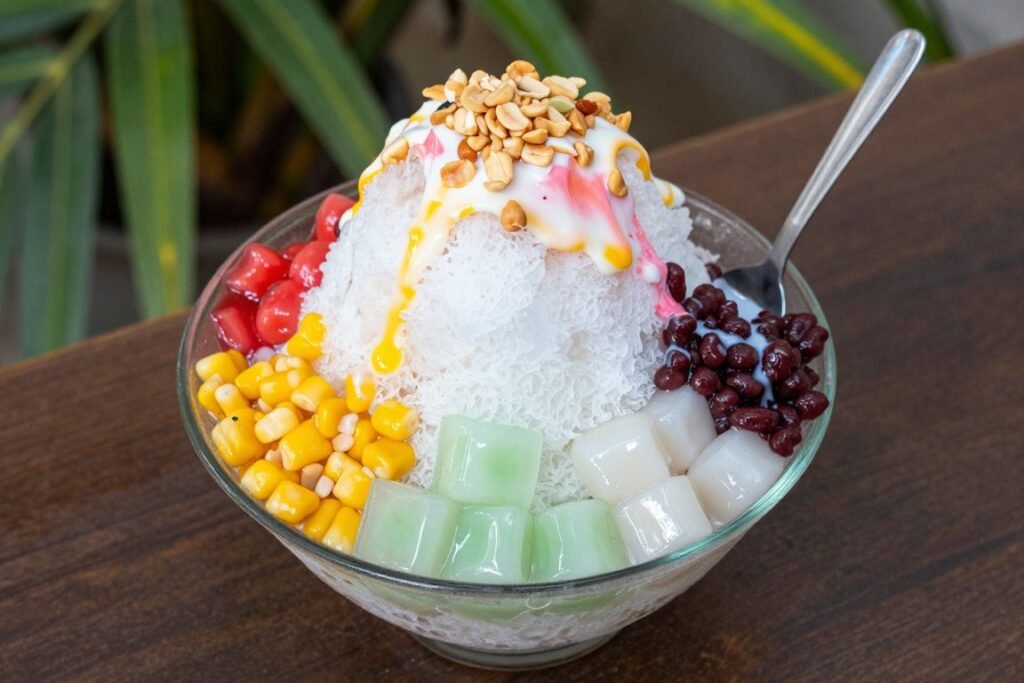
Vendors pile shaved ice into mountains. They add various toppings systematically. Syrups go on last. The result looks colorful and inviting.
Standard Ice Kacang Toppings
- Finely shaved ice forming the base mountain
- Red beans cooked with sugar for sweetness
- Sweet corn kernels adding crunch
- Grass jelly cubes providing texture contrast
- Attap seeds (palm fruit) for chewiness
- Roasted peanuts giving nutty flavor
- Rose syrup creating pink color
- Evaporated milk and condensed milk for creaminess
- Palm sugar syrup optional addition
Each vendor has signature touches. Some add durian. Others include ice cream. The base concept remains consistent across variations.
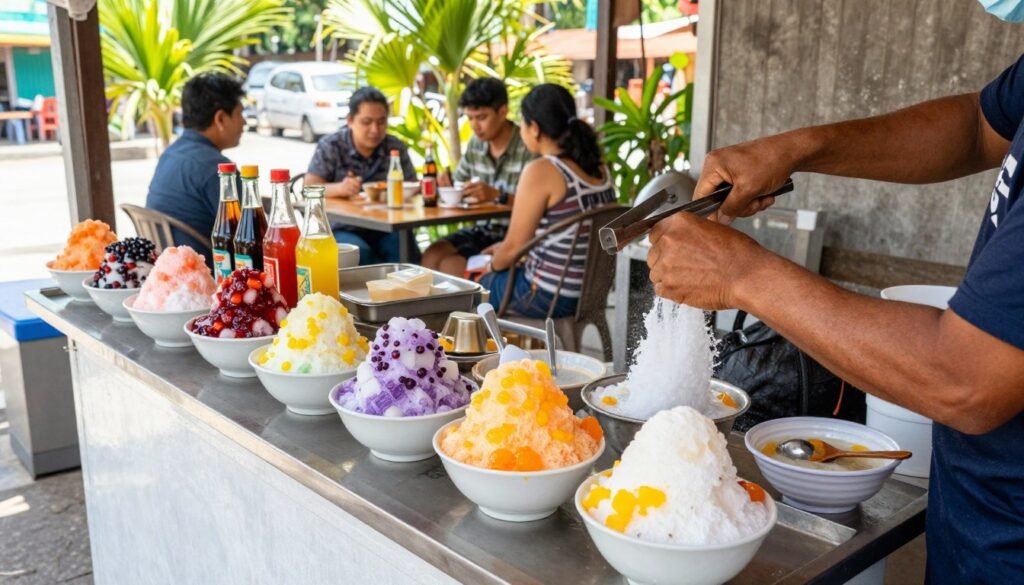
Best Ice Kacang Vendors
Penang Road Famous Teochew Chendul serves both cendol and ice kacang. They use the same quality ingredients for both desserts. The ice texture stays consistently fine.
Location: Penang Road (near Komtar)
Hours: 12:00 PM – 6:00 PM (closed Mondays)
Kek Seng Coffee Shop offers traditional ice kacang preparation. The vendor manually shaves ice blocks. Modern machines cannot match this texture.
Location: Jalan Dato Keramat, George Town
Hours: 10:00 AM – 5:00 PM (daily)
Lor Mee: Thick Gravy Noodles
Lor mee features thick egg noodles in starchy gravy. This Hokkien dish balances savory and slightly sweet flavors. The thick sauce coats every strand.
The dish originated in Fujian, China. Hokkien communities adapted it throughout Southeast Asia. Penang’s version has local characteristics.
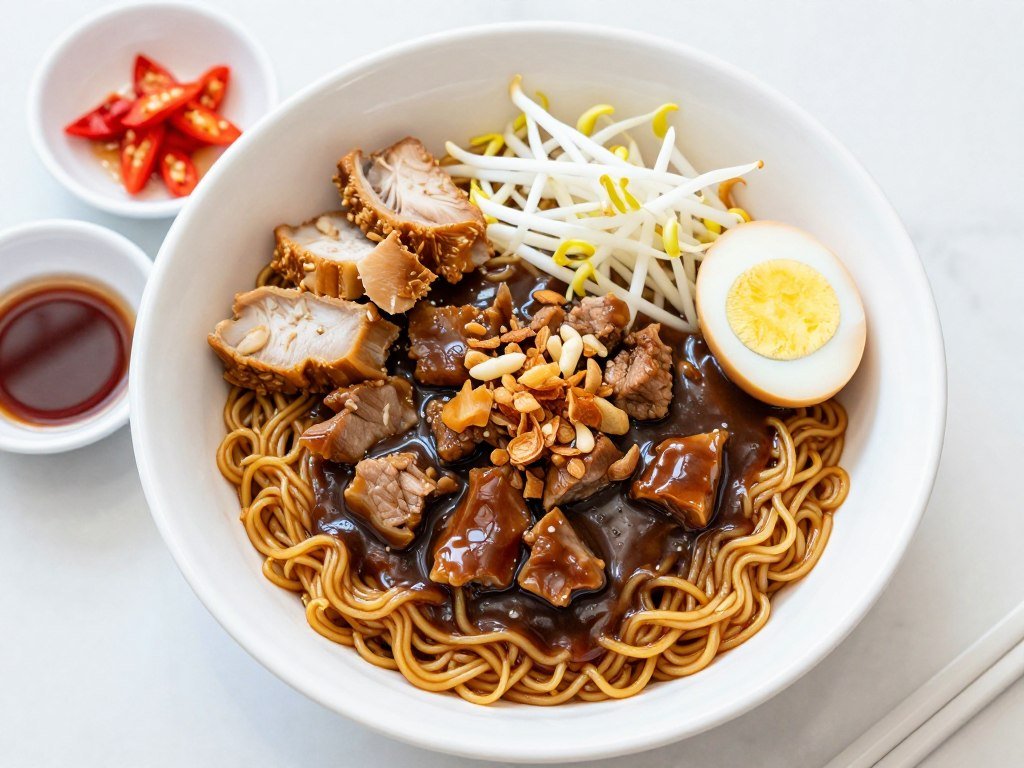
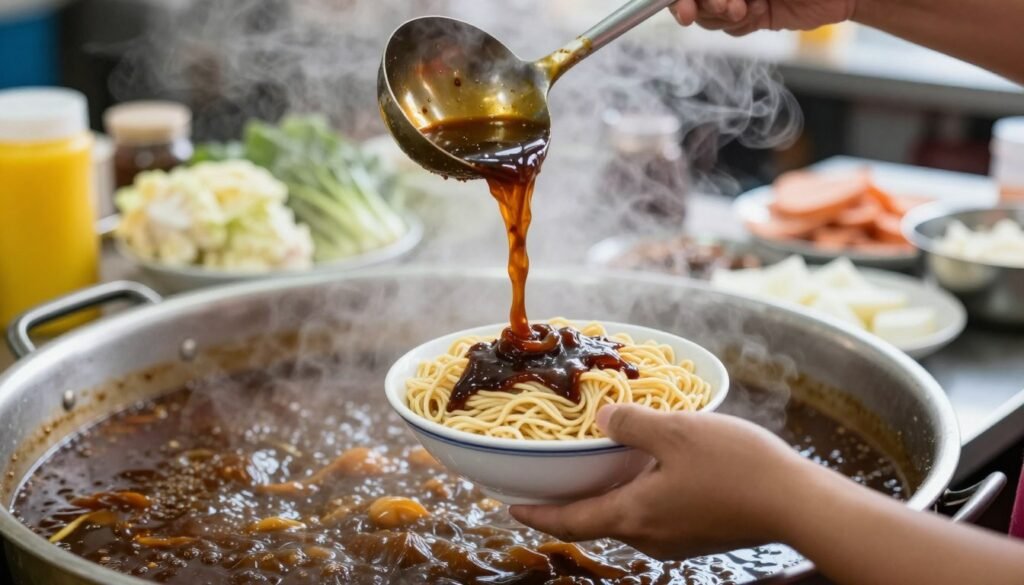
The gravy requires hours to prepare. Vendors simmer pork bones for stock. They thicken it with cornstarch. Five-spice powder provides aroma.
Lor Mee Components
- Thick yellow egg noodles with chewy texture
- Dark brown gravy thickened with cornstarch
- Braised pork belly sliced thin
- Fish cake slices adding seafood element
- Bean sprouts blanched briefly
- Hard-boiled eggs cut in half
- Fried shallots for aroma
- Black vinegar essential for balance
- Garlic and chili paste on the side
The vinegar serves crucial purpose. The gravy tastes rich and heavy. Vinegar cuts through the richness. Diners add it to taste preference.
Where to Find Lor Mee
Lam Ah Lor Mee operates at Cecil Street Market. The stall opens early for breakfast crowds. Their braised pork melts in your mouth. The gravy consistency stays perfect.
Location: Cecil Street Market, George Town
Hours: 6:30 AM – 11:30 AM (closed Thursdays)
Restoran Hainan serves lor mee all day. The restaurant atmosphere provides comfort. Portions exceed typical hawker stall sizes.
Location: Jalan Burma, George Town
Hours: 7:00 AM – 4:00 PM (daily)
Kuih Lapis: Rainbow Layer Cake
Kuih lapis showcases traditional Nyonya cake-making. This steamed layer cake requires patience and precision. Each colored layer cooks separately before adding the next.
Peranakan communities created kuih lapis. The cake appears at festivals and celebrations. Making it demonstrates cooking skill and dedication.
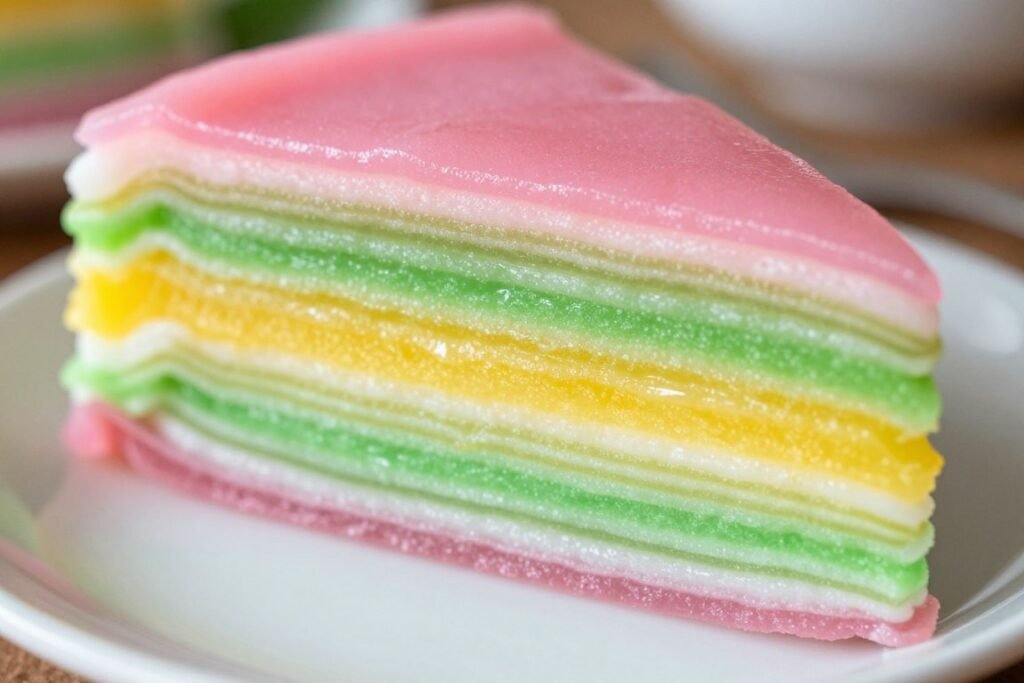
The preparation demands time. Bakers steam one thin layer. They wait for it to set. Another layer goes on top. The process repeats many times.
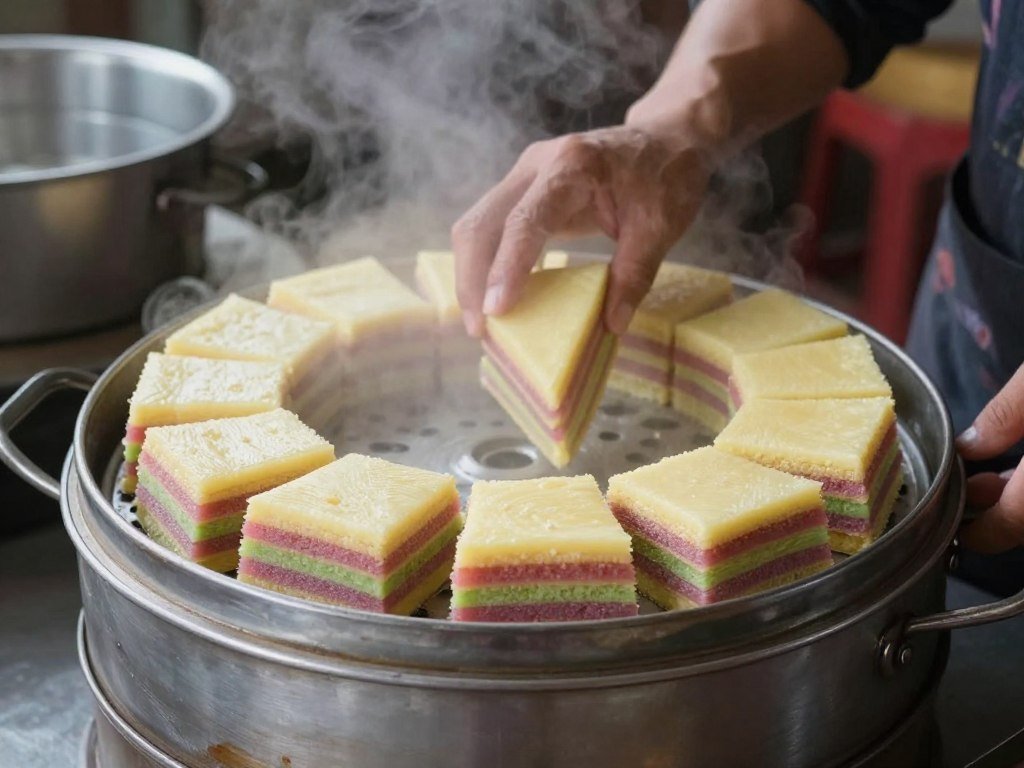
Kuih Lapis Making Process
- Batter prepared using tapioca flour, rice flour, coconut milk, and sugar
- Batter divided into portions and colored with natural food coloring
- First layer poured into steaming tray and cooked until set
- Second layer added on top of the first and steamed again
- Process repeated for each layer, typically nine to eleven layers total
- Entire cake steamed one final time after all layers complete
- Cake cooled completely before cutting into diamond shapes
- Each slice shows all colorful layers clearly
Traditional colors include pink, green, and white. Modern versions use more colors. The texture should be smooth and slightly chewy.
Where to Buy Kuih Lapis
Nyonya Breeze Desire specializes in traditional Nyonya kuih. They make kuih lapis to order. Each cake takes several hours to complete. Advance orders recommended.
Location: Jalan Burma, George Town
Hours: 10:00 AM – 6:00 PM (closed Sundays)
Sin Guat Lai Confectionery produces kuih lapis daily. The bakery opened in 1968. Their version uses natural colorings from pandan and beetroot.
Location: Jalan Burma, George Town
Hours: 9:00 AM – 6:00 PM (daily)
Essential Tips for Exploring Penang Street Food
Best Times to Visit Hawker Centres
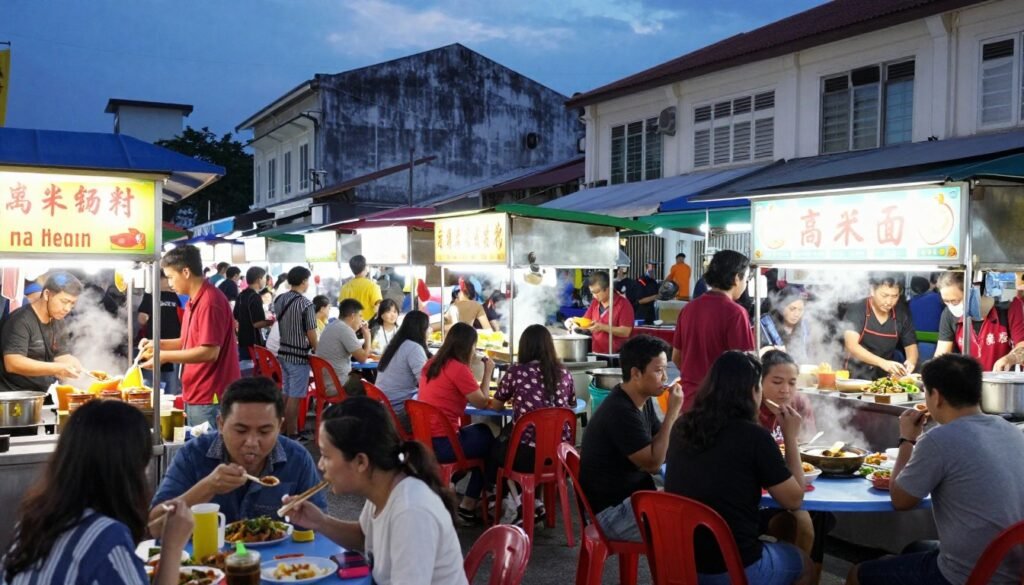
Timing affects your street food experience significantly. Different dishes appear at specific hours. Planning your visits ensures you don’t miss favorites.
- Breakfast items (6 AM – 11 AM): Char koay teow, hokkien mee, chee cheong fun, apom manis
- Lunch period (11 AM – 3 PM): Nasi kandar, curry mee, char koay kak, chicken rice
- Afternoon treats (2 PM – 6 PM): Cendol, ice kacang, rojak, tau sar pneah
- Dinner and supper (6 PM – late): Char koay teow, oh chien, lor bak, satay
Many popular stalls sell out quickly. Arriving early prevents disappointment. Some vendors close when ingredients run out, regardless of posted hours.
Understanding Queue Culture
Long queues indicate quality in Penang. Don’t avoid crowded stalls. The wait usually proves worthwhile. Locals know which vendors deserve their time.
Queue Strategy: Look for locals in line, not just tourists. Watch what regular customers order. Ask people in line for recommendations. They often share helpful tips about the best dishes.
Hawker centres operate differently than restaurants. Understanding the system makes ordering easier.
Finding Seats
Arrive and secure a table first. Place a packet of tissue on the table to reserve it. This local custom signals the table is taken. Then browse stalls and order.
Some centres assign table numbers. Remember your number when ordering. Vendors deliver food directly to your table.
Ordering Process
Point to dishes if language barriers exist. Most vendors understand basic English. Many stalls display photos of their offerings.
Pay immediately at smaller stalls. Larger operations may track orders and collect payment after eating. Watch other customers to understand each stall’s system.
Money and Payment
Street food remains remarkably affordable. Most dishes cost between RM 5-15 (approximately $1-3 USD). Carry small bills and coins.
- Cash remains king at hawker stalls – cards rarely accepted
- ATMs are widely available throughout George Town
- Keep small denominations – vendors may not have change for large bills
- Expect to spend RM 20-40 per person for a satisfying meal
Food Safety and Hygiene
Penang’s street food maintains high safety standards. The hot tropical climate requires vendors to handle food carefully. Most stalls demonstrate excellent hygiene practices.
Smart Choices: Choose busy stalls with high turnover. Fresh ingredients rotate quickly. Avoid places with food sitting out for long periods. Watch vendors prepare your dish when possible.
Tap water in Penang hotels is safe. At hawker centres, bottled water provides the safest option. Most stalls sell cold drinks.
Dietary Considerations
Penang accommodates various dietary needs. Communication helps ensure vendors understand requirements.
- Vegetarian options available at Indian Muslim and Chinese stalls
- Muslim travelers find extensive halal food throughout the city
- Pork appears in many Chinese dishes – ask if uncertain
- Spice levels vary – request less chili if sensitive to heat
- Many vendors speak limited English but understand dietary terms
Weather Considerations
Penang’s tropical climate affects street food timing. Rain can disrupt open-air hawker centres. Heat and humidity remain constant.
Indoor hawker centres provide weather protection. Outdoor venues offer authentic atmosphere but depend on weather. Evening brings slightly cooler temperatures for outdoor dining.
Guide to Penang’s Major Hawker Centres and Food Streets
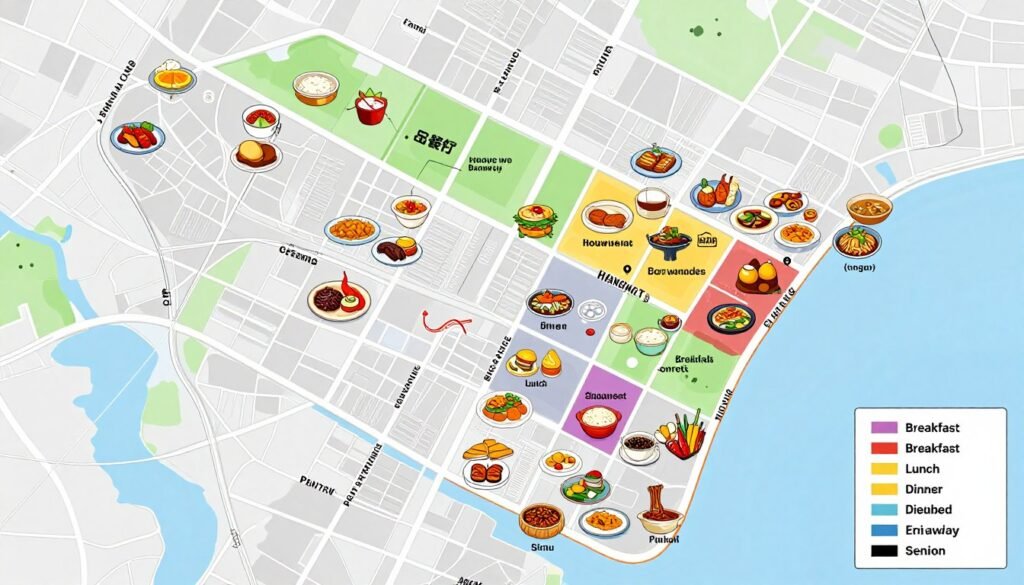
Penang concentrates street food in specific locations. These hawker centres and food streets offer multiple vendors in one place. Visiting these areas maximizes your food adventure efficiency.
Gurney Drive Hawker Centre
This waterfront hawker centre ranks among Penang’s most famous. The location offers sea breezes and sunset views. Over eighty stalls serve diverse dishes.
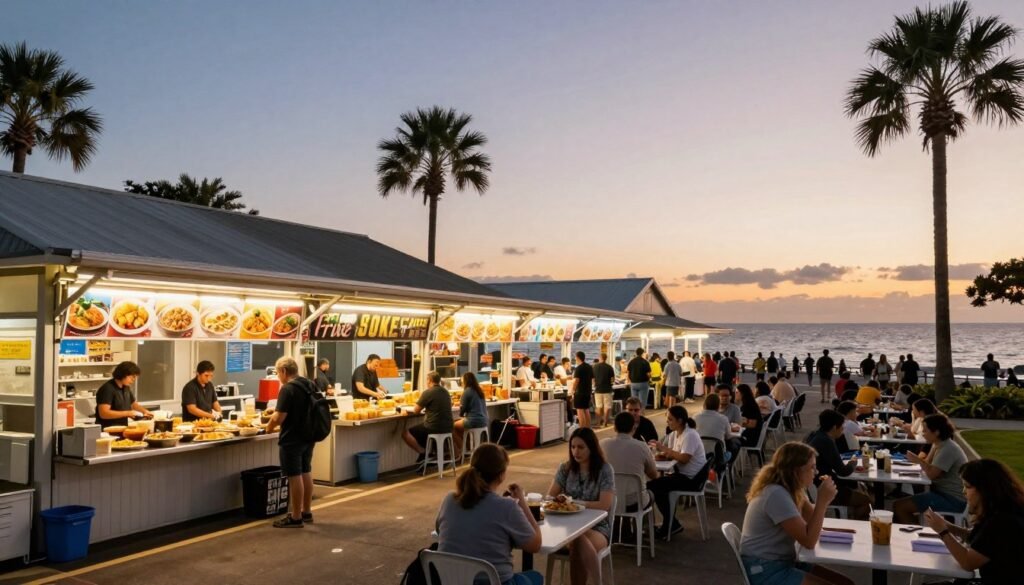
The centre operates from late afternoon into the night. Weekend crowds peak between 7 PM and 9 PM. Weekday evenings prove less busy.
Location: Gurney Drive, George Town
Hours: 6:00 PM – 12:00 AM (daily)
Specialties: Char koay teow, oyster omelette, satay, rojak, ice kacang
New Lane (Lorong Baru)
This narrow street transforms into food paradise each evening. Vendors set up temporary stalls along both sides. The intimate setting creates lively atmosphere.
New Lane specializes in Chinese hawker food. Multiple char koay teow vendors compete here. The quality stays uniformly high due to competition.
Location: Lorong Baru, George Town
Hours: 6:00 PM – 1:00 AM (daily)
Specialties: Char koay teow, oyster omelette, fried chicken wings, beer
Cecil Street Market (Pulau Tikus Market)
This morning market serves breakfast crowds. The hawker section operates inside the market building. Local residents dominate the clientele.
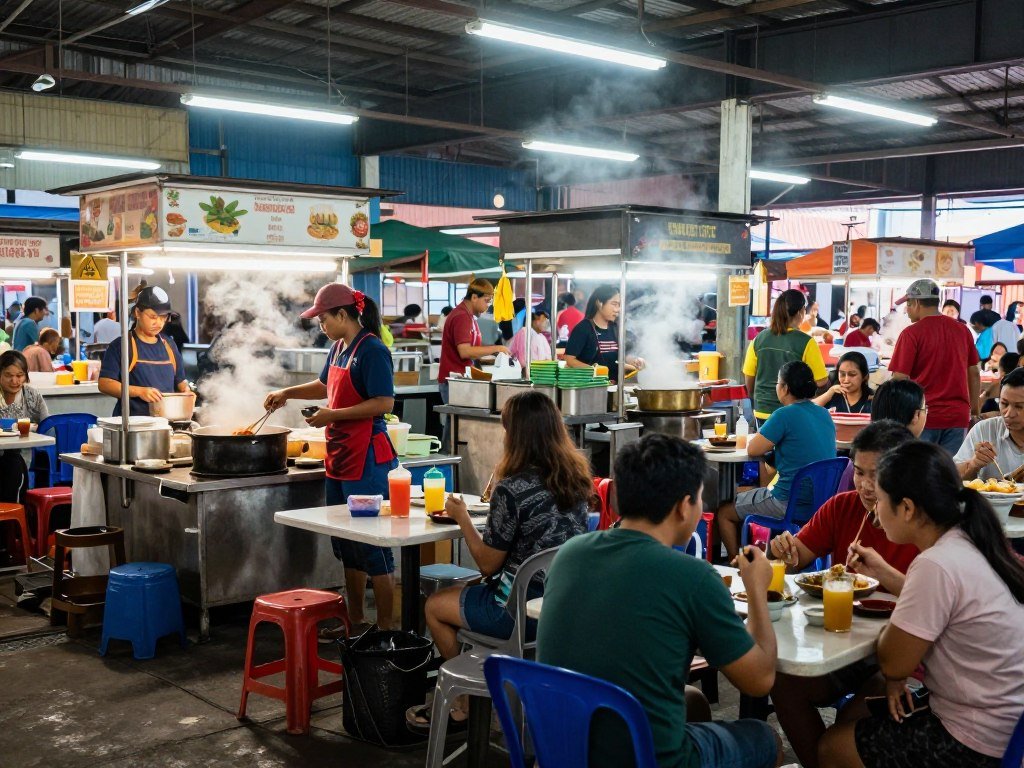
The market atmosphere feels authentically local. Few tourists venture here. Vendors focus on traditional breakfast dishes.
Location: Jalan Pasar, Pulau Tikus
Hours: 6:00 AM – 2:00 PM (daily)
Specialties: Char koay kak, chee cheong fun, curry mee, hokkien mee, apom
Kimberly Street
This street operates during dinner hours only. The limited operating time creates urgency. Stalls here have operated for decades.
The narrow street fills completely with tables and stalls. Traffic closes during operating hours. The crowded conditions add to the authentic experience.
Location: Kimberly Street, George Town
Hours: 4:00 PM – 9:00 PM (various closing days)
Specialties: Lor bak, rojak, duck egg koay teow, popiah
Gurney Drive Hawker Centre – Penang’s famous waterfront food destination
Ready to Taste Authentic Penang?
Stop planning and start eating. Our expert guides take you beyond the tourist spots to hidden gems where locals eat daily. We handle the language, navigation, and insider knowledge while you focus on the incredible food. Small groups ensure personalized attention and the ability to ask questions.
What’s Included:
- Expert local food guide
- 8-10 different hawker dishes
- Skip the lines at popular stalls
- Cultural and historical context
- Small group (max 8 people)
- Hotel pickup available
Tour Options:
- Morning Breakfast Tour (3 hours)
- Evening Street Food Tour (3.5 hours)
- Full Day Food Adventure (6 hours)
- Private Custom Tours Available
Your Penang Street Food Journey Begins
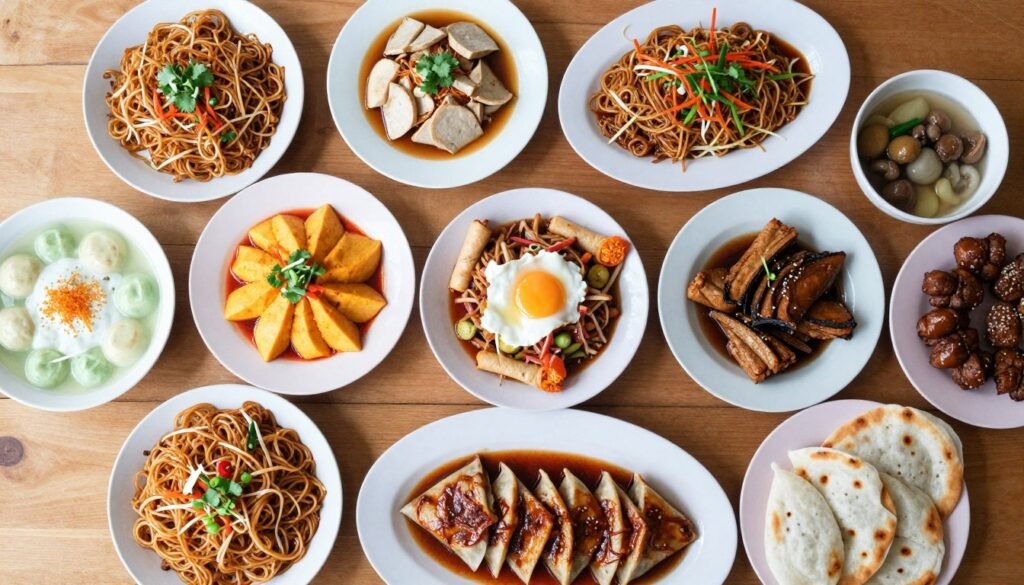
Penang’s street food scene offers endless discovery. These twenty dishes represent essential experiences. Each vendor brings unique touches to traditional recipes.
The hawker culture here thrives on dedication and skill. Many vendors spend entire careers perfecting single dishes. Their expertise creates memorable flavors impossible to replicate elsewhere.
Street food provides the most authentic way to experience Penang. The informal setting encourages interaction. Vendors share stories while preparing your meal. Fellow diners offer recommendations and tips.
Start your exploration with familiar flavors. Char koay teow and chicken rice provide comfortable entry points. Gradually venture toward more adventurous dishes like assam laksa and lor bak.
The best discoveries often come from following local crowds. Watch where residents eat. Long queues signal quality worth your wait. Don’t hesitate to ask strangers for recommendations.
Penang’s food culture continues evolving while respecting tradition. New vendors emerge alongside established family businesses. The city maintains its culinary heritage while embracing innovation.
Your taste preferences will guide your journey. Some travelers prefer savory breakfast noodles. Others chase sweet desserts. Penang satisfies all cravings with equal excellence.
Return visits reveal new favorites. Each trip uncovers different stalls and specialties. The food landscape changes constantly while core traditions endure.
Weather, timing, and luck all affect your experience. Some days bring perfect meals at every stop. Other times require flexibility and patience. Both scenarios teach you about Penang’s food culture.
This guide provides your starting point. The real education happens through tasting and exploring. Trust your instincts, follow your appetite, and embrace the adventure that awaits at every hawker stall in George Town.