

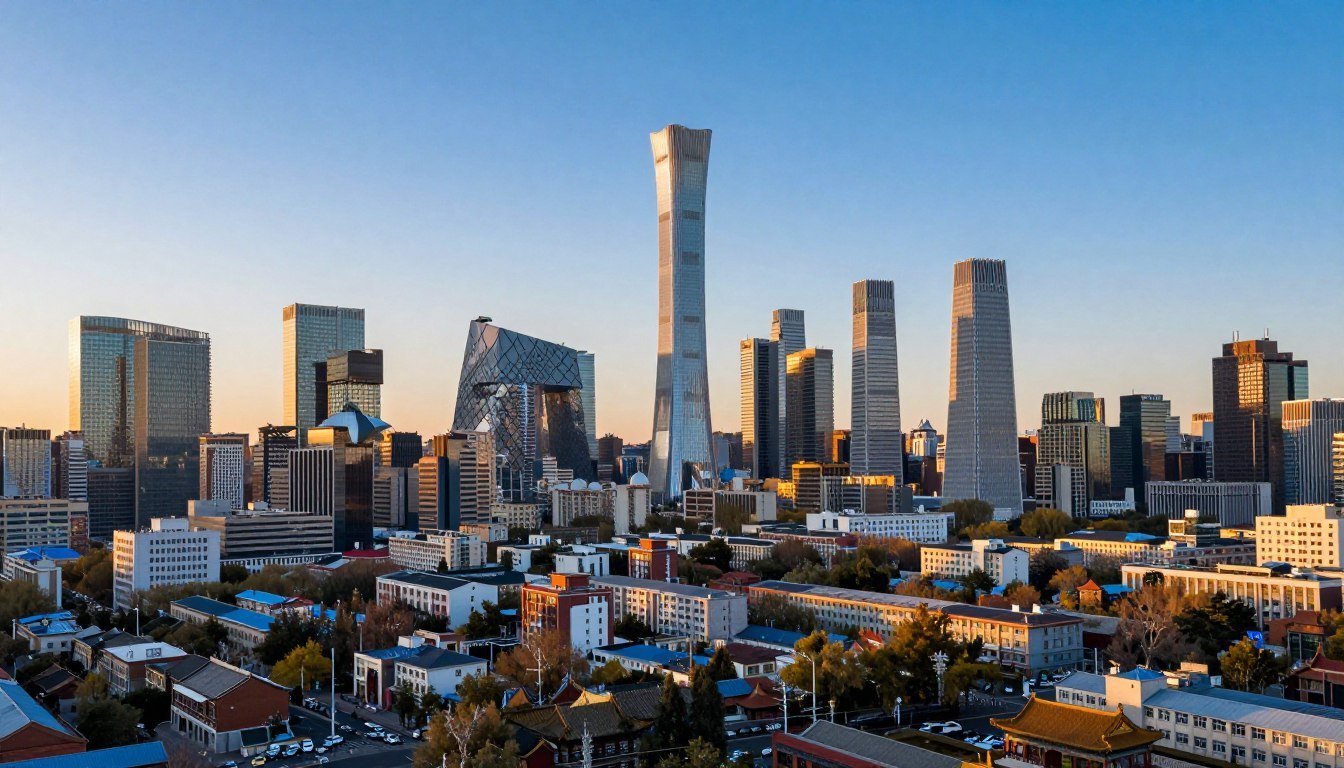
As the capital of the People’s Republic of China for over 800 years, Beijing preserves layers of history within its boundaries. The city serves as the political, cultural, and educational heart of the country. Millions of travellers visit each year to experience its UNESCO World Heritage sites, world-class museums, and vibrant food culture.
Planning a trip to China can be an exhilarating experience, but navigating its massive capital requires a solid plan. Welcome to the ultimate Beijing travel guide, your complete blueprint to exploring historic palaces, modern marvels, and hidden local alleyways without the stress.
Start Your Beijing Journey Right
Download our free Beijing Travel Checklist packed with essential tips, must-see attractions, and insider recommendations. This comprehensive PDF guide helps you plan the perfect trip to China’s capital city.
Understanding Beijing: History and Culture of China’s Ancient Capital
Beijing’s story spans three millennia. Archaeological evidence shows human settlement in this area dating back to prehistoric times. The city emerged as a political center during the Warring States period. Its strategic location near the northern border made it invaluable for defense and trade.
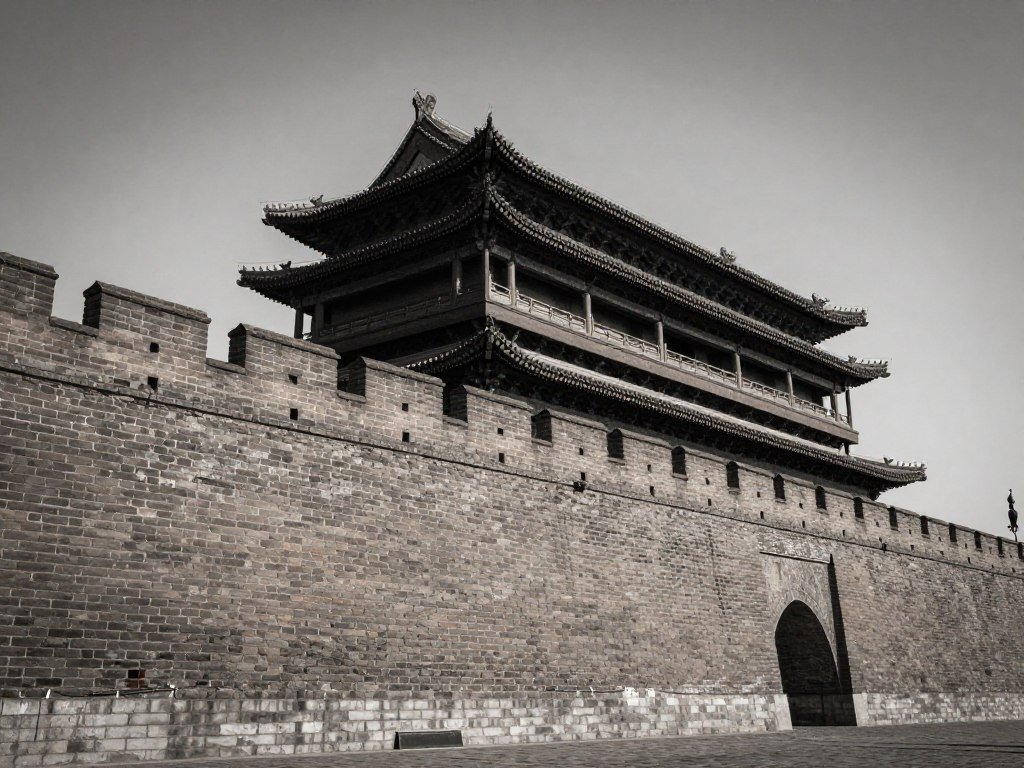
The Imperial Legacy of Beijing
The Ming Dynasty transformed Beijing into China’s capital in 1421. Emperor Yongle moved the imperial court from Nanjing, initiating massive construction projects. The Forbidden City rose as the emperor’s palace complex. The Temple of Heaven provided a sacred space for royal ceremonies.
During the Ming and Qing dynasties, Beijing flourished as the empire’s center. Artisans, scholars, and merchants flocked to the city. The imperial court patronized arts and culture. Architecture reached new heights of sophistication. The city’s layout reflected cosmic principles and hierarchical order.
Key Historical Periods
- 1045 BC: First settlement as Ji, capital of Yan state
- 1272 AD: Kublai Khan establishes Dadu (Great Capital)
- 1421 AD: Ming Emperor Yongle moves capital to Beijing
- 1644-1911: Qing Dynasty continues imperial rule from Beijing
- 1949: Becomes capital of People’s Republic of China
- 2008: Hosts Summer Olympic Games
Modern Beijing’s Transformation
The 20th century brought dramatic changes to Beijing. The fall of the Qing Dynasty in 1911 ended imperial rule. The city became capital of the People’s Republic of China in 1949 under Chairman Mao. Massive urban development followed, transforming the medieval city into a modern metropolis.
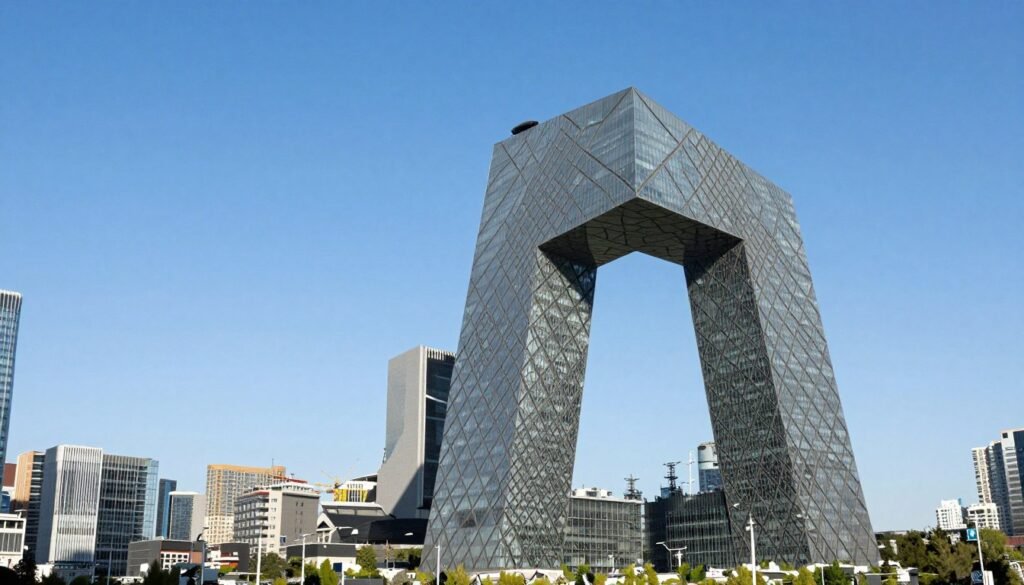
Recent decades have seen explosive growth. Beijing expanded far beyond its historic walls. New subway lines connect sprawling districts. Skyscrapers rise alongside ancient temples. The 2008 Olympics accelerated modernization, adding world-class infrastructure and architectural landmarks.
Beijing’s Cultural Significance Today
Beijing remains China’s cultural heartbeat. The city houses the country’s most important museums, universities, and research institutions. Traditional arts thrive alongside contemporary creativity. Peking Opera, calligraphy, and tea ceremony continue ancient traditions. Meanwhile, cutting-edge galleries and theaters showcase modern innovation.
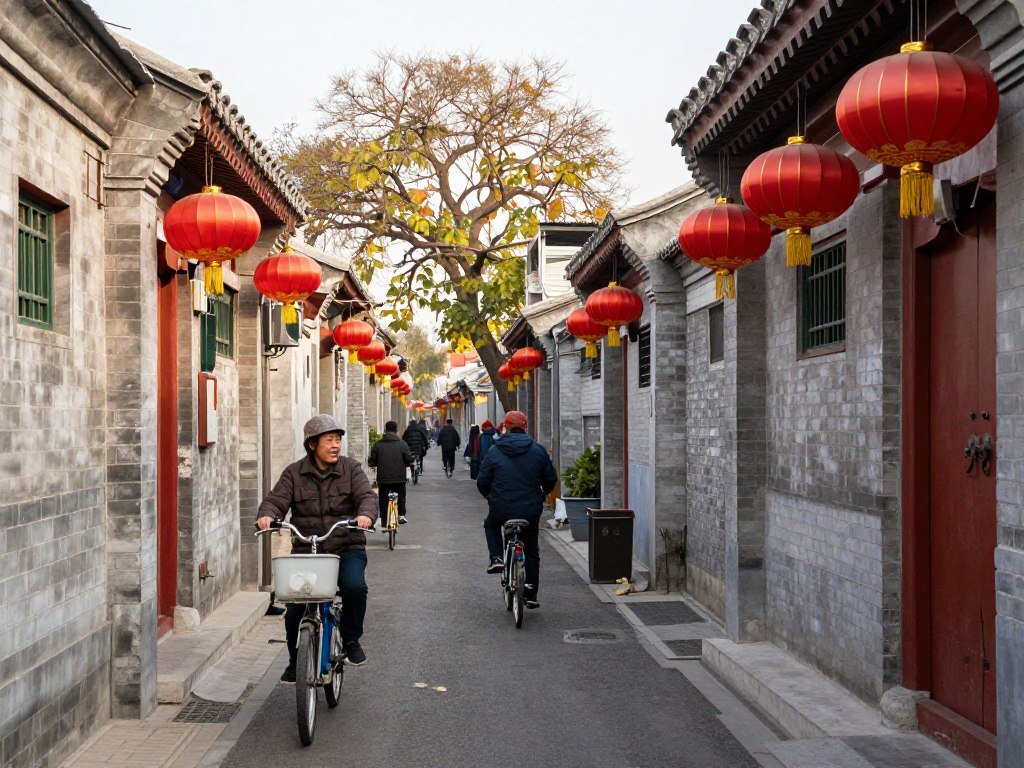
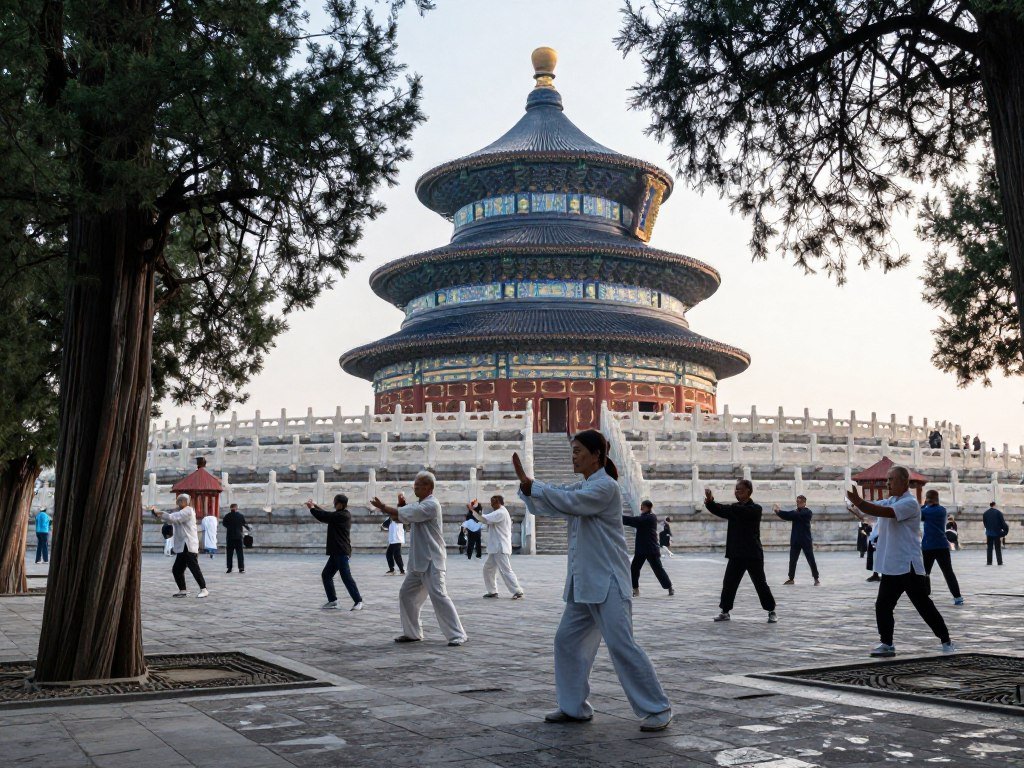
The city’s residents blend old and new in daily life. Morning tai chi sessions fill parks before the workday begins. Historic hutong neighborhoods preserve traditional courtyard homes. Local markets sell fresh produce using methods unchanged for generations. This cultural continuity makes Beijing unique among world capitals.
Best Time to Visit Beijing: Weather, Seasons, and Travel Planning
Beijing experiences four distinct seasons. Each period offers unique advantages for visitors. Understanding the climate helps you choose the ideal time for your trip. Weather conditions significantly impact your sightseeing experience and comfort level.
Spring in Beijing (March to May)
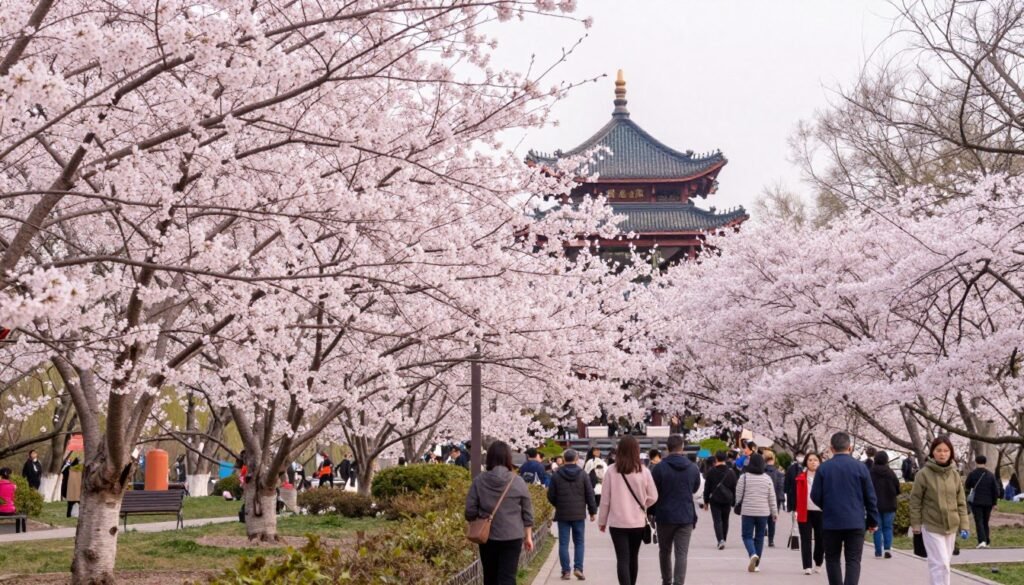
Spring brings mild temperatures and blooming flowers to Beijing. March can still feel chilly, with temperatures ranging from 4°C to 13°C. April and May warm up considerably, reaching comfortable 15°C to 26°C. The city’s parks burst with color as plum blossoms, cherry blossoms, and peonies bloom.
This season offers excellent conditions for outdoor exploration. Crowds remain moderate compared to summer peak season. However, spring also brings occasional sandstorms from the Gobi Desert. These typically last only a day or two but can reduce visibility and air quality.
Summer in Beijing (June to August)
Summer represents the peak tourist season in Beijing. Temperatures soar to 30°C or higher, often reaching 35°C in July and August. High humidity makes the heat feel more intense. Afternoon thunderstorms provide brief relief but also occasional disruption to outdoor plans.
Despite the heat, summer offers long daylight hours for sightseeing. The city vibrates with energy during these months. Major attractions see their largest crowds. Book hotels and tours well in advance during this period. Early morning visits to outdoor sites help you beat both heat and crowds.
Summer Advantages
- Longest daylight hours for sightseeing
- Vibrant atmosphere and events
- Lush greenery in parks and gardens
- Best time for Great Wall hiking
Summer Challenges
- Highest temperatures and humidity
- Largest tourist crowds
- Higher accommodation prices
- Occasional heavy rainfall
Autumn in Beijing (September to November)
Many travelers consider autumn the best time to visit Beijing. September through early November offers perfect weather conditions. Temperatures range from comfortable 15°C to 25°C. Humidity drops significantly after summer. Clear blue skies become more common as air quality improves.
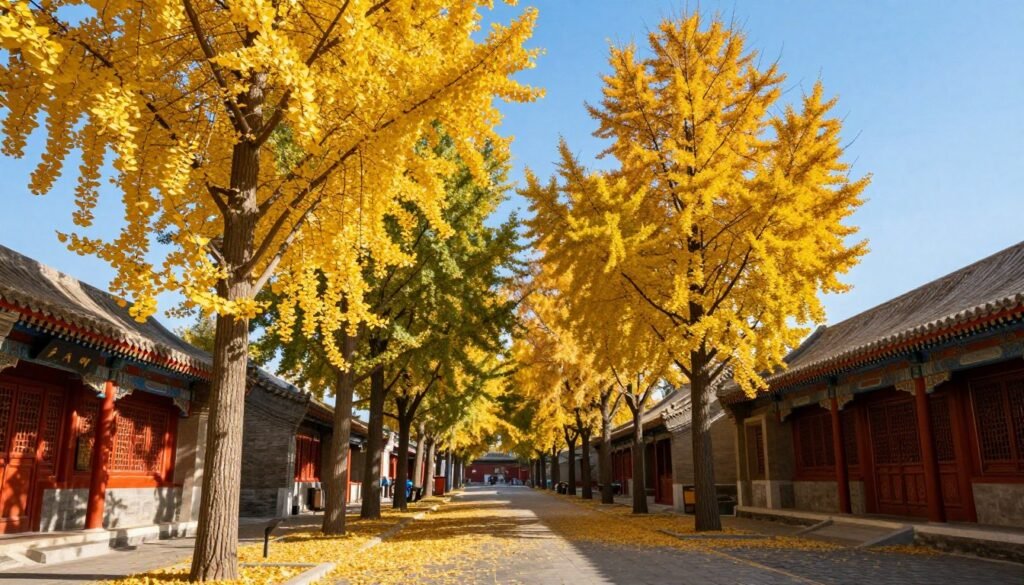
The city’s trees display spectacular fall colors. Golden ginkgo trees line many streets. Red leaves adorn the hills near the Great Wall. This season provides ideal conditions for photography. Crowds thin out after summer, making attractions more enjoyable. Hotel rates become more reasonable compared to peak season.
Winter in Beijing (December to February)
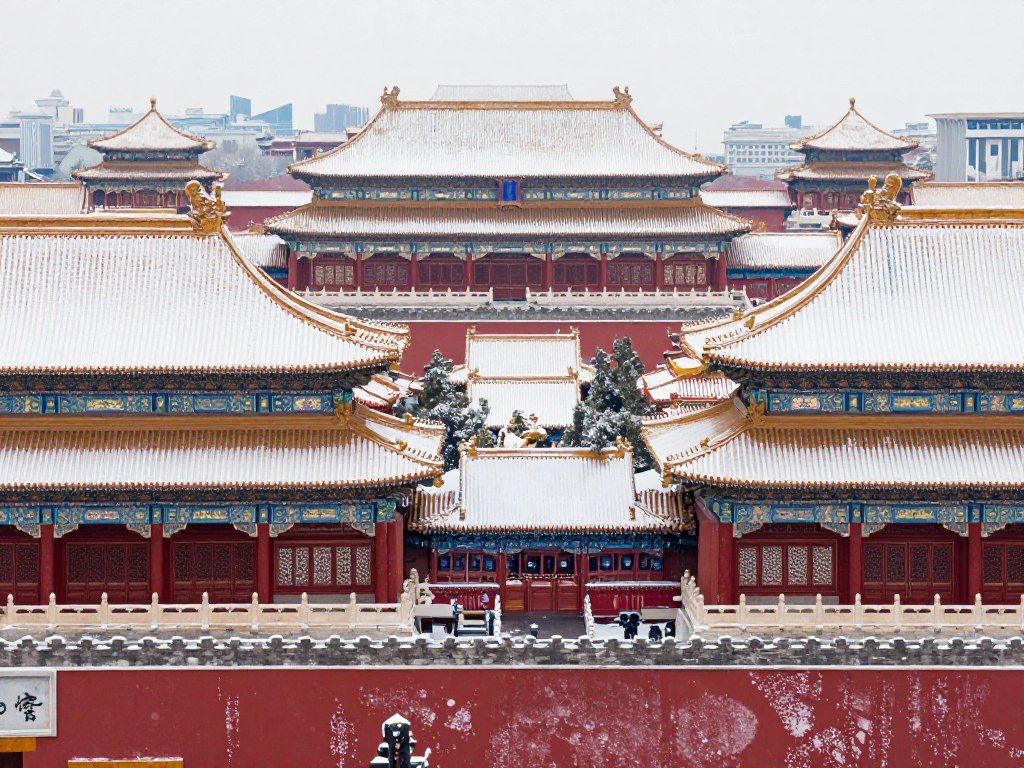
Winter brings cold, dry weather to Beijing. Temperatures often drop below freezing, ranging from -10°C to 5°C. Snow falls occasionally but rarely accumulates heavily. The low season means fewer tourists and better hotel deals. Indoor attractions like museums and temples become particularly appealing.
Winter offers unique experiences unavailable in other seasons. Ice skating on frozen lakes provides authentic local recreation. The city’s heating system keeps indoor spaces comfortably warm. Chinese New Year celebrations (usually late January or February) create festive atmosphere throughout Beijing. Bundle up properly and winter can be a rewarding time to explore.
| Season | Months | Temperature Range | Crowd Level | Best For |
| Spring | March – May | 4°C to 26°C | Moderate | Flowers, comfortable weather |
| Summer | June – August | 20°C to 35°C | High | Long days, festivals |
| Autumn | September – November | 5°C to 25°C | Moderate | Perfect weather, colors |
| Winter | December – February | -10°C to 5°C | Low | Low prices, festivals |
Plan Your Perfect Beijing Visit
Choosing the right time to visit Beijing makes all the difference. Our travel specialists can help you plan your trip based on your preferences, weather considerations, and special events. Get personalized recommendations for your ideal Beijing experience.
Top Attractions in Beijing: Must-See Sites and Landmarks
Beijing contains some of humanity’s most impressive architectural and cultural achievements. The city’s attractions span centuries of Chinese civilization. From imperial palaces to sacred temples, each site tells part of Beijing’s magnificent story. These landmarks define any visit to the capital of the People’s Republic of China.
The Forbidden City: Imperial Palace Complex
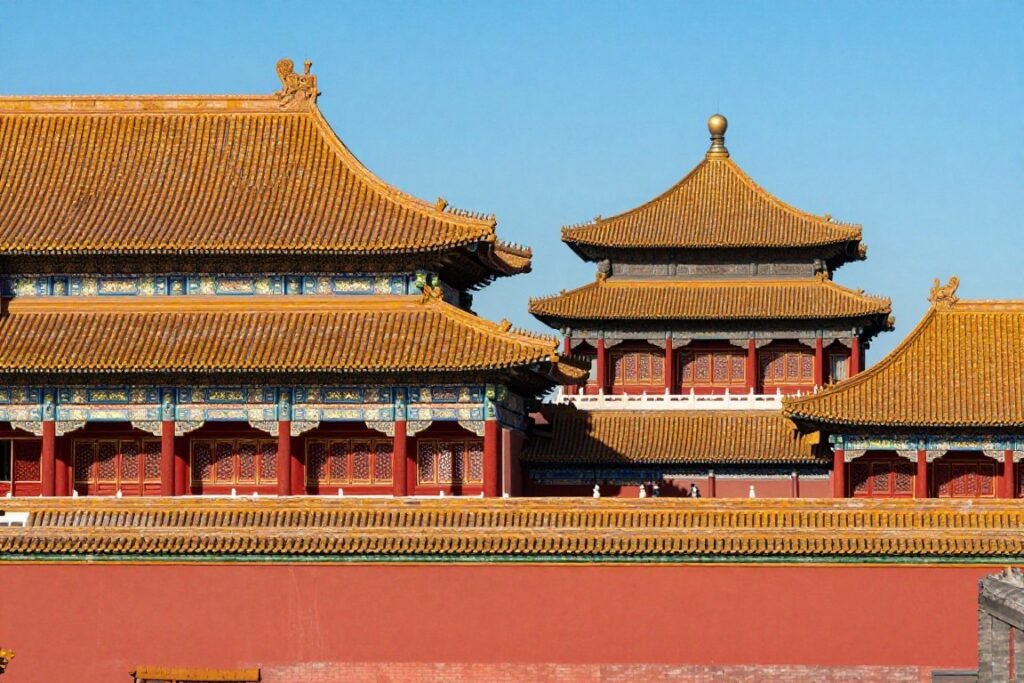
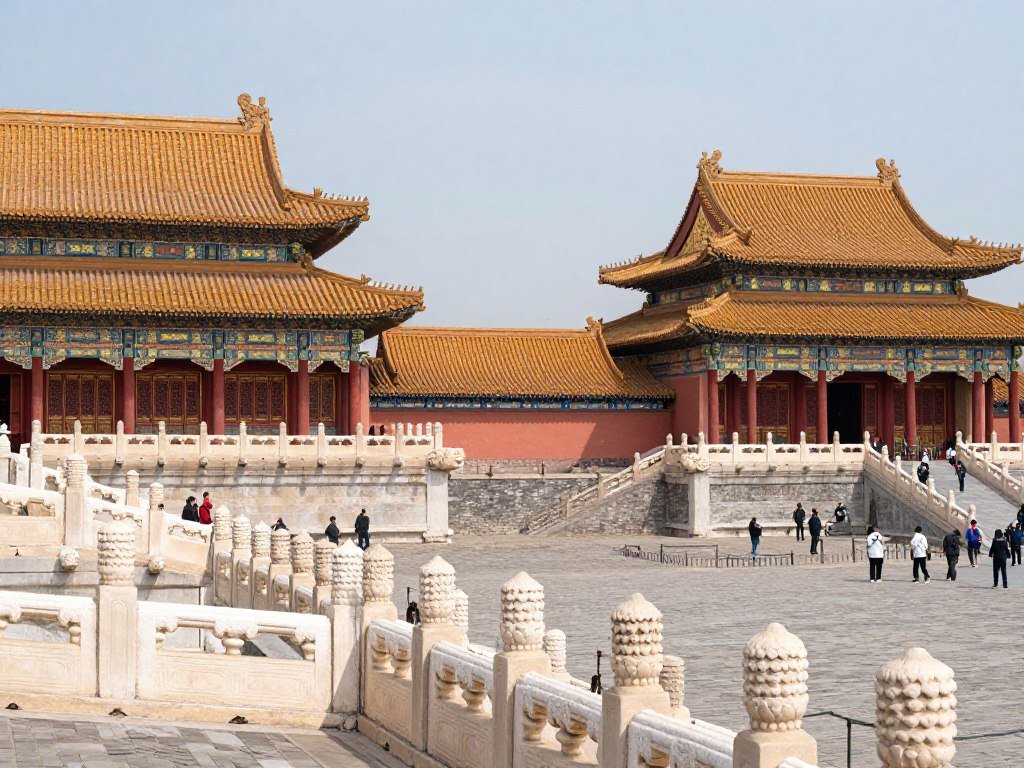
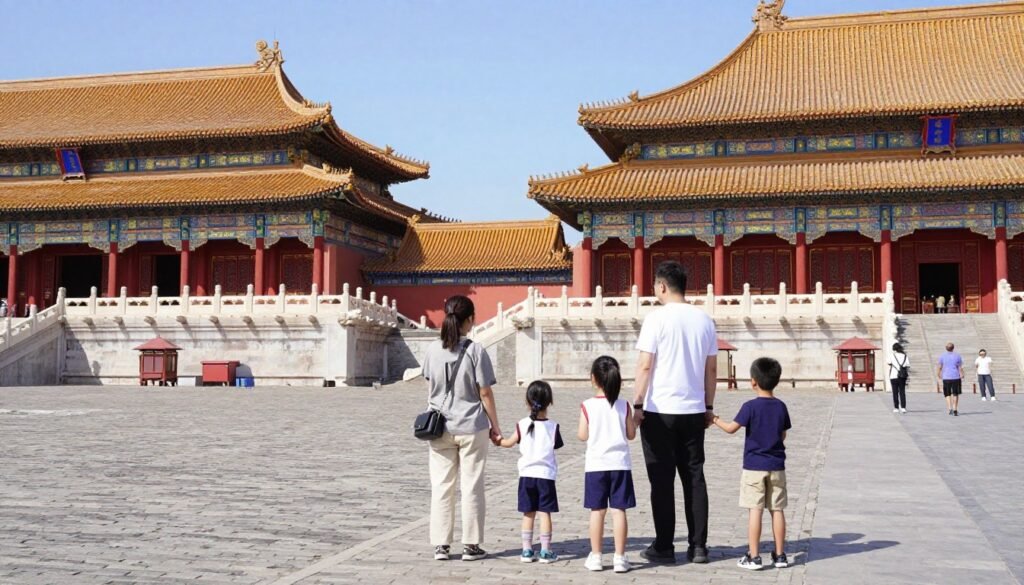
The Forbidden City stands as Beijing’s most iconic attraction. This massive palace complex served as home to 24 emperors during the Ming Dynasty and Qing Dynasty. Construction began in 1406 and took 14 years to complete. The site covers 180 acres and contains 980 surviving buildings with approximately 8,700 rooms.
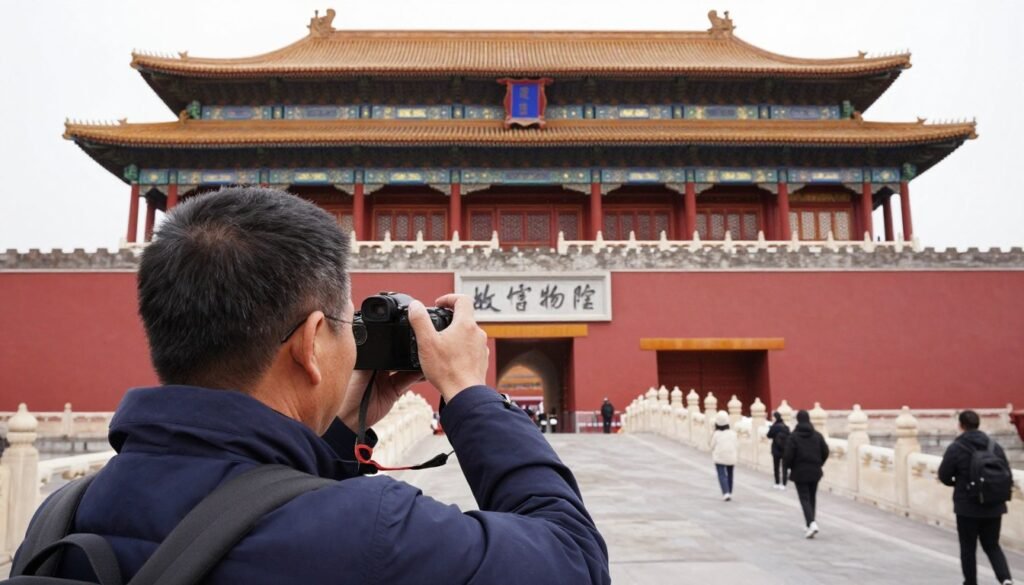
Visitors enter through the imposing Meridian Gate. The complex divides into Outer Court and Inner Court sections. The Outer Court housed state ceremonies and official functions. The Hall of Supreme Harmony, the largest building, hosted coronations and imperial weddings. The Inner Court contained the emperor’s private quarters and gardens.
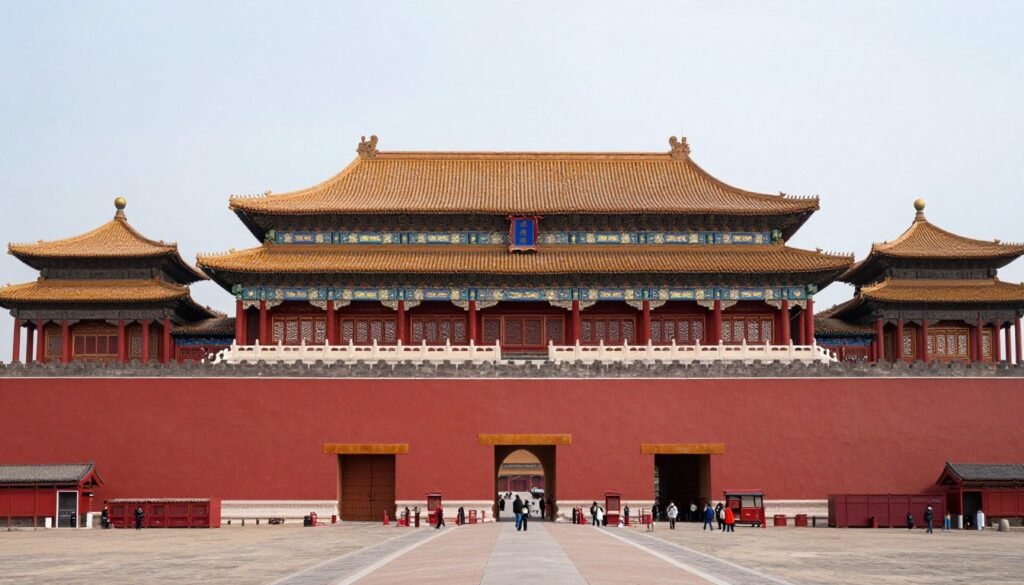
Today the Forbidden City operates as the Palace Museum. Over 1.8 million artifacts fill its collections. Jade carvings, bronze vessels, ceramics, paintings, and calligraphy represent China’s finest artistic achievements. Allow at least half a day to explore this vast complex properly. Arrive early to avoid the largest crowds that gather after 10 AM.
Forbidden City Visitor Information
- Opening Hours: 8:30 AM – 5:00 PM (April-October), 8:30 AM – 4:30 PM (November-March)
- Closed: Mondays (except during peak seasons and holidays)
- Ticket Price: ¥60 (April-October), ¥40 (November-March)
- Recommended Visit Duration: 3-4 hours minimum
- Book Tickets Online: Required during peak season, limited daily capacity
Tiananmen Square: The Heart of Beijing
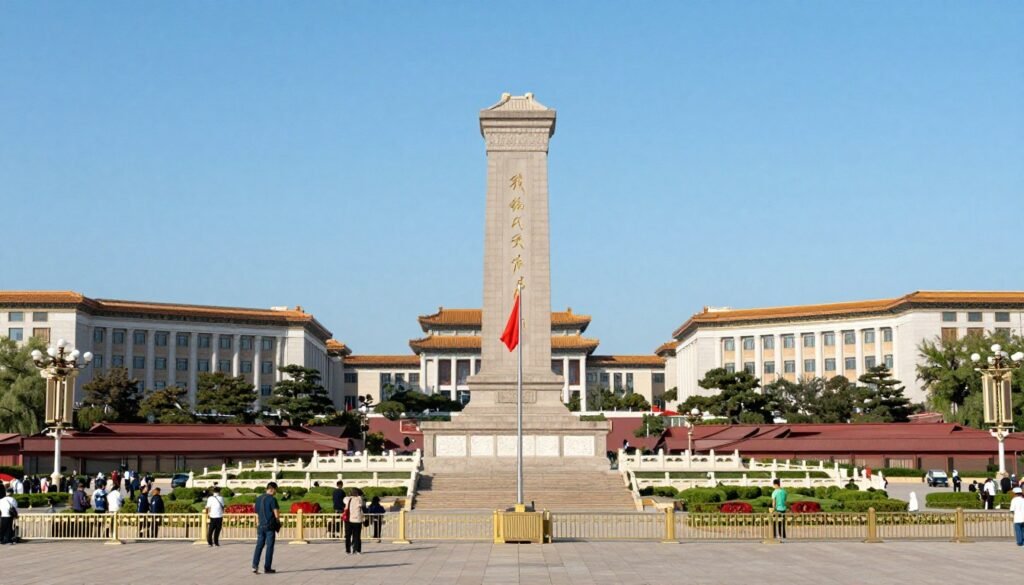
Tiananmen Square occupies the geographic and symbolic heart of Beijing. This vast public plaza stretches across 109 acres, making it one of the world’s largest public squares. The site has witnessed pivotal moments in Chinese history. Chairman Mao proclaimed the founding of the People’s Republic of China here on October 1, 1949.
Several important buildings surround the square. The Monument to the People’s Heroes stands at the center, honoring revolutionary martyrs. The Mausoleum of Chairman Mao allows visitors to pay respects to the founding father. The Great Hall of the People hosts government meetings on the western side. The National Museum of China occupies the eastern edge.
The square remains open to public 24 hours but undergoes security screening. Early morning offers the chance to witness the flag-raising ceremony performed by the honor guard. This solemn ritual attracts large crowds, especially during national holidays. The ceremony timing changes daily based on sunrise, so check current schedules.
The Great Wall of China: Ancient Wonder Near Beijing
No Beijing trip feels complete without visiting the Great Wall. Several sections lie within reach of the city. This architectural marvel stretches over 13,000 miles across northern China. The wall served as defensive fortification against invasions from northern nomadic tribes. Construction spanned over 2,000 years across multiple dynasties.
Badaling represents the most popular and accessible section. Located 43 miles from central Beijing, it features restored ramparts and watchtowers. Modern amenities include cable cars, restaurants, and souvenir shops. The site gets extremely crowded, especially on weekends and holidays. Despite the crowds, Badaling offers dramatic views and easy walking conditions.
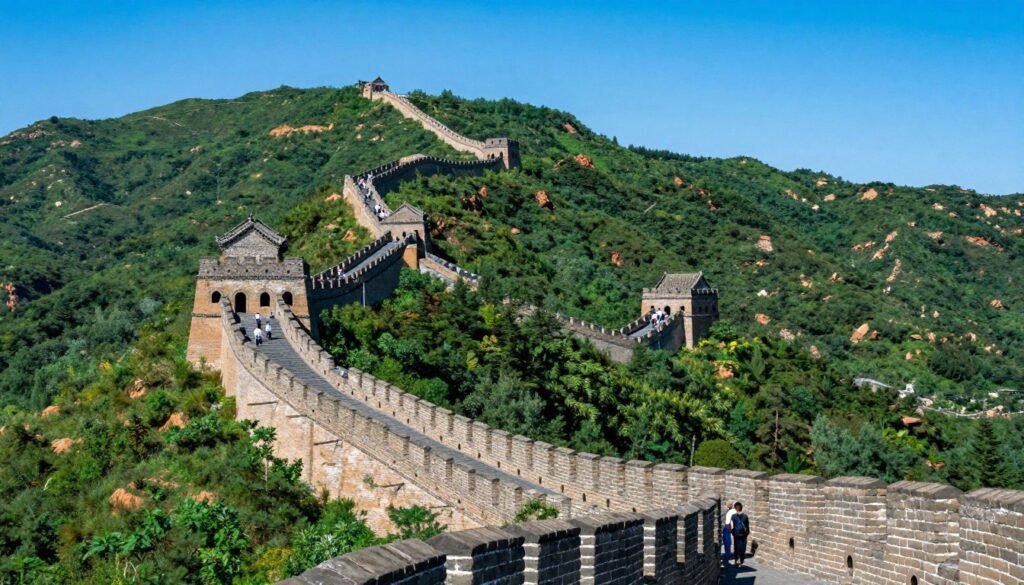
Mutianyu provides a less crowded alternative about 45 miles from Beijing. This section features impressive architecture with watchtowers every 100-200 meters. The wall winds through forested mountains offering stunning scenery. A cable car or chairlift helps visitors reach the wall. A toboggan slide provides a fun descent option after your walk.
Jinshanling and Simatai appeal to hikers seeking authentic experiences. These sections retain more original character with less restoration. The terrain challenges visitors with steeper climbs and rougher conditions. Rewards include spectacular views and fewer tourist facilities. These sections suit adventurous travelers with good fitness levels.
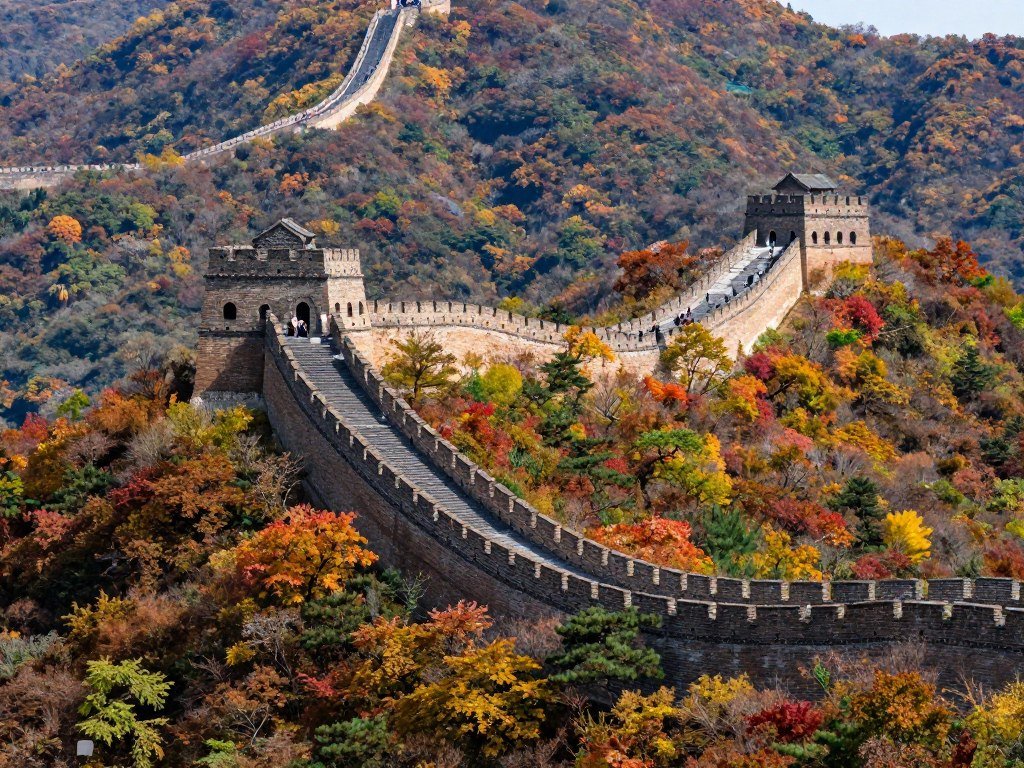
Great Wall Section Comparison
- Badaling: Most accessible, fully restored, very crowded
- Mutianyu: Less crowded, beautiful scenery, family-friendly
- Jinshanling: Partially wild, great for hiking, moderate crowds
- Simatai: Most authentic, steep terrain, night viewing available
- Huanghuacheng: Lakeside setting, mixed restored/wild sections
Temple of Heaven: Sacred Imperial Site
The Temple of Heaven complex showcases Ming Dynasty architecture at its finest. Emperors conducted annual ceremonies here to pray for good harvests. The site covers 670 acres, making it larger than the Forbidden City. Completed in 1420, the temple represents a masterpiece of Chinese religious architecture and landscape design.
The Hall of Prayer for Good Harvests serves as the complex’s centerpiece. This circular building with its triple-gabled roof has become an iconic Beijing symbol. The structure contains no beams or nails, relying instead on interlocking wooden brackets. Twenty-eight massive pillars support the roof, representing astronomical concepts in their arrangement.
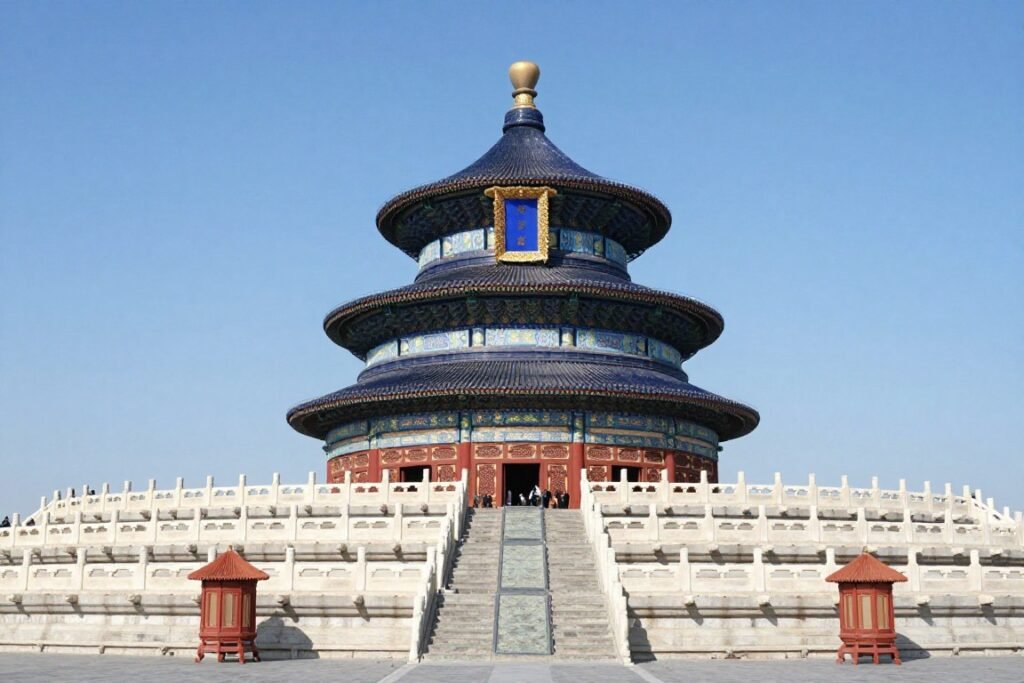
The surrounding park provides peaceful escape from urban bustle. Local residents gather here for tai chi, dancing, singing, and games. Early morning visits reveal authentic Beijing life as seniors practice traditional exercises. The park’s ancient cypress trees create serene atmosphere throughout the grounds.
Summer Palace: Imperial Garden Retreat
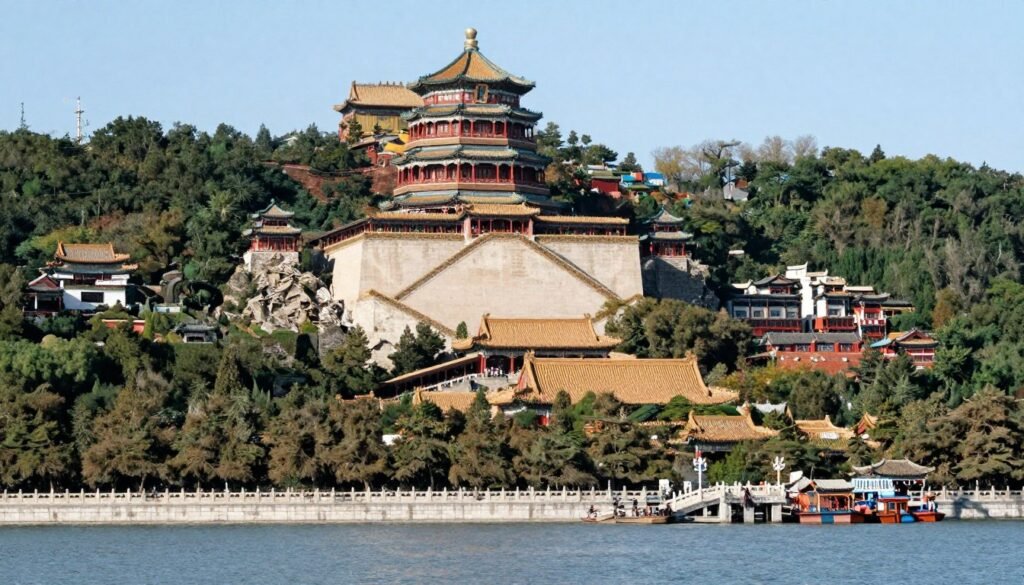
The Summer Palace offers a stunning blend of natural landscape and architectural artistry. This vast imperial garden covers 716 acres, with Kunming Lake occupying three-quarters of the area. The Qing Dynasty emperors escaped Beijing’s summer heat at this lakeside retreat. Empress Dowager Cixi expanded and renovated the complex extensively in the late 19th century.
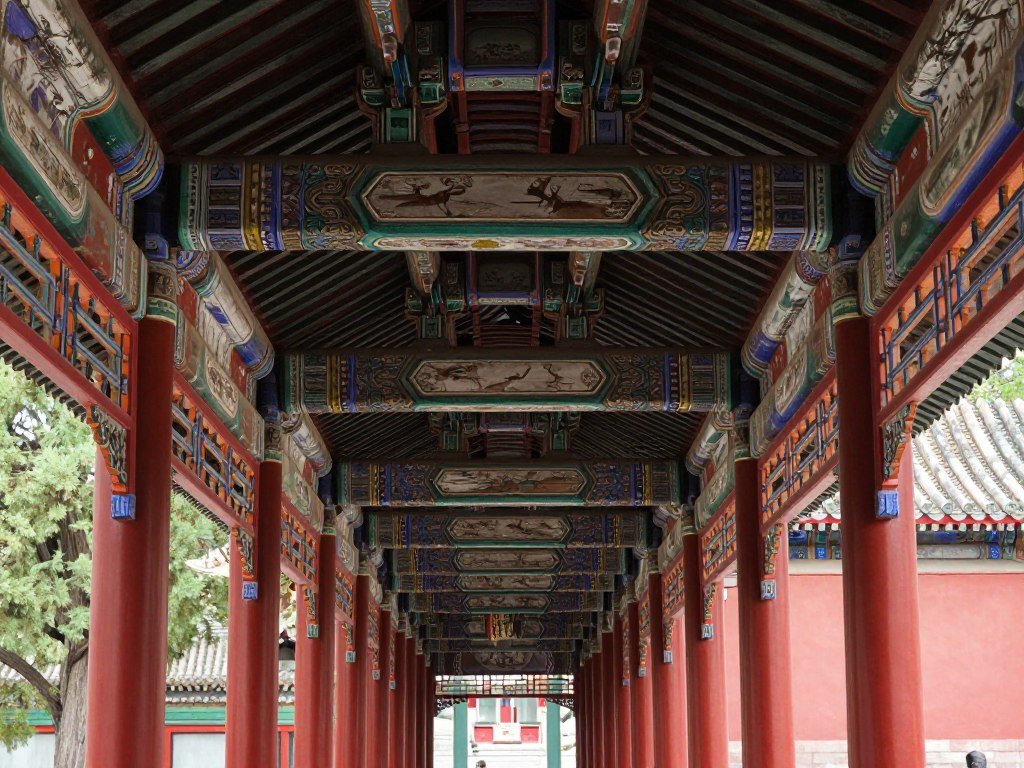
Longevity Hill rises from the northern shore, dotted with temples, pavilions, and corridors. The Tower of Buddhist Incense crowns the hilltop, offering panoramic views across the lake and gardens. The Long Corridor stretches nearly half a mile along the lake shore. This covered walkway features over 14,000 paintings depicting Chinese landscapes, legends, and historical scenes.
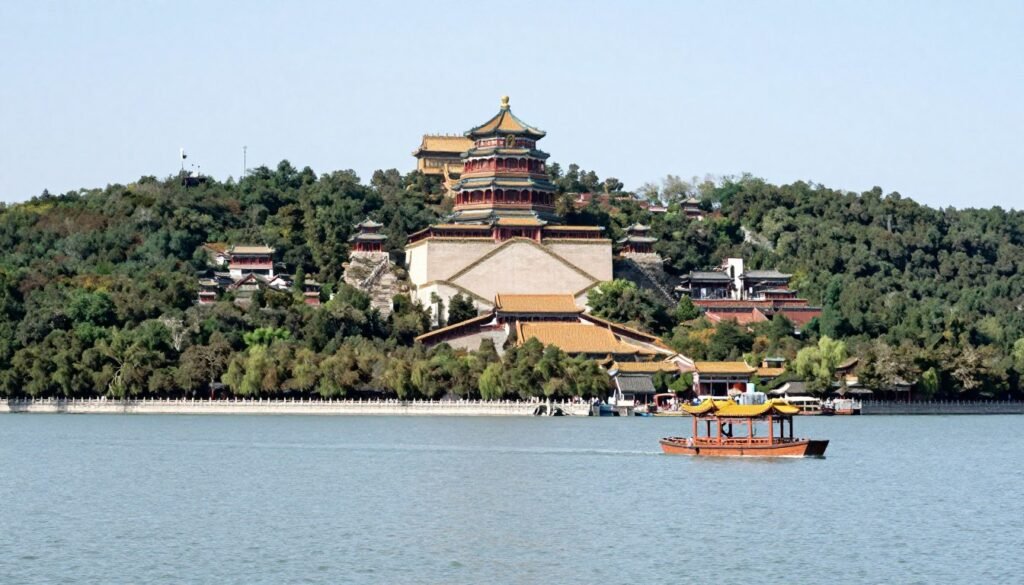
The Marble Boat sits at the lake’s edge, symbolizing Cixi’s controversial spending on the palace while China’s navy weakened. Visitors can rent paddle boats to explore the lake or take ferry rides to different parts of the complex. Spring cherry blossoms and summer lotus flowers add seasonal beauty. Winter ice skating transforms the frozen lake into a local playground.
Lama Temple: Beijing’s Largest Tibetan Buddhist Temple
The Lama Temple (Yonghe Temple) stands as one of Beijing’s most significant religious sites. Originally built as a royal residence in 1694, it converted to a Tibetan Buddhist monastery in 1744. The temple remains an active place of worship, with monks conducting daily rituals. Fragrant incense smoke fills the air as devotees pray before elaborate altars.
Five main halls stretch along the central axis. Each building houses impressive Buddhist statues and religious artifacts. The Pavilion of Ten Thousand Happinesses contains an 85-foot tall statue of Maitreya Buddha carved from a single sandalwood tree. This remarkable sculpture earned recognition in the Guinness Book of World Records.
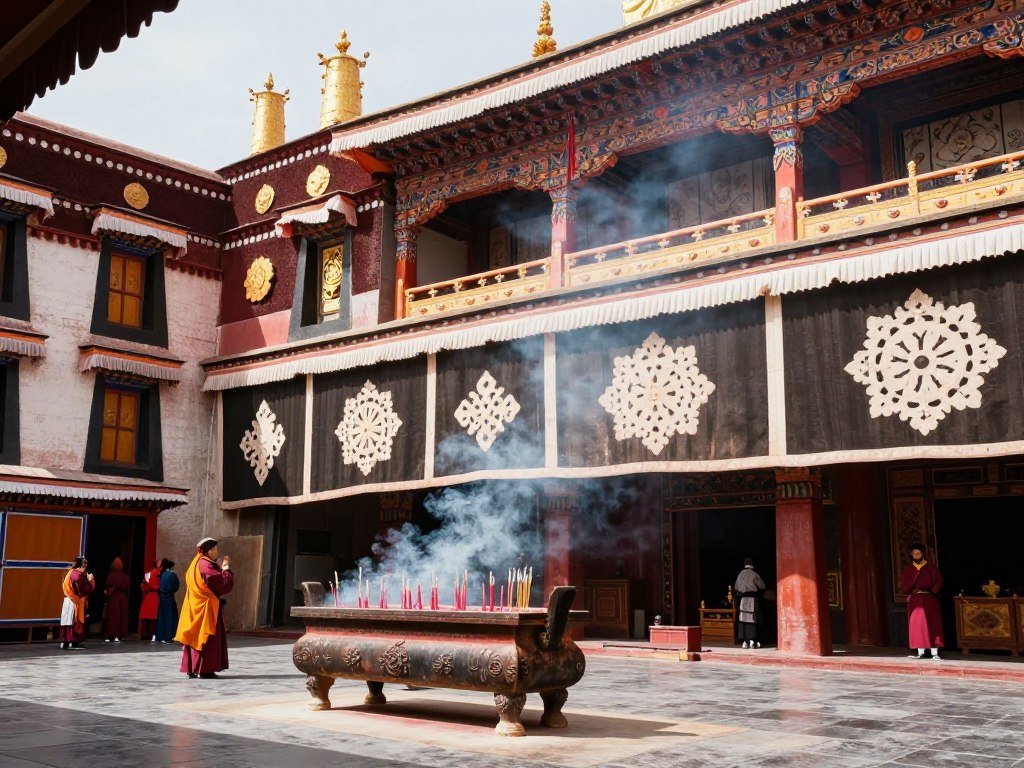
The temple complex combines Han Chinese and Tibetan architectural styles. Colorful prayer flags flutter in courtyards. Prayer wheels line walkways where faithful spin them while walking. The site provides insight into Tibetan Buddhism’s role in Chinese culture. Respectful visitors should dress modestly and refrain from photography inside halls containing statues.
Beijing Neighbourhoods: Where to Stay and Explore
Beijing divides into distinct districts, each offering unique character and attractions. Understanding the city’s neighbourhood layout helps you choose the best area for your accommodation and activities. The capital city sprawls across a vast area, but most visitors concentrate on central and inner-ring districts.
Dongcheng District: Historic Center
Dongcheng occupies the eastern half of central Beijing. This district contains many of the city’s most famous landmarks. The Forbidden City, Tiananmen Square, and Temple of Heaven all lie within Dongcheng boundaries. Historic hutong neighbourhoods preserve traditional Beijing character alongside modern development.
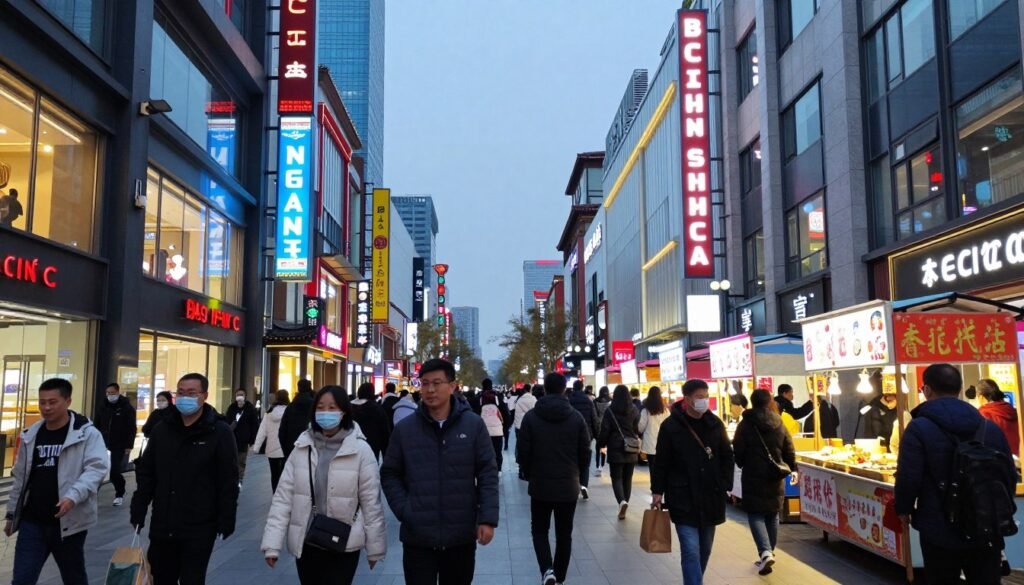
Wangfujing Street serves as Dongcheng’s main shopping corridor. This pedestrian avenue features department stores, international brands, and the famous Wangfujing Snack Street. The area comes alive in evenings with neon lights and crowds of shoppers. Traditional medicine shops and century-old restaurants maintain historic commercial traditions.
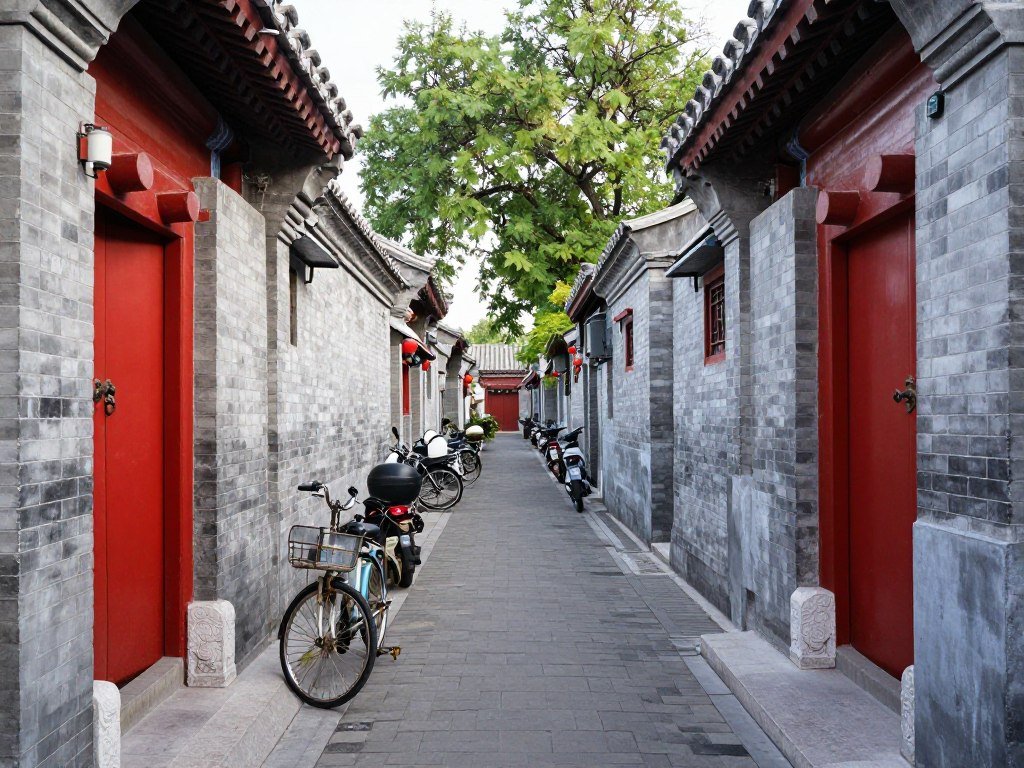
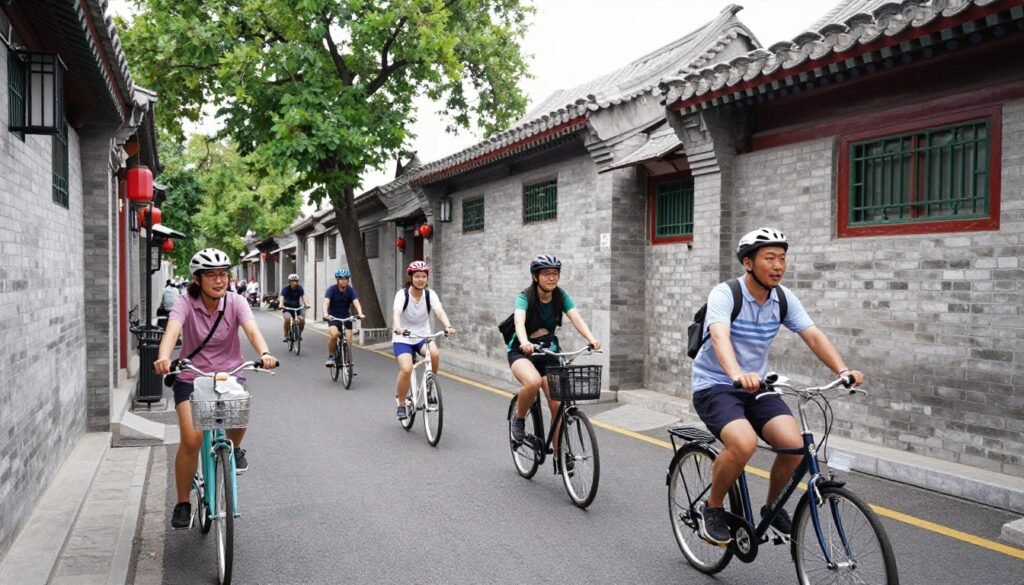
The hutong neighborhoods around Nanluoguxiang Lane offer glimpses of old Beijing. These narrow alleys wind between traditional courtyard homes. Many have transformed into boutique shops, cafes, and hostels while retaining their historic architecture. Cycling or walking through these lanes provides authentic cultural experiences.
Xicheng District: Cultural Hub
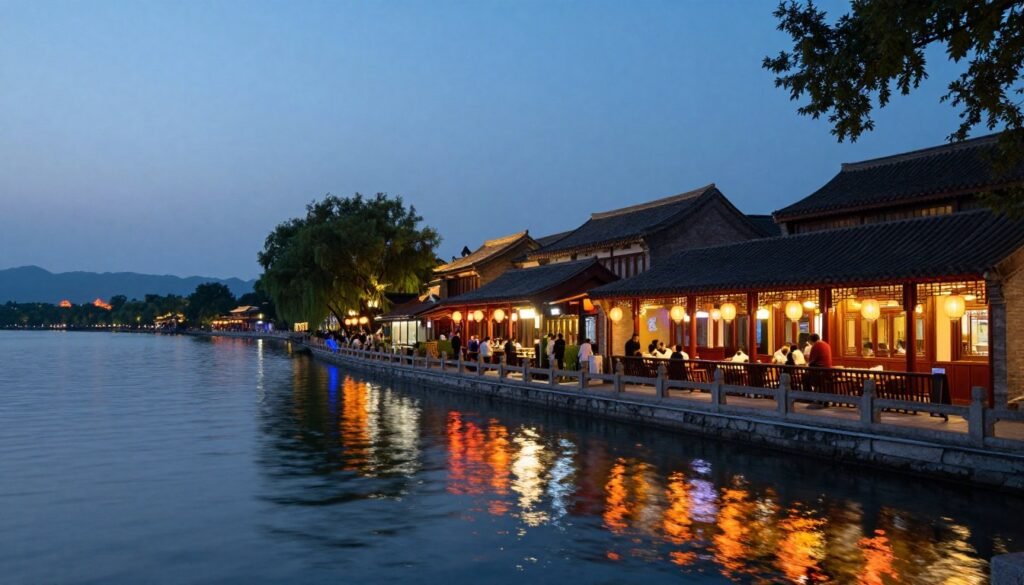
Xicheng forms the western counterpart to Dongcheng in central Beijing. This district houses important cultural institutions and historic sites. Beihai Park, with its white dagoba rising above the lake, provides central oasis. The park’s history extends back nearly 1,000 years, making it one of China’s oldest imperial gardens.
Houhai Lake area has become one of Beijing’s most popular entertainment zones. The lakeside streets fill with bars, restaurants, and live music venues. Summer brings outdoor seating and boat rentals. Winter transforms the frozen lake into a skating rink. The surrounding hutongs maintain residential character despite the nearby nightlife.
Xidan commercial area caters primarily to local residents rather than tourists. This shopping district offers authentic Beijing retail experience with department stores, electronics markets, and fashion boutiques. Prices generally run lower than tourist-focused areas. The area’s restaurants serve local favourites at reasonable rates.
Chaoyang District: Modern Beijing
Chaoyang represents Beijing’s modern, international face. This vast district extends east from the Second Ring Road. The Central Business District (CBD) rises with gleaming skyscrapers and contemporary architecture. International hotels, embassies, and multinational corporations cluster in Chaoyang.
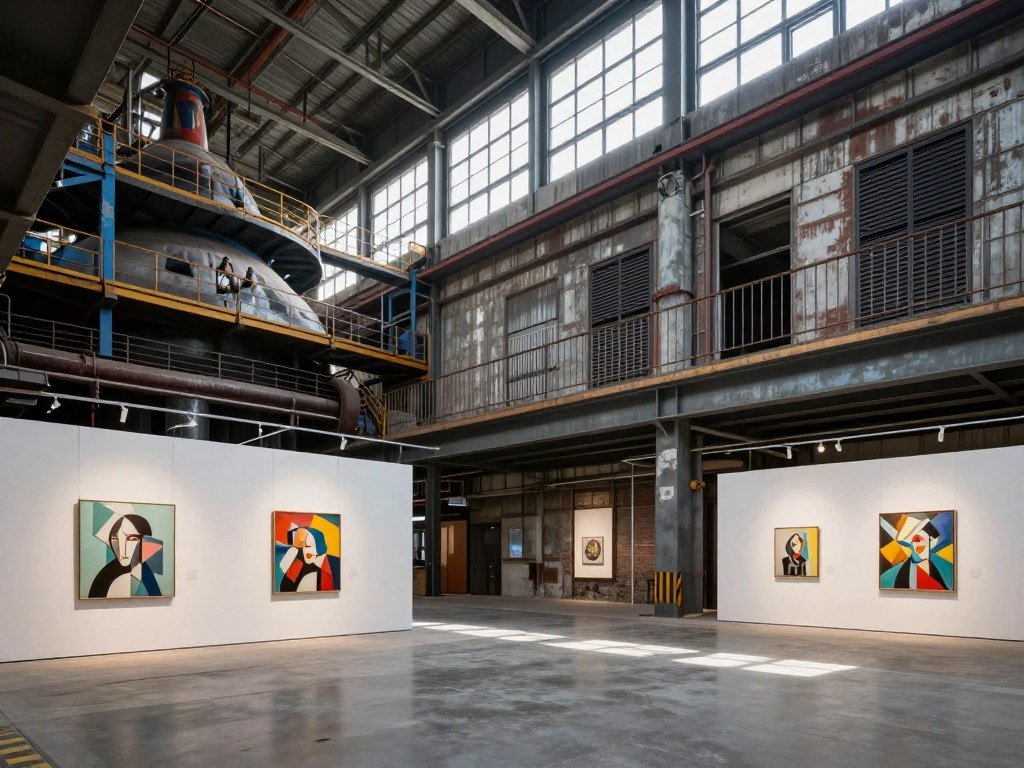
The 798 Art District occupies a former factory complex in northeastern Chaoyang. Artists converted industrial buildings into galleries, studios, and creative spaces. Contemporary art exhibitions, design shops, and trendy cafes fill the area. The district attracts young Chinese and international visitors interested in modern culture.
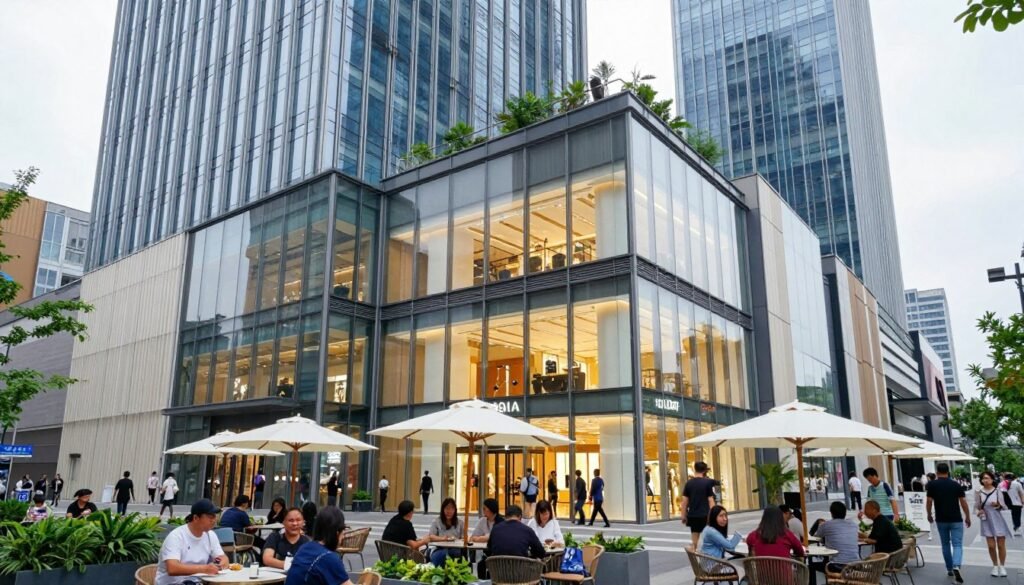
Sanlitun developed as Beijing’s foremost entertainment and shopping area. The Taikoo Li complex features high-end international brands, restaurants, and bars. The pedestrian-friendly streets attract fashionable crowds day and night. Embassy district proximity brings international atmosphere with diverse dining options representing cuisines from around the world.
Haidian District: University Quarter
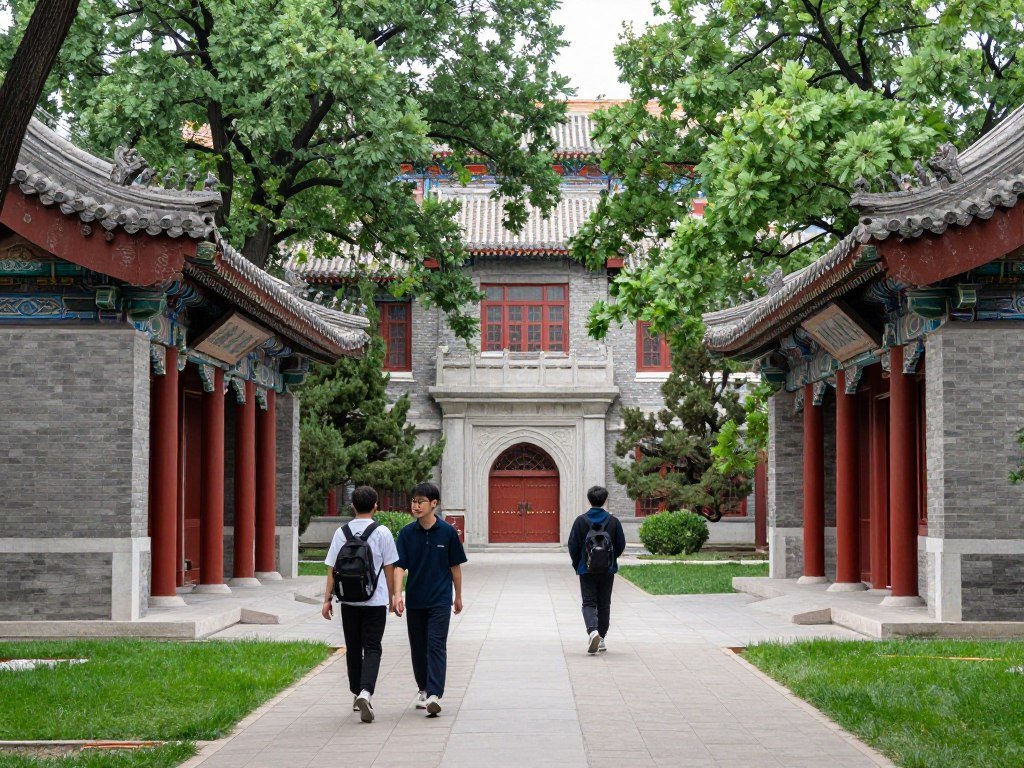
Haidian stretches across northwestern Beijing. This district houses most of the city’s major universities, including Peking University and Tsinghua University. The academic atmosphere influences the area’s character with bookstores, affordable restaurants, and student-friendly amenities.
The Summer Palace occupies the western part of Haidian. Technology companies cluster in the Zhongguancun area, earning it the nickname “China’s Silicon Valley.” The district offers lower accommodation prices than central areas. Public transportation connections make reaching downtown attractions straightforward despite the distance.
Olympic District: Sports and Parks
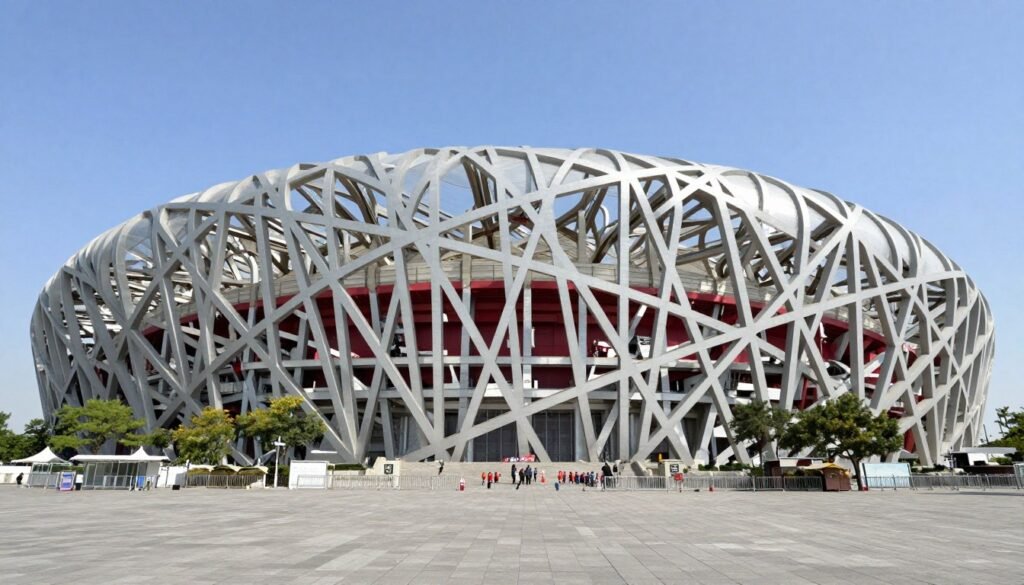
The Olympic District developed for the 2008 Summer Olympics in northern Beijing. The iconic Bird’s Nest stadium and Water Cube aquatic center remain popular tourist attractions. The Olympic Forest Park provides extensive green space for recreation. Modern hotels and shopping centers serve the area.
This district suits travellers interested in sports facilities and modern architecture. The area feels less crowded than central Beijing. Wide boulevards and contemporary urban planning create different atmosphere from historic neighbourhoods. Good subway connections link to major attractions throughout the city.
Need Help Choosing Your Perfect Neighbourhood?
Every Beijing district offers unique advantages depending on your travel style and interests. Our local specialists can recommend the ideal area based on your priorities, whether you prefer historic charm, modern amenities, nightlife access, or cultural immersion. Let us help you find your perfect base in Beijing.
Where to Stay in Beijing: Hotels and Accommodation Guide
Beijing offers accommodation options for every budget and preference. From luxurious international hotels to budget hostels, the city caters to all travellers. Location significantly impacts your Beijing experience. Choosing the right area and property type makes exploration more convenient and enjoyable.
Luxury Hotels in Beijing
Beijing’s luxury hotel scene rivals any world capital. International brands operate flagship properties throughout the city. These hotels provide Western-style service, English-speaking staff, and premium amenities. Most occupy central locations near major attractions or in modern business districts.
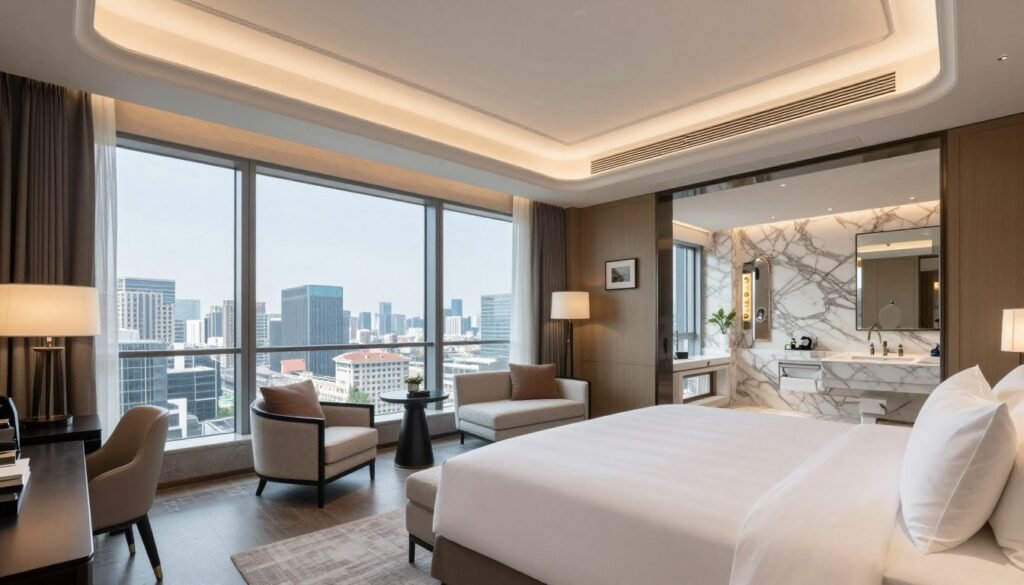
The Peninsula Beijing sits in Wangfujing shopping area, steps from the Forbidden City. This hotel combines traditional elegance with modern luxury. Rooms feature marble bathrooms and the latest technology. The rooftop restaurant offers stunning city views. Concierge services arrange everything from theatre tickets to Great Wall tours.
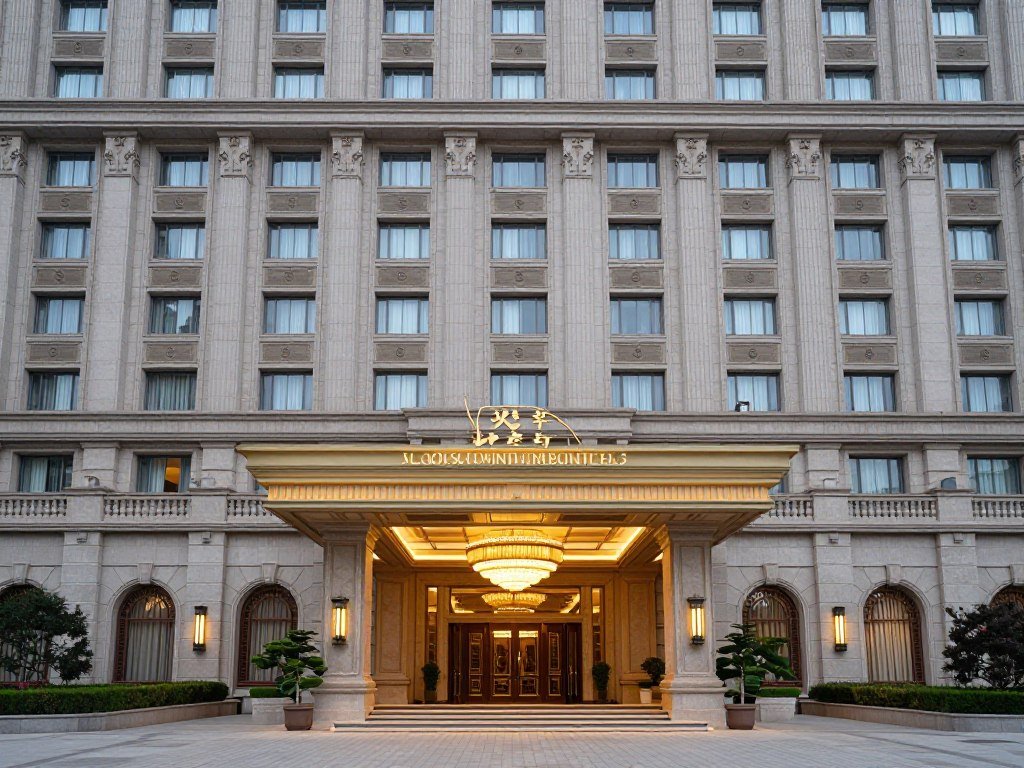
The opposite side of Tiananmen Square hosts the iconic Beijing Hotel. This property has welcomed dignitaries since 1900. Recent renovations modernized facilities while preserving historic character. The location provides unmatched access to major sites. Guests can walk to the Forbidden City, Wangfujing Street, and Tiananmen Square within minutes.
Chaoyang district luxury options include the Park Hyatt Beijing and Rosewood Beijing. These contemporary hotels tower above the CBD with sleek designs. Floor-to-ceiling windows frame city panoramas. Spa facilities, multiple restaurants, and executive lounges cater to business and leisure travellers. Despite distance from historic sites, excellent subway access maintains convenience.
The Peninsula Beijing
Located in Wangfujing area near Forbidden City. Traditional luxury meets modern amenities. Rooftop dining with city views.
- Walking distance to major attractions
- Award-winning restaurants
- Full-service spa and pool
- English-speaking concierge
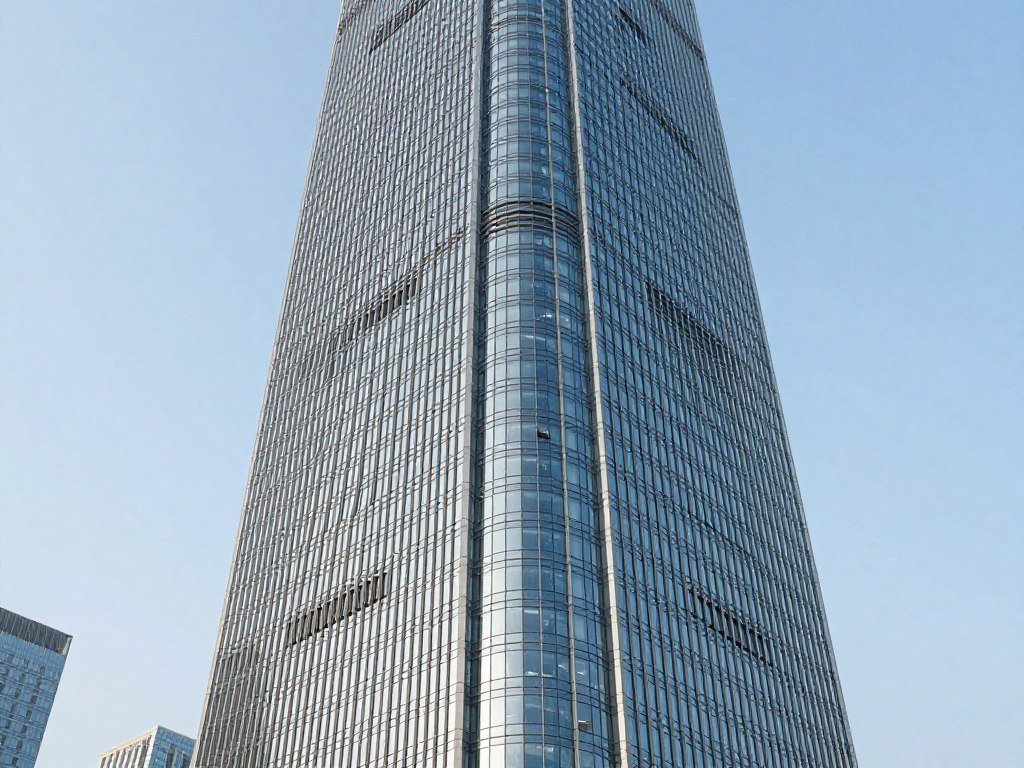
Park Hyatt Beijing
Contemporary luxury in CBD district. Floor-to-ceiling windows with panoramic views. Modern Chinese design elements throughout.
- Occupies floors 63-65 of skyscraper
- Outstanding city views
- Michelin-starred dining
- State-of-the-art fitness center
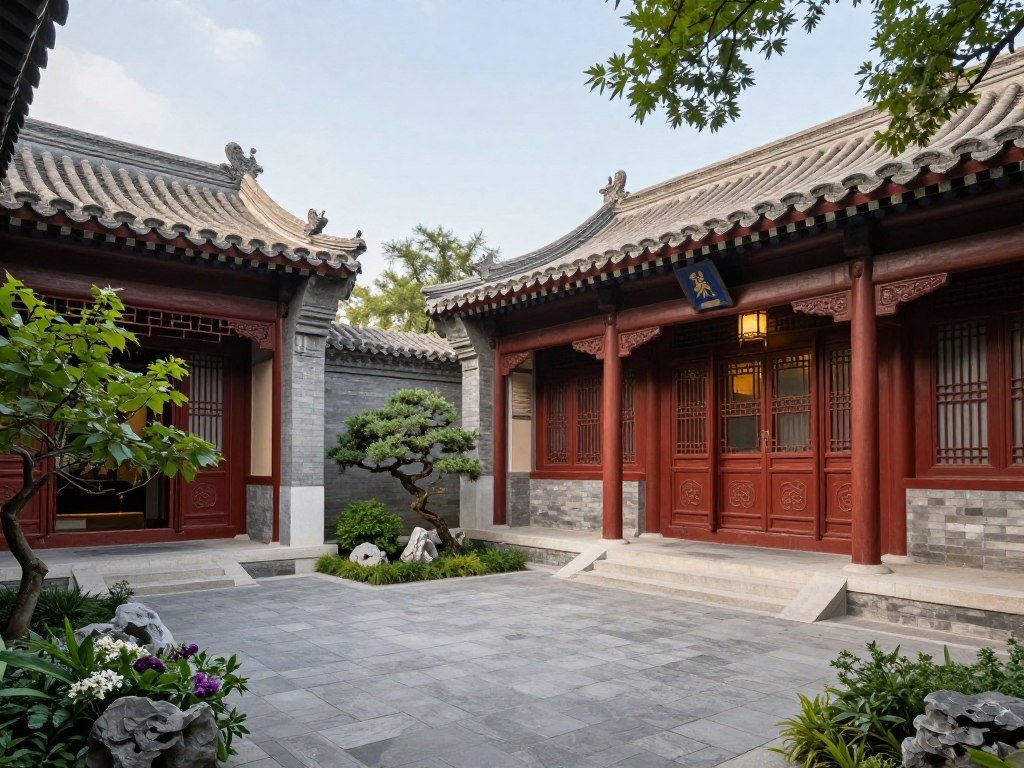
Aman at Summer Palace
Exclusive resort adjacent to Summer Palace. Series of restored courtyard pavilions. Ultimate tranquillity with imperial heritage.
- Private Summer Palace access
- Traditional courtyard suites
- Award-winning spa
- Serene garden setting
Mid-Range Hotels and Boutique Options
Mid-range hotels deliver comfort and good service at reasonable prices. International chains like Holiday Inn, Novotel, and Courtyard by Marriott operate properties across Beijing. These hotels typically offer clean rooms, breakfast options, and basic amenities. Locations vary from city center to outer districts.
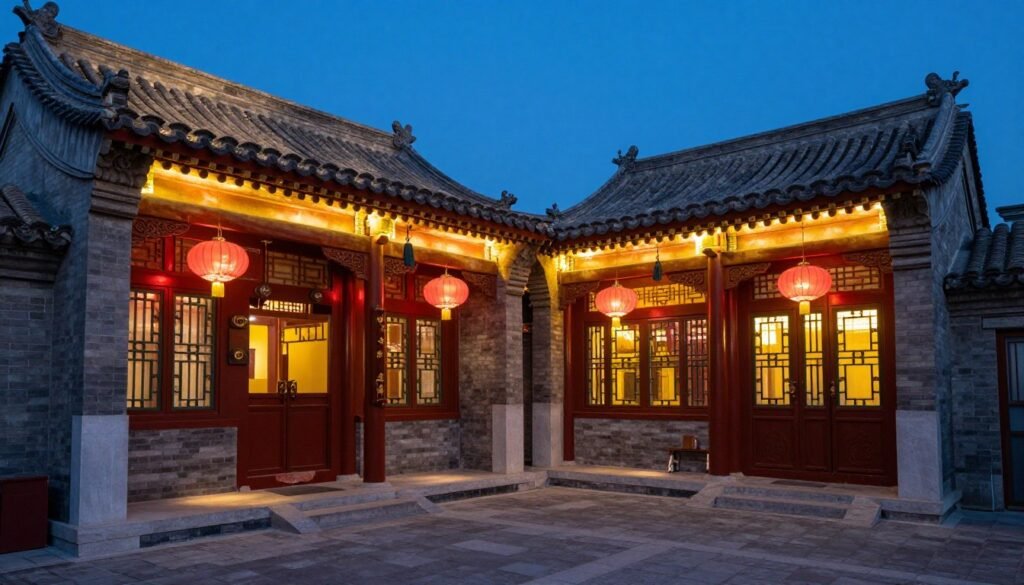
Boutique hotels have emerged in renovated hutong courtyards. These properties preserve traditional architecture while adding modern comforts. Room counts stay small, often under 20 rooms. Personal service and local character distinguish them from chain hotels. The Orchid Hotel and Red Capital Residence exemplify this category.
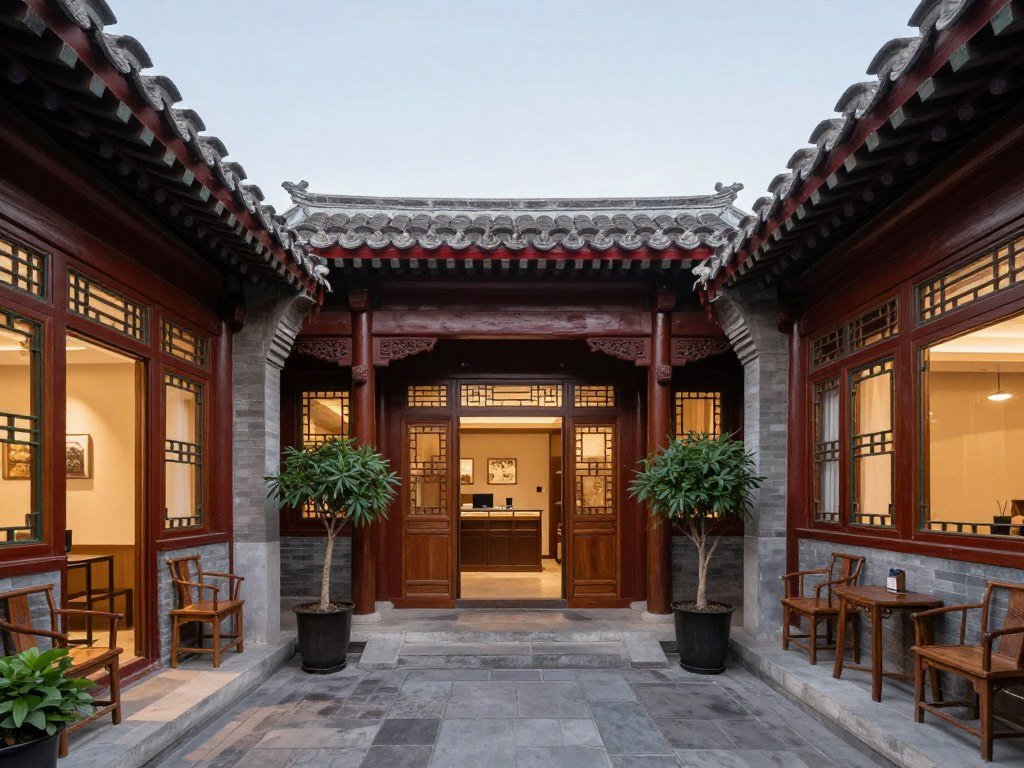
Hutong courtyard stays provide authentic Beijing accommodation experiences. Many traditional courtyard homes now operate as guesthouses. Rooms surround a central courtyard, following centuries-old architectural principles. Shared facilities keep prices lower than hotels. Cultural immersion compensates for fewer amenities. Hosts often share local knowledge and dining recommendations.
Budget Accommodation in Beijing
Budget travellers find numerous options in Beijing. International hostel chains maintain properties near major tourist areas. Dorm beds start around ¥60-100 per night. Private rooms cost ¥200-400. Common areas facilitate meeting other travellers. Staff typically speak English and assist with tour bookings.
Chinese budget hotel chains like Home Inn and Hanting Express blanket the city. These provide basic, clean rooms at low prices. Expect minimal English and simple facilities. Locations range across all districts. Book online for best rates. The chains offer consistent quality despite bare-bones amenities.
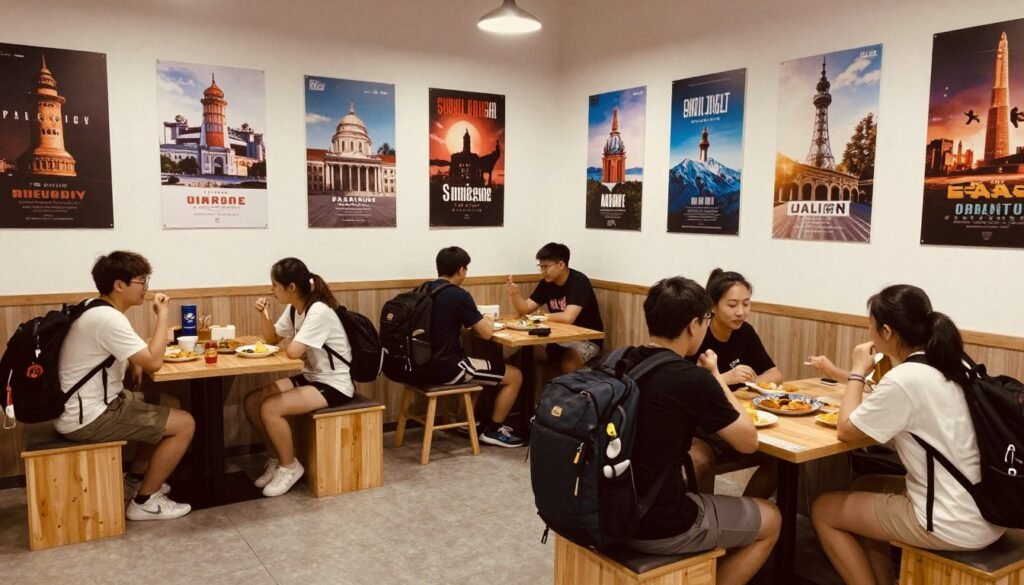
University areas in Haidian offer particularly good budget options. Student-oriented businesses keep prices competitive. Small hotels and guesthouses cluster near campuses. The area provides authentic local atmosphere away from tourist zones. Subway access connects to attractions across the city.
Apartment Rentals and Extended Stays
Serviced apartments suit longer visits or families needing more space. Companies like Ascott and Oakwood operate properties across Beijing. These provide full kitchens, separate living areas, and hotel-style services. Weekly and monthly rates offer savings over comparable hotel stays.
Vacation rental platforms list Beijing apartments from local landlords. Options range from simple studios to luxury penthouses. This choice works well for experiencing residential neighbourhoods. Communication may challenge those without Chinese language skills. Verify exact location and transportation access before booking.
| Accommodation Type | Price Range (per night) | Best For | Typical Location |
| Luxury Hotels | ¥1,500 – ¥5,000+ | Comfort, service, prestige | City center, CBD |
| Mid-Range Hotels | ¥400 – ¥1,500 | Value, reliability, amenities | All districts |
| Boutique Hotels | ¥600 – ¥2,000 | Character, local experience | Hutong areas |
| Budget Hotels | ¥200 – ¥400 | Basic comfort, savings | All districts |
| Hostels | ¥60 – ¥300 | Budget travel, socializing | Tourist areas |
| Serviced Apartments | ¥500 – ¥2,000 | Extended stays, families | Residential areas |
Essential Beijing Travel Tips: Navigating Transit
Beijing’s transportation network ranks among the world’s most extensive. Multiple options connect the sprawling city. Understanding the system helps you navigate efficiently between attractions. The capital’s public transit continues expanding, adding new subway lines and bus routes regularly.
Beijing Subway System
The Beijing Subway provides the fastest, most reliable way to travel across the city. The network includes over 25 lines covering more than 450 miles. Trains run from approximately 5:00 AM to 11:30 PM daily. Service frequency ranges from 2 to 10 minutes depending on time and line.
Fares operate on a distance-based system starting at ¥3 for trips under 6 km. Maximum fare reaches ¥9 for the longest journeys. Purchase single-journey tickets from machines at each station. These machines offer English language options. Rechargeable Yikatong cards provide convenience for multiple trips and also work on buses.
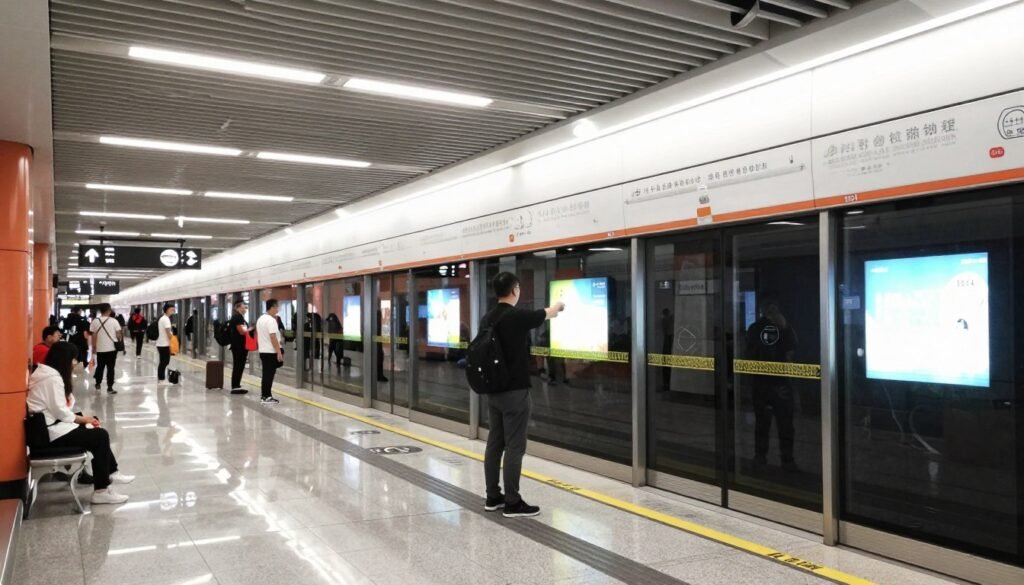
Download a subway map app or obtain a paper map at stations. Line numbers use colors for easy identification. Signs display station names in Chinese characters and pinyin romanization. Major tourist destinations have nearby stations. Transfer between lines at intersection stations, which can involve considerable walking.
Peak hours (7:30-9:00 AM and 5:00-7:00 PM) bring severe crowding on central lines. Avoid traveling during these periods when possible. Weekends and midday offer more comfortable conditions. Security screening at station entrances requires passing bags through X-ray machines.
Key Subway Lines for Tourists
- Line 1: Passes Tiananmen Square, Forbidden City, Wangfujing
- Line 2: Loop line serving Lama Temple, Drum Tower, Beijing Station
- Line 4: Connects Summer Palace, Old Summer Palace, Beijing South Railway Station
- Line 5: Links Temple of Heaven with Lama Temple
- Line 8: Reaches Olympic Forest Park and Bird’s Nest Stadium
Buses in Beijing
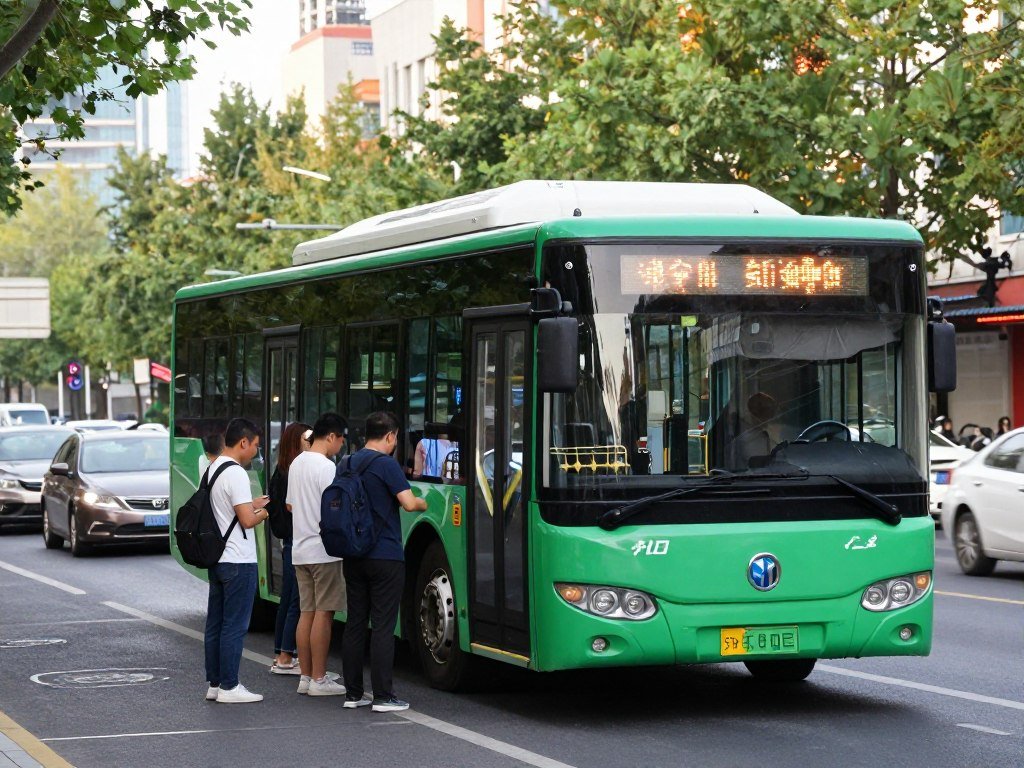
Beijing operates hundreds of bus routes covering areas the subway doesn’t reach. Regular buses charge flat fares of ¥1-2, payable with Yikatong card or exact change. Express buses and routes to distant suburbs cost more. Route numbers and destinations appear in Chinese, making buses challenging for non-Chinese speakers.
Bus stops display route maps, though English rarely appears. Download a Chinese map app or ask locals for assistance. Traffic congestion significantly slows bus travel during peak hours. Buses serve well for short trips in residential areas or reaching specific destinations near subway stations.
Taxis and Ride-Hailing Services
Taxis provide convenient door-to-door transportation. Official taxis display meters and company information. Starting fare runs ¥13 for first 3 kilometers. Additional distance costs ¥2.3 per kilometer. Nighttime rates (11 PM to 5 AM) increase by 20 percent. Few drivers speak English, so have destinations written in Chinese characters.
Didi Chuxing operates as China’s dominant ride-hailing platform. The app functions similarly to Uber with English language options. Payment links to WeChat Pay or Alipay. Prices often undercut traditional taxis. The app handles communication with drivers, eliminating language barriers. Airport pickup requires special permits, so confirm driver authorisation.
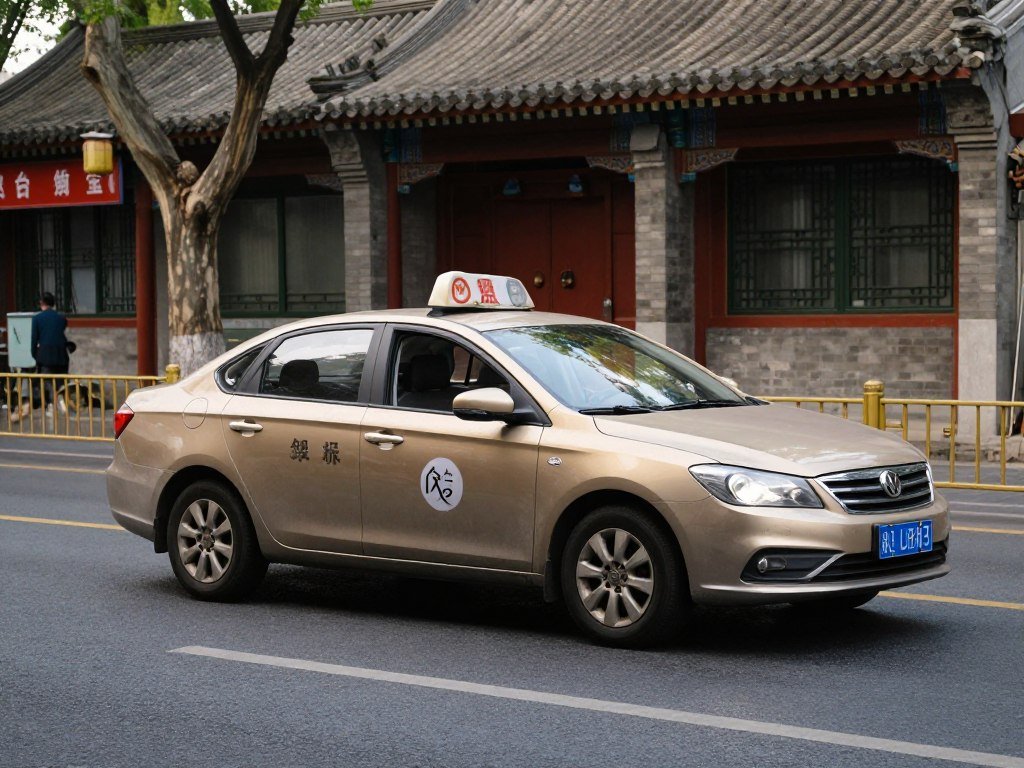
Traffic jams plague Beijing, especially during rush hours and around major attractions. What appears as a short distance on maps may require considerable time. The subway often proves faster than taxis for cross-city travel. Reserve taxis for areas poorly served by subway or when carrying luggage.
Bicycles and E-Bikes
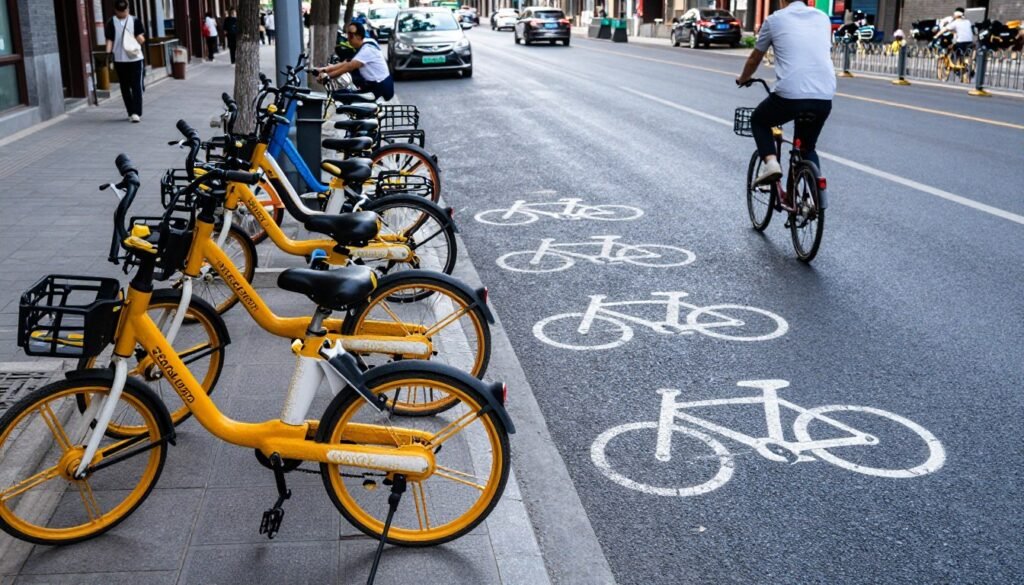
Beijing’s flat terrain suits cycling. Dedicated bike lanes line many major roads. Dockless bike-sharing services from Mobike and Hello Bike blanket the city. Download apps, scan QR codes on bikes, and pay minimal per-ride fees. This option works perfectly for short trips and hutong exploration.
E-bikes and e-scooters offer alternative two-wheel transport. Some bike-share companies include electric options in their fleets. Longer distances become manageable with electric assistance. Follow traffic rules and use bike lanes. Sidewalk cycling draws fines in some areas.
Airport Transportation
Beijing Capital International Airport (PEK) serves as the main international gateway. The Airport Express train connects to the city in 25-30 minutes for ¥25. Trains run from 6:00 AM to 10:30 PM, linking to Subway Lines 2 and 10. Taxis to central Beijing take 40-90 minutes depending on traffic and cost ¥80-120 plus tolls.
Beijing Daxing International Airport (PKX) opened in 2019, handling growing traffic. The Daxing Airport Express reaches the city in approximately 20 minutes for ¥35. This newer airport offers modern facilities and shorter immigration queues. Check which airport your flight uses, as they sit on opposite sides of Beijing.
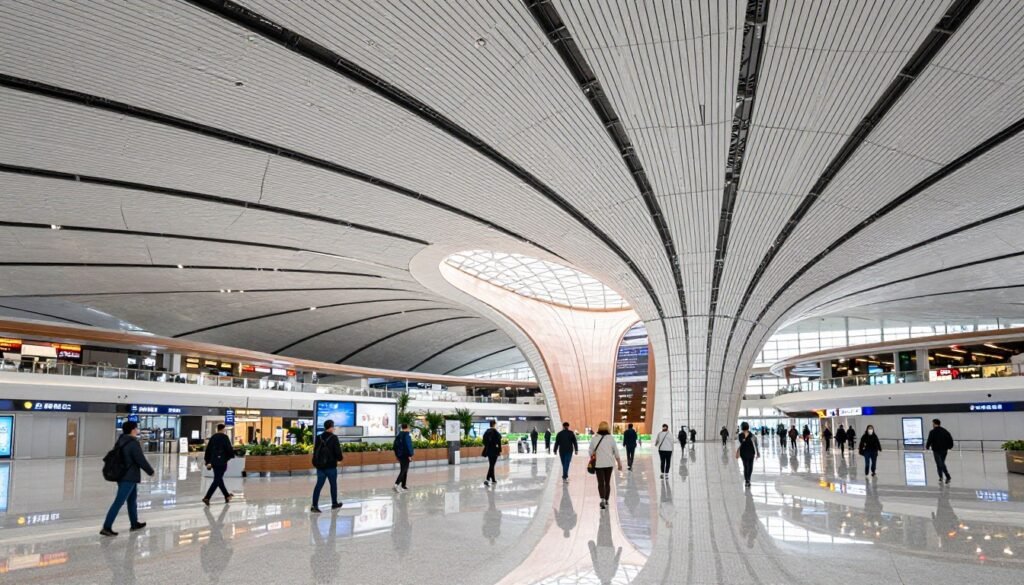
Airport shuttle buses serve both airports at lower cost than taxis. Multiple routes connect to different city areas. Travel time varies by route and traffic. Book hotel shuttle services in advance for convenient pickup. Many hotels offer this service for reasonable fees.
Intercity Transportation
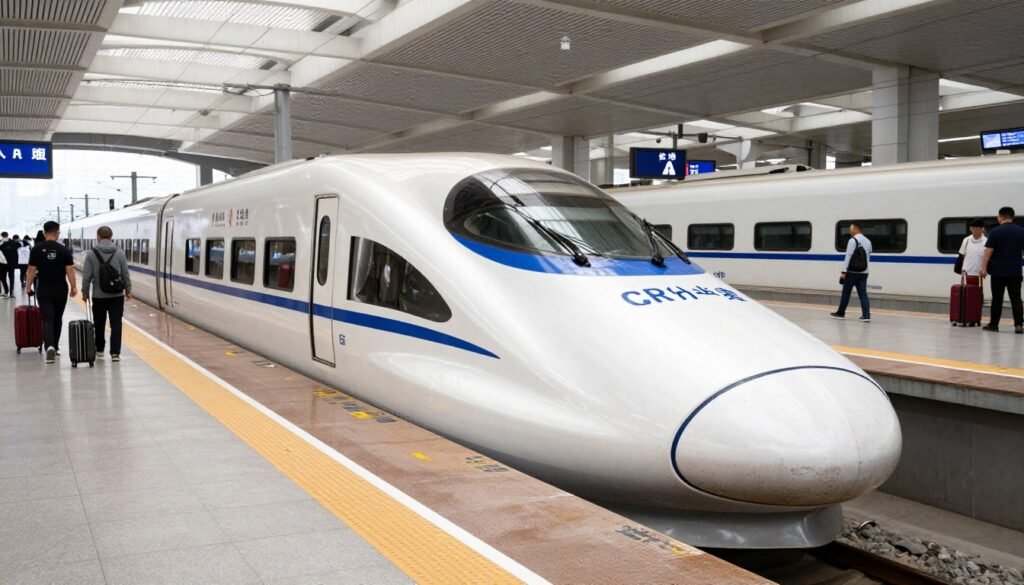
High-speed trains connect Beijing to destinations across China. Beijing has several major railway stations. Beijing Railway Station and Beijing West Railway Station handle most intercity traffic. Beijing South Railway Station serves high-speed routes to Shanghai, Tianjin, and southern cities. Always verify your departure station when booking tickets.
High-speed trains to nearby cities provide excellent day trip options. Tianjin lies 30 minutes away. The ancient city of Pingyao takes 3 hours. Shanghai connects in 4.5 hours. Book tickets online through Trip.com or China Railway’s official website. Bring passport for ticket collection and boarding.
Beijing Cuisine: Food Guide and Best Restaurants
Beijing’s culinary scene reflects centuries of imperial influence and northern Chinese traditions. The city’s signature dishes earned fame throughout China and beyond. From humble street food to elaborate banquets, Beijing offers extraordinary eating experiences. Food plays a central role in the capital’s culture and daily life.
Signature Beijing Dishes
Peking Duck stands as Beijing’s most celebrated culinary creation. This iconic dish features crispy-skinned duck served with thin pancakes, sweet bean sauce, and scallions. Specialized restaurants perfect the preparation through days-long process. The duck roasts in wood-fired ovens until skin achieves perfect crackle. Skilled carvers slice the duck tableside with theatrical precision.
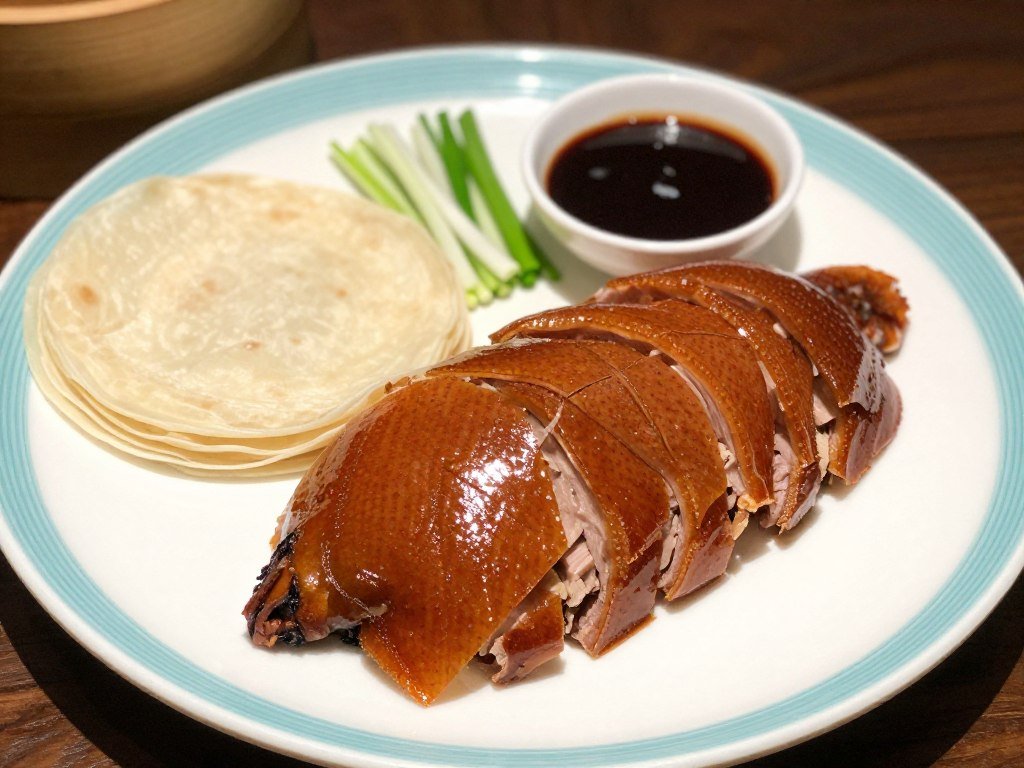
Quanjude and Bianyifang represent the two major Peking Duck schools. Quanjude uses hanging ovens, producing crisper skin. Bianyifang employs closed ovens for juicier meat. Both methods create delicious results. Reservations prove essential at famous branches, especially during peak dining hours.
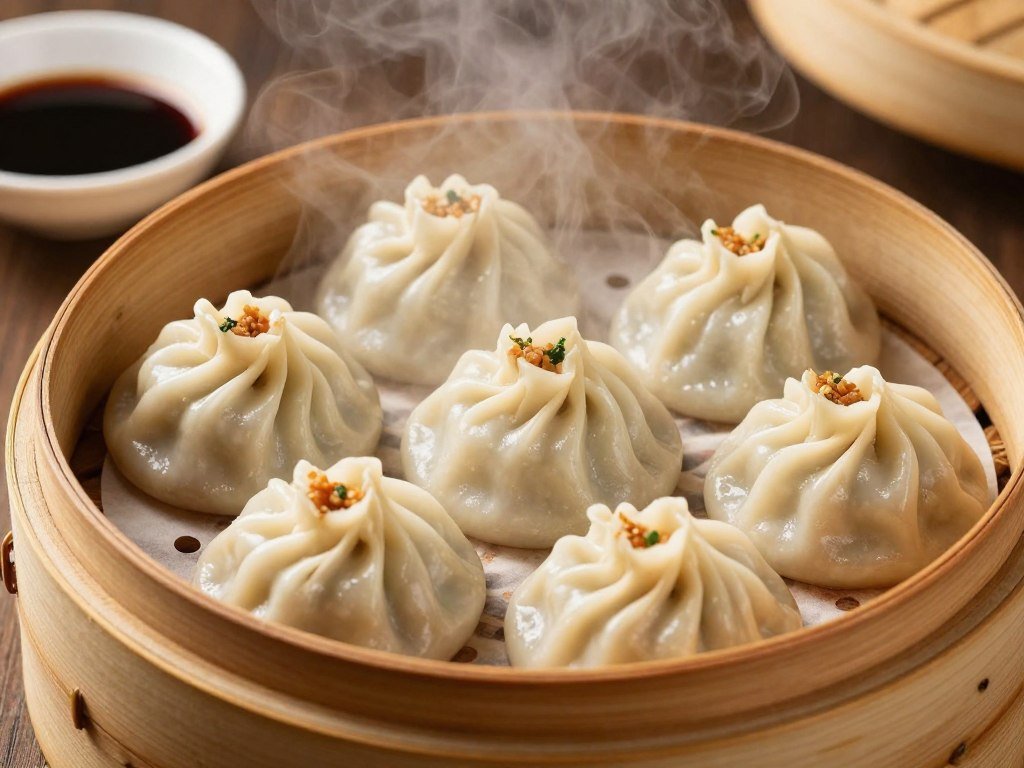
Jiaozi (dumplings) appear everywhere in Beijing. These wheat-flour pockets contain various fillings from pork and cabbage to lamb and fennel. Restaurants specialize in different styles and preparations. Boiled, steamed, or pan-fried versions each offer distinct textures. Small family restaurants often serve the most authentic preparations.
Zhajiangmian consists of thick wheat noodles topped with fermented soybean paste and julienned vegetables. This comfort food appears in homes and casual restaurants throughout Beijing. The dish represents northern Chinese home cooking at its finest. Each family guards their own sauce recipe variations.
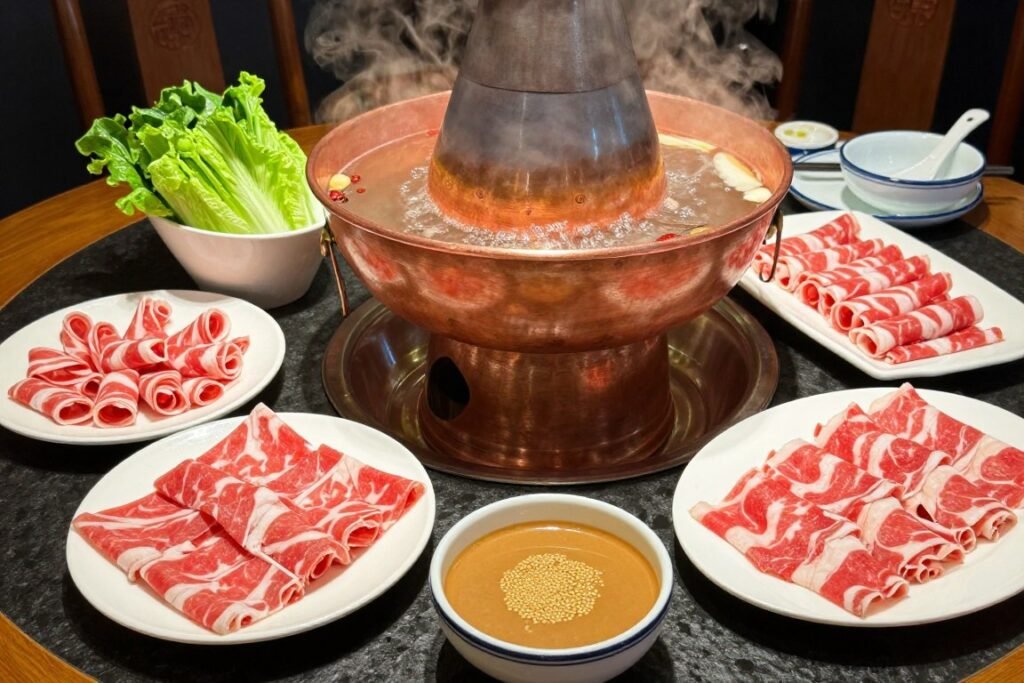
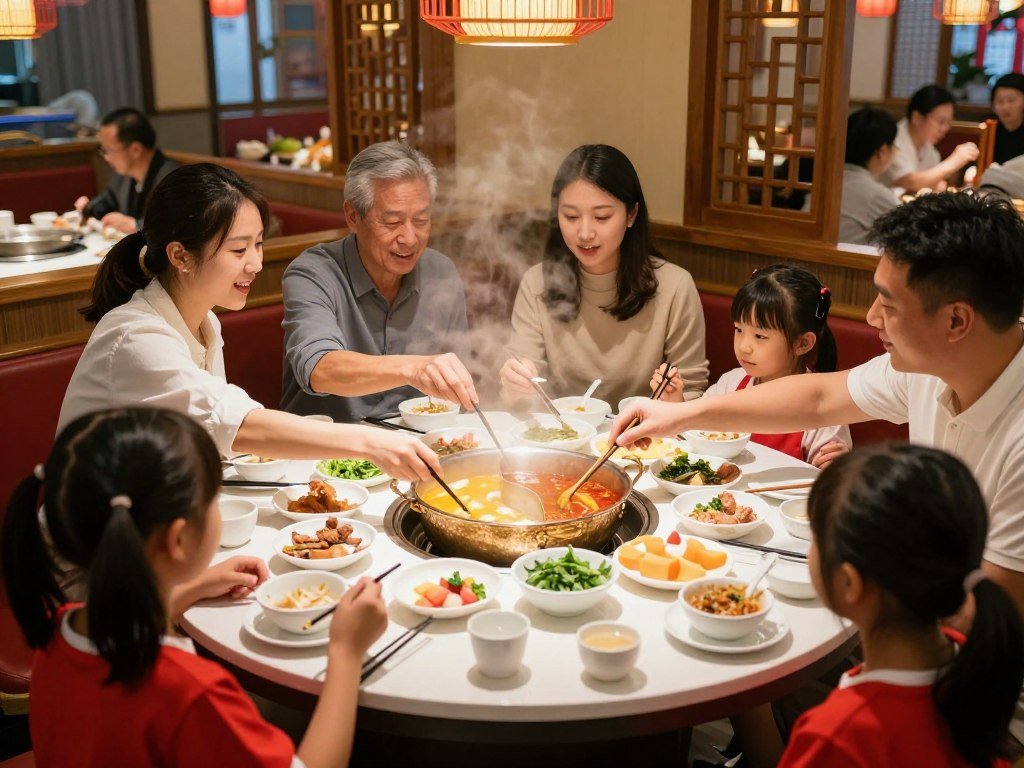
Beijing Hotpot differs from Sichuan varieties with its emphasis on mutton and sesame sauce. The copper pot divides into sections for different broths. Thin-sliced lamb cooks within seconds in boiling broth. Diners assemble their own sauce from sesame paste, fermented tofu, and condiments. The meal extends for hours as groups gather around bubbling pots.
Street Food and Snacks
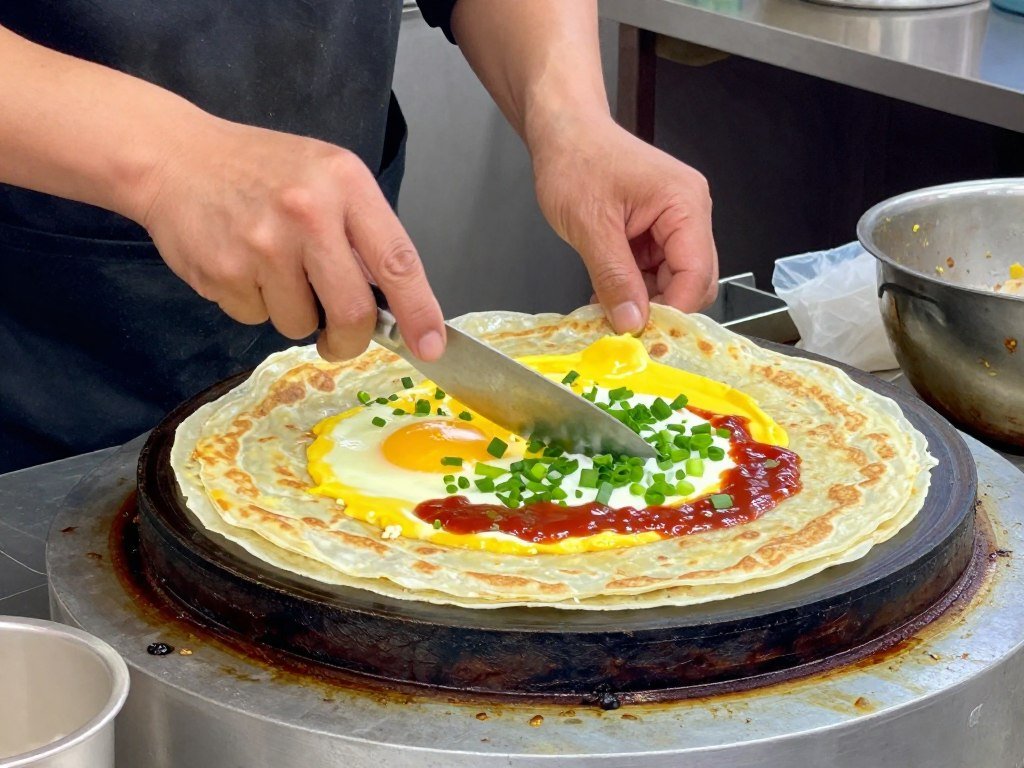
Wangfujing Snack Street packs dozens of food stalls into a pedestrian lane. Vendors sell everything from scorpions on sticks to traditional candied hawthorn berries. Jianbing (savory crepes) make popular breakfast choices. Vendors spread batter on hot griddles, adding eggs, scallions, and crispy wonton. The filled crepe folds into portable packages perfect for eating while walking.
Baozi (steamed buns) come in countless varieties. Sweet versions contain red bean paste or sugar. Savory buns hold pork, vegetables, or other fillings. Street vendors sell them from large bamboo steamers. The soft, fluffy texture and aromatic fillings make them irresistible snacks.
Tanghulu features candied fruits on bamboo skewers. Traditionally made with hawthorn berries, modern versions use strawberries, grapes, and other fruits. The hard candy coating provides sweet crunch contrasting with tart fruit. These colorful treats appear throughout tourist areas and local markets.
Traditional Beijing Restaurants
Historic restaurants preserve recipes spanning generations. Donglaishun specializes in mutton hotpot, operating since 1903. The restaurant sources premium lamb and prepares traditional sesame sauce. Multiple branches serve across Beijing, though the original Wangfujing location maintains special atmosphere.
Fangshan Restaurant occupies a former imperial kitchen in Beihai Park. The menu recreates dishes from Qing Dynasty palace banquets. Prices reflect the prestigious location and elaborate preparation. The restaurant requires reservations and enforces dress codes. Dining here provides unique glimpse into imperial culinary traditions.
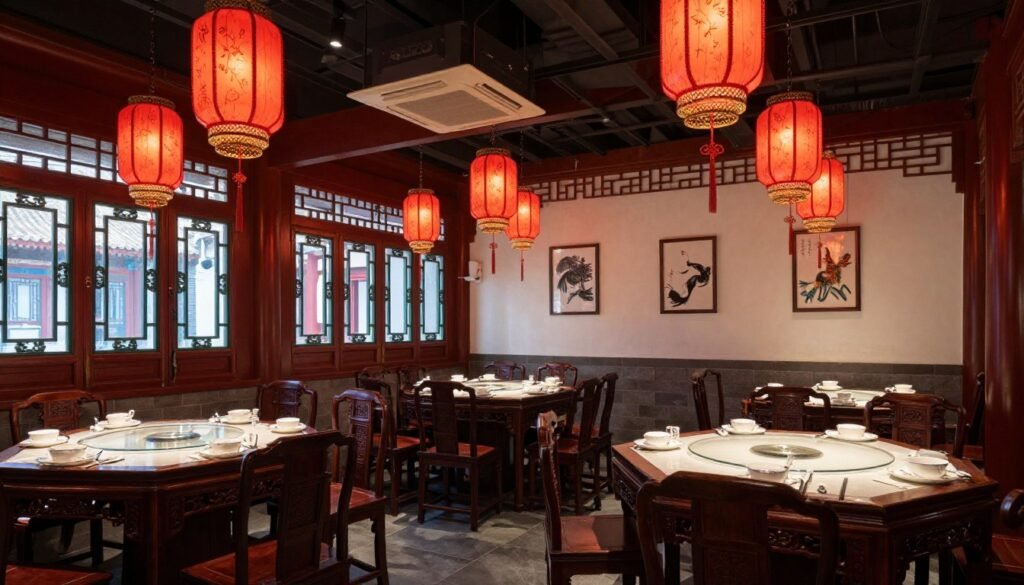
Jiumen Xiaochi brings together vendors from historic Beijing snack shops. This food court format allows sampling multiple traditional foods in one location. Each stall specializes in specific items like lamb spine soup, fried liver, or almond tofu. The casual setting suits adventurous eaters wanting to try authentic local flavors.
Modern Dining Scene
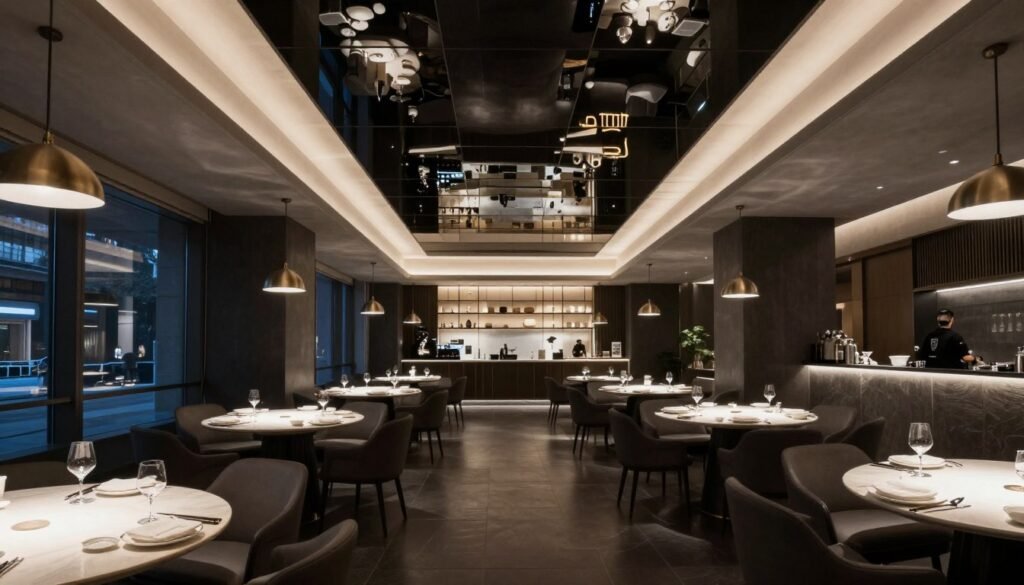
Beijing’s restaurant landscape has exploded in recent years. International cuisines from every continent find representation. The city earned three Michelin stars in the 2021 guide. TRB Hutong combines French technique with Chinese ingredients in a renovated temple setting. The innovative menu changes seasonally.
Sanlitun and CBD districts concentrate international dining options. Japanese, Korean, Italian, and American restaurants cater to expatriate communities and wealthy locals. Prices match or exceed Western levels in upscale establishments. These areas also host trendy bars and cafes popular with younger crowds.
Food delivery apps transformed Beijing dining habits. Meituan and Ele.me deliver from thousands of restaurants. Locals order multiple meals daily through these platforms. Visitors with Chinese phone numbers and payment apps can access this convenience. The services operate in Chinese, though some interfaces offer English.
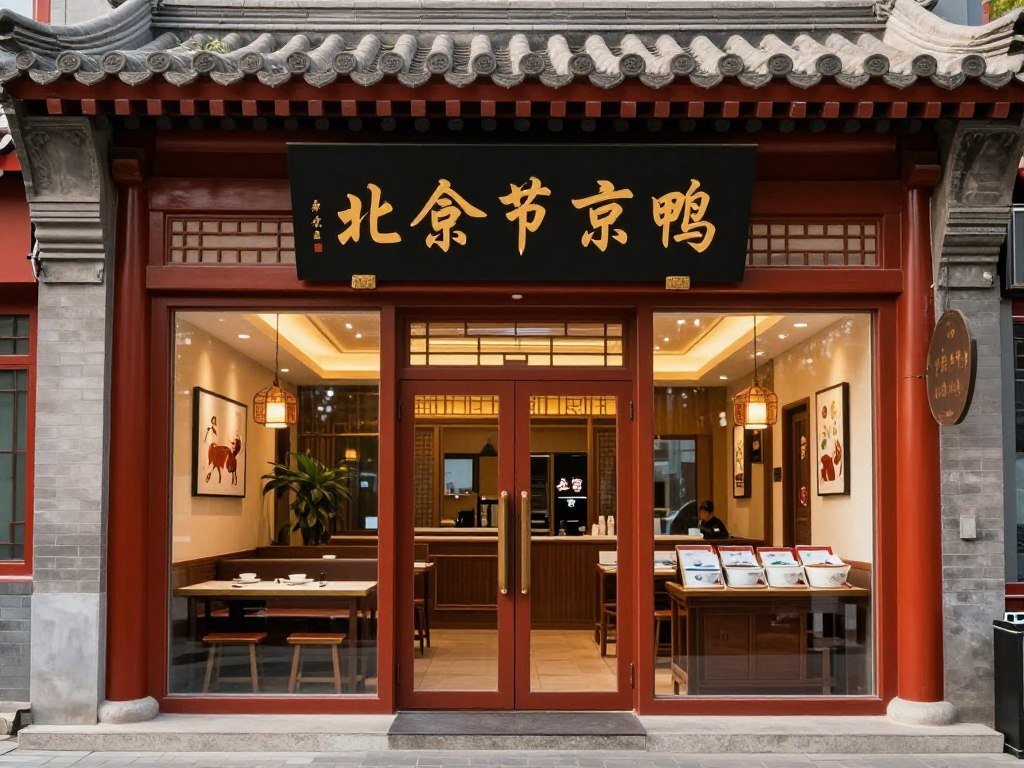
Quanjude Peking Duck
Beijing’s most famous duck restaurant since 1864. Multiple locations across the city. Hanging oven technique produces exceptionally crispy skin.
- Signature: Whole Peking Duck (¥268-398)
- Reservations recommended
- English menu available
- Tourist-friendly service
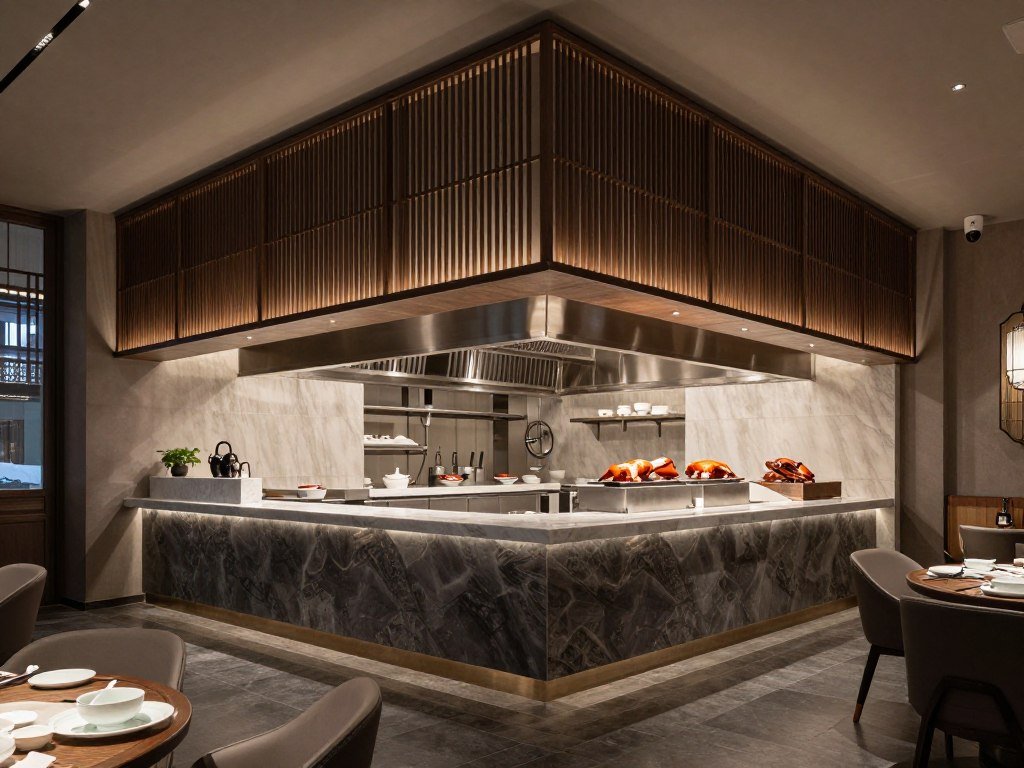
Da Dong Roast Duck
Modern interpretation of Peking Duck with innovative presentation. Stylish contemporary setting. Lower-fat preparation technique.
- Signature: Superior Peking Duck (¥398)
- Modern Chinese cuisine
- Creative presentations
- Upscale atmosphere
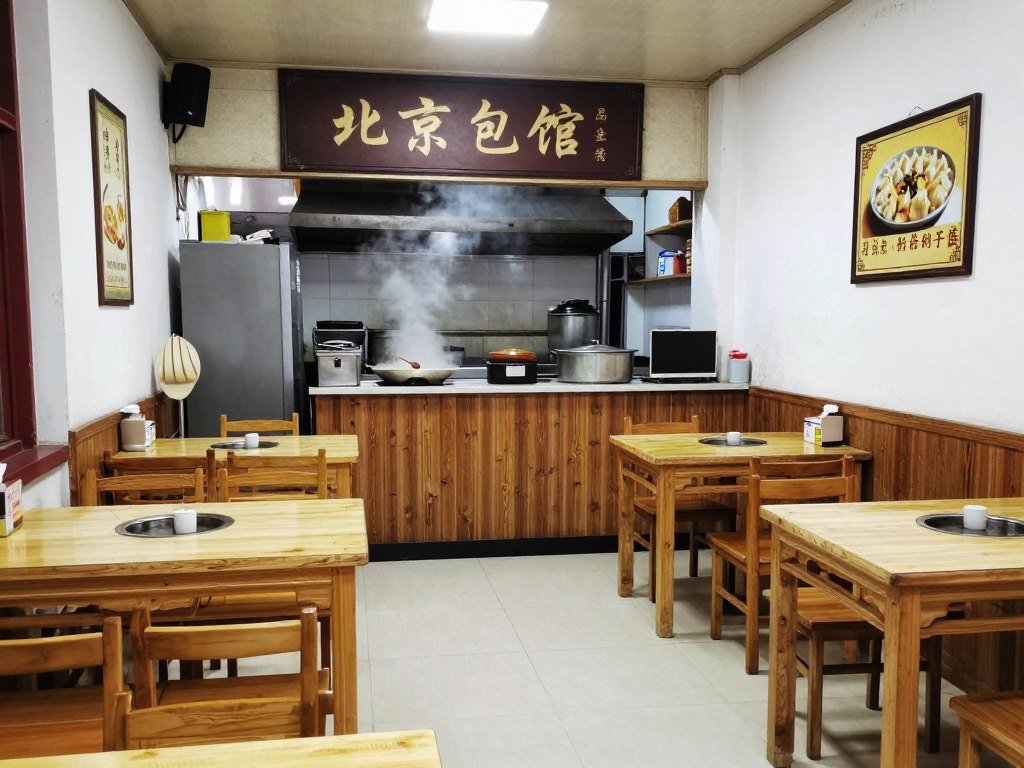
Baoyuan Jiaozi Wu
Popular dumpling house famous for colorful jiaozi. Vegetable extracts create rainbow-colored wrappers. Over 100 filling combinations available.
- Specialty: Rainbow dumplings (¥48-68)
- Casual atmosphere
- Moderate prices
- Local favorite
Speak with Our Food Tour Specialists
Discover Beijing’s authentic culinary treasures with guided food tours. Our local experts take you beyond tourist restaurants to hidden gems and traditional eateries. Experience hutong cooking classes, market visits, and family-style meals.
Available daily 9:00 AM – 8:00 PM Beijing time
Shopping in Beijing: Markets, Malls, and Traditional Crafts
Beijing offers shopping experiences ranging from ancient markets to ultra-modern malls. The city blends traditional Chinese crafts with international luxury brands. Understanding where to shop helps you find authentic items at fair prices. Each area caters to different interests and budgets.
Traditional Markets and Streets
Panjiayuan Antique Market sprawls across several acres in southeastern Beijing. Over 3,000 vendors sell antiques, crafts, furniture, and collectibles. The market operates daily but weekends bring the largest selection. Arrive early for best choices before crowds arrive. Bargaining remains essential, with vendors expecting negotiation.
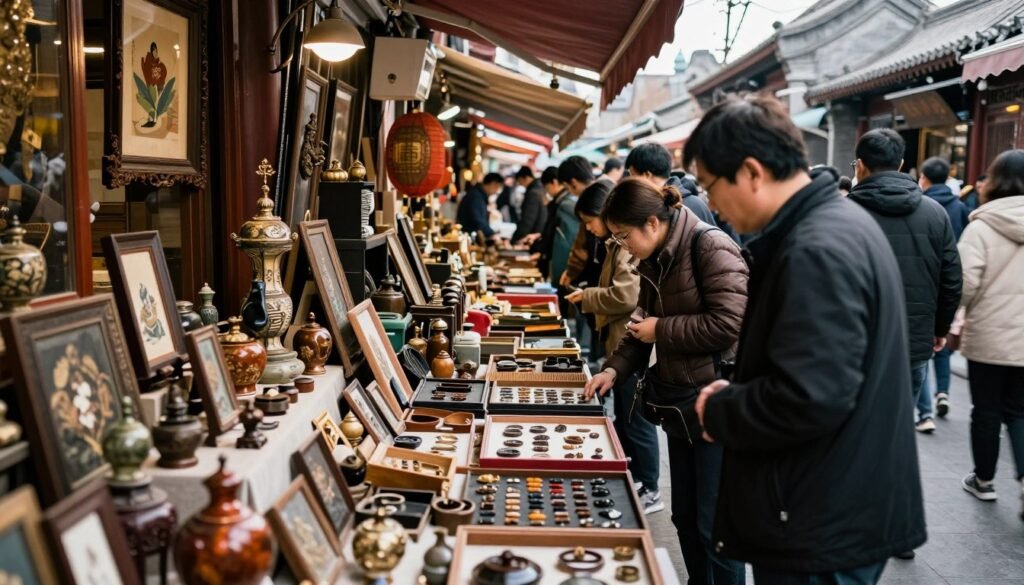
Items range from genuine antiques to modern reproductions. Distinguishing authentic pieces requires expertise. Most “antiques” date to recent decades rather than dynastic periods. Regardless of age, the market offers beautiful traditional crafts, artwork, and souvenirs. Jade, porcelain, paintings, and Mao-era memorabilia fill the stalls.
Liulichang Cultural Street preserves the atmosphere of old Beijing. This renovated historical street specializes in traditional Chinese arts. Calligraphy supplies, traditional paintings, seals, and books stock the shops. Prices exceed markets but quality tends higher. The street itself provides pleasant walking experience with traditional architecture.
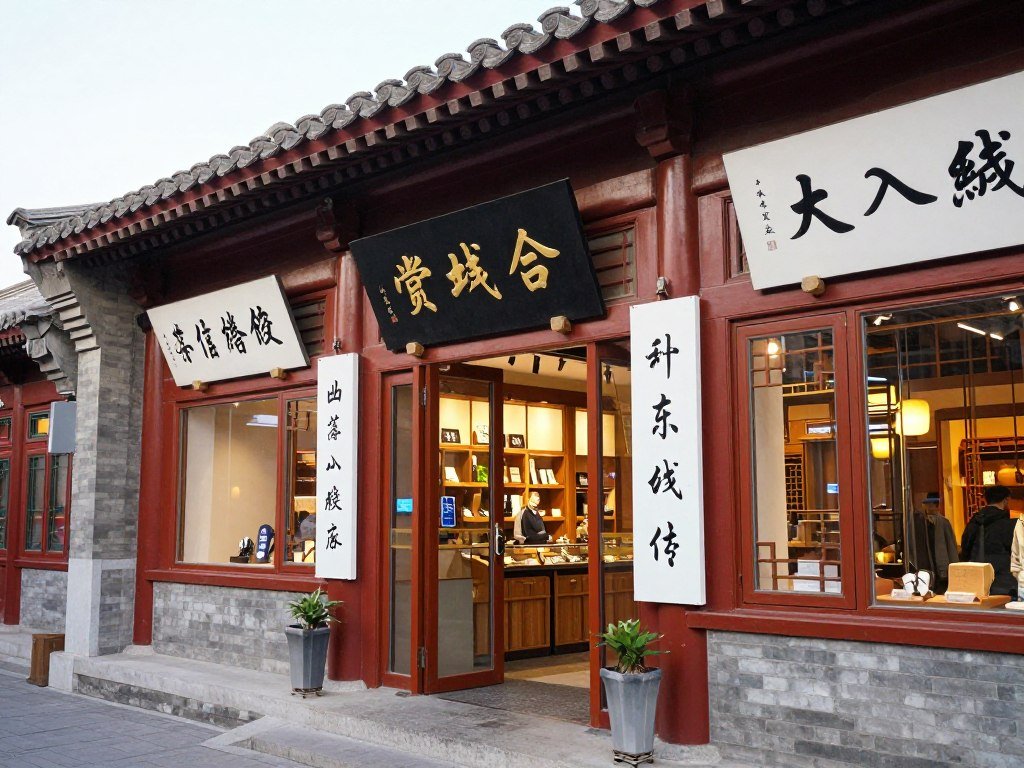
Silk Street Market (Xiushui) attracts tourists with five floors of clothing, accessories, and electronics. Despite the name, silk represents only a fraction of merchandise. Aggressive vendors pursue shoppers through narrow aisles. Counterfeit goods dominate, though quality varies wildly. Bargain hard, starting at 20-30% of the asking price.
Modern Shopping Malls
Sanlitun Village (Taikoo Li) represents Beijing’s most fashionable shopping destination. International luxury brands occupy street-level boutiques. The outdoor pedestrian design creates pleasant browsing environment. Restaurants and cafes surround the shopping areas. Prices match international retail levels.
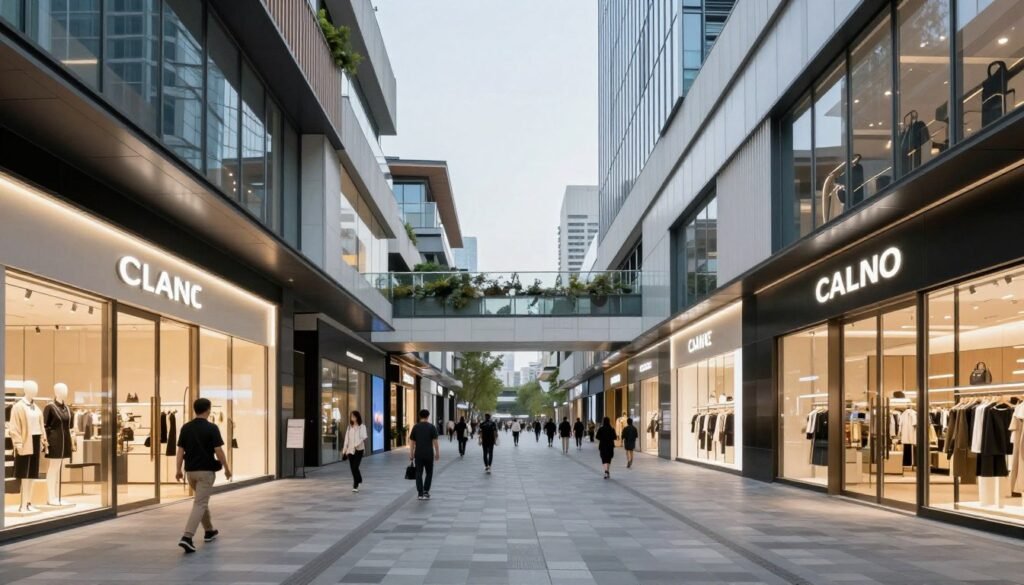
SKP Beijing ranks among China’s highest-grossing luxury malls. This upscale department store carries virtually every major fashion house. The basement level houses a impressive food market and restaurants. Prices remain high, but seasonal sales offer occasional deals. The mall attracts Beijing’s wealthy residents and tourists seeking premium goods.
Wangfujing Department Store anchors the historic shopping street of the same name. This massive complex combines traditional Chinese products with modern retail. The Oriental Plaza nearby adds international brands and dining. The pedestrian street between them buzzes with activity day and night.
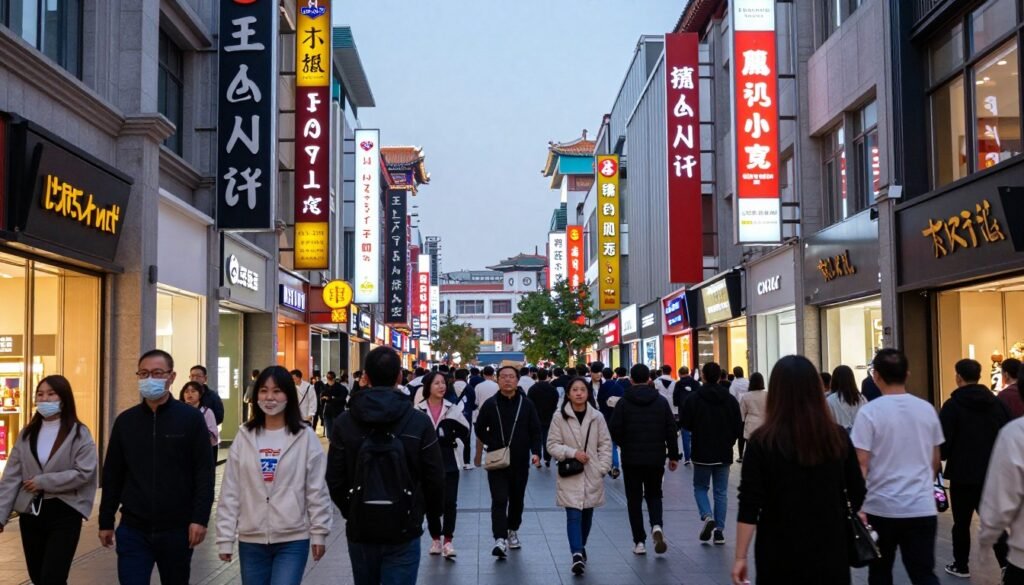
Specialty Shopping Areas
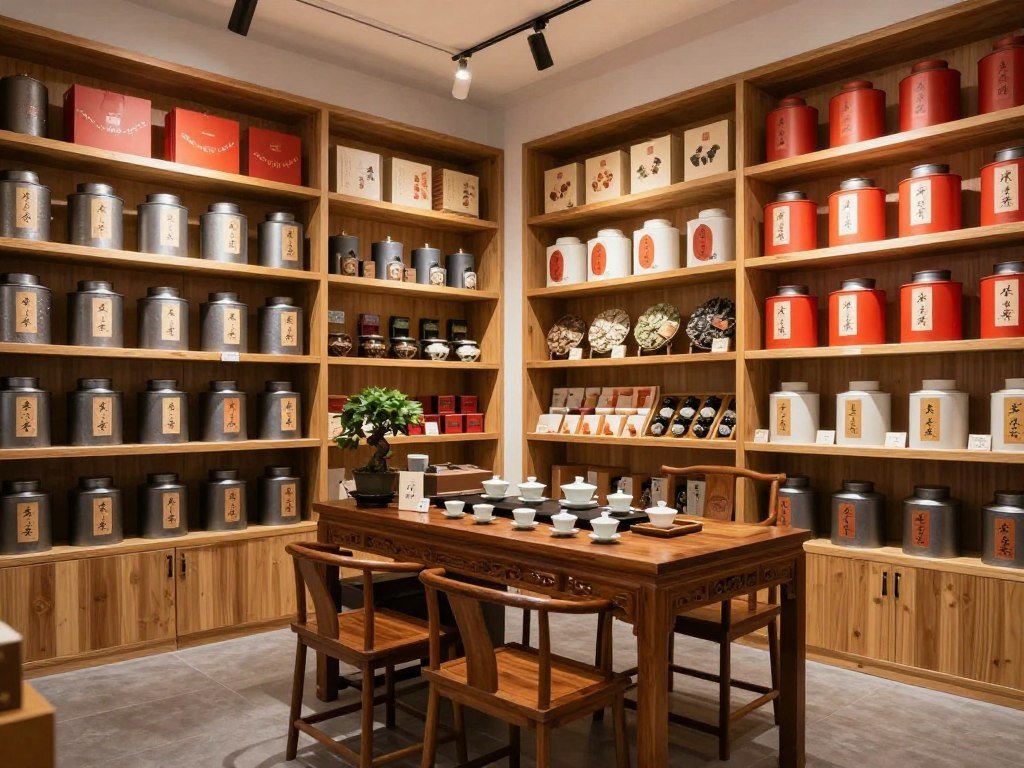
Maliandao Tea Street concentrates dozens of tea shops in one area. Vendors offer samples while explaining different varieties. Prices range from affordable daily-drinking teas to rare premium leaves. Most shops also sell teaware including pots, cups, and accessories. Staff typically speak some English and welcome browsers.
Hongqiao Pearl Market fills multiple floors with jewelry, pearls, and accessories. Despite the name, vendors sell much more than pearls. Clothing, bags, electronics, and souvenirs occupy upper levels. Pearl quality varies significantly, requiring careful inspection. Bargaining culture prevails throughout the building.
798 Art District shops sell contemporary Chinese art, design items, and creative products. Galleries often sell artworks directly from exhibiting artists. Independent designers operate boutiques featuring clothing, accessories, and home goods. Prices reflect the artistic nature and unique items. The area attracts creative shoppers seeking one-of-a-kind pieces.
What to Buy in Beijing
Traditional Chinese tea makes excellent gifts and personal souvenirs. Beijing’s shops stock varieties from across China. Green tea, oolong, pu-erh, and jasmine tea represent popular choices. Purchase from established shops for quality assurance. Many vendors vacuum-seal packages for travel.
Popular Beijing Souvenirs
- Chinese tea and teaware
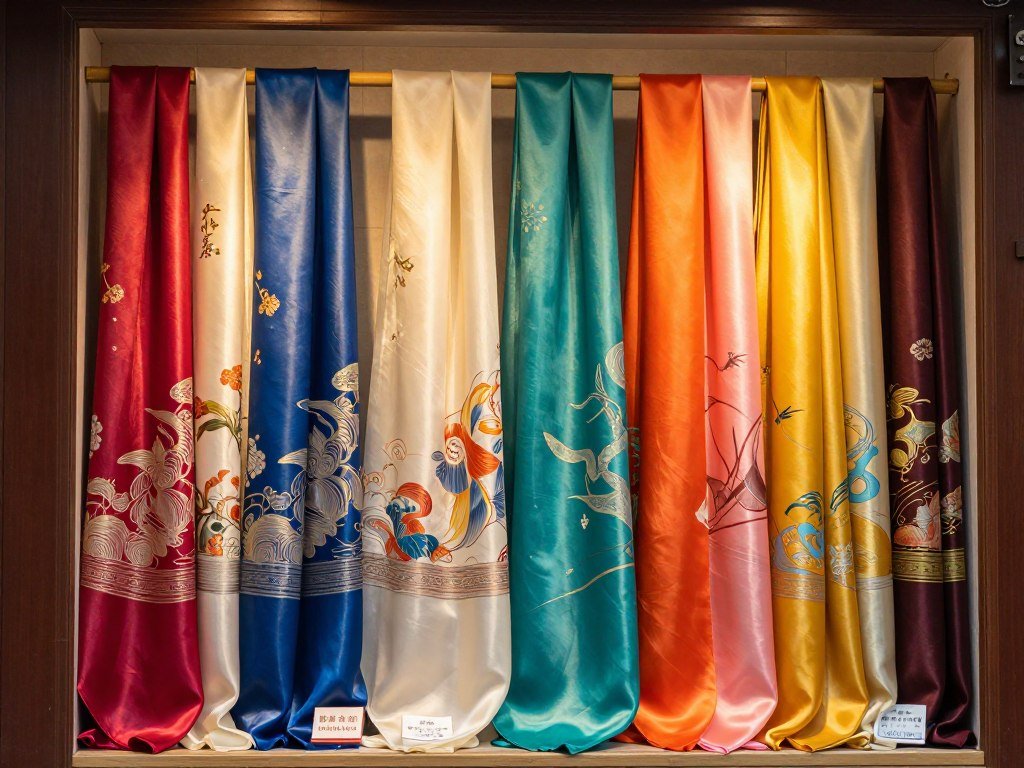
- Silk products and clothing
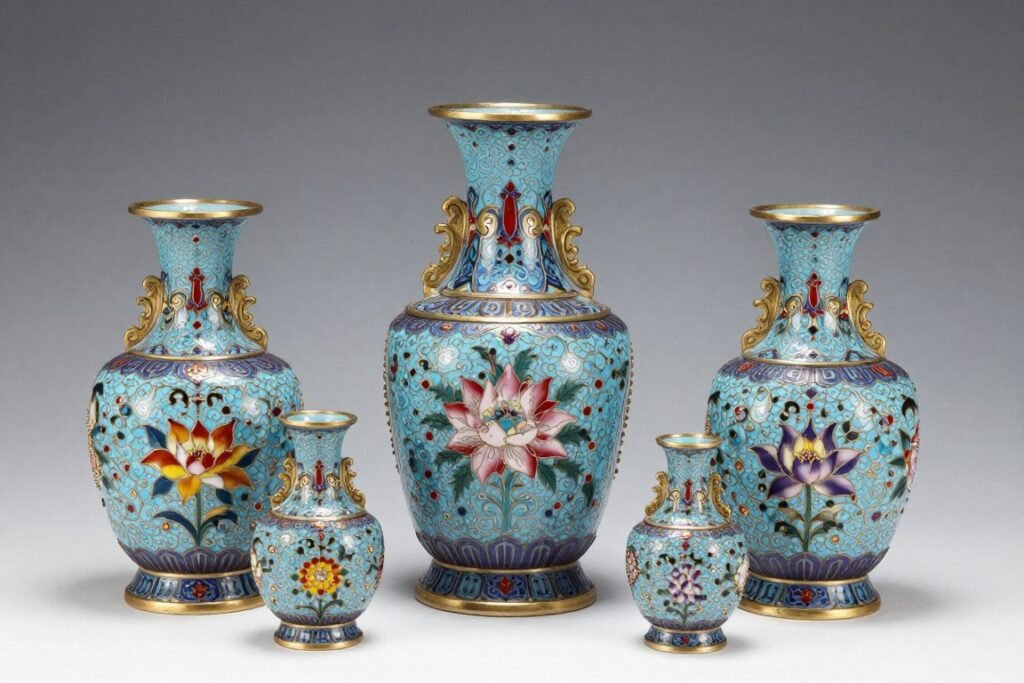
- Cloisonné decorative items
- Traditional Chinese paintings
- Calligraphy supplies and artwork
- Jade jewelry and carvings
- Beijing Opera masks
- Mao memorabilia and propaganda posters
Cloisonné enamelware originated in Beijing during the Yuan Dynasty. This intricate metalwork involves applying colored enamel to copper. Vases, plates, and decorative objects feature elaborate designs. Quality pieces require skilled craftsmanship. Purchase from reputable shops to ensure authentic items rather than factory reproductions.
Silk products range from scarves and clothing to decorative fabrics. China produces the world’s finest silk for centuries. Beijing shops stock items for all budgets. Check quality by examining weave tightness and color fastness. Pure silk feels cool to the touch and has characteristic luster.
Practical Travel Information for Beijing Visitors
Planning a Beijing trip requires understanding practical details beyond attractions and hotels. Visa requirements, currency, language, and local customs all impact your experience. This section covers essential information helping you prepare for a smooth visit to China’s capital.
Visa Requirements for Beijing
Most foreign nationals require a visa to enter China. Tourist visas (L-type) allow stays up to 30 days. Application processes vary by country but generally require passport, application forms, photo, and sometimes invitation letters. Chinese embassies and consulates process applications, typically taking 4-7 business days.
The 72-hour and 144-hour visa-free transit policy benefits some travelers. Eligible nationalities can transit through Beijing without a visa when continuing to a third country. This privilege requires tickets proving onward travel within the allowed time. The policy applies to Beijing Capital Airport arrivals and some other designated entry points.
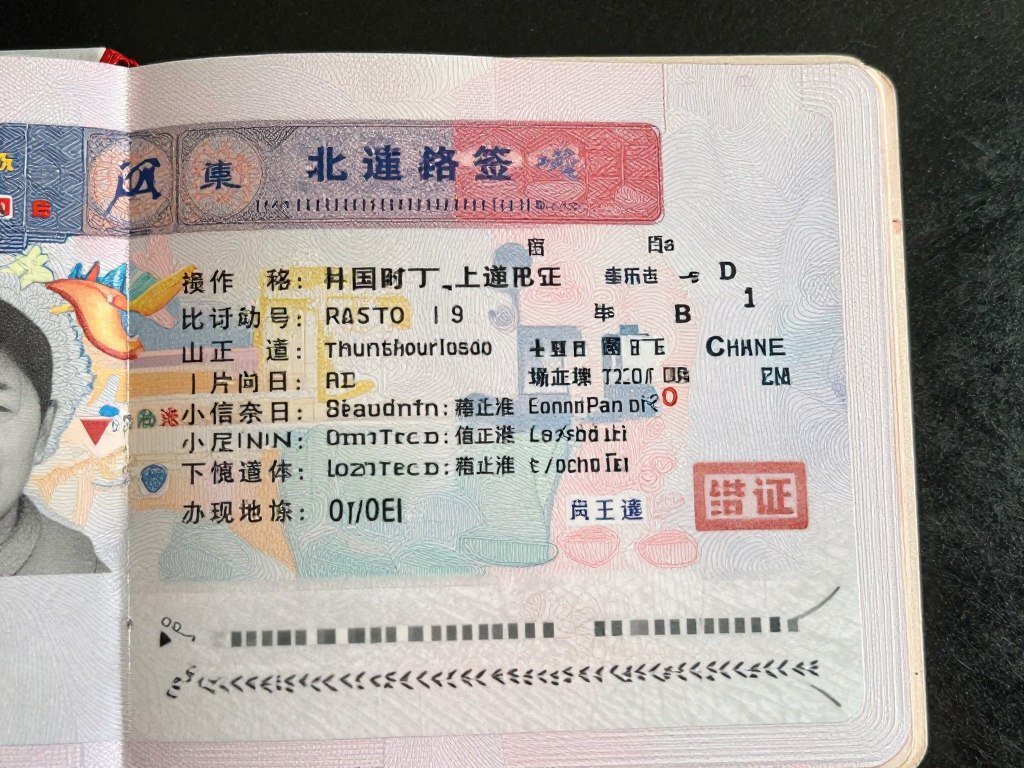
Apply for visas well before your intended travel dates. Peak seasons see longer processing times. Some countries require in-person applications at visa centers. Fees vary by nationality and processing speed. Check current requirements with your nearest Chinese diplomatic mission as policies change occasionally.
Currency and Money Matters
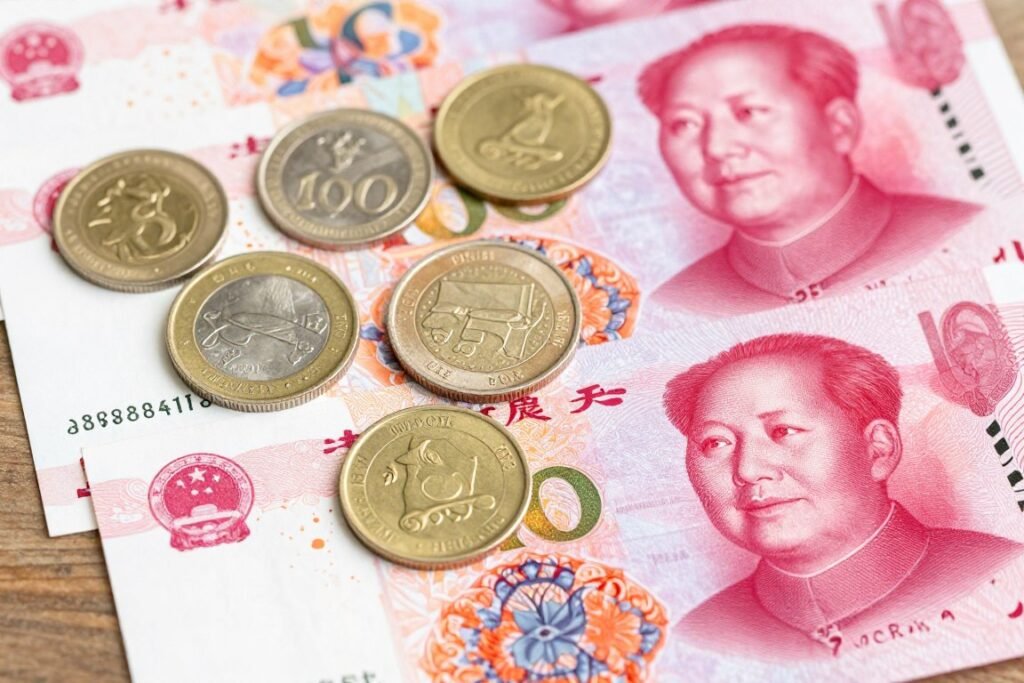
China’s official currency is the Renminbi (RMB) with the yuan (¥) as the basic unit. Banknotes come in denominations of ¥1, ¥5, ¥10, ¥20, ¥50, and ¥100. Coins include ¥1 and smaller jiao denominations. Beijing has largely shifted to mobile payments, but cash remains useful for small vendors and emergencies.
ATMs accepting international cards appear throughout Beijing. Bank of China, ICBC, and China Construction Bank machines work with most foreign cards. Withdrawal limits typically range from ¥2,500-¥3,000 per transaction. Fees apply from both your home bank and the Chinese bank. Airport ATMs offer immediate cash access upon arrival.
WeChat Pay and Alipay dominate cashless transactions in Beijing. These mobile payment systems require Chinese bank accounts for setup, creating challenges for tourists. Some services now allow international credit card linking, though functionality remains limited. Many restaurants and shops still accept cash and credit cards despite mobile payment prevalence.
Major hotels, restaurants, and shopping malls accept international credit cards. Visa and Mastercard work at most establishments catering to tourists. American Express and other cards have more limited acceptance. Small shops, street vendors, and some local restaurants only take cash or Chinese mobile payments.
Currency Exchange Tips
- Exchange money at banks or hotel front desks for best rates
- Avoid airport exchange counters except for small amounts
- Keep exchange receipts for converting unused yuan back
- Notify your bank of travel dates to prevent card blocks
- Carry cash backup even if planning to use cards
Language and Communication
Mandarin Chinese (Putonghua) serves as Beijing’s primary language. English proficiency remains limited outside tourist areas and international hotels. Young people and those in tourism industry speak better English than older generations. Learning basic Chinese phrases enhances your experience and shows cultural respect.
Translation apps prove invaluable for Beijing visitors. Google Translate works if downloaded for offline use before arriving (Google services face restrictions in China). Pleco and other China-focused translation apps function better for Chinese-English translation. Camera translation features help read menus and signs.
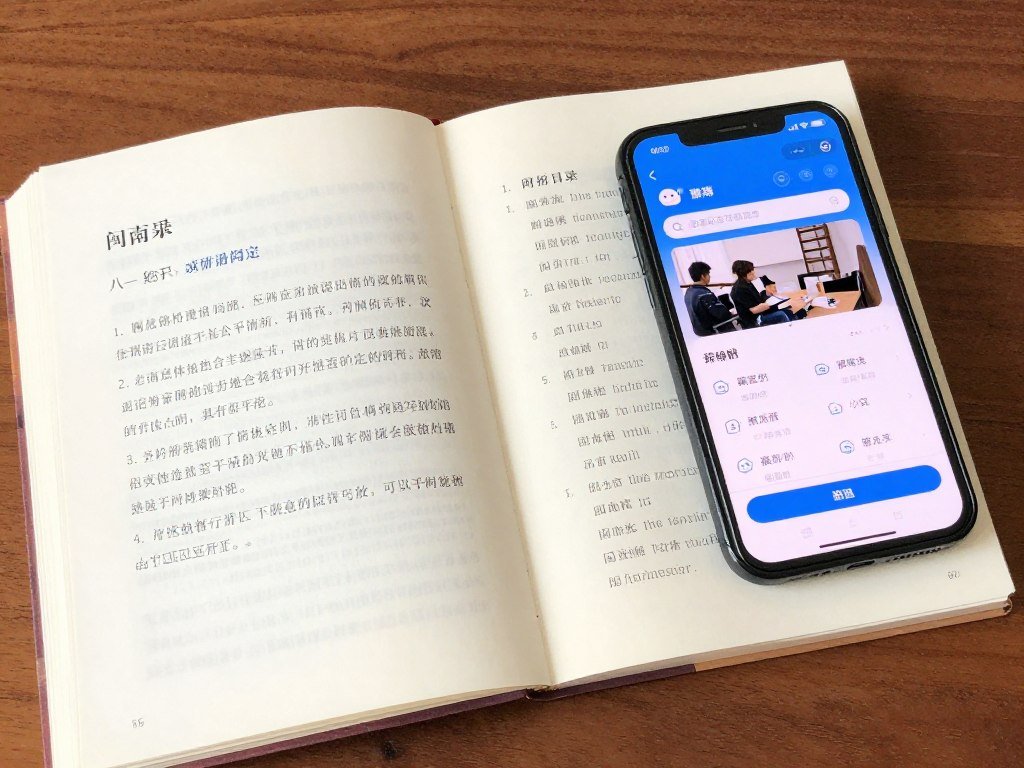
Have hotel addresses written in Chinese characters. Taxi drivers and many locals cannot read romanized addresses. Hotels provide business cards with Chinese addresses. Photograph or save these for showing drivers. Screenshot destinations in map apps showing Chinese names.
China blocks many Western internet services including Google, Facebook, Instagram, and WhatsApp. VPN services allow accessing these platforms. Install and test VPN before arriving in China. Not all VPNs work reliably, so research current functioning options. Chinese social media like WeChat works without restrictions.
Health and Safety Considerations
Beijing generally offers safe environment for tourists. Violent crime against foreigners remains rare. Petty theft occurs in crowded tourist areas and public transportation. Keep valuables secure and maintain awareness in busy locations. Pickpockets target distracted tourists, especially on crowded subway trains.
Air quality fluctuates significantly in Beijing. Winter months and certain weather conditions bring high pollution levels. Check air quality indexes daily. Consider wearing masks during polluted periods. Limit outdoor activities when AQI exceeds 150. Hotels and modern buildings have air filtration systems.
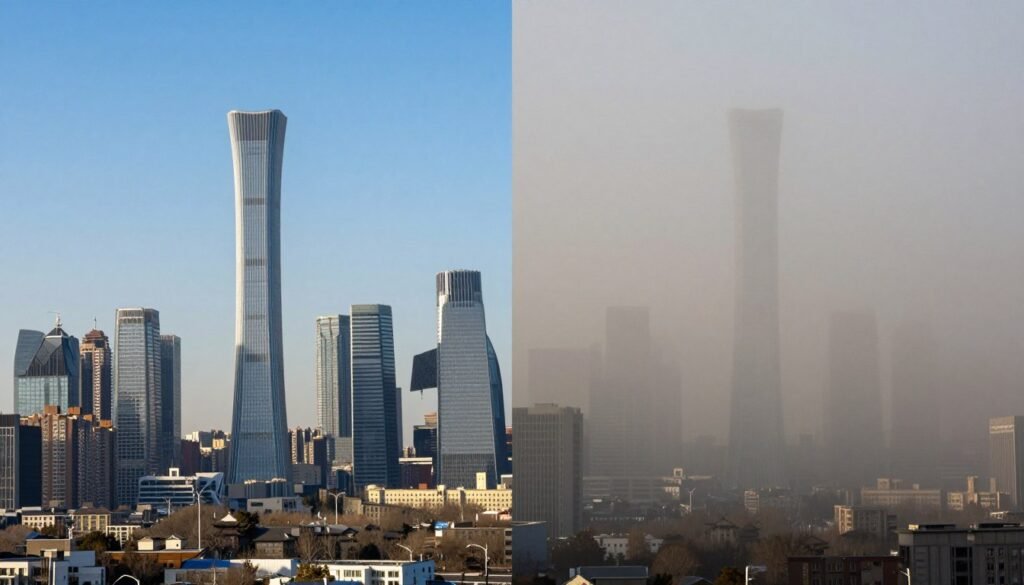
Tap water in Beijing should not be consumed directly. Hotels provide bottled water or filtered water dispensers. Restaurants serve boiled water (hot or cooled). Purchase bottled water from convenience stores everywhere. Avoid ice in drinks outside reputable hotels and restaurants.
No required vaccinations exist for Beijing travel, though routine immunizations should be current. Travel insurance with medical coverage provides peace of mind. Major hospitals have international departments with English-speaking staff. Beijing United Family Hospital and Peking Union Medical College Hospital serve expatriate communities.
Emergency Contact Numbers
- Police: 110
- Ambulance: 120
- Fire: 119
- Tourism Hotline: 12301 (Chinese language)
- Your Embassy: Keep number in phone
Cultural Etiquette and Customs
Understanding basic Chinese etiquette smooths interactions and shows respect. Greetings involve nodding or slight bowing rather than handshakes, though handshakes have become common in business contexts. Address people by title and surname until invited to use given names.
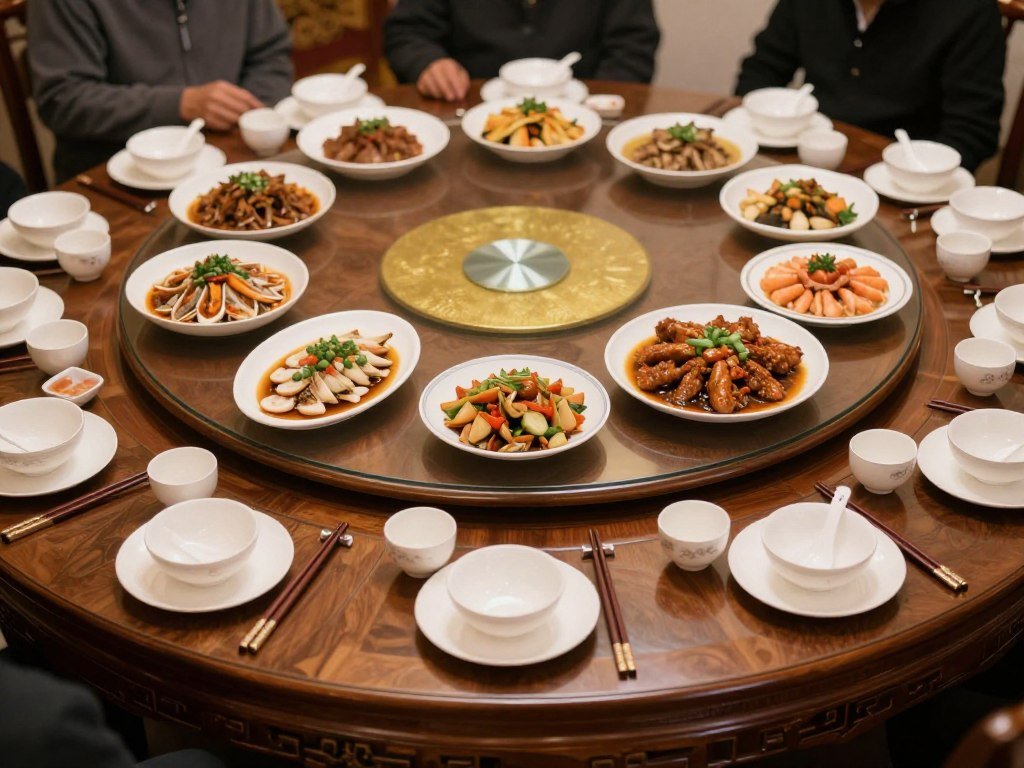
Dining etiquette includes specific customs. Never stick chopsticks upright in rice (resembles funeral rituals). Place chopsticks across your bowl or on the chopstick rest. The rotating center (lazy susan) turns clockwise. Try all dishes offered but finishing everything implies insufficient food was served.
Gift-giving follows certain rules. Avoid clocks, white flowers, or items in sets of four (number sounds like “death”). Red envelopes (hongbao) contain money for special occasions. Refuse gifts politely before accepting (declining once shows modesty). Open gifts privately unless invited to open immediately.
Temple and religious site visits require respectful behavior. Remove hats inside halls. Don’t touch religious statues or artifacts. Photography rules vary by location. Dress modestly, covering shoulders and knees. Speak quietly and turn off phone ringers. Follow posted rules about incense burning and donations.
Internet and Connectivity
WiFi access appears widely in Beijing hotels, cafes, and restaurants. Many locations require Chinese phone number for access codes. Hotels provide reliable connectivity for guests. Public WiFi networks may have restrictions or require registration.
Chinese SIM cards offer convenient mobile data access. China Telecom, China Mobile, and China Unicom operate networks. Purchase SIM cards at airports or official stores with passport. Prepaid plans start around ¥50-100 for tourist durations. Data speeds generally perform well in urban Beijing.
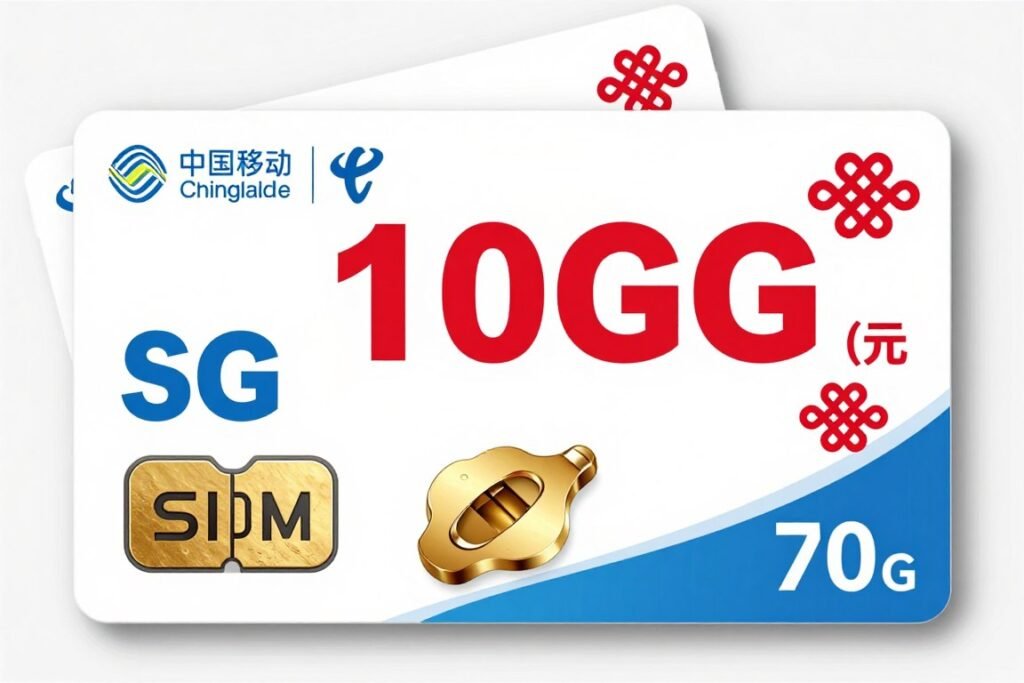
International roaming from home carriers costs significantly more than local SIM cards. Check your carrier’s China roaming rates before relying on this option. Some travelers use portable WiFi devices rented at airports. These provide reliable connectivity for multiple devices simultaneously.
Day Trips from Beijing: Nearby Destinations Worth Visiting
Beijing’s location provides access to fascinating destinations within day-trip distance. Ancient towns, imperial tombs, and natural wonders surround the capital. These excursions offer deeper understanding of Chinese history and culture. They also provide welcome breaks from urban intensity.
The Great Wall at Various Sections
While technically part of Beijing, the Great Wall sections deserve day trip consideration. Badaling draws largest crowds but offers easiest access. Mutianyu provides balance between access and authenticity. More adventurous travelers explore Jinshanling, Simatai, or Huanghuacheng for wild wall experiences.
Hiking between wall sections creates memorable adventures. The Jinshanling to Simatai trek covers about 6 miles with spectacular scenery. The route includes both restored and unrenovated sections. Physical fitness and sure footing matter on steep, uneven sections. Organized tours handle transportation and entrance arrangements.
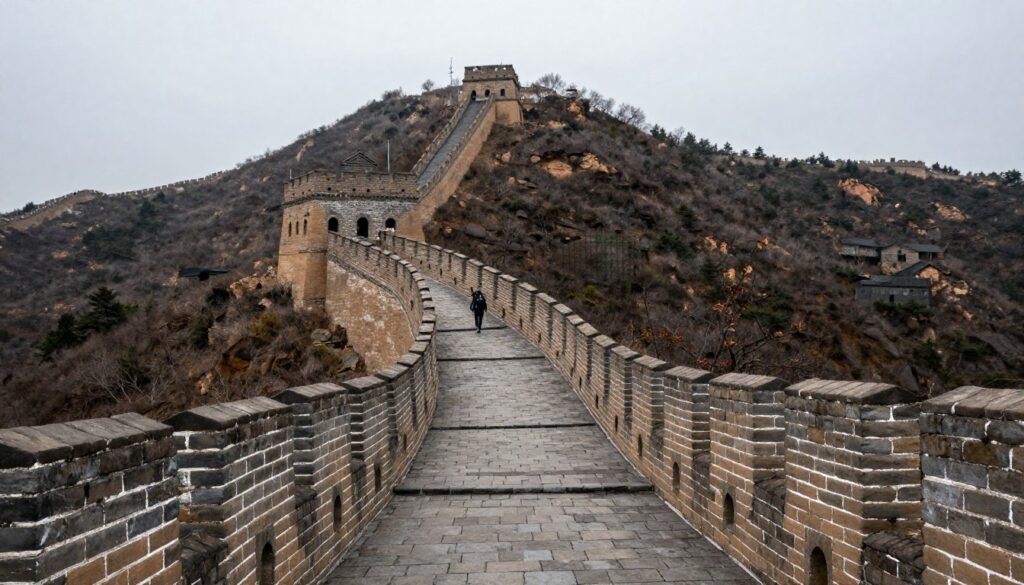
Sunrise or sunset visits transform Great Wall experiences. Fewer crowds and dramatic lighting create magical atmosphere. Some sections like Simatai offer night viewing under floodlights. Private tours arrange special access timing. Bring layers as temperatures drop significantly on exposed ridges.
Ming Tombs: Imperial Burial Site
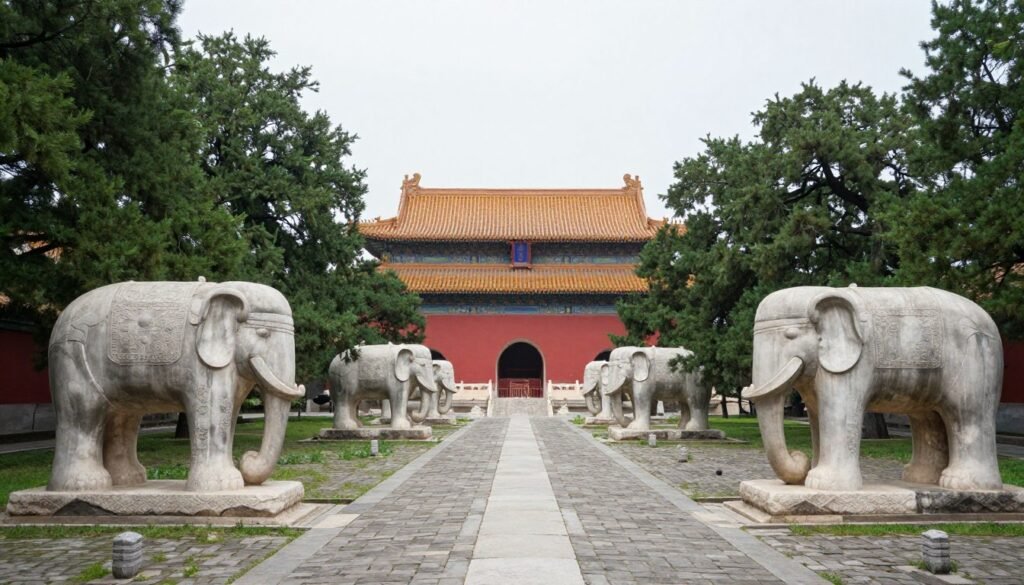
The Ming Dynasty emperors rest in tombs located 30 miles north of Beijing. Thirteen emperors chose this valley surrounded by mountains. The Sacred Way leading to the tombs features impressive stone sculptures of animals and officials. This ceremonial path extends for 4 miles through beautiful landscape.
Only three tombs currently open to visitors. Changling, the largest, contains the tomb of Emperor Yongle. The underground palace at Dingling allows descending into burial chambers. The museums display artifacts recovered from excavations. Combined Great Wall and Ming Tombs tours offer efficient day trips covering both sites.
Gubei Water Town
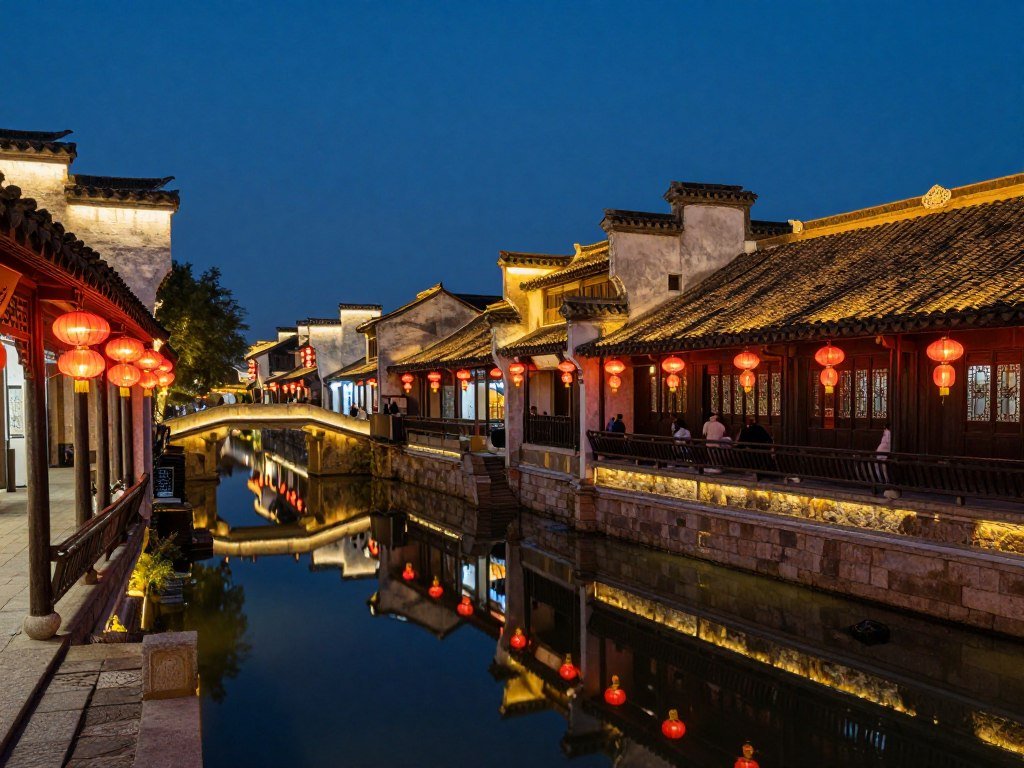
This reconstructed ancient town sits at the foot of the Simatai Great Wall section. Traditional architecture recreates Ming and Qing Dynasty styles. Canals and bridges create picturesque waterside setting. The town opened in 2014 as tourist destination, blending old aesthetics with modern amenities.
Numerous hotels allow overnight stays for sunset and sunrise Great Wall viewing. Restaurants serve northern Chinese cuisine in atmospheric settings. The town lights up at night, creating romantic ambiance. While not authentically historic, Gubei Water Town provides comfortable base for Simatai Great Wall visits.
Tianjin: Nearby Port City
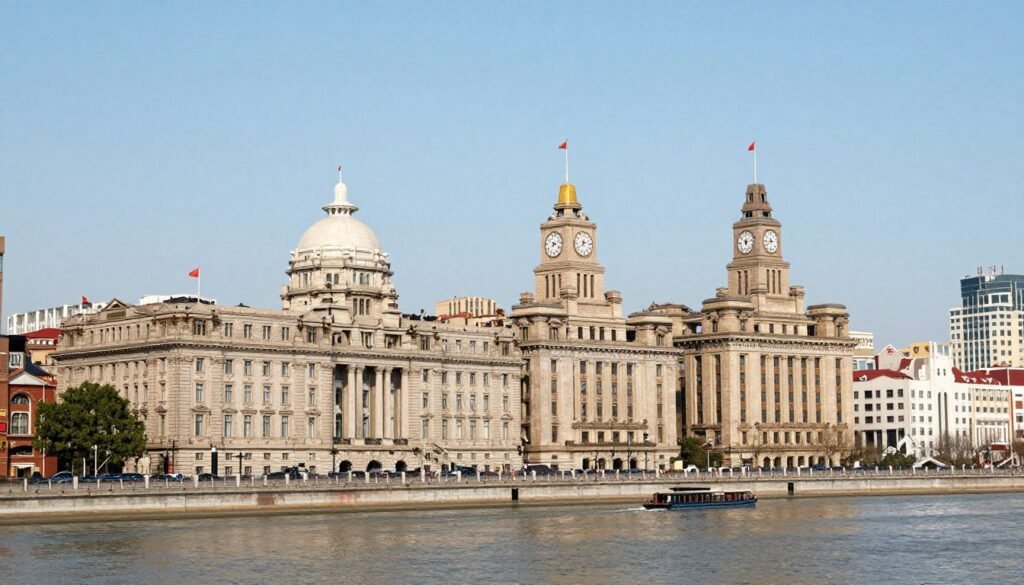
Tianjin lies just 30 minutes from Beijing by high-speed train. This coastal city features European-style architecture from its time as foreign concession territory. The Haihe River winds through the city center. Walking along riverside promenades reveals the Italian, French, and British architectural heritage.
Tianjin’s food culture differs from Beijing with unique local specialties. Goubuli steamed buns, ear-hole fried cakes, and Tianjin preserved vegetables represent local favorites. Ancient Culture Street preserves traditional architecture and hosts craft shops. The Porcelain House, covered in ancient porcelain and crystals, creates surreal artistic experience.
Cuandixia Village: Ancient Mountain Village
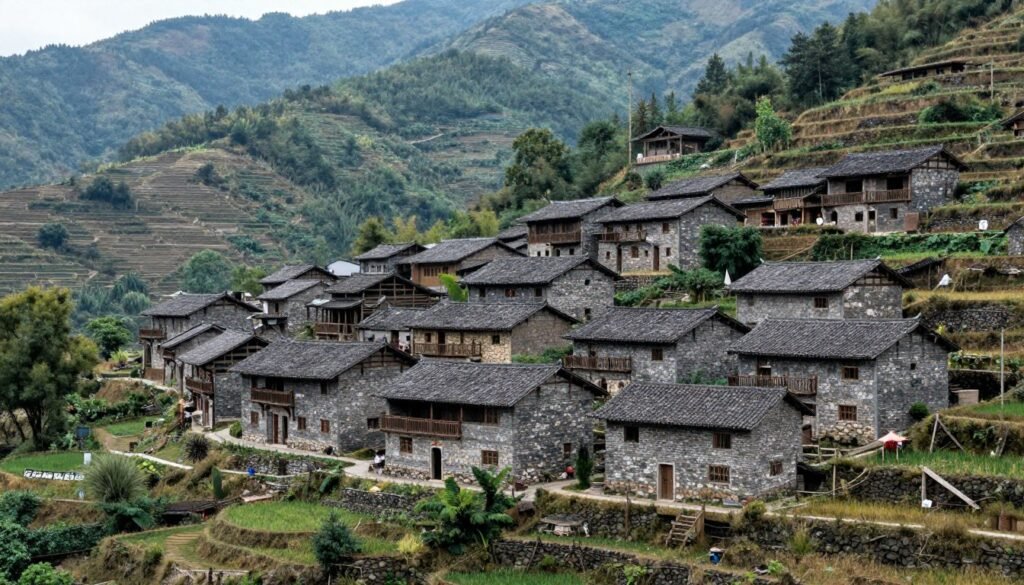
This Ming Dynasty village perches on mountainside about 56 miles west of Beijing. Nearly 500 years old, the village preserves traditional courtyard homes. Stone houses climb the slope in terraced arrangement. The remote location protected it from modern development, maintaining authentic character.
Approximately 70 households still inhabit the village. Locals rent rooms to overnight visitors. Simple conditions provide authentic rural experience. The surrounding mountains offer hiking trails. Photography enthusiasts appreciate the unspoiled traditional architecture and scenic setting. The journey takes about 3 hours each way by car.
Chengde: Imperial Summer Resort
Chengde served as Qing emperors’ summer retreat, located 140 miles northeast of Beijing. The massive Mountain Resort complex covers 1,400 acres. Gardens, palaces, and lakes recreate southern Chinese scenery. The UNESCO World Heritage site represents imperial landscape architecture at its peak.
Eight Outer Temples surround the resort, blending Chinese and Tibetan Buddhist architecture. The Putuo Zongcheng Temple resembles Lhasa’s Potala Palace. These magnificent structures demonstrate the Qing Dynasty’s religious and political reach. Chengde makes better overnight trip than rushed day visit given distance and site scale.
| Destination | Distance from Beijing | Travel Time | Main Attractions | Best For |
| Mutianyu Great Wall | 45 miles (73 km) | 1.5-2 hours | Great Wall, scenic mountains | Families, photographers |
| Ming Tombs | 30 miles (50 km) | 1-1.5 hours | Imperial tombs, Sacred Way | History enthusiasts |
| Gubei Water Town | 78 miles (125 km) | 2-2.5 hours | Traditional town, Simatai Wall | Overnight stays, photography |
| Tianjin | 75 miles (120 km) | 30 min by train | Colonial architecture, food | Architecture lovers, foodies |
| Cuandixia Village | 56 miles (90 km) | 3 hours | Ancient village, mountains | Photographers, hikers |
| Chengde | 140 miles (225 km) | 2-3 hours | Summer Resort, temples | History buffs, overnight trips |
Beijing Itinerary Suggestions: How to Plan Your Days
Organizing your Beijing time efficiently maximizes experiences while avoiding exhaustion. The city offers enough attractions to fill weeks. Most visitors spend 3-7 days exploring. These suggested itineraries help structure your trip based on available time.
The Ultimate 3-Day Beijing Itinerary & Trip Planner
A three-day visit allows hitting major highlights with focused planning. This timeline suits first-time visitors wanting to experience Beijing’s top attractions. Days require early starts and sustained energy. The schedule balances must-see sites with some flexibility.
Day 1: Imperial Beijing
Morning: Start at Tiananmen Square at sunrise for flag-raising ceremony. Enter the Forbidden City when it opens at 8:30 AM. Spend 3-4 hours exploring the palace complex.
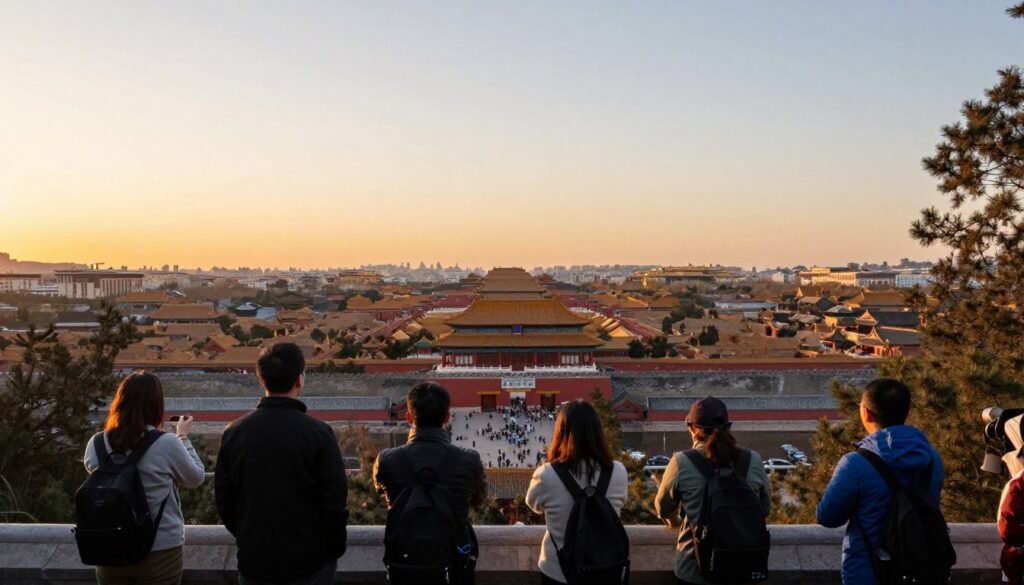
Afternoon: Walk to Jingshan Park for panoramic city views. Lunch in Wangfujing area. Explore Wangfujing Street shopping and snacks.
Evening: Visit Houhai Lake area for dinner and evening atmosphere. Traditional Beijing cuisine at a lakeside restaurant.
Day 2: The Great Wall
Morning: Depart early for Mutianyu Great Wall (arrive before 9 AM). Take cable car up, walk the wall for 2-3 hours. Toboggan down for fun descent.
Afternoon: Return to Beijing. Visit Lama Temple or relax at hotel. Late afternoon shopping in Sanlitun.
Evening: Peking Duck dinner at famous restaurant. Evening walk around Olympic area to see Bird’s Nest illuminated.
Day 3: Temple & Summer Palace
Morning: Visit Temple of Heaven early. Watch locals practicing tai chi and traditional activities in the park.
Afternoon: Take subway to Summer Palace. Explore gardens, walk Long Corridor, rent boat on Kunming Lake. Allow 3-4 hours minimum.
Evening: Return to city center. Farewell dinner in Dongcheng. Optional Peking Opera performance or acrobatics show.
Five Days in Beijing: In-Depth Exploration
Five days allows deeper engagement with Beijing’s attractions and culture. This schedule includes major sites plus additional experiences. The pace feels more relaxed with time for wandering and discovery. Days can be rearranged based on weather and personal interests.
Follow the three-day itinerary above, then add two more days focusing on specific interests. Day 4 might explore hutong neighborhoods by bicycle, visit 798 Art District, and experience a traditional tea ceremony. Day 5 could include a different Great Wall section like Jinshanling or a day trip to Ming Tombs and Dingling underground palace.
Additional experiences might include kung fu show, Chinese cooking class, or calligraphy workshop. Market visits to Panjiayuan or Silk Street fit well into afternoon schedules. Evening options expand to include various performances like Peking Opera, acrobatics, or contemporary theater.
One Week in Beijing: Comprehensive Discovery
Seven days permits thorough Beijing exploration including day trips. This timeframe suits travelers wanting complete immersion without rushing. The schedule accommodates rest days and spontaneous discoveries. Mix structured sightseeing with unplanned wandering.
Dedicate one full day to a significant excursion like Chengde or Gubei Water Town. Another day might focus entirely on museums – National Museum of China, Capital Museum, or specialized collections. Include time for personal interests whether shopping, parks, or neighborhoods that intrigue you.
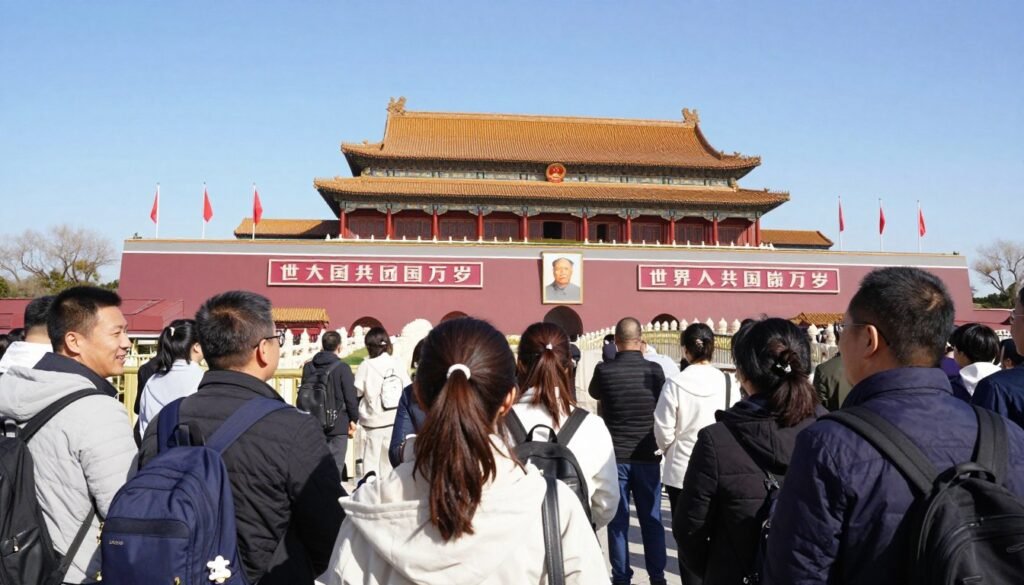
A week allows experiencing Beijing’s different faces. Balance tourist attractions with local life observation. Spend mornings in parks watching tai chi and dancing. Eat where residents eat rather than only tourist restaurants. Visit neighborhoods beyond the sightseeing circuit. This deeper engagement reveals Beijing’s authentic character.
Essential Beijing Travel Tips Before You Go
Geographic clustering saves time and energy. Group nearby attractions into single days. The Forbidden City, Tiananmen Square, and Jingshan Park work well together. Temple of Heaven, Panjiayuan Market, and Beijing Zoo (if interested) form another logical combination.
Consider opening days and times when planning. Many museums close Mondays. The Forbidden City limits daily visitors, requiring advance tickets. Some attractions reduce hours in winter. Check current schedules before finalizing daily plans.
Morning Priorities
- Arrive at major sites when they open
- Beat the crowds and heat
- Better photography light
- Guards and staff more helpful early
- Great Wall visits especially crucial
Afternoon Flexibilities
- Shopping and markets more lively
- Parks pleasant in good weather
- Museums when outdoor sites too hot
- Tea houses and cultural activities
- Rest time before evening activities
Build in flexibility for weather variations. Air pollution, extreme heat, or rain can derail outdoor plans. Maintain backup indoor options for each day. Museums, shopping centers, and cultural activities work regardless of conditions.
Factor in transportation time between sites. Beijing’s size means traveling across the city can take an hour or more. Morning and evening rush hours severely slow all transportation. Allow buffer time in schedules rather than packing activities too tightly.
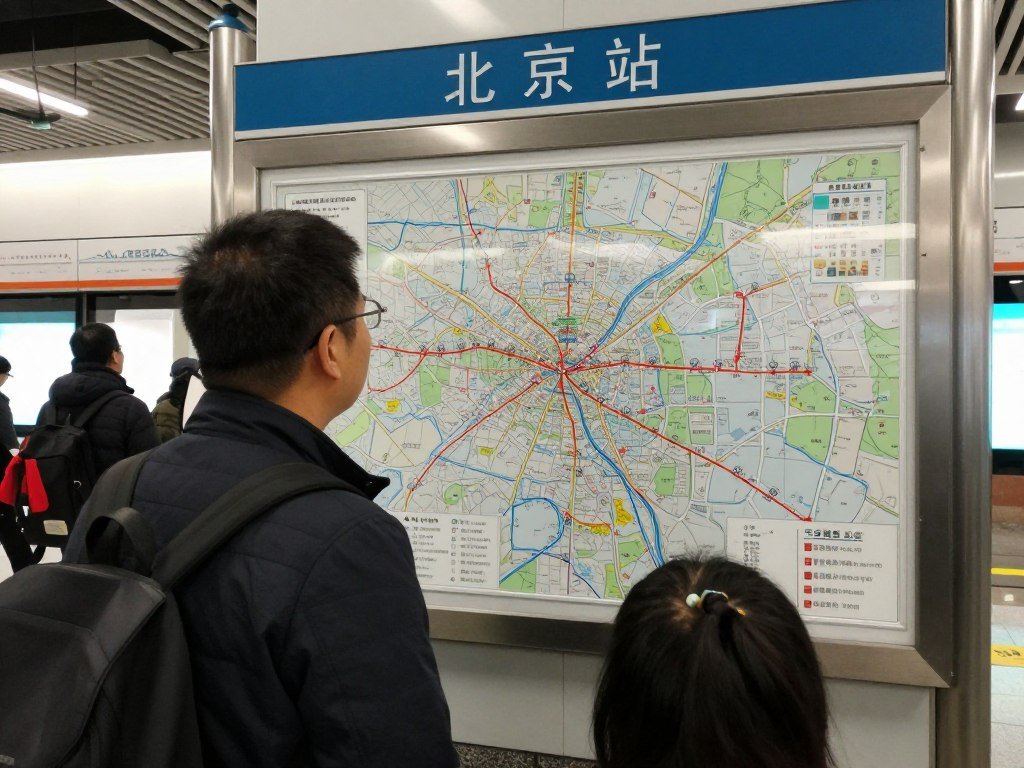
Beijing Events and Festivals Throughout the Year
Beijing’s event calendar follows both traditional Chinese festivals and modern celebrations. These occasions provide unique cultural experiences beyond standard sightseeing. Many festivals date back centuries while others reflect contemporary China. Planning around major events enhances your visit significantly.
Chinese New Year (Spring Festival)
Chinese New Year represents China’s most important holiday. The date shifts annually based on lunar calendar, usually falling in late January or February. Beijing transforms with red decorations, lanterns, and festive atmosphere. Families gather for reunion dinners on New Year’s Eve. Streets empty as residents travel home to family.
Temple fairs (miaohui) operate throughout the two-week celebration period. These traditional events feature performances, games, crafts, and special foods. The Temple of Earth, Ditan Park, and other venues host major fairs. Lion dances, traditional music, and folk performances fill the days.
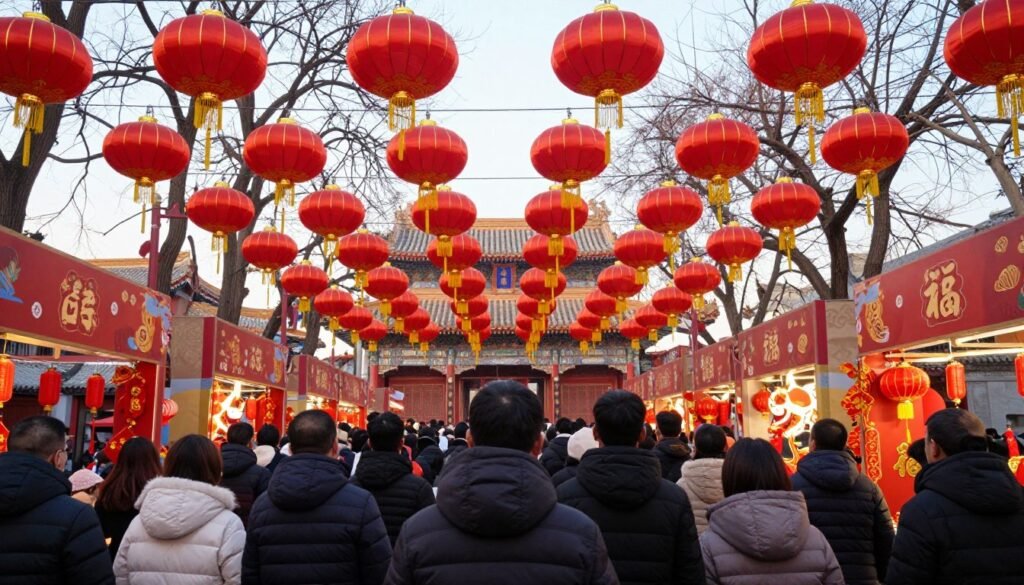
Many restaurants and shops close during the holiday. Plan accordingly for reduced services. The week before and after New Year sees extreme transportation crowding as the world’s largest annual migration occurs. Hotels and flights become expensive and scarce. Despite challenges, the festive energy makes this special time to visit.
Lantern Festival
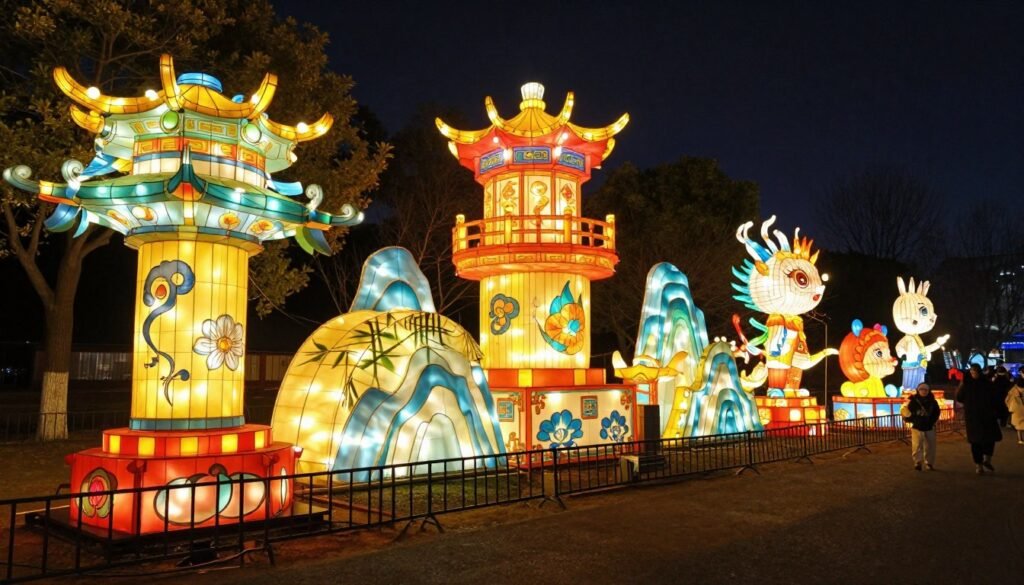
The Lantern Festival marks the end of New Year celebrations on the 15th day of the first lunar month. Traditional lanterns of all shapes and sizes illuminate parks and streets. Yuanxiao (sweet rice balls) represent the traditional food eaten this night. Families solve riddles written on lanterns as part of celebrations.
Parks throughout Beijing host lantern displays. The displays range from traditional designs to modern artistic creations. Some lanterns reach enormous sizes as elaborate installations. Evening visits provide the best viewing as lights glow against dark skies.
Qingming Festival (Tomb Sweeping Day)
Qingming occurs in early April when families honor ancestors by cleaning tombs and making offerings. While primarily a solemn occasion, the festival also celebrates spring’s arrival. Many Beijing residents travel to ancestral homes, reducing city crowds. Parks fill with people flying kites, a traditional Qingming activity.
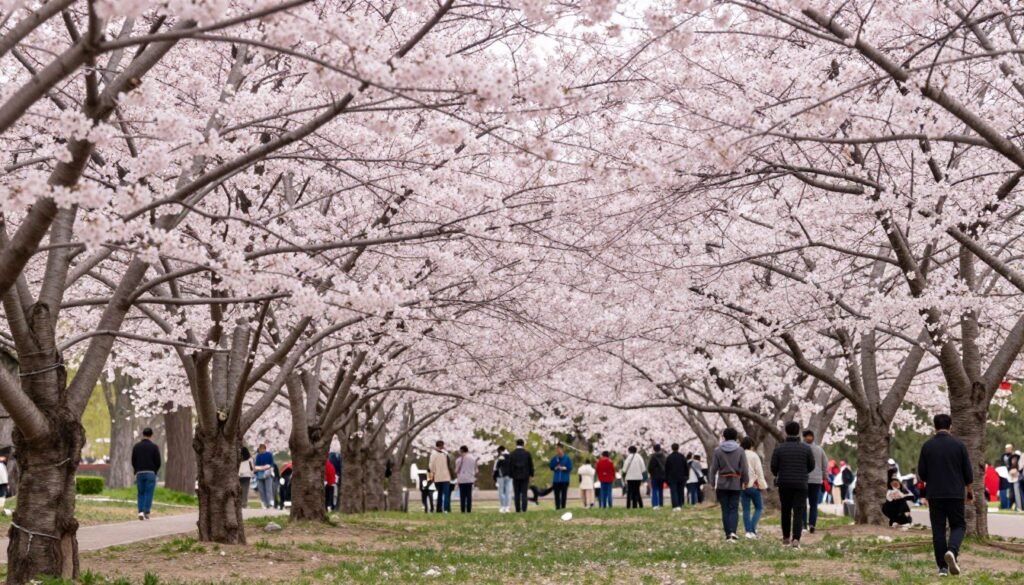
This period brings comfortable spring weather ideal for outdoor activities. Cherry blossoms bloom in parks throughout the city. Yuyuantan Park hosts an annual cherry blossom festival. The combination of cultural tradition and natural beauty makes Qingming an interesting visit time.
Mid-Autumn Festival (Moon Festival)
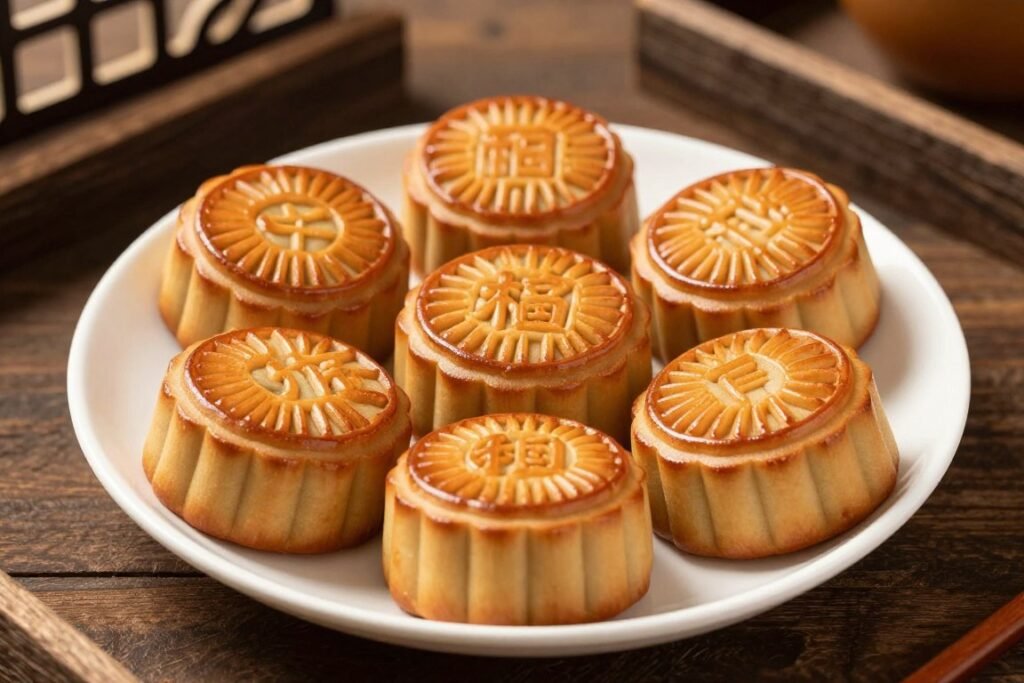
The Mid-Autumn Festival falls on the 15th day of the eighth lunar month (September or October). Families gather to admire the full moon and eat mooncakes. These dense pastries contain various sweet or savory fillings. Stores sell elaborately packaged mooncakes for weeks before the festival.
Parks host moon-viewing parties where people bring tea and snacks. The tradition emphasizes family reunion and appreciation of natural beauty. Some locations organize traditional performances or lantern displays. The festival creates peaceful, contemplative atmosphere throughout Beijing.
National Day Golden Week
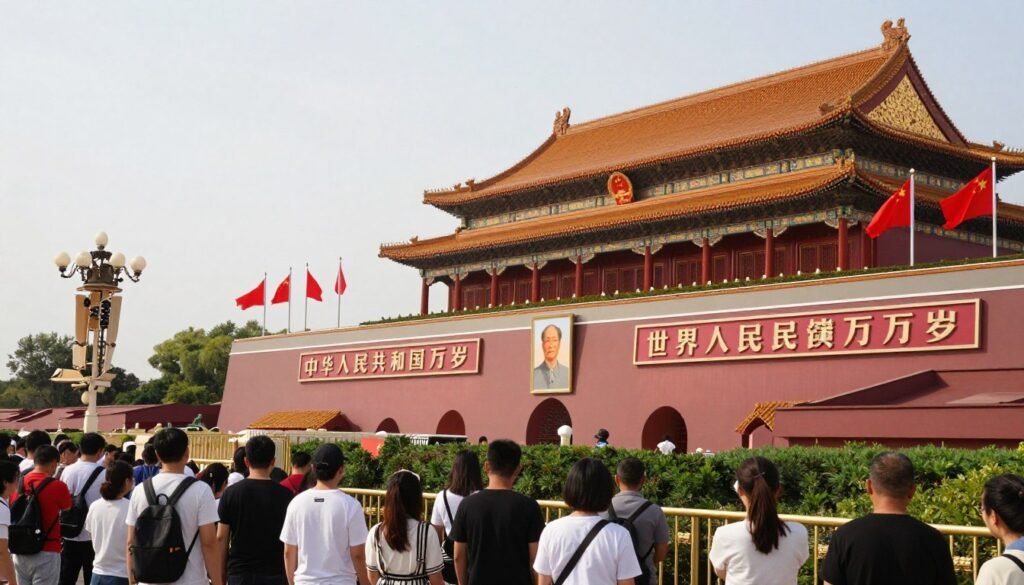
October 1st marks the founding of the People’s Republic of China in 1949. National Day kicks off a week-long holiday period. Tiananmen Square hosts flag-raising ceremonies and patriotic displays. The entire week sees massive domestic tourism as Chinese residents travel.
This period represents the worst time for foreign tourists to visit Beijing. Attractions become impossibly crowded. Hotels and transportation prices soar. Booking anything becomes difficult. The Great Wall literally fills with shoulder-to-shoulder visitors. Avoid this week if possible unless you specifically want to experience the crowds.
Beijing International Film Festival
This annual film festival occurs in April, showcasing Chinese and international cinema. Screenings take place at theaters across Beijing. The event attracts film industry professionals and enthusiasts. Red carpet events and celebrity appearances add glamour. Movie fans can purchase tickets for screenings of films from around the world.
Beijing Music Festival
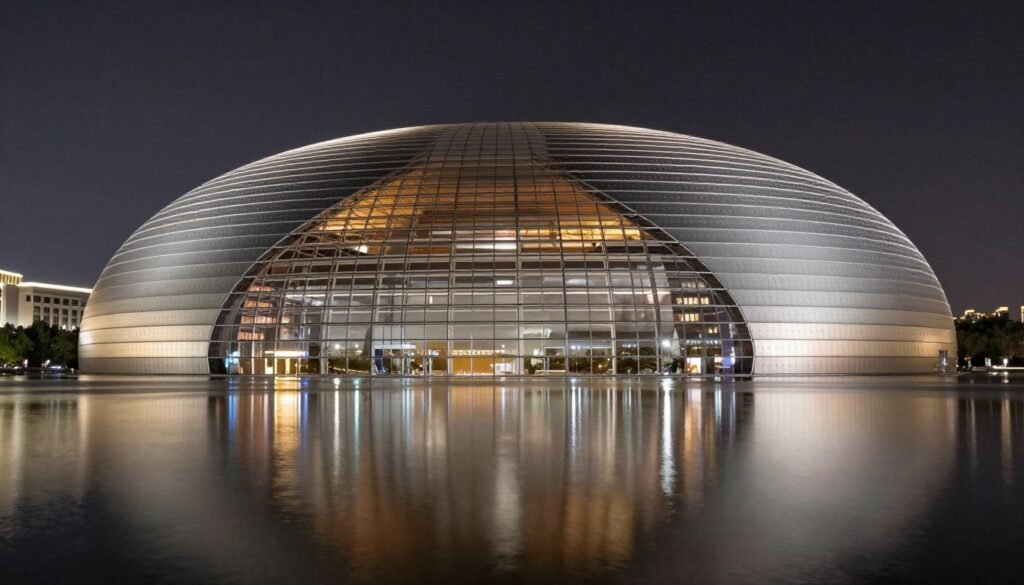
October brings classical music performances to Beijing’s premier venues. International orchestras and renowned soloists perform alongside Chinese musicians. The National Centre for the Performing Arts hosts many concerts. This month-long festival elevates Beijing’s cultural scene with world-class performances.
Family-Friendly Beijing: Traveling with Children
Beijing welcomes families with children of all ages. The city offers numerous attractions and activities suitable for young travelers. Planning appropriately ensures everyone enjoys the trip. Understanding kid-friendly options helps families make the most of their Beijing adventure.
Best Attractions for Families
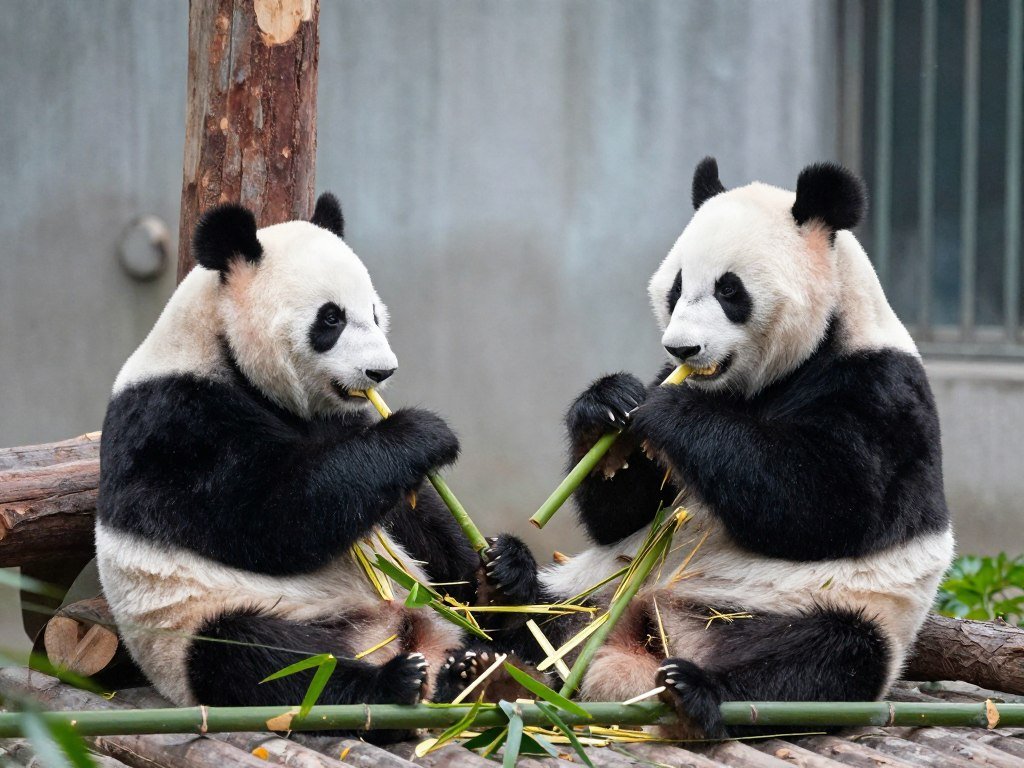
Beijing Zoo houses over 14,500 animals including the beloved giant pandas. The panda hall attracts the largest crowds, especially on weekends. Arrive early for the best viewing when pandas are most active. The zoo also features other Chinese animals like red pandas, golden monkeys, and South China tigers.
The adjoining Beijing Aquarium showcases marine life in one of Asia’s largest facilities. Dolphin and sea lion shows entertain children throughout the day. The Amazon rainforest section recreates tropical environment. Touch pools allow interactive experiences with smaller sea creatures. Combined zoo and aquarium tickets offer good value.
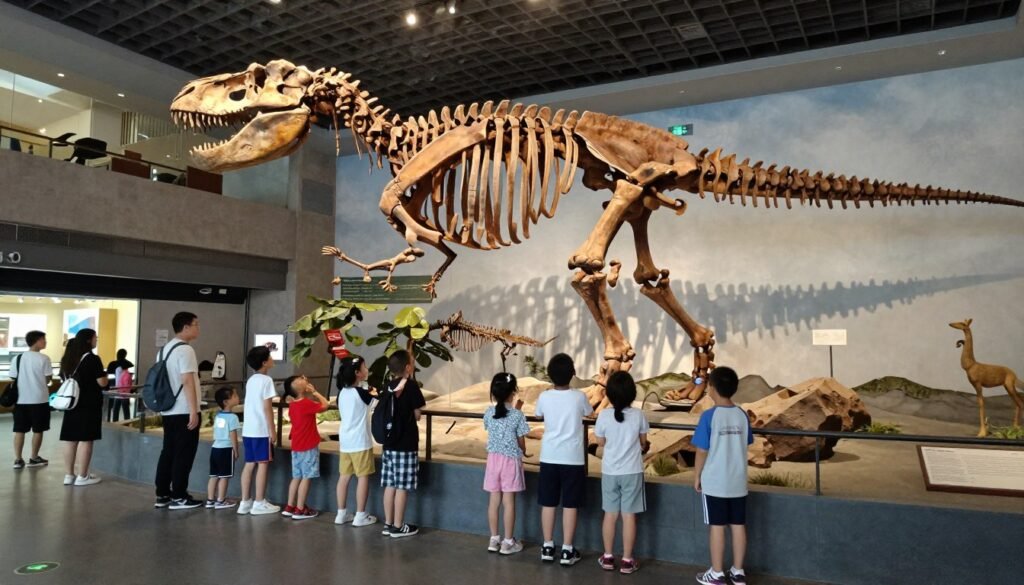
The Natural History Museum provides free admission and engaging exhibits. Dinosaur skeletons fascinate young visitors. Interactive displays explain natural sciences through hands-on activities. The museum’s central location makes it easy to visit between other attractions. English explanations appear throughout the facility.
The China Science and Technology Museum occupies a massive modern building. Five themed halls cover topics from ancient Chinese inventions to space exploration. Children can conduct experiments and interact with displays. The IMAX theater shows educational films. The museum requires half a day minimum for thorough exploration.
Parks and Outdoor Spaces
Beihai Park combines history with recreational opportunities. Families rent paddle boats to explore the lake. Children enjoy feeding fish and watching the white dagoba from different angles. The park’s size allows running and playing without disturbing others. Playgrounds appear in several locations throughout the grounds.
Olympic Forest Park provides enormous green space north of the Bird’s Nest. Bike rentals allow exploring the extensive paths. Playgrounds, fitness equipment, and open lawns accommodate various activities. The park feels less touristy than central Beijing sites. Locals use it for recreation, creating authentic atmosphere.
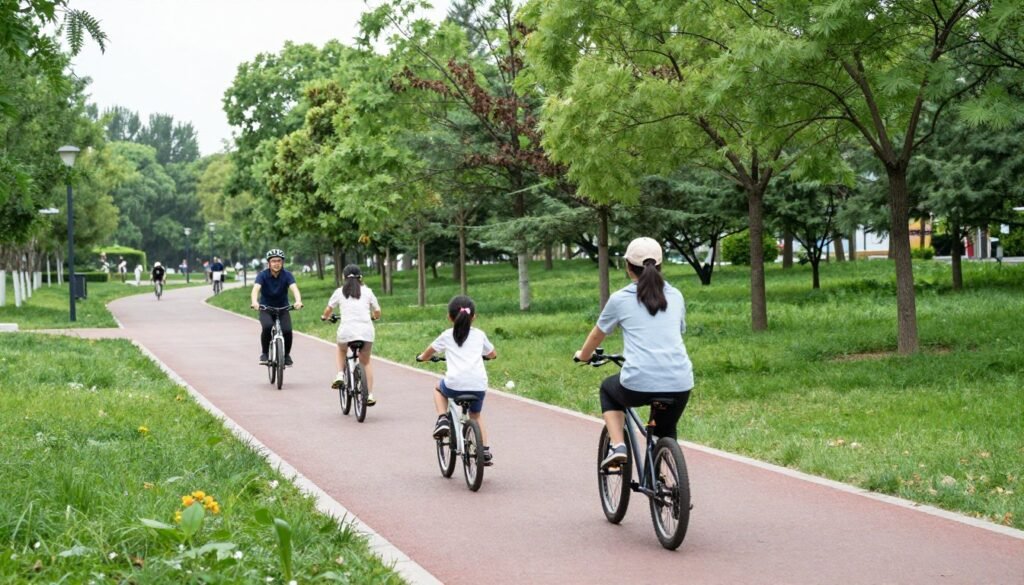
Chaoyang Park offers amusement rides, water activities in summer, and seasonal festivals. The park charges entrance fee with additional costs for attractions. It bridges traditional park and amusement park concepts. Families can easily spend several hours enjoying various activities.
Kid-Friendly Restaurants
Many Beijing restaurants welcome children, though dedicated kids’ menus remain uncommon. Western chains like McDonald’s, KFC, and Pizza Hut appear throughout the city. These provide familiar options when children need comfort food. Shopping malls concentrate multiple dining choices under one roof with clean restrooms and changing facilities.
Hot pot restaurants engage children in the cooking process. They can select ingredients and watch food cook at the table. Dumpling restaurants often have windows showing dumpling-making, entertaining young diners. The interactive nature of these dining experiences keeps children occupied.
Practical Tips for Families
Bring or buy a stroller for younger children. Beijing’s size requires extensive walking. Many attractions have uneven surfaces or stairs limiting stroller access. Baby carriers work better at the Forbidden City and Great Wall. Taxis and ride-hailing apps prove more convenient than public transit with strollers and tired children.
Pace yourself with only one or two major activities daily. Children tire quickly in Beijing’s climate. Morning visits to major sites beat afternoon heat and crowds. Plan rest time at hotels during midday. Evening activities can replace afternoon sightseeing during hot months.
Family Travel Essentials
- Hand sanitizer and wet wipes (not always available in restrooms)
- Snacks and water bottles
- Sun protection (hats, sunscreen, sunglasses)
- First aid kit with children’s medication
- Entertainment for subway/taxi rides
- Change of clothes for young children
Public restrooms vary in quality and cleanliness. Shopping malls and modern attractions maintain better facilities. Always carry tissue paper as toilet paper isn’t always provided. Many restrooms feature squat toilets rather than Western-style toilets. Tourist areas increasingly provide family restrooms with changing tables.
Altitude and air quality affect children more than adults. Monitor kids for signs of fatigue or breathing difficulties during high pollution days. Stay indoors in air-conditioned spaces when air quality index exceeds 150. Masks help protect children during smoggy periods.
Conclusion: Making the Most of Your Beijing Experience
Beijing stands as one of the world’s most fascinating travel destinations. The capital of the People’s Republic of China seamlessly blends three thousand years of history with rapid modernization. From the imperial grandeur of the Forbidden City to the contemporary architecture of the CBD, the city captivates visitors with its contrasts.
Planning ahead maximizes your Beijing adventure. Understanding the best time to visit helps you choose ideal weather and avoid extreme crowds. Selecting the right neighborhood for accommodation affects your daily experience. Mastering the subway system saves time and money while connecting you to all major attractions.
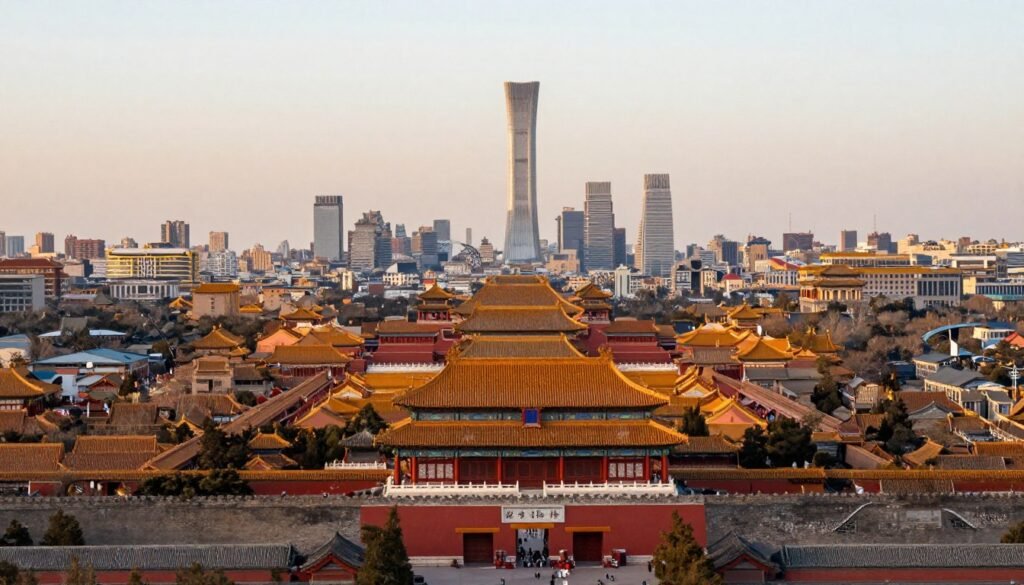
Beijing’s top attractions deserve multiple days of exploration. The Great Wall remains an absolute must-see despite requiring extra travel time. The Forbidden City needs at least half a day for proper appreciation. Summer Palace, Temple of Heaven, and Tiananmen Square round out the essential sites. Each location offers unique insights into Chinese culture and history.
The city’s food scene rivals the cultural attractions. Peking Duck represents Beijing’s most famous culinary export, but the diverse dining landscape extends far beyond this signature dish. Street food, traditional restaurants, and modern establishments all contribute to Beijing’s gastronomic reputation. Exploring different neighborhoods reveals distinct food cultures and specialties.
Practical preparation smooths your Beijing journey. Visa requirements demand attention well before departure. Currency and payment systems require understanding, though cash remains widely accepted. Language barriers challenge non-Chinese speakers, making translation apps essential. Air quality fluctuates, so monitoring pollution levels helps plan daily activities.
Beijing rewards visitors willing to venture beyond the standard tourist circuit. Hutong neighborhoods preserve traditional Beijing character. Local parks reveal daily life as residents practice tai chi, dance, and socialize. Markets from Panjiayuan to neighborhood produce stands showcase authentic commerce. These experiences provide cultural immersion impossible in carefully curated tourist attractions.
The city’s transportation network continues expanding, making exploration increasingly convenient. The subway reaches most major attractions and neighborhoods. Buses, taxis, and bike-sharing systems fill the gaps. Understanding these options allows flexible movement across Beijing’s vast expanse. Day trips to the Great Wall, Ming Tombs, or nearby cities extend your discovery.
Beijing’s seasons each offer distinct advantages. Spring brings blooming flowers and comfortable temperatures. Summer allows full days of exploration despite heat and crowds. Autumn delivers perfect weather and spectacular colors. Winter offers fewer tourists and unique festival experiences. No wrong time exists if you plan appropriately for the season.
Families find Beijing surprisingly accommodating with proper planning. The Beijing Zoo, parks, and interactive museums engage children. Pacing daily activities and building in rest time prevents exhaustion. Western food options provide familiar meals when needed. The city’s generally safe environment and helpful locals make family travel feasible.
Cultural sensitivity enhances your Beijing experience. Understanding basic etiquette shows respect for local customs. Learning a few Chinese phrases demonstrates effort and often receives warm responses. Patience with language barriers and different ways of doing things makes travel smoother. Embracing the differences rather than resisting them enriches your journey.
Beijing continues evolving rapidly. New subway lines open regularly. Neighborhoods transform from traditional to modern. International events bring global attention and investment. Yet beneath the changes, the city maintains its essential character as China’s political and cultural capital. This dynamic tension between preservation and progress defines contemporary Beijing.
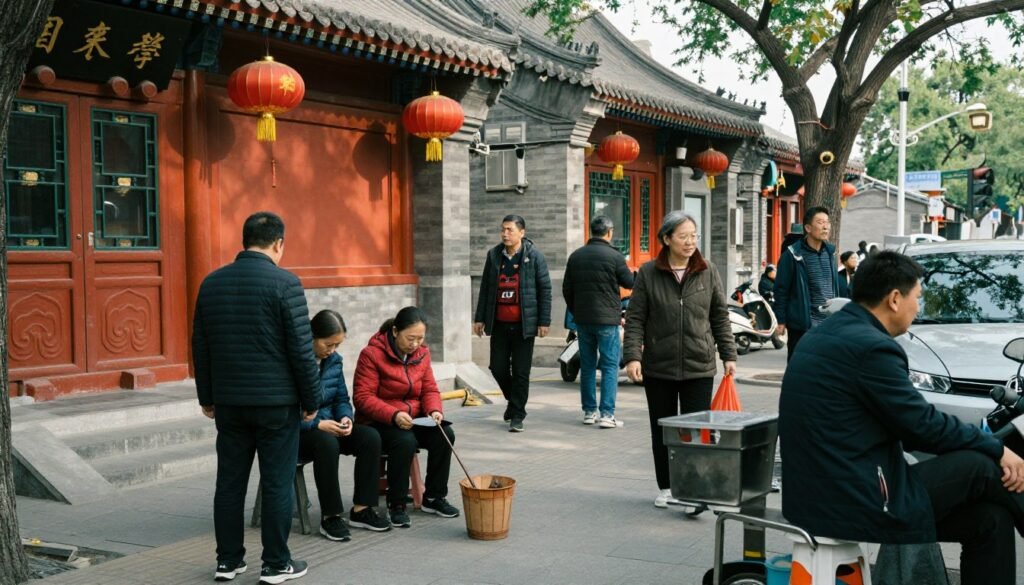
Whether visiting for business or leisure, Beijing leaves lasting impressions. The scale of attractions from the Forbidden City to the Great Wall inspires awe. The depth of history spanning millennia provides perspective. The energy of modern China’s capital stimulates and excites. The warmth of individual interactions creates personal connections.
Your Beijing journey extends beyond checking sites off a list. The experience involves engaging with one of the world’s great civilizations at a pivotal moment in its development. Every day in Beijing teaches something new about China, history, culture, and often about yourself. The city challenges assumptions while rewarding curiosity.
This comprehensive guide provides the foundation for your Beijing adventure. The practical information helps you navigate logistics efficiently. The attraction descriptions allow informed choices about your itinerary. The cultural insights prepare you for meaningful engagement. Now the journey becomes yours to create, exploring Beijing according to your interests and pace.
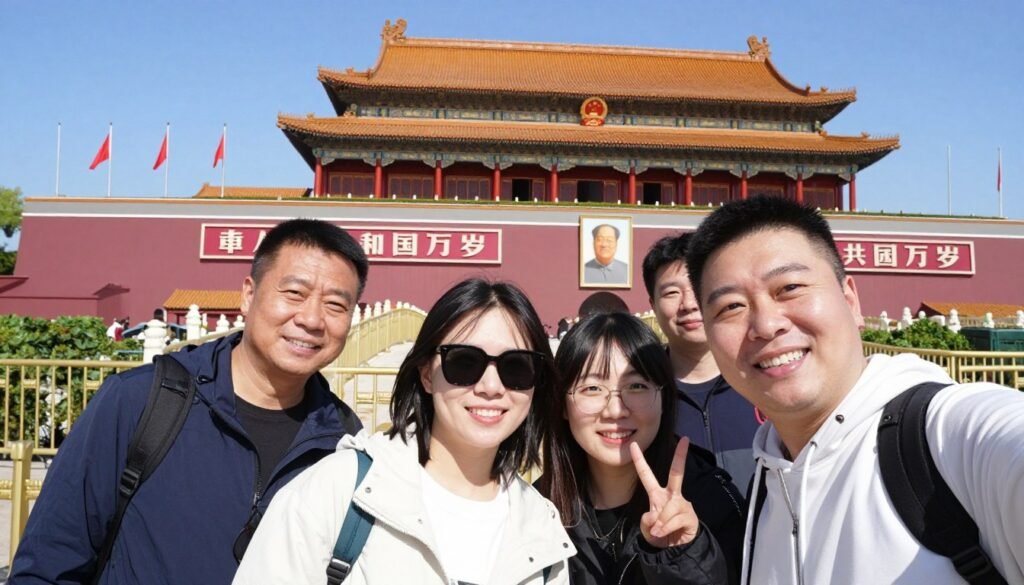
Beijing awaits your discovery. The capital of China stands ready to reveal its treasures to prepared travelers. From the first glimpse of the Forbidden City’s red walls to the final view from your departing airplane, Beijing creates memories lasting a lifetime. Start planning your journey to this extraordinary city today.