

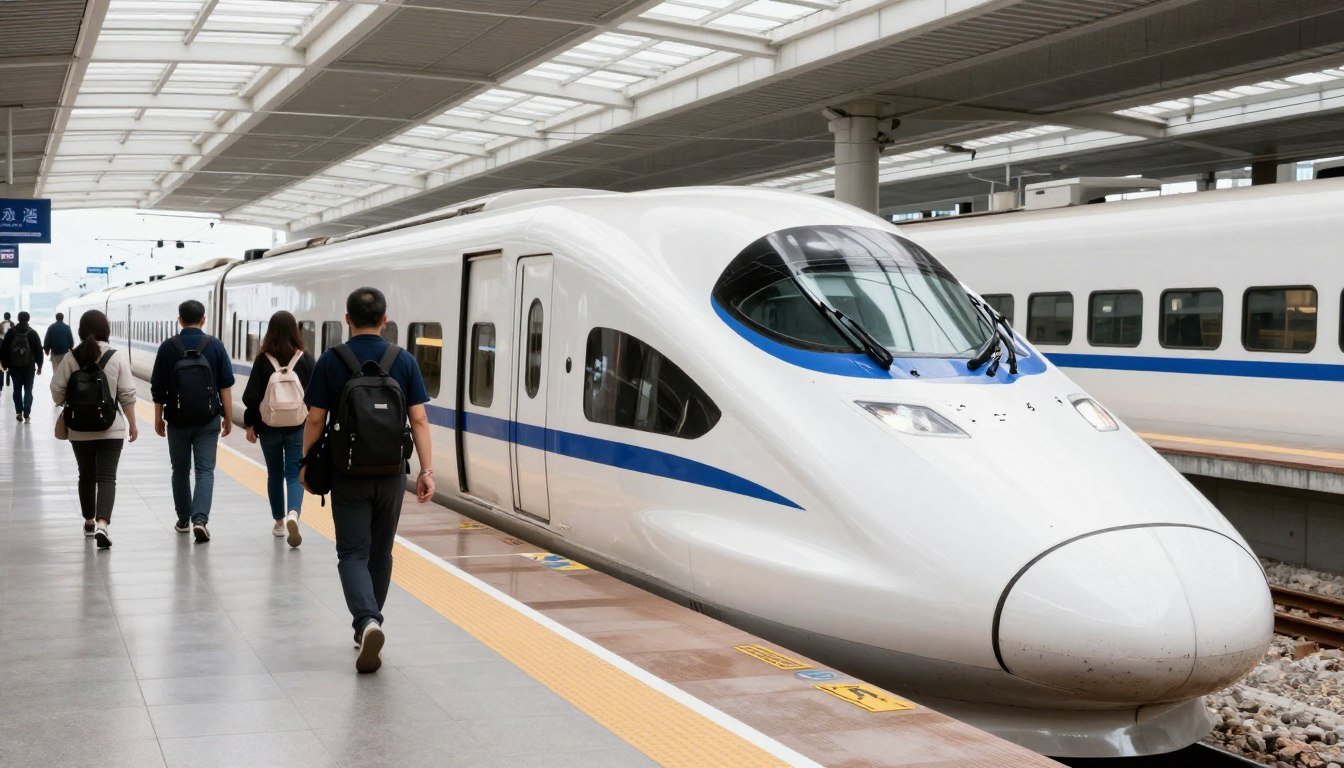
Planning your first trip to Taiwan can feel overwhelming. You want to see the best places without renting a car or joining a rigid tour group. Good news – Taiwan’s world-class train system makes independent travel incredibly easy. This 7-day Taiwan itinerary takes you through the island’s western coast, covering three amazing cities using only public transportation.
This week-long journey balances urban energy with cultural depth. You’ll explore night markets in Taipei, discover colorful art villages in Taichung, and walk through centuries of history in Tainan. Each day builds on the last, creating a smooth loop that brings you back to Taipei for your departure flight. No complicated transfers or rental car confusion – just simple train rides that let you relax and enjoy the view.
Taiwan rewards first-time visitors with incredible street food, friendly locals, and attractions that work for every budget. The country blends Chinese tradition with Japanese influence and modern innovation. Whether you’re watching the sunset from Taipei 101 or eating oyster omelets at a Tainan temple, this itinerary ensures you experience the best of Taiwan’s west coast in just seven days.
Your Journey Starts With the Right Rail Pass
Save money and travel stress-free with a Taiwan Rail Pass. Unlimited rides on trains connecting all cities in this itinerary. Book now and receive instant confirmation.
Why This 7-Day Taiwan Itinerary Works for First-Timers
Most travelers visiting Taiwan for the first time face a common problem – too many options and not enough time. This itinerary solves that challenge by focusing on three distinct cities along the western coast. Each city offers a different flavor of Taiwanese culture while remaining easily connected by train. You won’t waste precious vacation days stuck in traffic or navigating confusing rural roads.
The loop design ensures you maximize your time without backtracking. You’ll start in Taipei, the bustling capital with modern energy. Then head south to Taichung for art, nature, and some of Taiwan’s best food markets. Finally, you’ll reach Tainan, where ancient temples and colonial architecture tell stories from centuries past. The entire route follows the Taiwan High Speed Rail and conventional railway lines, which means every connection takes less than two hours.
Perfect for Independent Travelers
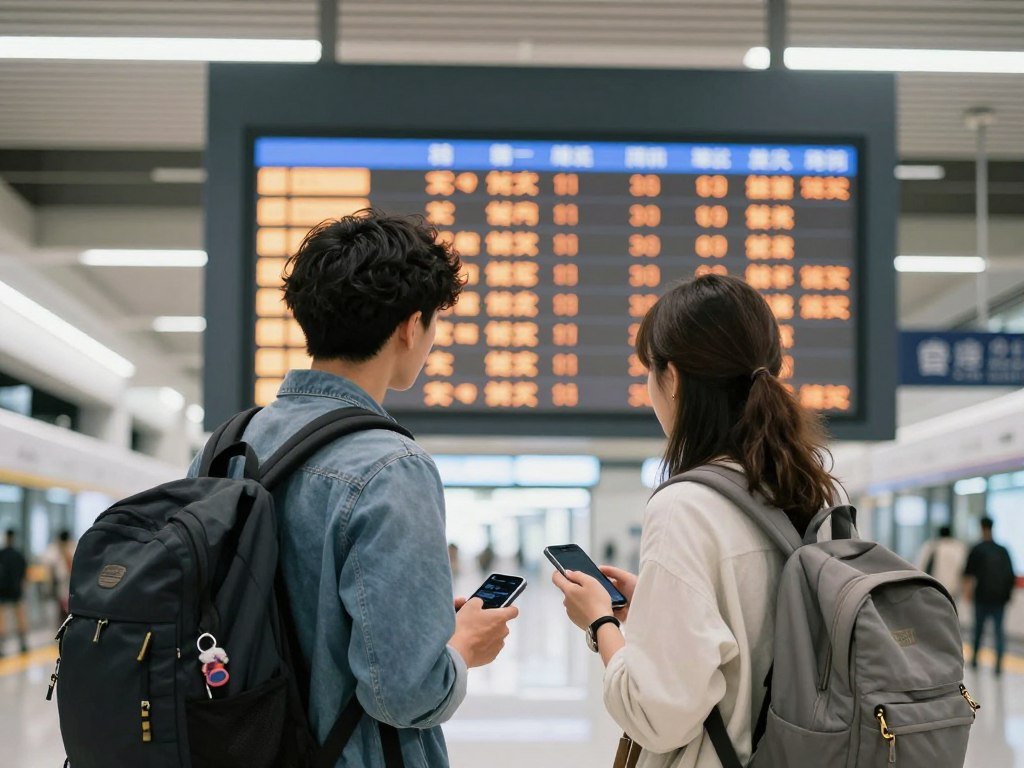
This itinerary gives you freedom without the stress. You control your pace each day while following a tested framework that avoids common pitfalls. The train stations in each city connect to excellent metro systems and bus networks. Even if you’ve never traveled in Asia before, you’ll find navigation surprisingly simple with clear English signage and helpful transportation apps.
Budget-Friendly Without Sacrificing Quality
Taiwan offers exceptional value compared to other Asian destinations. A week of accommodation, meals, attractions, and train travel costs significantly less than similar trips to Japan or South Korea. Night markets provide delicious dinners for just a few dollars. Many temples and scenic areas charge no admission. The rail pass covers all intercity travel, eliminating surprise transportation costs. You’ll experience world-class culture without draining your travel budget.
Optimal Timing for Weather and Crowds
This itinerary works year-round but shines brightest during spring and fall. March through May offers comfortable temperatures and blooming flowers. September through November brings clear skies and pleasant evening weather for night market exploration. Summer months get hot and humid, but that’s when tropical fruits taste incredible at markets. Winter remains mild on the western coast, though you’ll want a light jacket for evening activities.
Essential Planning: Before You Go to Taiwan
Smart preparation makes the difference between a good trip and an amazing one. Taiwan welcomes visitors with straightforward visa policies and modern infrastructure, but a few advance steps will save you time and money during your week. Focus on securing three key elements before you board your flight – connectivity, transportation passes, and accommodation in prime locations.
Visa Requirements and Entry
Most Western passport holders enter Taiwan visa-free for up to 90 days. United States, Canadian, British, Australian, and European Union citizens can walk through immigration with just a valid passport and proof of onward travel. Your passport must remain valid for at least six months beyond your planned departure date. The entry process takes about 15 minutes at Taiwan Taoyuan International Airport, with immigration officers who speak clear English.
Connectivity Solutions
Staying connected transforms your Taiwan experience from stressful to seamless. You’ll need internet access for maps, translation, train schedules, and restaurant recommendations.
- Airport SIM card counters offer 7-day unlimited data plans for around $15
- eSIM options work with newer smartphones and activate instantly
- Pocket WiFi devices serve groups traveling together
- Free WiFi covers most train stations and city areas but lacks reliability
Money and Banking
Taiwan’s currency is the New Taiwan Dollar (TWD/NT$). The country still operates largely on cash, especially at night markets and small restaurants.
- ATMs at airports and 7-Eleven stores accept international cards
- Withdraw larger amounts to minimize transaction fees
- Credit cards work at hotels and department stores
- Carry at least NT$5,000 in small bills for daily expenses
Transportation Cards
Get an EasyCard immediately upon arrival at Taipei Airport. This rechargeable smart card works on all metro systems, buses, and convenience stores across Taiwan.
- Purchase at airport MRT stations for NT$100 deposit plus credit
- Reload at any metro station or 7-Eleven
- Receive automatic discounts on public transportation
- Use for small purchases at chain stores
Useful Apps to Download
Technology removes language barriers and navigation confusion. Download these apps before leaving home to ensure smooth travels throughout your week.
- Google Maps – works flawlessly for Taiwan navigation and transit
- 台鐵e訂通 (TRA app) – books conventional railway tickets
- T-EX – reserves Taiwan High Speed Rail seats
- Google Translate – includes camera translation for menus
Stay Connected Throughout Your Journey
Get unlimited data for your entire trip. Order an eSIM before departure and activate it when you land. No hunting for SIM card shops or dealing with language barriers.
Packing for Your Week in Taiwan
Pack light for Taiwan’s excellent train system. You’ll move between three cities with your luggage, so a carry-on sized bag plus a daypack works best. Taiwan’s climate varies slightly between north and south, but the western coast maintains similar conditions year-round. Casual clothing dominates local fashion, and comfort beats style at tourist attractions.
Weather-Appropriate Clothing
Layers handle Taiwan’s temperature shifts between air-conditioned spaces and humid outdoor heat. Spring and fall need a light jacket for evenings. Summer demands breathable fabrics and sun protection. Winter requires just a sweater for the western coast.
- Comfortable walking shoes broken in before your trip
- Quick-dry shirts and pants for hot, humid days
- Light rain jacket or small umbrella for unexpected showers
- Sun hat and sunglasses for daytime exploration
- One nicer outfit for upscale restaurants or clubs
Practical Travel Essentials
Taiwan’s modern infrastructure means you can buy most forgotten items easily. Focus on items specific to your needs or expensive to replace abroad.
- Prescription medications with enough for your entire trip
- Power adapter for Type A outlets (same as United States)
- Portable battery pack for long days of sightseeing
- Reusable water bottle – tap water is safe to drink
- Basic first aid supplies including blister treatments
Days 1-2: Taipei – Modern Energy and Night Market Magic
Your Taiwan adventure begins in Taipei, a city where gleaming skyscrapers stand blocks away from centuries-old temples. These first two days establish your rhythm and introduce Taiwan’s unique blend of tradition and modernity. The capital offers world-class public transportation and English signage that helps first-timers build confidence for the rest of the trip. You’ll explore neighborhoods on foot, taste incredible street food, and witness why Taipei ranks among Asia’s most livable cities.
Day 1: Arrival and Central Taipei Exploration
Most international flights arrive at Taiwan Taoyuan International Airport in late afternoon or evening. The airport express train delivers you to Taipei Main Station in 35 minutes, connecting seamlessly to the metro system. Check into your hotel, drop your bags, and head out to experience your first Taiwanese night market while your energy remains high despite jet lag. The excitement of new surroundings typically overpowers fatigue for a few hours.
Start Day 1 properly after a good night of sleep. Begin at Chiang Kai-shek Memorial Hall, a massive monument that showcases traditional Chinese architecture and hosts the changing of the guard ceremony every hour. The surrounding gardens and plaza provide a peaceful introduction to Taipei’s blend of history and public space. From there, walk to nearby Yongkang Street for lunch. This pedestrian-friendly area serves some of Taiwan’s most famous restaurants, including Din Tai Fung’s original location where xiaolongbao soup dumplings reach perfection.
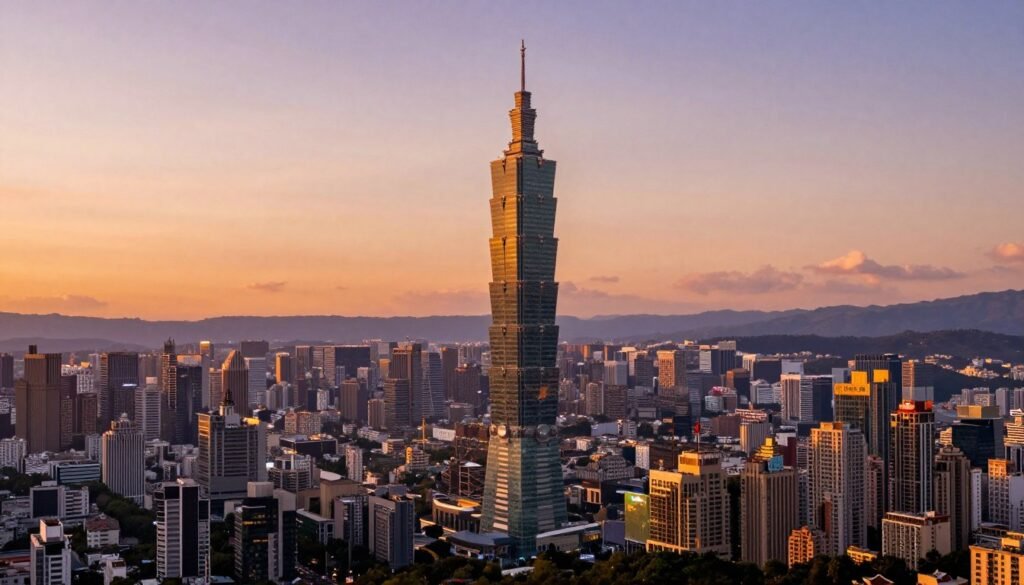
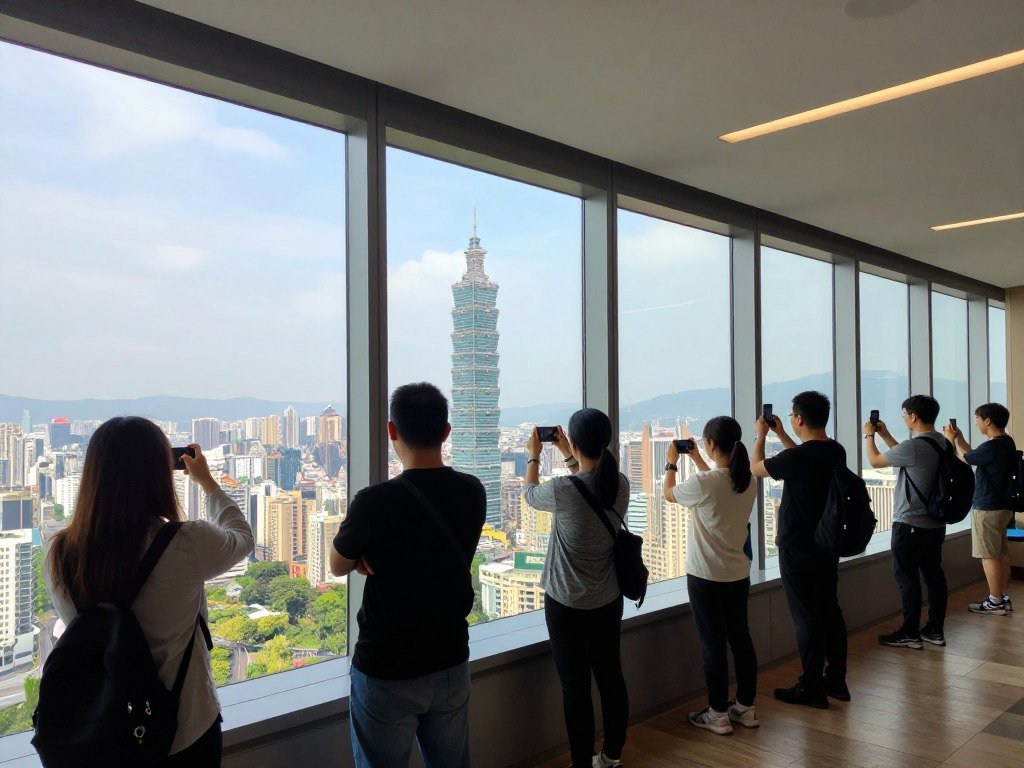
Afternoon brings you to Taipei 101, the iconic skyscraper that dominated world height records until 2010. The observatory on the 89th floor provides stunning views across the entire city and surrounding mountains. Visit during late afternoon to watch daylight transition into Taipei’s glittering night view. The shopping mall at Taipei 101’s base offers upscale brands and an excellent food court if you want a climate-controlled break from summer heat.
Recommended Taipei Neighborhoods for Your Base
Ximending – Youth Culture Hub
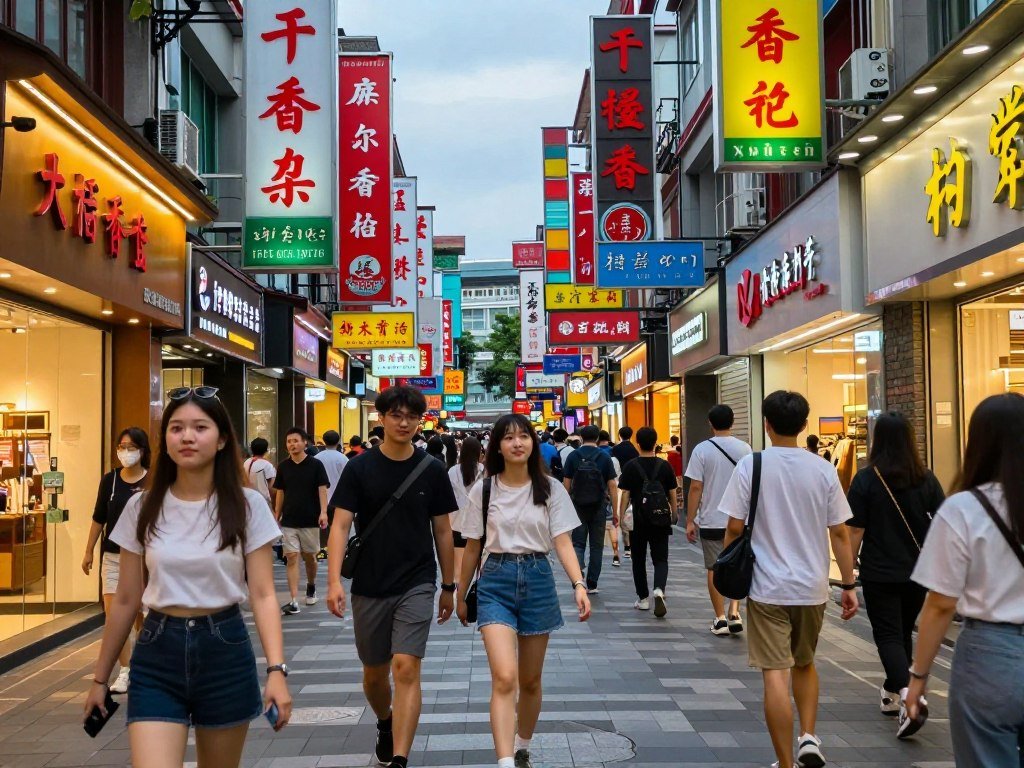
Taipei’s energetic youth district pulses with shops, street performers, and late-night food options. Excellent metro connections and budget-friendly hotels make Ximending popular with younger travelers. The area never sleeps, which means constant activity but also persistent noise.
- Walking distance to major attractions
- Abundant affordable accommodation options
- Direct metro line to Taipei Main Station
- Vibrant nightlife and entertainment
Da’an District – Upscale Comfort
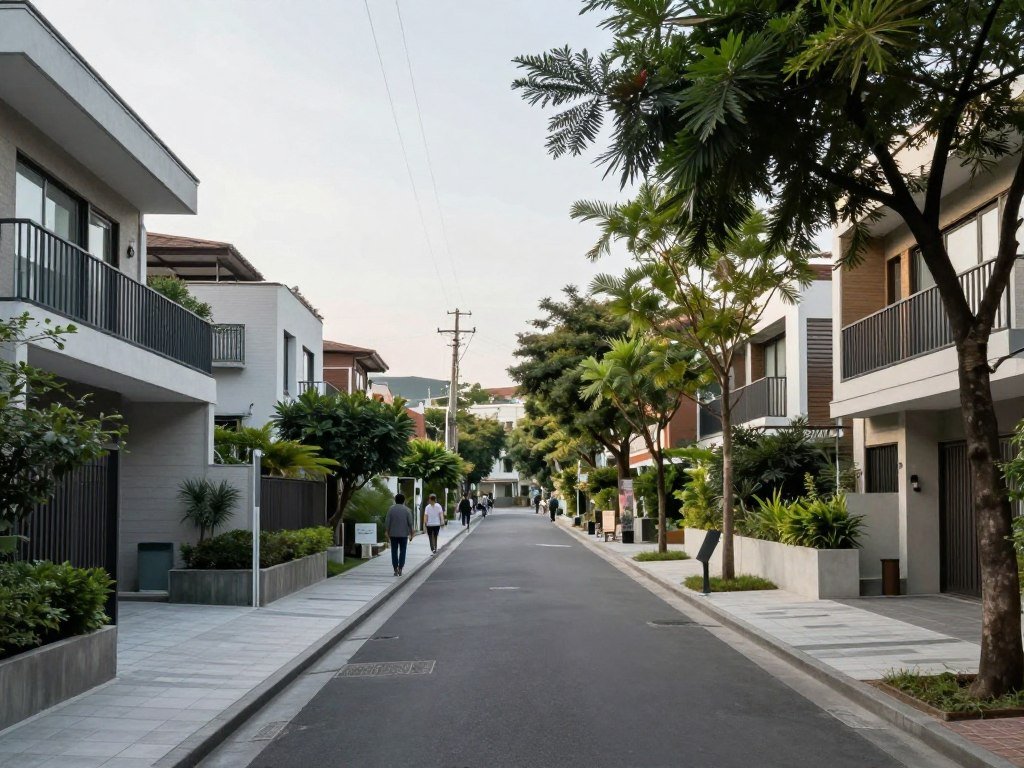
This refined neighborhood balances residential calm with excellent dining options and coffee culture. Da’an sits near Taipei 101 and offers higher-end hotels with superior service. The area attracts business travelers and tourists who prefer quieter evenings after busy sightseeing days.
- Close proximity to Taipei 101 and Yongkang Street
- Upscale restaurants and specialty coffee shops
- Multiple metro line access points
- Safer, calmer atmosphere than entertainment districts
Zhongshan – Cultural Center
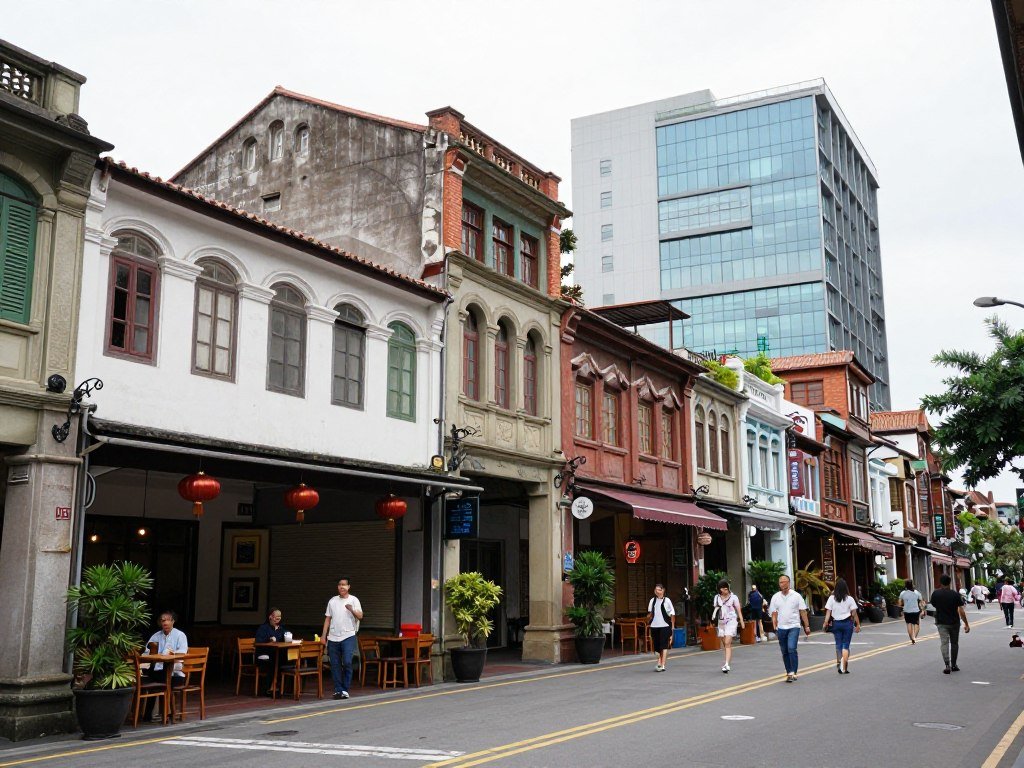
Zhongshan blends artistic venues with international dining and independent boutiques. The neighborhood provides easy access to both traditional markets and contemporary galleries. Hotel rates fall between budget Ximending and upscale Da’an, offering good value for mid-range travelers.
- Central location for exploring all Taipei areas
- Mix of local character and tourist conveniences
- Direct metro access to airport express line
- Authentic neighborhood feel with modern amenities
Day 2: Old Taipei and Evening Night Market
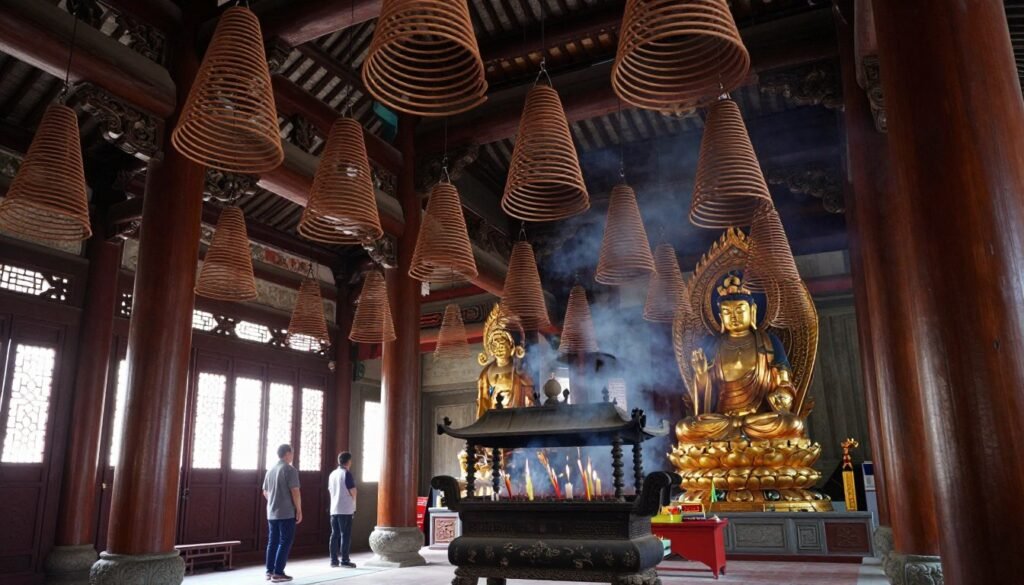
Day 2 dives into Taipei’s traditional side before ending at one of Taiwan’s most famous night markets. Start your morning at Longshan Temple, a stunning Buddhist temple that’s been welcoming worshippers since 1738. The intricate carvings, spiral incense coils hanging from the ceiling, and devoted locals practicing their faith create an atmosphere of genuine spirituality. You don’t need religious beliefs to appreciate the artistry and peaceful ambiance.
Walk from Longshan Temple through the nearby historic streets to discover old shops selling traditional medicines, tea, and handcrafted goods. This area shows how local Taiwanese lived before modern development transformed the city. Small family restaurants serve authentic Taiwanese breakfast options like dan bing (egg crepes) and soy milk. The pace feels slower here compared to the gleaming downtown areas you explored yesterday.
Afternoon options include visiting the National Palace Museum to see priceless Chinese artifacts, or taking the gondola up to Maokong for tea plantations and mountain views. The museum requires three hours minimum to appreciate the collection properly. Maokong offers a more relaxed afternoon with scenic cable car rides and traditional tea houses where you can sample high-mountain oolongs while overlooking Taipei’s sprawling expanse below.
Shilin Night Market Experience
Save room for dinner because Shilin Night Market delivers Taiwan’s night market experience at its most intense. This sprawling complex combines an underground food court with endless above-ground stalls selling everything from clothes to carnival games. The food court downstairs offers the cleanest, most organized introduction to Taiwanese street food, with every stall displaying English menus and pictures.
- Fried chicken cutlets (crispy, enormous, perfectly seasoned)
- Oyster omelet (controversial texture but authentic Taiwan)
- Stinky tofu (smells terrible, tastes surprisingly good)
- Fresh fruit juice stands (sugar cane and papaya milk)
- Grilled squid (tender with sweet-savory glaze)
- Pepper buns (flaky pastry with meat filling)
Must-Try Shilin Night Market Foods
- Arrive hungry around 6-7 PM for freshest options
- Eat at the food court first, explore stalls after
- Carry small bills – vendors rarely have change for NT$1,000
- Watch locals to gauge portion sizes before ordering
- Try weird items – night markets reward adventurous eaters
- Take the MRT Shilin Station exit marked for the market
Night markets represent Taiwan’s social heart and soul. Families gather to eat and play games together. Teenagers hang out in groups testing their throwing skills at game booths. Tourists wander wide-eyed, phones ready to capture the sensory overload. The combination of sizzling woks, shouting vendors, flashing lights, and incredible aromas creates an experience no restaurant can replicate. This is Taiwan at its most authentic and accessible.
Day 3: Taipei to Taichung – Central Taiwan’s Creative Spirit
Morning brings a transition from northern energy to central Taiwan’s more relaxed pace. Taichung sits about 140 kilometers south of Taipei, reachable in under an hour via High Speed Rail. The train journey itself offers a preview of Taiwan’s landscape – rice paddies, small towns, and glimpses of the mountainous interior as you speed south. Check out of your Taipei hotel by 11 AM, ride the metro to Taipei Main Station, and catch a southbound HSR train.
The High Speed Rail operates like a highway in the sky. Trains depart every 15-30 minutes during daytime hours, so you don’t need advance reservations unless traveling on weekends or holidays. Purchase tickets at automated machines in the station using your credit card or cash. The trains reach speeds of 300 km/h, but the ride feels smooth and quiet. Use this time to plan your Taichung activities or simply watch Taiwan’s countryside blur past your window.
Book Your High Speed Rail Tickets in Advance
Secure discounted advance purchase tickets for travel between Taipei and Taichung. Early bird fares save up to 35% on regular prices. Book online and collect tickets at any station using your confirmation code.
Arriving in Taichung
Taichung HSR station sits outside the main city center, but free shuttle buses connect to downtown areas every 20 minutes. Alternatively, take a taxi for about NT$400 to reach central hotel districts. Check into your Taichung accommodation, drop your bags, and head out to explore Taiwan’s second-largest city with a completely different personality than Taipei.
Taichung earned its reputation as Taiwan’s most livable city through green spaces, manageable traffic, and thriving arts scene. The city feels less rushed than Taipei while offering equally impressive food options and cultural attractions. Many travelers find Taichung their favorite Taiwan stop because it provides authentic local life without overwhelming tourist crowds.
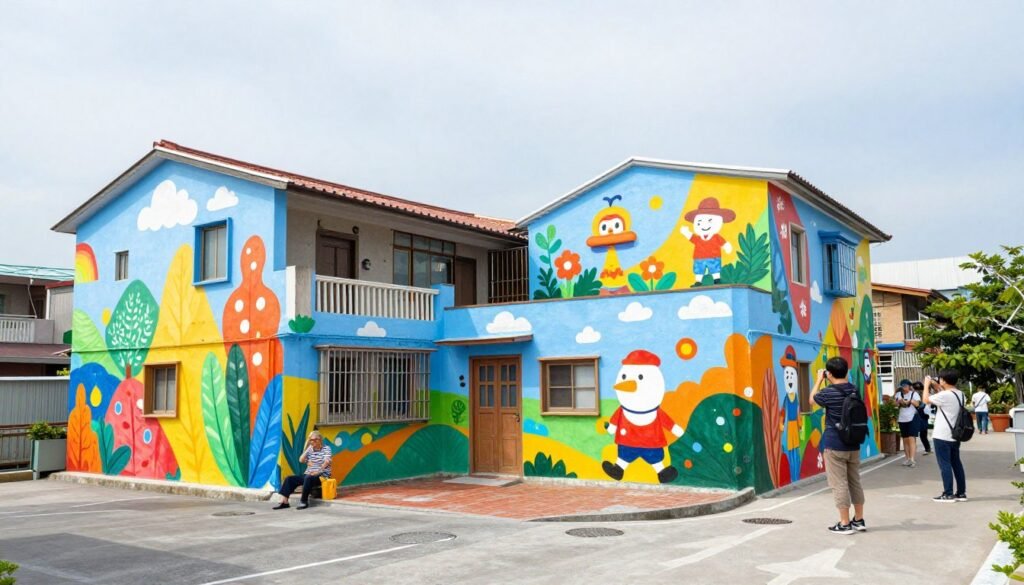
Afternoon at Rainbow Village
Rainbow Village became an international sensation when an elderly veteran named Huang Yung-Fu started painting colorful artwork all over his military dependents’ village to save it from demolition. His whimsical characters, animals, and patterns now cover every surface, creating an outdoor art gallery that attracts visitors from around the world. The village sits on the city outskirts, requiring a 30-minute bus ride from downtown, but the journey rewards you with one of Taiwan’s most Instagram-worthy locations.
Huang, now in his late 90s, still greets visitors most afternoons and continues adding new artwork. The preservation of Rainbow Village demonstrates Taiwan’s growing appreciation for folk art and community activism. What started as one man’s protest against urban development became a beloved cultural landmark. Spend an hour wandering the narrow lanes, photographing the explosion of colors, and perhaps buying postcards that directly support the village’s continued maintenance.
Evening at Feng Chia Night Market
Feng Chia Night Market earns praise from locals as Taiwan’s best night market. The market surrounds Feng Chia University, giving it a younger, more innovative atmosphere than traditional markets. Vendors compete to create Instagram-worthy food items and unique flavors that you won’t find elsewhere. The crowd here skews younger than Shilin, with university students making up a large portion of evening visitors.
Feng Chia Night Market Highlights
This market pushes boundaries with creative food combinations and modern presentations. Try items here that you haven’t seen at previous night markets.
- Giant fried chicken steaks bigger than your face
- Cheese potato spirals on sticks
- Bubble tea from original innovative shops
- Wheel pies with sweet and savory fillings
- Flame-grilled beef cubes with various toppings
Getting to Feng Chia
The market sits northwest of downtown Taichung. Public buses provide the most economical option, while taxis offer convenience for tired travelers.
- Bus routes 25, 37, and 135 from downtown
- Taxi costs approximately NT$200 from central hotels
- Market operates from 5 PM until midnight
- Peak crowds arrive between 7-9 PM on weekends
Day 4: Taichung – Nature, Culture, and Local Life
Your full day in Taichung balances cultural attractions with natural beauty. The city sprawls across a wide area, but efficient bus routes and affordable taxis make navigation simple. Start early to maximize your time before afternoon heat makes outdoor activities less comfortable. Today showcases why Taichung residents proudly claim their city offers the best quality of life in Taiwan.
Morning at National Taichung Opera House
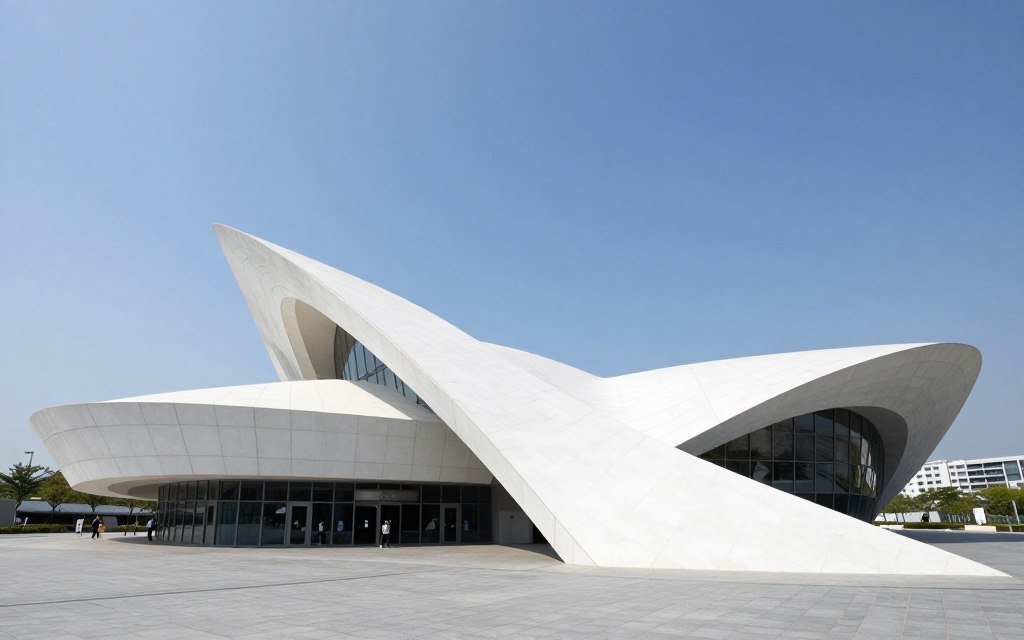
Begin with Taiwan’s architectural masterpiece – the National Taichung Opera House. Japanese architect Toyo Ito designed this curved, cave-like structure that defies traditional building concepts. The flowing interior spaces, curved walls, and innovative acoustics won international design awards. You don’t need to attend a performance to appreciate the building. Free tours explain the revolutionary construction techniques that made this organic form possible.
The surrounding National Taiwan Museum of Fine Arts and Calligraphy Greenway offer pleasant morning walks through parks and gardens. Taichung’s commitment to public space and outdoor art installations becomes clear as you explore these interconnected green areas. Local residents practice tai chi, walk dogs, and exercise in these spaces, providing glimpses of daily Taiwanese life beyond tourist attractions.
Afternoon Options: Museums or Nature
Choose your afternoon based on interests and weather. The National Museum of Natural Science ranks among Asia’s best science museums, with hands-on exhibits, a botanical garden, and an IMAX theater. Families with children particularly enjoy the dinosaur displays and earthquake simulator. The museum requires three hours to see properly, making it ideal for rainy days or travelers who enjoy educational attractions.
Alternatively, visit Gaomei Wetlands for sunset views over the Taiwan Strait. This ecological preserve sits on Taichung’s coast, about 45 minutes by bus from downtown. A wooden boardwalk extends into the wetlands, allowing close-up views of the mudflats and diverse bird species. The real attraction comes at sunset when the shallow water reflects the sky, creating mirror-like conditions that photographers love. Time your visit to arrive an hour before sunset for the best light and less intense heat.
Miyahara Ice Cream – Architectural Dessert
End your day with dessert at Miyahara, a beautifully restored Japanese-era building now housing an ice cream shop and bakery. The interior resembles a European library with towering wooden shelves and ornate details. The ice cream comes piled high with your choice of elaborate toppings including pineapple cake pieces, nougat, and fresh fruit. Yes, it’s touristy. Yes, there’s usually a line. The experience still deserves your time because the restoration quality and flavor combinations make this more than just another dessert stop.
Taichung Accommodation Recommendations
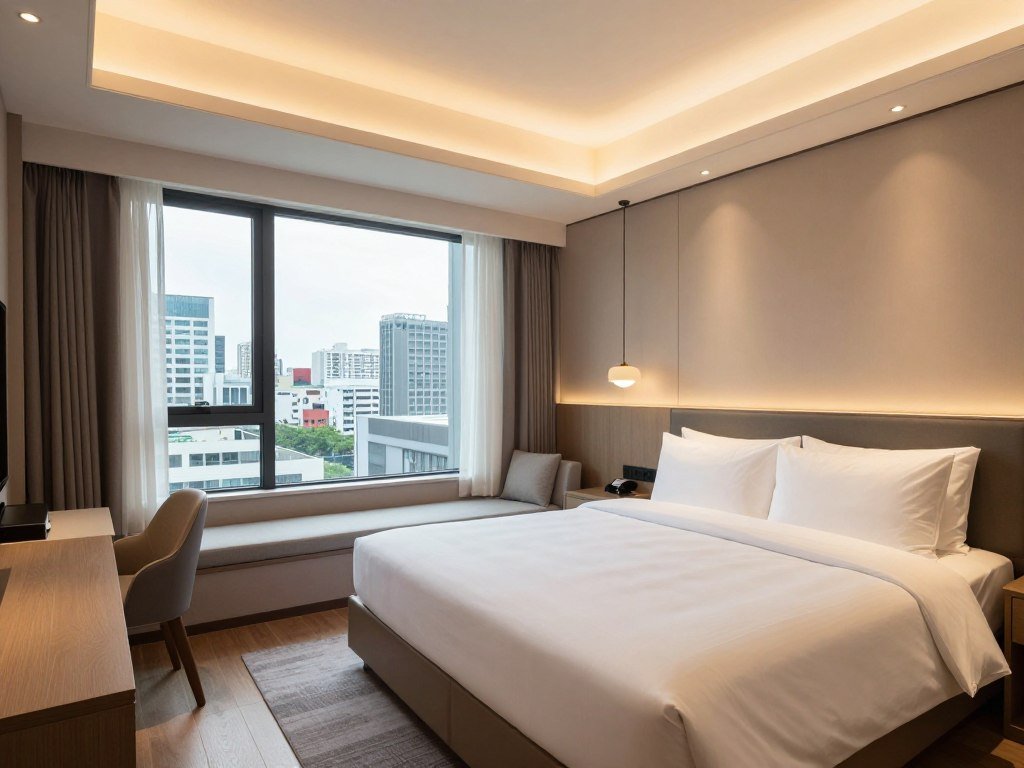
Book hotels near Taichung Main Station or the West District for easy access to buses heading to attractions. Mid-range hotels in Taichung offer better value than equivalent Taipei properties.
- Near train station for day trip convenience
- West District for walking to restaurants and shops
- Budget options cluster near universities
- Business hotels provide excellent service and English-speaking staff
Day 5: Taichung to Tainan – Taiwan’s Ancient Capital
Morning brings another train journey, this time heading further south to Tainan. Taiwan’s oldest city offers a completely different experience than the modern energy of Taipei or creative vibe of Taichung. Tainan served as Taiwan’s capital for over 200 years, and that deep history permeates every neighborhood. The city moves at a slower pace, with more temples per square kilometer than anywhere else on the island and food traditions that date back generations.
Check out of your Taichung hotel and catch either High Speed Rail or the slightly slower but cheaper Taiwan Railway train. The journey takes 30-45 minutes depending on which service you choose. HSR drops you at Tainan’s newer station outside the city center, while conventional trains arrive at the original Tainan Station in the heart of downtown. Both stations connect to city buses and taxis for reaching your hotel.
Afternoon Arrival and Old Town Exploration
Drop your bags at your hotel and immediately head out to explore Tainan’s historic center. Unlike Taipei’s vertical growth or Taichung’s sprawl, Tainan’s attractions cluster together in compact historic districts. Most visitors rent bicycles or simply walk between temples, old streets, and cultural sites. The afternoon heat can be intense, so pace yourself and duck into temples or air-conditioned cafes when you need cooling breaks.
Chihkan Tower provides an excellent starting point for understanding Tainan’s layered history. This site started as a Dutch fort in 1653, was later taken over by Chinese forces, and now stands as a cultural monument surrounded by gardens and ponds. The admission fee of NT$50 includes access to exhibitions about Tainan’s colonial periods under Dutch and later Japanese rule. Climb to the top level for views over the old town’s traditional rooflines.
Evening on Shennong Street
As daylight fades, make your way to Shennong Street, a beautifully preserved lane that comes alive after sunset with lanterns and small bars. Old merchant houses now host independent shops selling handmade crafts, art galleries showcasing local artists, and intimate cafes perfect for watching the slow pace of Tainan life. Unlike the chaotic night markets, Shennong Street offers a calm, romantic atmosphere that appeals to travelers seeking quieter evenings.
For dinner, venture to Tainan’s numerous temple-adjacent food stalls. The city built its culinary reputation on dishes that other Taiwanese regions later adopted. Danzai noodles originated here, as did coffin bread and shrimp rolls. Local restaurants typically close earlier than their northern counterparts – by 8 PM many places stop serving. This early schedule reflects Tainan’s more traditional lifestyle compared to Taipei’s late-night energy.
Days 6-7: Tainan – History, Temples, and Return to Taipei
Your final full day explores more of Tainan before an afternoon return to Taipei. The city rewards slow exploration and food-focused wandering. Skip rigid schedules in favor of following your interests through temple districts and local neighborhoods. Many travelers wish they’d allocated more time to Tainan after experiencing its unique character and incredible depth of history.
Day 6 Morning: Anping District
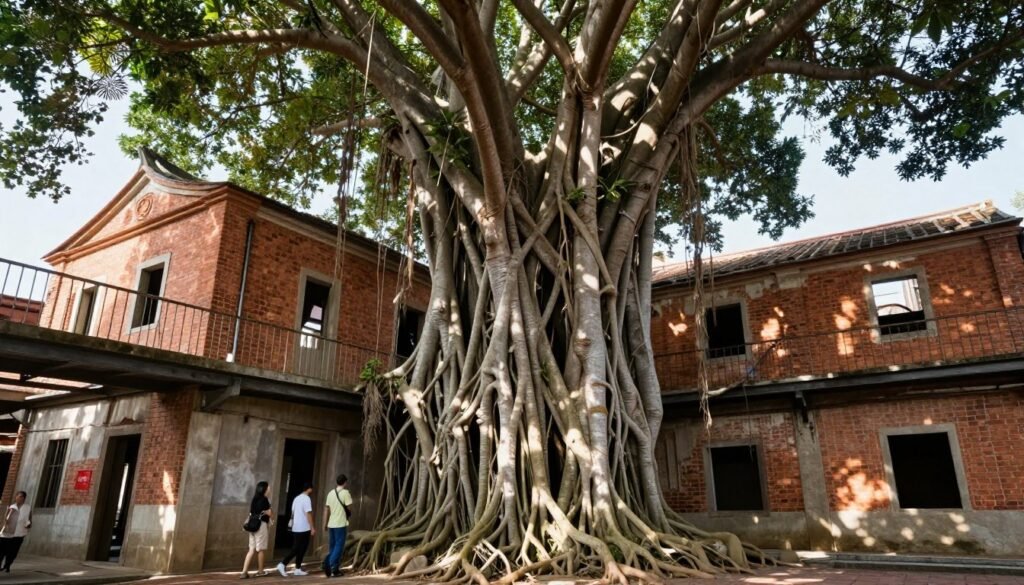
Take a bus or taxi to Anping, Tainan’s historic port district where Taiwan’s recorded history began. Anping Old Fort sits on the site of the original Dutch Fort Zeelandia from 1624. The fort itself has been extensively rebuilt, but the area around it preserves old streets with traditional architecture. The Anping Tree House nearby showcases nature reclaiming an abandoned warehouse, with massive banyan tree roots completely overtaking the brick structure in a photogenic display of organic power versus human construction.
Anping’s old streets offer excellent shopping for local crafts and Tainan specialty foods to take home. Shrimp crackers made fresh daily, preserved fruits, and traditional candies make good gifts that capture Tainan’s flavors. The seaside location means excellent seafood restaurants line the waterfront. Try oyster noodles or seafood porridge at any of the family-run places along the coast road.
Day 6 Afternoon: Temple Circuit
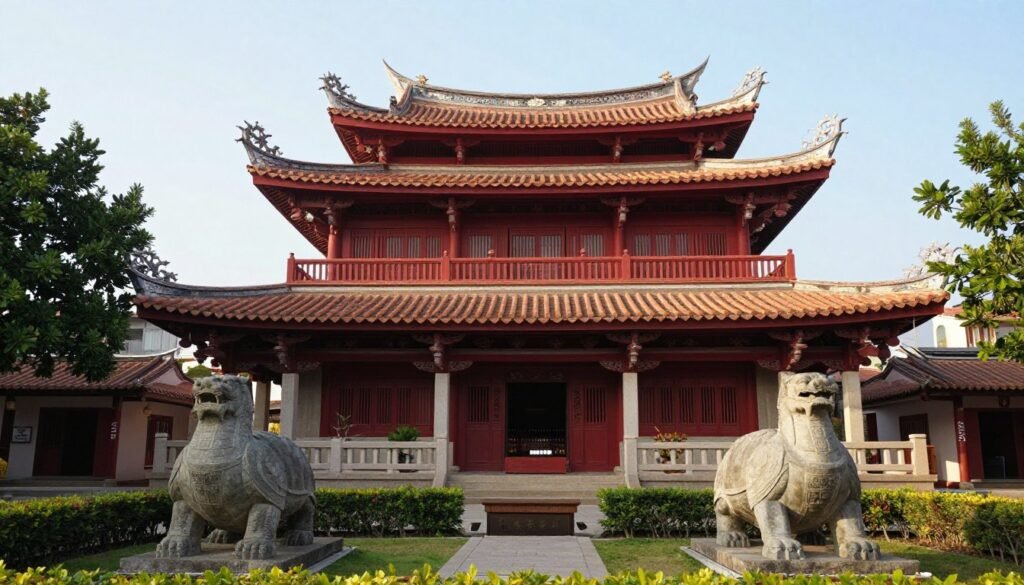
Return to central Tainan for a walking circuit of the city’s most important temples. Tainan contains over 1,600 temples representing Buddhist, Taoist, and folk religious traditions. Start at Koxinga Shrine, dedicated to the Ming Dynasty general who drove the Dutch from Taiwan. Continue to Confucius Temple, Taiwan’s first Confucian academy built in 1665. These aren’t tourist reconstructions – they’re active religious sites where locals come to pray, meditate, and seek spiritual guidance.
Temple architecture in Tainan follows traditional southern Chinese styles with elaborate roof decorations, detailed wood carvings, and stone guardians protecting entrances. Each temple has unique historical significance and artistic elements worth studying. Photography is generally permitted, but always show respect for worshippers and religious ceremonies. Remove loud conversations and turn off phone notifications before entering temple grounds.
Essential Tainan Temples
These temples offer the best combination of historical significance, architectural beauty, and accessible locations within walking distance of each other.
- Confucius Temple – Taiwan’s oldest Confucian academy
- Koxinga Shrine – Beautiful Japanese-style architecture
- Grand Matsu Temple – Ancient sea goddess worship site
- Sacrificial Rites Martial Temple – Stunning woodwork details
Temple Visiting Etiquette
Follow these guidelines to show respect while visiting active religious sites throughout Tainan’s historic temple district.
- Remove hats when entering main worship halls
- Step over raised door thresholds, never on them
- Keep voices low and phones silent
- Don’t touch religious statues or altar offerings
Day 6 Evening: Night Market Finale
Spend your final night market experience at Tainan Garden Night Market, which operates on Thursday, Saturday, and Sunday evenings. If your schedule doesn’t align, Dadong Night Market runs Tuesday, Friday, and Sunday. These rotating schedules prevent oversaturation and keep local vendors moving between locations. Tainan’s night markets feel more local than Taipei’s tourist-heavy options, with more traditional foods and fewer carnival games.
Day 7: Return Journey and Final Taipei Hours
Check out of your Tainan hotel by 11 AM and catch a northbound train back to Taipei. The High Speed Rail covers the distance in 90 minutes, delivering you to Taipei with time for final shopping or sightseeing before your departure flight. Most international flights leave Taipei in evening or late-night time slots, giving you several afternoon hours in the capital.
Store luggage in coin lockers at Taipei Main Station or your departure terminal. Use these final hours to visit attractions you missed earlier in the week, buy last-minute souvenirs at duty-free shops, or enjoy one more meal at a favorite restaurant. The airport express train requires 35-45 minutes from central Taipei, so leave sufficient buffer time for your departure flight based on airline recommendations.
Taipei Main Station Facilities
The massive transport hub offers everything you need for your final hours before heading to the airport.
- Coin-operated luggage lockers on B1 floor
- Food court with quick meal options
- Convenience stores and pharmacies
- Free WiFi throughout entire complex
- Clean restrooms and phone charging stations
Last-Minute Shopping Options
Pick up authentic Taiwan souvenirs without venturing far from transport hubs on your departure day.
- Pineapple cakes from Sunny Hills or ChiaTe
- High-mountain oolong tea from specialty shops
- Beauty products – Taiwan excels at skincare
- Instant noodles in local flavors
- Dried fruit and preserved snacks
Airport Express Information
Reliable train service connects Taipei to the international airport with comfortable rides and luggage space.
- Direct trains every 15 minutes during peak hours
- Journey time 35-40 minutes to airport
- Designated luggage storage areas in each car
- Purchase tickets at station machines
- Free WiFi available on all trains
Get Your Complete Taiwan Transportation Guide
Download our comprehensive PDF guide with train schedules, metro maps, bus routes, and transportation tips for all three cities. Includes offline maps and Chinese phrases for taxi drivers.
Practical Tips for Your Week in Taiwan
These essential details help you navigate Taiwan confidently throughout your entire trip. Small cultural knowledge and practical preparations prevent common frustrations that can disrupt otherwise smooth travel.
Language and Communication
Mandarin Chinese serves as Taiwan’s official language, but the country welcomes English-speaking tourists with exceptional infrastructure. Major cities post signs in English at transportation hubs, tourist attractions, and shopping areas. Younger Taiwanese people often speak functional English, especially in Taipei. However, English proficiency drops significantly outside major tourist zones and among older generations.
Essential Communication Tools
- Google Translate works offline if you download Chinese language pack
- Camera translation feature scans menus instantly
- Most restaurants in tourist areas have picture menus
- Hotel staff universally speak English and help with reservations
- Convenience store staff manage basic English transactions
Useful Mandarin Phrases
- Nǐ hǎo (nee how) – Hello
- Xièxiè (syeh syeh) – Thank you
- Duōshǎo qián? (dwor-shaow chyen) – How much?
- Bù yào là (boo yaow la) – Not spicy, please
- Zhège (jay-guh) – This one (point at what you want)
Food Safety and Dietary Considerations
Taiwan maintains extremely high food safety standards. You can eat street food with confidence at night markets and roadside stalls. The country’s subtropical climate and Buddhist influence mean vegetables and fruits taste incredible. Vegetarian options appear on most menus, though pure vegan eating requires careful checking as many dishes use oyster sauce or fish stock.
Tap water in Taiwan is technically safe but locals typically drink filtered or boiled water. Hotels provide electric kettles for making hot water. Convenience stores sell bottled water cheaply if you prefer. Ice in drinks is safe – Taiwan’s ice comes from filtered water systems. Food allergies should be taken seriously, but explaining restrictions can be challenging due to language barriers. Carry allergy cards printed in Chinese characters if you have severe reactions.
Safety and Health
Taiwan ranks among Asia’s safest destinations. Violent crime against tourists is extremely rare. The biggest safety concerns involve traffic – scooters dominate roads and sometimes ignore pedestrian right-of-way. Always look carefully before crossing streets, even at marked crosswalks. Taiwanese drivers typically yield to pedestrians but scooters move unpredictably.
Travel Insurance Recommendation: While Taiwan is very safe, having travel insurance provides peace of mind for medical emergencies, trip interruptions, or lost belongings. Taiwan’s healthcare quality is excellent but medical tourism status means services can be expensive for uninsured foreigners. Comprehensive travel insurance costs less than one emergency room visit.
Cultural Norms and Etiquette
Taiwanese people are exceptionally polite and forgiving of tourist mistakes. However, understanding basic etiquette shows respect and improves interactions. Remove shoes when entering someone’s home, some traditional restaurants, and temple buildings. Avoid loud conversations on public transportation. Don’t stick chopsticks vertically into rice bowls as this resembles funeral rituals.
Tipping is not customary in Taiwan and can sometimes cause confusion. Service charges are built into restaurant bills at upscale establishments. Taxi drivers don’t expect tips. Hotel porters appreciate small tips but won’t be offended without them. The lack of tipping culture means service wages are already fair, unlike American systems.
Taiwan Travel Advantages
- Incredibly safe for solo travelers and families
- Excellent value compared to Japan or South Korea
- World-class public transportation systems
- Genuine friendliness toward foreign visitors
- Amazing food at all price points
- Compact size allows thorough exploration in one week
Common Challenges
- Summer humidity and heat can be uncomfortable
- Language barriers outside major tourist zones
- Typhoon season affects July through September
- Some attractions close on Mondays
- Air quality varies in industrial areas
- Cash dependence at many small businesses
Best Times to Visit Taiwan
Taiwan’s subtropical climate means year-round travel possibilities, but certain seasons offer clear advantages. Spring (March-May) brings comfortable temperatures and blooming flowers without the summer humidity. Fall (September-November) provides the best weather overall with clear skies and pleasant temperatures. Summer (June-August) gets hot and humid with afternoon thunderstorms and occasional typhoons. Winter (December-February) stays mild on the western coast but brings rain to the north.
Avoid traveling during Chinese New Year (late January or February) when domestic tourism peaks and many businesses close. Labor Day (May 1) and National Day (October 10) create crowded conditions at major attractions. Weekends see higher hotel rates and more crowded trains compared to weekday travel.
| Month | Weather | Pros | Cons | Crowd Level |
| March-May | Warm, occasional rain | Comfortable temps, flowers blooming | Some rainy days in north | Moderate |
| June-August | Hot, humid, storms | Tropical fruit season, long days | Typhoons possible, very humid | High |
| September-November | Pleasant, dry | Best overall weather, clear skies | October holidays increase crowds | Moderate-High |
| December-February | Cool, damp in north | Fewer tourists, lower prices | Rain in Taipei, Chinese New Year | Low-Moderate |
Budget Planning for Your 7-Day Taiwan Trip
Taiwan delivers exceptional value, especially compared to other developed Asian nations. This cost breakdown helps you budget accurately based on your travel style. Prices reflect current averages for international tourists in 2024, with all amounts shown in US dollars for clarity.
Accommodation Costs
Hotel prices in Taiwan vary significantly by city, location, and season. Taipei commands the highest rates while Tainan offers the best value. Booking platforms like Booking.com and Agoda frequently offer discounts, especially for weekday stays or advance bookings of two weeks or more.
Budget Tier
Hostels and basic hotels provide clean, safe accommodation with minimal frills but excellent locations.
- Hostel dorm bed: $12-20 per night
- Private room in hostel: $30-45 per night
- Budget hotel single: $35-50 per night
- Budget hotel double: $45-65 per night
- Weekly total: $245-455
Mid-Range Tier
Comfortable business hotels and boutique properties with good service and convenient locations.
- 3-star hotel single: $60-85 per night
- 3-star hotel double: $70-100 per night
- Boutique hotel: $80-120 per night
- Airbnb entire apartment: $50-90 per night
- Weekly total: $420-840
Luxury Tier
International chain hotels and high-end boutiques offering premium amenities and excellent English-speaking service.
- 4-star hotel: $120-180 per night
- 5-star hotel: $180-300+ per night
- Suite accommodations: $250-500 per night
- Luxury boutique: $200-350 per night
- Weekly total: $840-2,100+
Food and Dining Expenses
Taiwan’s food scene accommodates every budget without sacrificing quality. You can eat incredibly well spending very little at night markets and local restaurants. Upscale dining costs a fraction of equivalent meals in Western countries or Japan.
Daily Food Budget Estimates
- Breakfast at 7-Eleven or local shop: $2-4
- Lunch at food court or noodle shop: $3-6
- Dinner at night market: $5-10
- Snacks and drinks throughout day: $3-5
- Bubble tea and desserts: $2-4
Budget Eating ($15-25/day)
- Hotel or cafe breakfast: $5-10
- Sit-down restaurant lunch: $8-15
- Nice restaurant dinner: $15-25
- Cafes, snacks, convenience food: $5-8
- Specialty drinks and treats: $3-7
Mid-Range Eating ($35-60/day)
- Hotel breakfast buffet: $15-25
- Quality restaurant lunch: $20-35
- Fine dining dinner experience: $40-70
- Premium cafes and bakeries: $8-15
- Craft beverages and desserts: $5-10
Upscale Dining ($75-120/day)
Transportation Expenses
Getting around Taiwan costs remarkably little thanks to efficient public systems. The rail pass represents the single best value for visitors following this itinerary.
Taiwan Rail Pass
Unlimited train travel for consecutive days. Essential for this itinerary and provides the best value for multiple city connections.
- 3-day pass: $85-95
- 5-day pass: $125-140
- 7-day pass: $160-175
- Includes HSR and conventional trains
City Transportation
Metro systems and buses in Taipei, Taichung, and Tainan use the same EasyCard for seamless travel.
- EasyCard deposit: $3 (refundable)
- Daily metro budget: $3-6 per city
- City buses: $0.50-1.00 per ride
- Weekly city transit total: $25-40
Airport Transfers
Getting between Taiwan Taoyuan Airport and Taipei city center offers several options at different price points.
- Airport MRT express: $5 one-way
- Airport bus to city: $3-4 one-way
- Taxi to central Taipei: $35-45
- Round trip budget: $10-90 depending on choice
Activity and Attraction Costs
Many of Taiwan’s best experiences cost very little or nothing at all. Temple visits are free. Parks and scenic areas rarely charge admission. Major attractions that do charge entry maintain reasonable prices compared to similar venues worldwide.
Sample Attraction Costs
- Taipei 101 Observatory: $18-20
- National Palace Museum: $10-12
- Chihkan Tower Tainan: $2
- Rainbow Village: Free
- Night markets: Free entry, pay per food item
- Most temples and parks: Free
- Walking tours: $15-30 per person
Budget $50-100 for the week to cover admission to paid attractions and optional tours. Most days require minimal spending on activities beyond transportation and meals.
Total Weekly Budget Summary
These totals combine accommodation, food, transportation, and activities for one person following this seven-day itinerary. Couples sharing rooms save significantly on lodging costs.
| Budget Level | Accommodation | Food | Transport | Activities | Total Per Person |
| Budget | $245-455 | $105-175 | $195-215 | $50-75 | $595-920 |
| Mid-Range | $420-840 | $245-420 | $195-245 | $75-150 | $935-1,655 |
| Luxury | $840-2,100 | $525-840 | $245-350 | $150-300 | $1,760-3,590 |
Money-Saving Tips: Book accommodations at least two weeks in advance for better rates. Eat most meals at night markets and local restaurants rather than tourist-area establishments. Visit free attractions like temples, parks, and old streets which offer authentic experiences without admission costs. Consider the rail pass carefully – it saves money if you take three or more intercity trips during your week.
Frequently Asked Questions About Taiwan Travel
These common questions address concerns that first-time Taiwan visitors frequently raise during trip planning. The answers provide practical guidance based on real travel experiences.
Is seven days enough time to see Taiwan?
Seven days provides sufficient time to experience Taiwan’s western coast highlights following this itinerary. You’ll visit three distinct cities, sample diverse foods, see major cultural attractions, and understand Taiwan’s character. However, Taiwan offers much more beyond this route. The eastern coast, mountain areas like Sun Moon Lake and Alishan, and offshore islands like Penghu deserve additional time. Consider this week-long trip as an excellent introduction that will likely inspire return visits to explore deeper.
Can I really travel Taiwan without renting a car?
Absolutely. Taiwan’s public transportation system ranks among the world’s best. High Speed Rail connects major cities in under two hours. Metro systems in Taipei and Kaohsiung rival any global subway network. City buses run frequently with real-time tracking apps. Taxis remain affordable for occasional use. The three cities in this itinerary are specifically chosen for their excellent public transit access. You’ll actually find car-free travel more convenient than driving, especially given Taiwan’s dense traffic and limited parking in city centers.
How much Mandarin do I need to speak?
Zero Mandarin ability works fine for this itinerary. English signage covers all transportation systems. Hotel staff speak English. Younger people in service industries often know basic English. Google Translate handles restaurant menus and basic communication needs. That said, learning a few polite phrases like “hello” (nǐ hǎo) and “thank you” (xièxiè) goes a long way in creating positive interactions. Taiwanese people appreciate even minimal effort to use their language and will help confused travelers with remarkable patience.
Is Taiwan safe for solo travelers?
Taiwan is exceptionally safe for solo travelers of all genders. Crime rates remain very low. Streets are well-lit and populated late into the evening. Public transportation feels secure at all hours. Women traveling alone report feeling completely comfortable exploring cities day and night. The main safety concern involves traffic – watch carefully when crossing streets and avoid assuming drivers will yield to pedestrians. Common-sense precautions like securing valuables and avoiding excessive alcohol in unfamiliar areas apply as they would anywhere.
What about vegetarian and vegan food options?
Taiwan offers excellent vegetarian food thanks to Buddhist culinary traditions. Most cities have dedicated vegetarian restaurants marked with a 素 character. Many dishes are naturally vegetarian. However, pure vegan eating requires vigilance as eggs, dairy, and oyster sauce appear in seemingly plant-based dishes. Night markets feature vegetarian stalls, and Buddhist temples often serve free vegetarian meals. Learning to say “wǒ chī sù” (I eat vegetarian) helps communicate dietary needs. Apps like HappyCow locate vegetarian restaurants throughout Taiwan.
When should I avoid visiting Taiwan?
Avoid Chinese New Year (dates vary, usually late January to mid-February) when domestic tourism peaks, many businesses close, and transportation gets crowded. Typhoon season runs June through September, with August and September seeing the most storm activity. Typhoons can disrupt travel plans and close attractions, though most pass quickly. Summer months bring intense heat and humidity that some travelers find uncomfortable. Otherwise, Taiwan welcomes visitors year-round with each season offering different advantages.
Do I need a visa to visit Taiwan?
Citizens of the United States, Canada, United Kingdom, Australia, New Zealand, most European Union countries, and many other nations receive visa-free entry for up to 90 days. You need only a passport valid for at least six months beyond your departure date and proof of onward travel (return ticket). Check the Taiwan Bureau of Consular Affairs website for your specific country’s requirements as visa policies occasionally change. The vast majority of Western tourists enter Taiwan without advance visa arrangements.
Can I drink tap water in Taiwan?
Taiwan’s tap water meets safety standards, but locals typically boil water before drinking due to potential pipe contamination in older buildings. Hotels provide electric kettles for making hot water. Convenience stores sell bottled water cheaply. Many public locations offer water fountains specifically marked for filling bottles. Ice in drinks comes from filtered water systems and is safe. Most travelers either drink boiled tap water or buy bottled water without experiencing any health issues either way.
Final Thoughts on Your Taiwan Adventure
This seven-day loop along Taiwan’s western coast delivers an ideal first-time experience of this remarkable island nation. You’ve planned a trip that balances major highlights with authentic local culture, all while relying on public transportation that makes independent travel surprisingly simple. The route from Taipei through Taichung to Tainan and back creates a natural progression through different aspects of Taiwanese life and history.
Taiwan welcomes travelers with warm hospitality, incredible food, and attractions that work for every budget. The three cities in this itinerary each offer distinct personalities while remaining easily connected by train. You’ll return home with memories of bustling night markets, ancient temples, modern architecture, and the satisfaction of successfully navigating a foreign country independently. Many first-time visitors immediately start planning return trips to explore the areas this itinerary couldn’t cover.
Remember that successful travel requires flexibility. Trains might be crowded, attractions could be closed, and weather may not cooperate perfectly. These small disruptions become part of your story rather than ruining your trip. Taiwan’s compact size means you can easily adjust plans if one area disappoints or another exceeds expectations. The suggestions in this guide provide structure, but your own interests should ultimately direct your days.
The most important preparation involves adopting the right mindset. Approach your week with curiosity about differences rather than frustration at unfamiliarity. Smile at vendors who speak limited English. Try foods that look strange. Ask locals for recommendations even if communication requires creative gesturing. These interactions transform a standard tourist trip into a genuine cultural exchange that enriches both visitors and hosts.
Taiwan has preserved its cultural identity while embracing modernity in ways that few places achieve. The country demonstrates how economic development needn’t erase tradition, how technology can enhance rather than replace human connection, and how a small nation can project massive influence through soft power like food, design, and hospitality. Your week here provides a template for travel itself – moving slowly enough to appreciate depth while covering enough ground to understand breadth.
Safe travels, and enjoy every moment of your Taiwan adventure. The island will surprise you, delight you, and likely inspire you to return. That’s exactly what first-time visitors discover when they follow this classic western coast loop through Taiwan’s modern cities and ancient heart.
Start Planning Your Taiwan Journey Today
Download our complete planning checklist with packing lists, booking timelines, and day-by-day preparation steps. Plus, join our newsletter for more Asia travel guides and exclusive tips.