

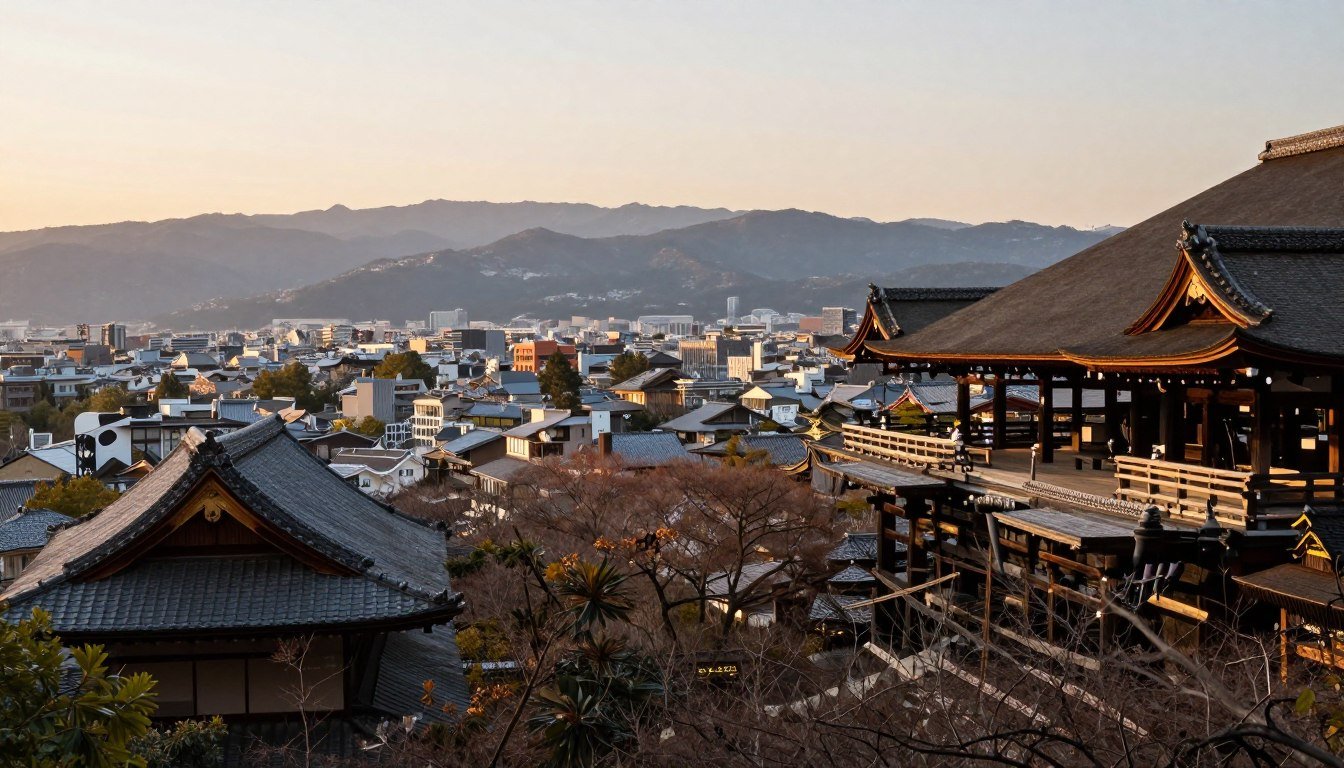
Kyoto stands as Japan’s cultural heart, where centuries-old temples meet vibrant modern neighborhoods. Planning your trip to this enchanting city requires understanding its seasonal rhythms, neighborhood personalities, and cultural treasures. This comprehensive Kyoto travel guide walks you through everything needed for an unforgettable experience in 2026.
Whether you’re seeking peaceful temple gardens, authentic culinary experiences, or insight into traditional Japanese culture, Kyoto delivers. The city welcomes millions of travelers yearly, yet maintains its serene character through careful preservation of historic districts and sacred spaces.
Get Your Free Kyoto Trip Planner for 2026
Receive exclusive travel updates, insider tips, and our comprehensive Kyoto planning checklist delivered straight to your inbox. Join 50,000+ travelers preparing their perfect Japan adventure.
Why Kyoto Deserves Your Travel Time in 2026
Kyoto served as Japan’s capital for over a thousand years, creating a cultural legacy unmatched anywhere else. The city escaped bombing during World War II, preserving 17 UNESCO World Heritage Sites, over 2,000 temples and shrines, and countless traditional machiya townhouses.
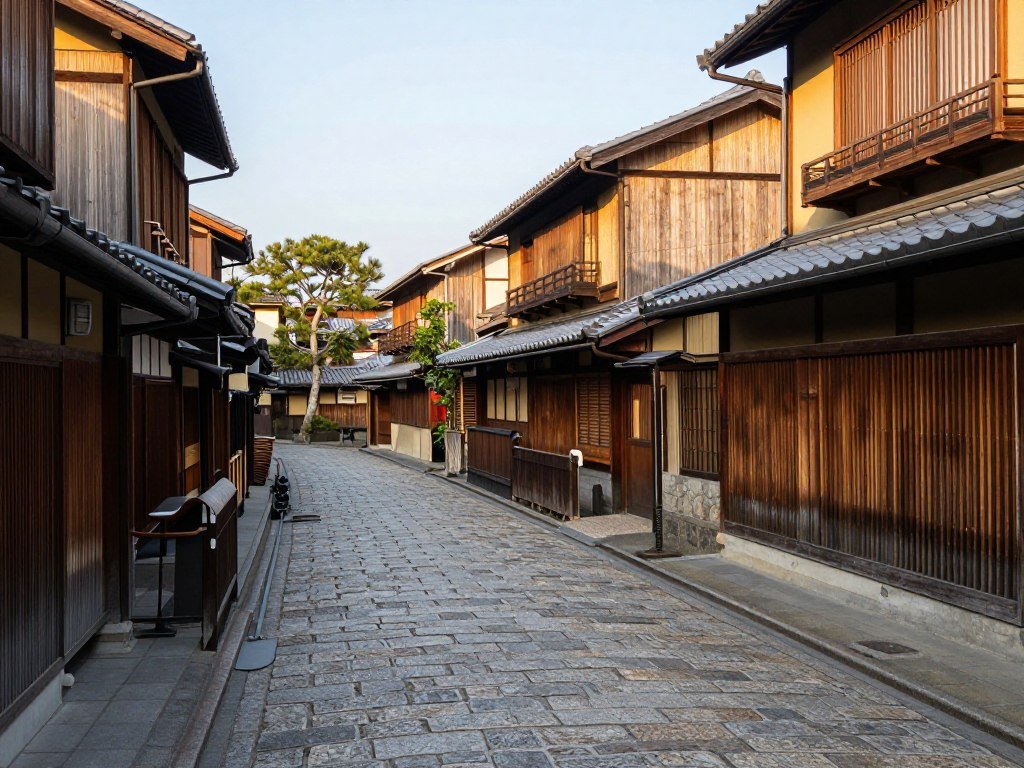
Walking through Kyoto’s historic districts feels like stepping back in time. The Gion neighborhood still hosts geisha rushing to appointments. Arashiyama’s bamboo groves tower overhead, creating natural cathedrals of green light. Downtown Kyoto blends modern energy with cultural respect, offering world-class shopping alongside ancient shrines.
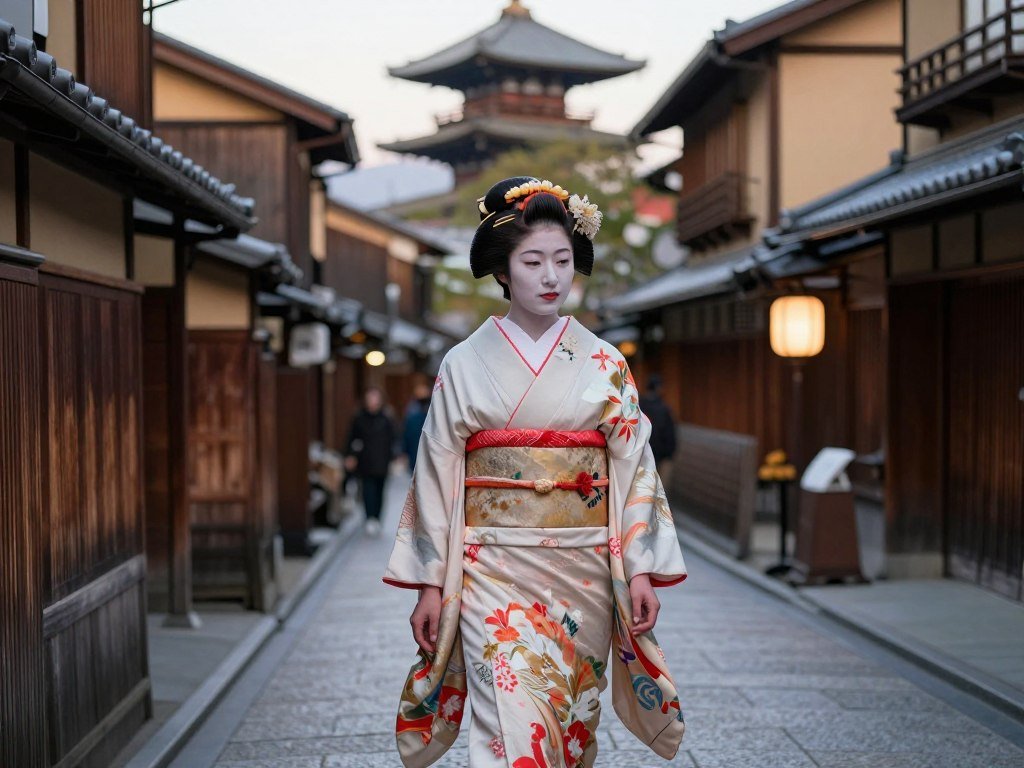
The city offers experiences found nowhere else. Participate in tea ceremonies at historic tea houses. Visit gardens designed by legendary masters. Sleep in traditional ryokan inns where hospitality reaches art form status. Every neighborhood reveals different aspects of Japanese culture, from the quiet spirituality of temple districts to the lively energy of modern shopping areas near Kyoto Station.
Food culture thrives throughout the heart of Kyoto. The city pioneered kaiseki cuisine, Japan’s haute culinary tradition. Markets overflow with Kyoto vegetables grown using centuries-old techniques. Street food vendors serve specialties unique to this destination. From humble ramen shops to Michelin-starred restaurants, Kyoto satisfies every palate and budget.
Best Time to Visit Kyoto: Seasonal Planning Guide
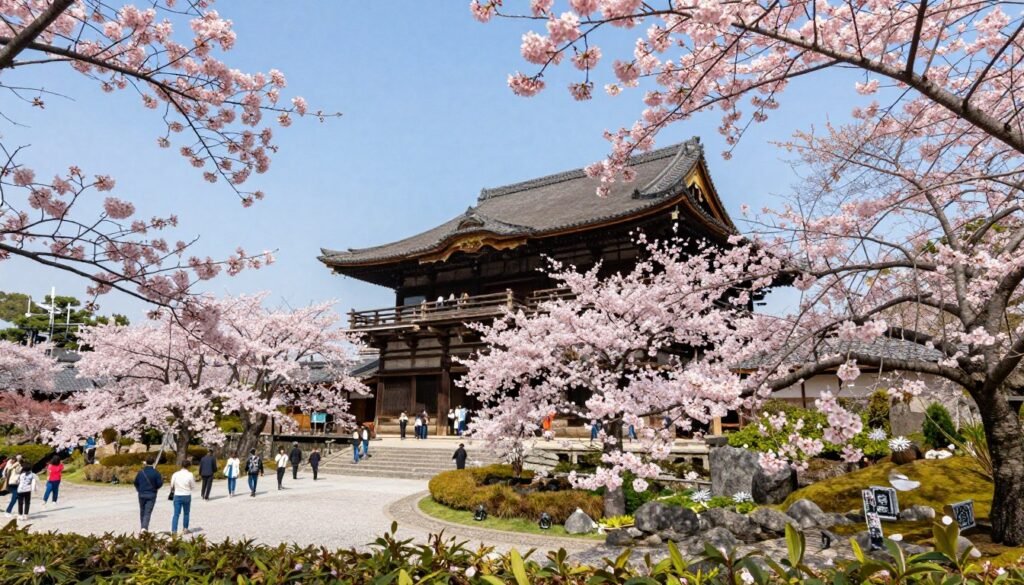
Timing dramatically affects your Kyoto experience. Each season offers distinct advantages, and understanding these patterns helps match your trip to personal preferences and practical considerations.
Spring in Kyoto (March – May)
Spring brings Japan’s most celebrated natural phenomenon – cherry blossoms. Peak bloom typically occurs in early April, though exact timing varies yearly. The city transforms into pink and white wonderlands as sakura trees bloom throughout temple gardens, along rivers, and in parks. This magical time draws massive crowds, especially during the first two weeks of April.
Temperatures range from cool mornings requiring light jackets to pleasant afternoons perfect for walking. Spring rain occasionally appears, so pack an umbrella. Hotel rates increase significantly during cherry blossom season, and popular sites experience their longest wait times of the year. Book accommodations at least six months ahead for April travel.
Pro Tip: Visit popular cherry blossom spots early morning or late evening to avoid peak crowds. The Philosopher’s Path and Maruyama Park offer spectacular blooms with slightly fewer visitors than more famous locations.
Summer in Kyoto (June – August)
Summer means heat and humidity, with temperatures often exceeding 90°F (32°C) with high humidity levels. June brings rainy season (tsuyu), creating muggy conditions but also beautiful hydrangea displays at temples. July and August offer the clearest weather but most intense heat.
Advantages include smaller crowds at major sites and lower hotel rates compared to spring and fall. Summer festivals enliven the city, particularly the famous Gion Matsuri in July. Many gardens appear lush and green, and temple grounds offer shaded respite from heat. Plan activities for early morning and evening, reserving midday hours for air-conditioned museums or restaurants.
Autumn in Kyoto (September – November)
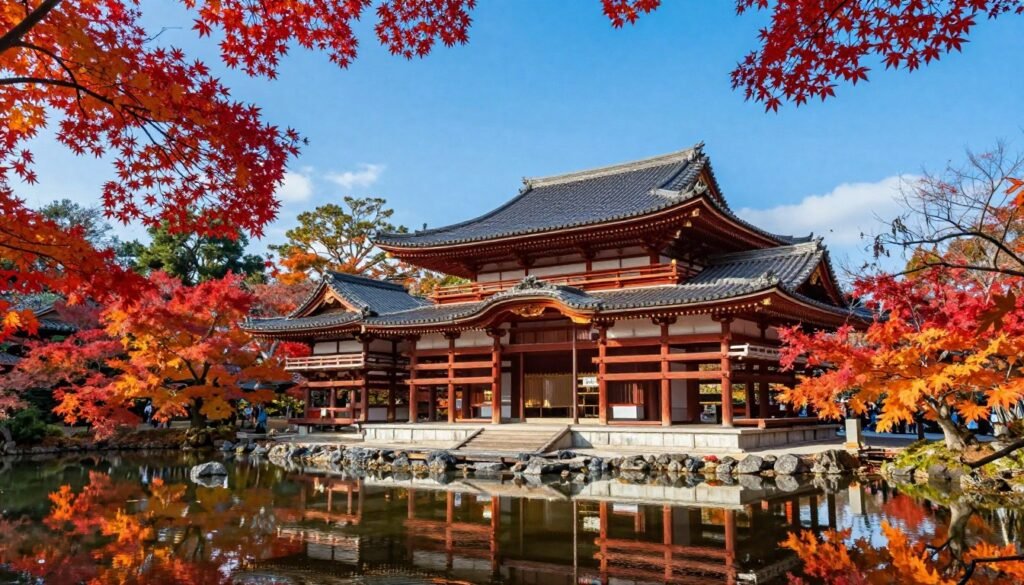
Autumn rivals spring as Kyoto’s most beautiful season. Fall foliage peaks in mid to late November, painting temple gardens in spectacular reds, oranges, and golds. Weather remains comfortable, with pleasant temperatures and low rainfall. These ideal conditions attract crowds nearly matching spring levels.
Many travelers consider autumn Kyoto’s best season. The light becomes softer, enhancing photography opportunities. Harvests bring seasonal foods to restaurant menus. Temple gardens choreograph their fall displays, with different areas peaking at different times to extend the viewing season. Popular sites like Tofuku-ji Temple and Eikando Temple become extremely crowded during peak color weekends.
Winter in Kyoto (December – February)
Winter brings Kyoto’s fewest tourists and lowest hotel rates. Cold temperatures require warm clothing, and occasional snow creates magical scenes at temples. Most days remain dry and sunny, though temperatures hover around 40-50°F (4-10°C).
Winter advantages include peaceful temple visits without crowds, easier restaurant reservations, and authentic experiences at local establishments less focused on tourism. Some gardens deliberately designed for winter viewing reveal their secrets. Hot springs near Kyoto provide perfect warming escapes. The cold keeps some travelers away, creating opportunities for those willing to bundle up.
Book Your 2026 Cherry Blossom Tour Now
Spring 2026 tours are filling fast. Secure your spot for guided cherry blossom experiences with local experts who know the best viewing locations and perfect timing.
Kyoto Weather Quick Reference
| Season | Temperature Range | Rainfall | Crowds | Hotel Rates | Best For |
| Spring | 50-70°F (10-21°C) | Moderate | Very High | Expensive | Cherry blossoms, photography |
| Summer | 75-95°F (24-35°C) | High (June), Low (July-Aug) | Moderate | Moderate | Festivals, fewer tourists |
| Autumn | 55-75°F (13-24°C) | Low | Very High | Expensive | Fall foliage, perfect weather |
| Winter | 35-50°F (2-10°C) | Low | Low | Budget-friendly | Peaceful visits, budget travel |
Getting to Kyoto: Transportation Options
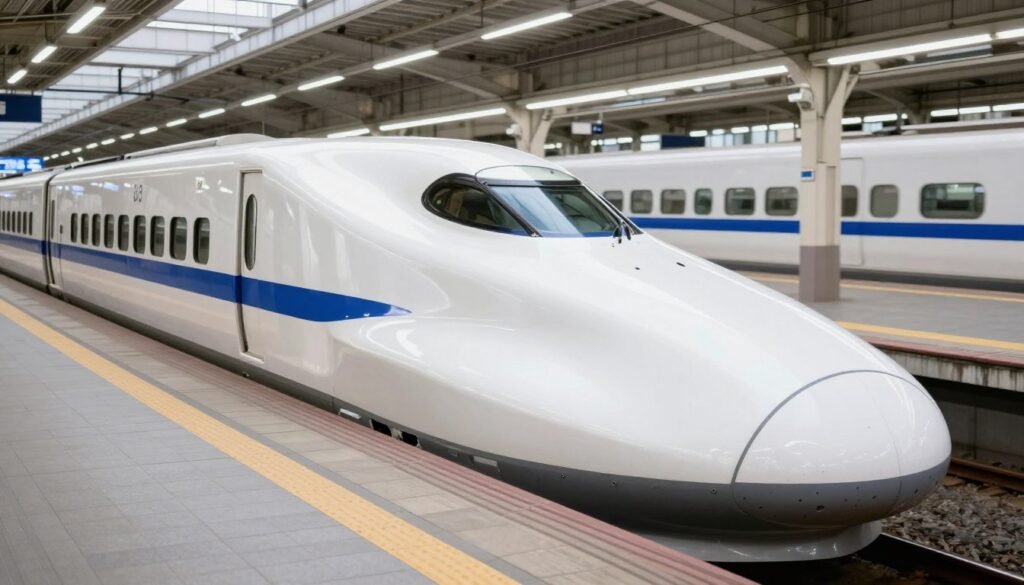
Reaching Kyoto requires understanding Japan’s excellent but sometimes complex transportation network. Most international travelers arrive through major airports, then use train connections to reach the city. Planning these connections in advance saves time and stress.
From Kansai International Airport (KIP/Osaka)
Kansai International Airport serves as the primary gateway for Kyoto visitors. Located about 100 kilometers from downtown Kyoto, several transportation options connect the airport to the city. The journey takes 75 to 120 minutes depending on the service chosen.
The Haruka Limited Express train offers the fastest and most comfortable option, running directly from the airport to Kyoto Station. The journey takes approximately 75 minutes. Reserved seats ensure space for luggage, important after long international flights. This train departs every 30 minutes throughout the day.
Airport limousine buses provide an alternative, especially for travelers staying at hotels not within walking distance of Kyoto Station. These comfortable coaches travel directly to major hotel districts, including downtown Kyoto areas. Journey time ranges from 90 to 120 minutes depending on traffic and hotel location. Luggage storage under the bus eliminates hauling bags through train stations.
Budget travelers can use regular express trains requiring one transfer, cutting costs significantly. This option takes about 90-100 minutes total and requires navigating stations with luggage. The savings may justify the extra effort for some travelers.
From Tokyo to Kyoto
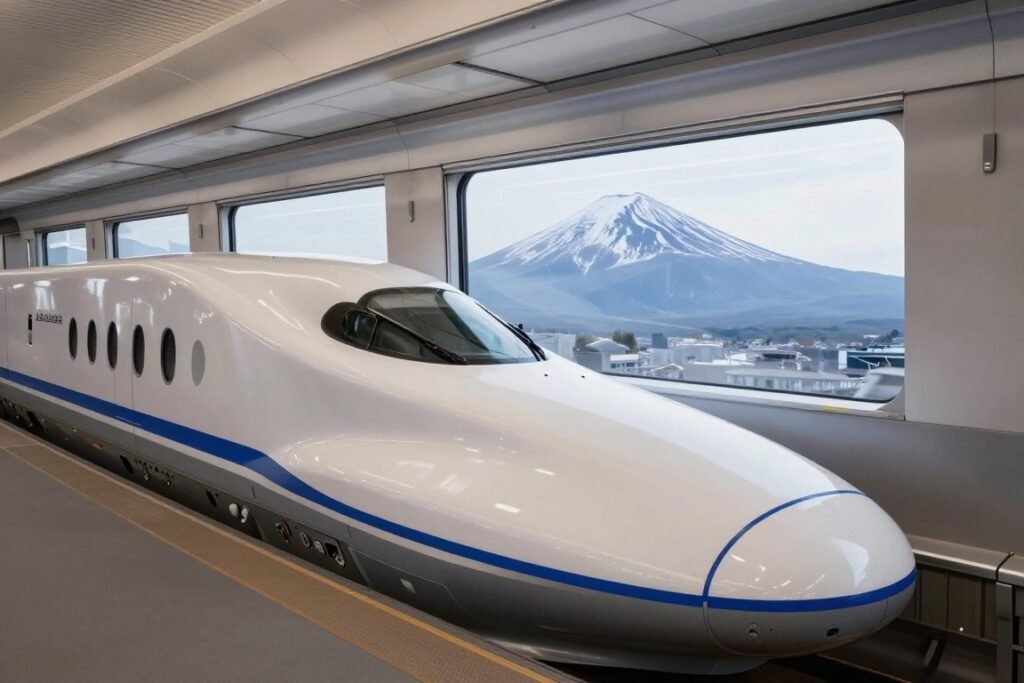
The shinkansen bullet train connects Tokyo and Kyoto in about 2 hours and 15 minutes, making it the preferred option for most travelers. These iconic trains depart every 10-20 minutes during peak hours from Tokyo Station, providing flexibility in scheduling. The journey offers comfortable seats, smooth rides, and often glimpses of Mount Fuji between Tokyo and Kyoto.
Three train types serve this route: Nozomi (fastest, not covered by standard rail pass), Hikari (slightly slower, covered by rail pass), and Kodama (stops at every station, rarely used for long-distance travel). Nozomi trains complete the trip in about 2 hours 15 minutes, while Hikari trains add 15-30 minutes.
Reserved seats cost more than unreserved but guarantee space during busy travel periods. Peak travel times (Friday evenings, Sunday afternoons, holidays) see trains filling completely. Book reserved seats for these times, especially when traveling with luggage or in groups.
Japan Rail Pass Considerations
The Japan Rail Pass offers unlimited travel on most JR trains, including many shinkansen services. Passes come in 7-day, 14-day, and 21-day versions, making sense for travelers visiting multiple cities. A single Tokyo-Kyoto-Tokyo trip nearly pays for a 7-day pass.
The pass covers Hikari and Kodama shinkansen services between Tokyo and Kyoto, plus local JR trains within Kyoto. It does not cover Nozomi or Mizuho shinkansen services, the fastest options. Most travelers find Hikari services frequent enough that missing Nozomi trains causes no inconvenience.
Purchase rail pass vouchers before arriving in Japan, then exchange them for actual passes at major stations. The exchange process takes 15-30 minutes, so factor this into arrival day plans. Activate passes on any day within three months of purchase, providing flexibility in timing.
Save Up to 40% with Japan Rail Pass
Planning multiple city visits? The Japan Rail Pass pays for itself in just two long-distance trips. Purchase before arrival for the best rates and seamless travel across Japan.
Other Transportation to Kyoto
Some travelers arrive at Osaka Itami Airport, a domestic airport closer to Kyoto than Kansai International. Limousine buses connect this airport to Kyoto in about 55 minutes. This option works well for travelers connecting from domestic flights within Japan.
Highway buses connect Kyoto with cities across Japan at budget prices. Overnight buses from Tokyo offer the cheapest transportation option, though comfort suffers compared to trains. These buses work well for budget-conscious travelers willing to sacrifice sleep for savings.
Getting Around Kyoto: City Transportation
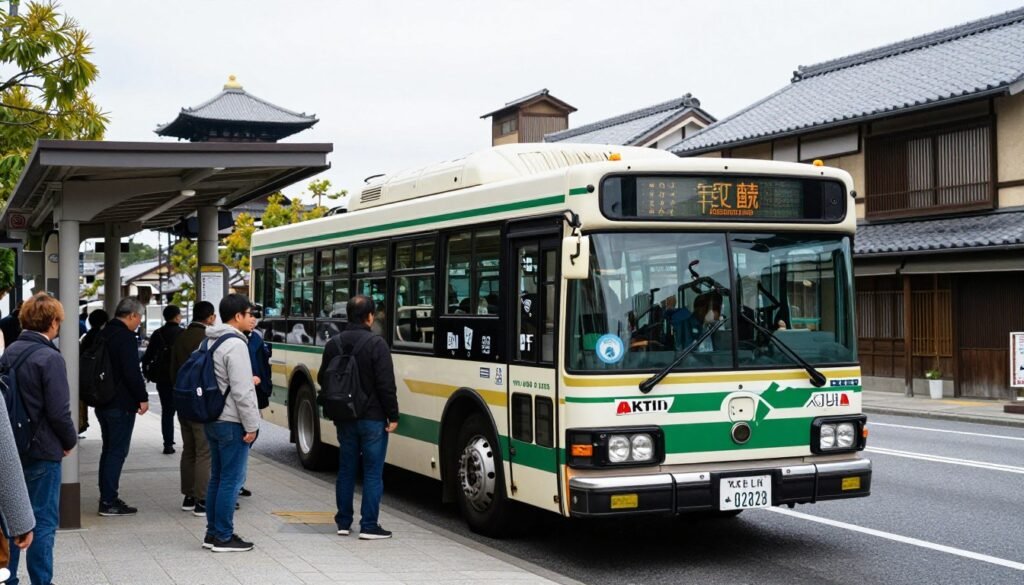
Kyoto’s public transportation system efficiently connects major attractions, hotels, and districts. Understanding the options helps maximize your time and minimize navigation stress. Most visitors rely primarily on buses, with trains serving specific routes.
Kyoto City Buses
Buses reach virtually every attraction in Kyoto, making them the primary transportation for most tourists. The network appears complex initially but follows logical patterns. Key routes include numbers 100, 101, 102, 204, and 205, which circle the city reaching major temple districts and tourist areas.
Flat fares apply to most trips, currently 230 yen for adults. Board through the rear door, exit through the front while paying. Bus drivers rarely speak English, but digital displays and announcement systems include English station names at major stops. Many buses become extremely crowded during peak tourist seasons, particularly those serving popular temple areas.
One-day bus passes offer unlimited bus rides for 700 yen, paying for themselves after three trips. Purchase these passes from bus drivers (exact change required) or at Kyoto Station information centers. The passes also provide small discounts at some attractions and restaurants.
Kyoto Subway System
Two subway lines serve Kyoto: the Karasuma Line (north-south) and the Tozai Line (east-west). These lines reach fewer tourist sites than buses but offer faster travel between connected points. The subway particularly helps reaching Kyoto Station, downtown shopping districts, and some temple areas.
Subway fares start at 220 yen, increasing with distance. Purchase tickets from vending machines displaying English instructions. IC cards (described below) work on all subway trains, simplifying payment.
Private Railway Lines
Several private railway companies supplement public transportation. The Keihan Line connects downtown Kyoto with Osaka, stopping at Gion and other eastern districts. The Hankyu Line provides another Osaka connection through western Kyoto. The Eizan Railway reaches northern mountain areas including Kurama and Kibune.
These private lines don’t accept JR rail passes but do accept IC cards. They often provide the fastest routes to certain destinations, particularly areas outside central Kyoto.
IC Transportation Cards
IC cards (ICOCA, Suica, PASMO) function as rechargeable transportation payment cards working on buses, trains, and subways throughout Japan. Tap the card on entry and exit, automatically deducting correct fares. These cards eliminate fumbling with change and figuring exact fares.
Purchase IC cards from machines at major stations with a 500 yen refundable deposit plus initial charge. Add value at any station or convenience store. The cards also work for purchases at convenience stores, vending machines, and many restaurants, adding convenience beyond transportation.
Taxis in Kyoto
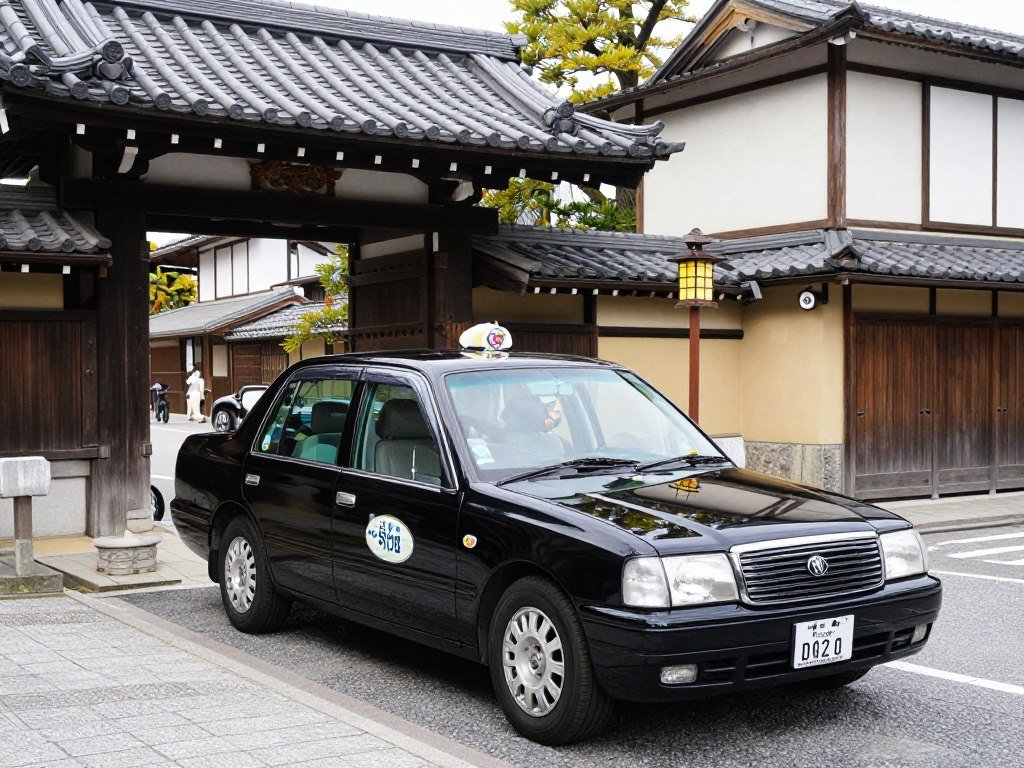
Taxis provide convenient point-to-point transportation, especially for short distances, early morning temple visits, or late night returns to hotels. Fares start around 500 yen, increasing with distance and time. Most drivers speak limited English, so having destination addresses written in Japanese helps communication.
Download taxi apps offering English interfaces and credit card payment. JapanTaxi and GO apps work reliably throughout Kyoto. These services cost the same as street taxis but eliminate language barriers and payment hassles.
Taxis make sense for groups visiting multiple sites within a district or when heavy rain makes bus travel uncomfortable. For longer distances or full-day sightseeing, hiring a private car with English-speaking driver costs more but provides flexible, comfortable transportation.
Walking and Bicycles
Central Kyoto rewards walking exploration. Many attractions cluster within walkable neighborhoods. The Gion district, Philosopher’s Path, and Higashiyama temple area all invite leisurely strolls connecting multiple sites. Comfortable walking shoes become essential equipment, as you’ll easily walk 10,000-15,000 steps daily visiting temples and gardens.
Bicycle rentals provide an excellent way to cover more ground than walking while enjoying neighborhood atmosphere. Many hotels and dedicated shops rent bicycles by the day. Kyoto’s relatively flat geography (except for mountain temple areas) suits cycling. Dedicated bike paths along the Kamo River offer particularly pleasant riding. Be aware that cycling on sidewalks, while common, is technically illegal and can result in fines.
Where to Stay in Kyoto: Neighborhood Guide
Choosing the right neighborhood significantly impacts your Kyoto experience. Each area offers distinct character, advantages, and access to different attractions. Understanding these differences helps match accommodation to your travel style and priorities.
Downtown Kyoto (Kawaramachi and Karasuma)
Downtown Kyoto pulses with modern energy while maintaining cultural connections. This central area offers the densest concentration of restaurants, shopping, and entertainment. Hotels here range from international chains to boutique properties, mostly occupying high-rise buildings along major streets.
Staying downtown puts you within walking distance of Gion, Pontocho alley, and Nishiki Market. Excellent public transportation connections reach all major attractions within 30 minutes. The area particularly suits travelers wanting restaurant variety, night life options, and convenience. Prices run moderate to expensive, with international hotel brands dominating the high-end market.
Downtown hotels often lack the traditional Japanese atmosphere found in other neighborhoods. The trade-off brings convenience and modern amenities. Many business hotels in this area offer excellent value, with compact but well-designed rooms including all necessary facilities.
Recommended Downtown Hotels
- The Royal Park Hotel Kyoto Sanjo – Modern comfort with traditional touches near downtown action
- Hotel Gracery Kyoto Sanjo – Mid-range option with great restaurant access
- Good Nature Hotel Kyoto – Eco-conscious property with rooftop bar and local dining
- Mitsui Garden Hotel Kyoto Sanjo – Reliable chain with comfortable rooms near transit
Find Best Downtown Kyoto Rates
Compare prices across major booking platforms. Downtown Kyoto hotels book quickly during peak seasons.
Kyoto Station Area
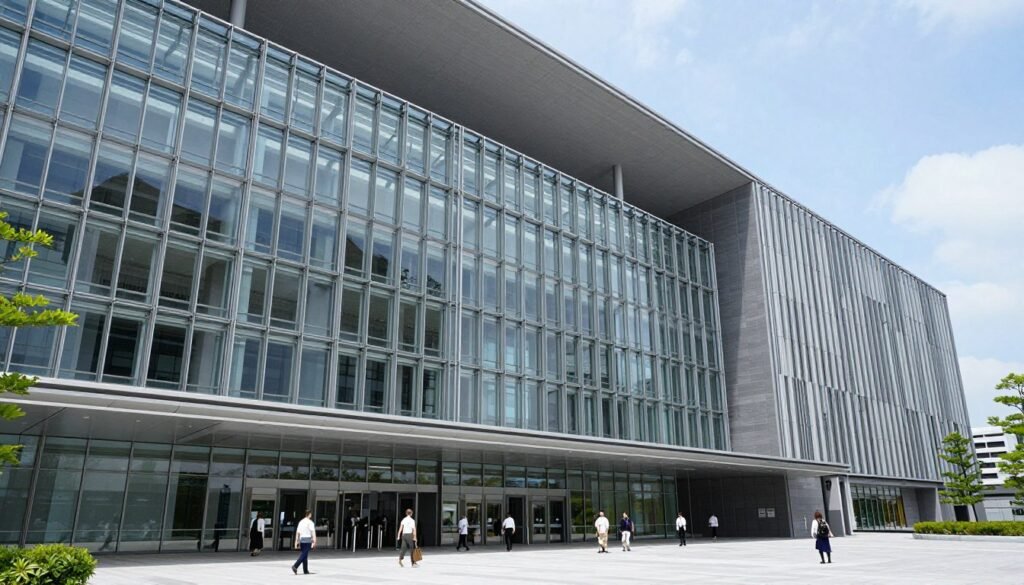
The Kyoto Station neighborhood offers maximum transportation convenience. Staying here simplifies airport transfers, day trips to other cities, and access to all attractions via direct bus routes. Many hotels occupy the area immediately north of the station, within walking distance of departure points.
Hotel Kyoto options near the station span all budget ranges. International luxury brands tower above the station complex. Mid-range Japanese chains fill nearby streets. Budget hostels serve backpackers and economy travelers. The concentration of hotels creates competitive pricing, especially during slower seasons.
The station area lacks traditional charm but compensates with modern shopping complexes, excellent restaurants (including a huge underground food mall), and efficient access to everything. Early morning train departures become stress-free when your hotel sits within walking distance from Kyoto Station platforms.
Station Area Advantages: Hotels near Kyoto Station provide free or low-cost luggage storage, early check-in options for rail pass exchange, and direct access to both local and long-distance train lines. This area works especially well for travelers splitting time between Kyoto and other Japanese cities.
Higashiyama (Eastern Mountains District)
Higashiyama captures classic Kyoto atmosphere. Narrow lanes wind between traditional wooden buildings. Major temples including Kiyomizu-dera cluster within walking distance. Staying here places you in the heart of historic Kyoto, though usually at premium prices.
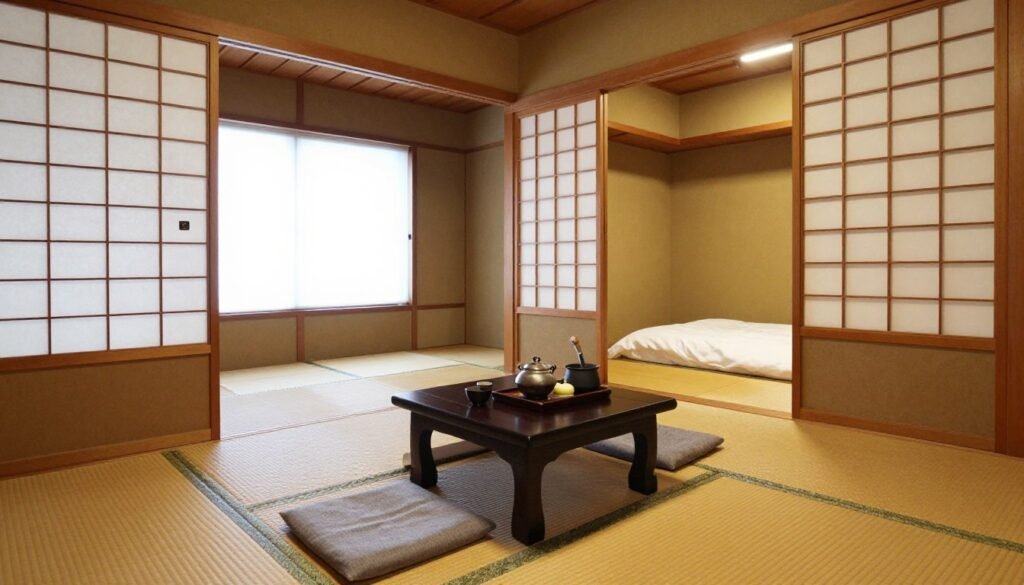
Accommodation options lean toward traditional ryokan inns and boutique hotels in restored machiya townhouses. These properties emphasize Japanese hospitality and cultural experience over modern convenience. Expect tatami mat rooms, futon bedding, and communal bathing areas at traditional establishments.
The neighborhood becomes crowded during daytime as tour groups visit famous temples. Early morning and evening reveal Higashiyama’s magical atmosphere. Staying here lets you experience these quiet times while day visitors crowd buses back to hotels.
Gion and Maruyama Park Area
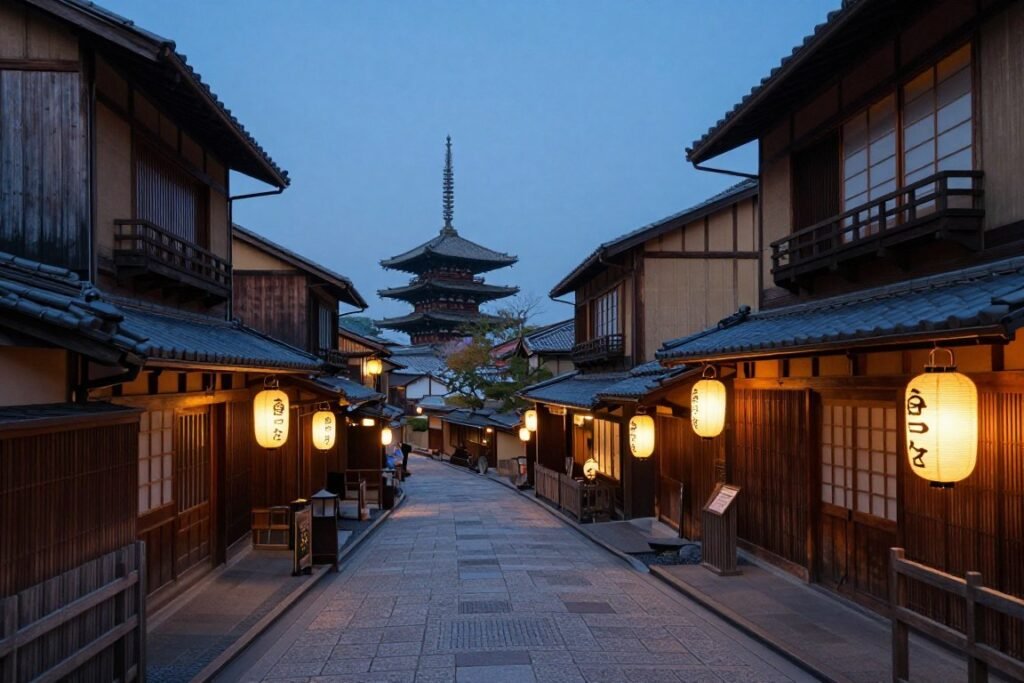
Gion offers the quintessential geisha district experience. Traditional tea houses line atmospheric lanes. The area maintains strict preservation standards, creating authentic historic ambiance. Hotels here tend toward luxury properties and high-end ryokan inns serving kaiseki dinners.
Location advantages include proximity to the Kamo River (perfect for evening walks), easy access to Higashiyama temples, and the heart of Kyoto’s most photogenic districts within walking distance. The neighborhood particularly suits travelers prioritizing cultural immersion and willing to invest in accommodation quality.
Book well in advance for Gion properties, especially during cherry blossom and fall foliage seasons. The limited number of hotels and strong demand create premium pricing. Some travelers consider the expense worthwhile for the authentic atmosphere and convenient location.
Arashiyama and Western Kyoto
Arashiyama provides a resort-like atmosphere away from central Kyoto. Mountain scenery surrounds the neighborhood. The famous bamboo grove, Tenryu-ji Temple, and Togetsukyo Bridge sit within walking distance. Staying here offers peaceful mornings and evenings after day visitors depart.
Hotel options include river-view ryokan, modern spa resorts, and mountain temples offering lodging. Prices range widely depending on property type and river views. Transportation to central Kyoto takes 30-40 minutes via train or bus, trading convenience for tranquility.
This area suits travelers wanting a retreat-style experience, couples seeking romance, or visitors planning multiple days exploring western Kyoto and nearby areas. The neighborhood rewards those willing to base themselves outside the central city in exchange for scenic beauty and calmer atmosphere.
Traditional Ryokan vs. Modern Hotels
Traditional Ryokan Experience
- Tatami mat rooms with futon bedding
- Multi-course kaiseki dinner and breakfast included
- Yukata robes and slippers provided
- Communal or private onsen bathing
- Personalized service and cultural experience
- Higher prices, usually $200-500+ per person
- Best for cultural immersion and special occasions
Modern Hotel Advantages
- Western-style beds and private bathrooms
- Flexible meal options or no meals included
- Larger rooms with more storage space
- 24-hour front desk and concierge services
- Loyalty programs and familiar amenities
- Wider price range, from budget to luxury
- Best for convenience and flexibility
Many travelers enjoy splitting their trip between both accommodation styles, spending a night or two in a traditional Japanese ryokan for the cultural experience, then staying at modern hotels for practical convenience. This combination offers the best of both worlds.
Discover Authentic Kyoto Accommodations
From traditional ryokan to modern hotels near Kyoto Station, find the perfect base for your 2026 adventure. Early booking ensures best rates and availability.
Top Attractions and Temples in Kyoto
Kyoto contains over 2,000 temples and shrines, making comprehensive coverage impossible. These attractions represent the essential experiences, balanced between famous landmarks and lesser-known gems. Plan to visit 3-5 major sites daily, allowing time to truly experience each location rather than rushing between temples.
Fushimi Inari Shrine: The Thousand Torii Gates
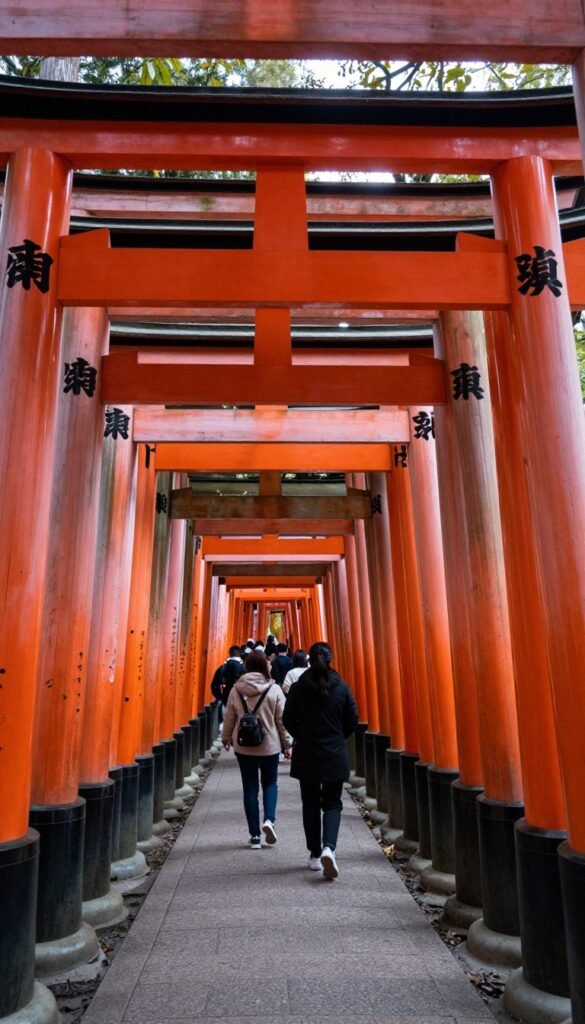
Fushimi Inari ranks as Kyoto’s most iconic attraction. Thousands of vermillion torii gates form tunnels winding up Mount Inari. The shrine dedicates itself to Inari, the Shinto god of rice and prosperity. Businesses donate the gates, with names and donation dates inscribed on each.
The main path takes 2-3 hours to complete, climbing to the mountain summit. Most visitors explore only the lower sections, where gates stand closest together creating the famous tunnel effect. Early morning visits (before 8 AM) or evening exploration (after 5 PM) avoid the worst crowds.
Admission costs nothing, and the grounds stay open 24 hours. The shrine sits about 10 minutes from Kyoto Station via JR train, making it easily accessible. Small restaurants near the entrance serve inari-zushi (sushi wrapped in fried tofu), the shrine’s namesake dish.
Insider Tip: The crowds thin dramatically after the first major viewpoint. Continuing to the summit rewards you with peaceful hiking, smaller shrines, and excellent views over Kyoto. The full circuit takes 2-3 hours at a moderate pace.
Kinkaku-ji: The Golden Pavilion
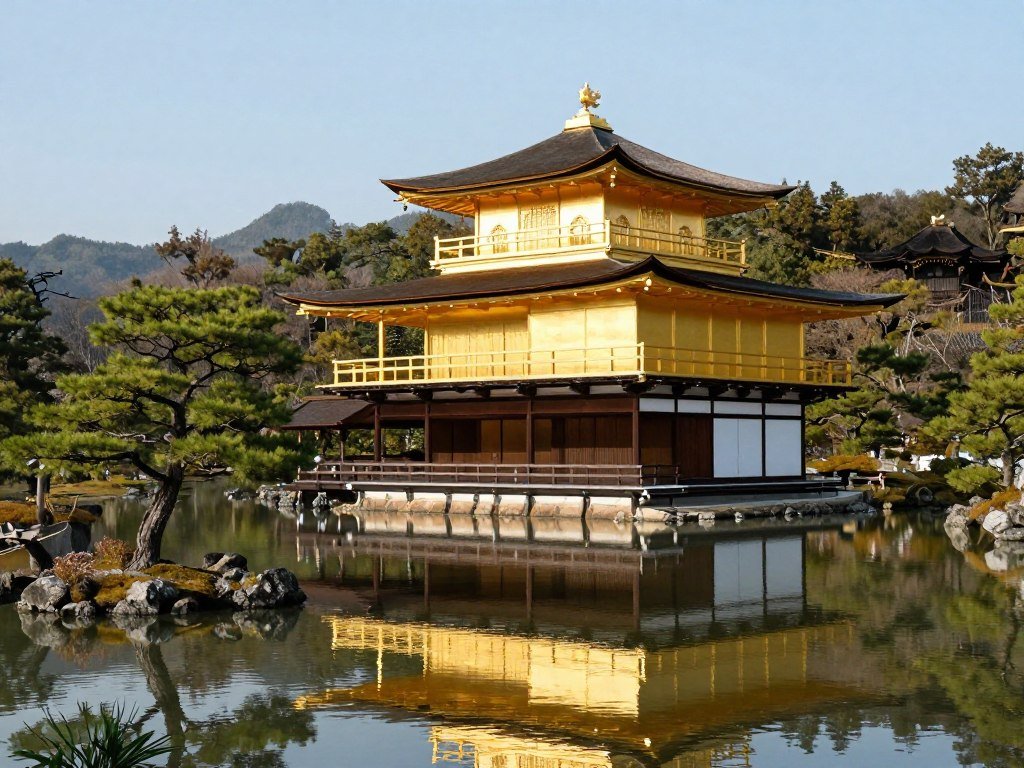
Kinkaku-ji literally stops visitors in their tracks. The three-story pavilion, completely covered in gold leaf, reflects in the mirror pond before it. This building ranks among Japan’s most photographed sites, though photos never fully capture its shimmering presence.
The current structure dates from 1955, rebuilt after a monk burned the original in 1950. The reconstruction used even more gold than the historical version, creating the brilliant appearance visitors see today. The pavilion serves as a shariden, housing relics of the Buddha.
Visit early (by 9 AM) to avoid massive tour groups that arrive mid-morning. The temple charges 500 yen admission. The visit follows a one-way path through lovely gardens, taking about 45 minutes. Photography opportunities abound, particularly from the main viewing area overlooking the pond.
The temple sits in northwestern Kyoto, requiring bus or taxi from downtown areas. Several buses serve the temple, including numbers 101, 102, and 204. Plan about 30 minutes travel time from Kyoto Station or downtown hotels.
Arashiyama Bamboo Grove
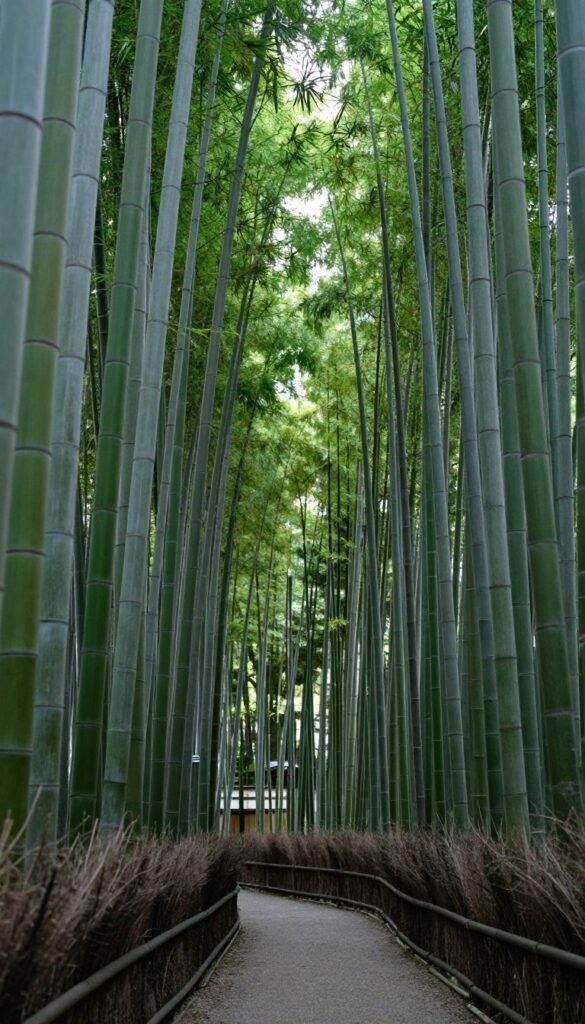
Walking through Arashiyama’s bamboo grove creates an otherworldly experience. Towering bamboo stalks create natural cathedrals of green light. Wind rustling through bamboo produces distinctive sounds recognized nowhere else. This relatively short path (about 500 meters) attracts enormous crowds yet still manages to inspire awe.
Visit at dawn or just before sunset for the best light and fewest people. The grove sits near Tenryu-ji Temple in western Kyoto. Most visitors combine the bamboo grove with other Arashiyama attractions including the temple, nearby gardens, and the scenic Togetsukyo Bridge.
The grove itself requires no admission fee, though reaching it through Tenryu-ji Temple’s northern gate (recommended for the best approach) costs 500 yen. The temple garden deserves the admission price regardless, offering one of Kyoto’s finest landscape gardens.
Skip the Lines at Kinkaku-ji
Beat the crowds with early-morning guided tours that include priority access and expert insights into the Golden Pavilion’s history and significance.
Kiyomizu-dera Temple
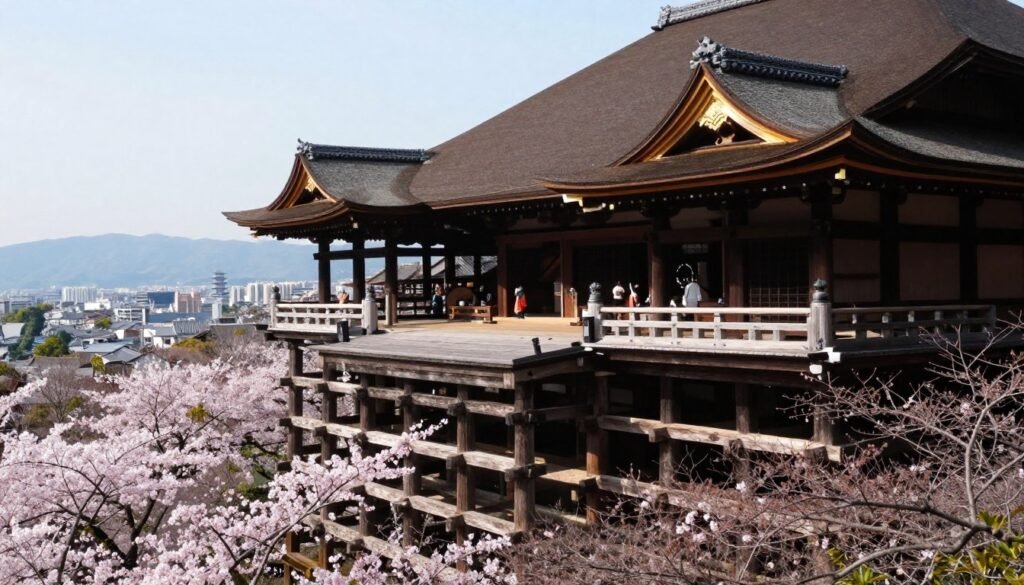
Kiyomizu-dera translates as “Pure Water Temple,” named for the waterfall within its complex. The temple’s wooden stage, built without a single nail, juts out from the hillside offering spectacular views over Kyoto. This UNESCO World Heritage site represents one of Japan’s most celebrated temples.
The approach to Kiyomizu-dera winds through the historic Higashiyama district. Narrow lanes lined with traditional shops selling crafts, snacks, and souvenirs create atmospheric buildup to the temple itself. Many visitors spend as much time exploring these approach streets as the temple grounds.
Admission costs 400 yen. The temple opens early (6 AM) and stays open until evening. Special night illuminations during cherry blossom and fall foliage seasons extend hours and offer magical experiences, though crowds intensify during these events. The climb to the temple requires walking uphill for about 15 minutes from bus stops.
The temple complex includes several buildings and a three-stream waterfall where visitors drink sacred water believed to confer wisdom, health, or longevity. Choose your stream carefully – drinking from all three supposedly brings bad luck.
Ginkaku-ji: The Silver Pavilion
Ginkaku-ji serves as counterpoint to Kinkaku-ji. Despite its name (Silver Pavilion), the building never received silver covering. The name emerged to distinguish it from its golden predecessor. The temple exemplifies wabi-sabi aesthetic principles valuing simplicity and natural beauty over ostentation.
The grounds showcase quintessential Japanese garden design. Raked gravel gardens include distinctive cone shapes representing Mount Fuji. Moss gardens and pond landscapes create varying scenes as the path winds through the hillside. The visit takes about 45 minutes following the designated route.
Ginkaku-ji sits at the northern terminus of the Philosopher’s Path, making it ideal to combine with a walk along this famous canal-side trail. The temple charges 500 yen admission and sits in northeastern Kyoto, accessible by bus from downtown in about 20 minutes.
Philosopher’s Path
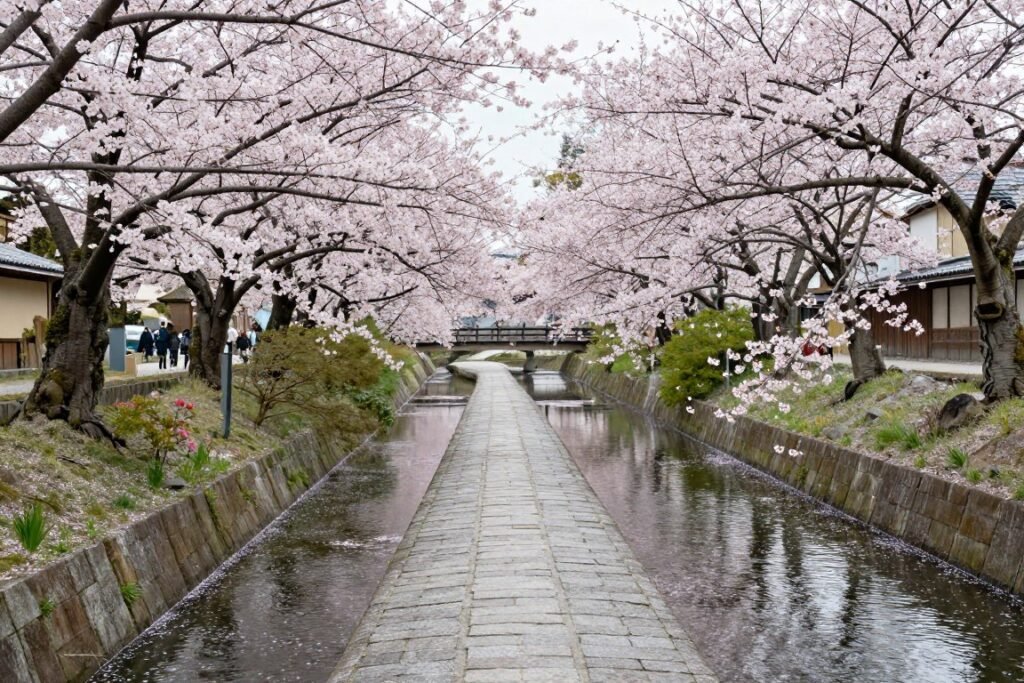
The Philosopher’s Path follows a canal for about two kilometers, connecting Ginkaku-ji with the Nanzen-ji Temple area. Cherry trees line both sides, creating one of Kyoto’s most beautiful spring walks. Small temples, cafes, and craft shops dot the route, inviting leisurely exploration.
The path takes its name from philosopher Nishida Kitaro, who walked this route daily in meditation. The peaceful canal-side setting still invites contemplation. Most visitors walk the path in spring or autumn, though each season offers different charms.
Walking the complete path takes 30-45 minutes without stops, though most visitors spend 1-2 hours exploring the route and visiting temples along the way. The path requires no admission fee. Access is easiest from bus stops serving Ginkaku-ji or from Nanzen-ji Temple at the southern end.
Ryoan-ji Temple and Rock Garden
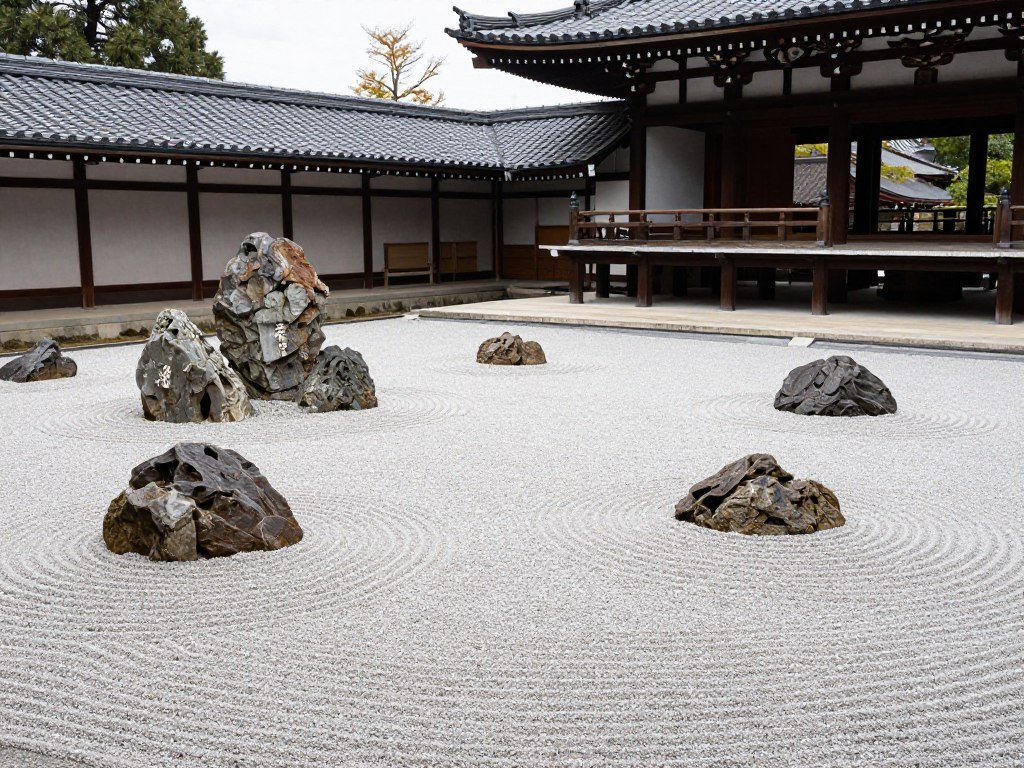
Ryoan-ji houses Japan’s most famous rock garden. Fifteen stones arranged in raked white gravel create a composition that has inspired contemplation for centuries. The garden’s meaning remains deliberately ambiguous – islands in an ocean, tiger cubs crossing a river, or pure abstract composition depending on interpretation.
The key characteristic: from any viewing position, at least one stone remains hidden from sight. This design principle reflects Buddhist concepts about the nature of reality and perception. Visitors typically sit on the viewing platform for extended periods, finding personal meaning in the simple scene.
Beyond the rock garden, Ryoan-ji includes a lovely pond garden dating from earlier periods. Most tour groups skip this area, creating peaceful walking opportunities. The full visit takes about 60-90 minutes. Admission costs 500 yen.
The temple sits in northwestern Kyoto near Kinkaku-ji, easily combined in a single morning or afternoon. Bus 59 connects both temples, or taxis cover the short distance affordably.
Nijo Castle
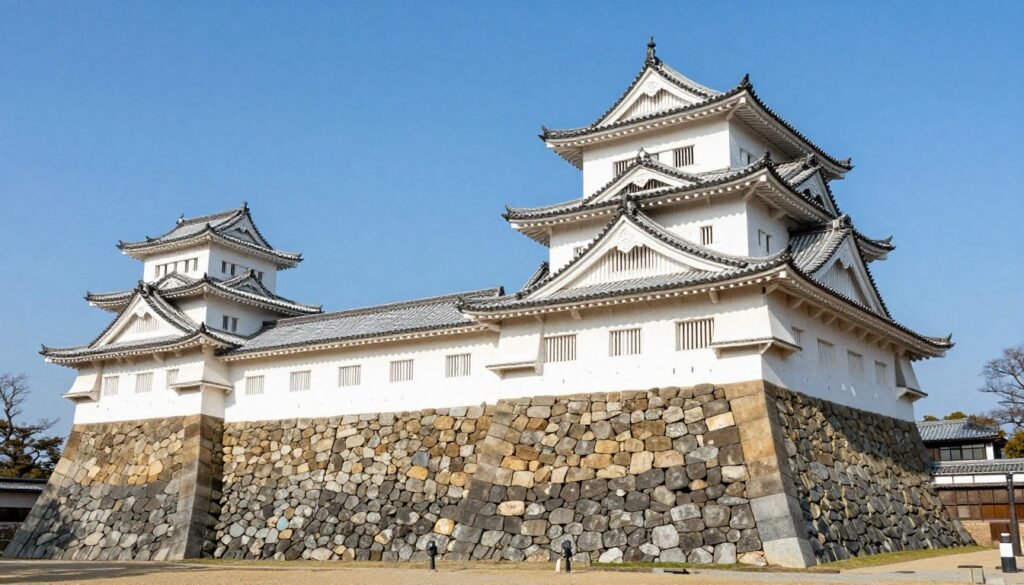
Nijo Castle represents samurai power and shogunate authority. Built in 1603 as the Kyoto residence of Tokugawa shoguns, the castle demonstrates defensive architecture and artistic achievement. Ornate interiors contrast sharply with the austere beauty of Zen temples.
The famous “nightingale floors” chirp with each step, designed to alert guards to intruders. Elaborate wall paintings by the Kano school cover interior surfaces. The castle grounds include beautiful gardens designed by master landscape architect Kobori Enshu.
Unlike most Kyoto sites, Nijo Castle represents military rather than religious architecture. This difference provides welcome variety in temple-heavy itineraries. The visit takes about 90 minutes to tour buildings and gardens thoroughly. Admission costs 1,300 yen.
The castle sits in central Kyoto, easily accessible by subway (Tozai Line) or bus. Its proximity to downtown makes it convenient to visit before or after shopping or dining in central areas.
Experience Kyoto’s Hidden Temples
Go beyond the tourist trails with guided tours to lesser-known temples and gardens. Local experts reveal Kyoto’s secret spiritual spaces rarely seen by visitors.
Tofuku-ji Temple
Tofuku-ji excels during autumn when maple trees paint the temple grounds in brilliant reds and oranges. The temple’s Tsutenkyo Bridge offers one of Kyoto’s most spectacular fall foliage views, looking out over a sea of color in the valley below.
Founded in 1236, Tofuku-ji ranks among Kyoto’s most important Zen temples. The main hall houses impressive Buddhist statuary. Multiple sub-temples within the complex offer different garden styles, from traditional gravel gardens to modernist moss landscapes.
Visit outside peak autumn weekends if possible. The temple becomes extremely crowded during prime foliage periods, with long lines to enter the bridge area. Early morning visits or weekday exploration provide better experiences. Admission costs 600 yen for the bridge and main garden areas, with additional fees for special gardens.
The temple sits in southeastern Kyoto, about 15 minutes from Kyoto Station by train (JR Nara Line or Keihan Line). This convenient location makes it easy to include in itineraries without dedicating entire half-days to reaching distant sites.
Cultural Experiences and Traditional Activities
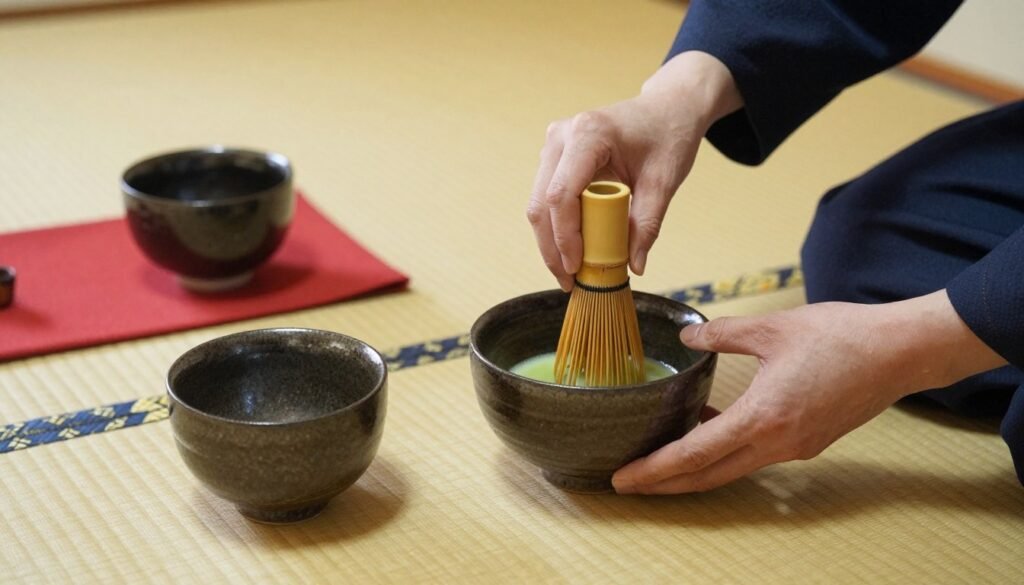
Experiencing traditional Japanese culture transforms Kyoto from beautiful backdrop into immersive destination. These activities provide hands-on engagement with customs that have defined Japanese life for centuries. Book cultural experiences in advance, especially during busy travel periods.
Tea Ceremony Experience
The Japanese tea ceremony (chanoyu) represents the ultimate refinement of hospitality. This ritualized preparation and serving of matcha green tea embodies Zen Buddhist principles of harmony, respect, purity, and tranquility. Participating in a ceremony offers profound insight into Japanese aesthetic values.
Several venues throughout Kyoto offer tea ceremony experiences for visitors. Sessions typically last 45-90 minutes, including instruction in proper etiquette, preparation observation, and participating in the ceremony yourself. Experiences range from casual introductions to formal presentations in historic tea houses.
Quality tea ceremony experiences cost $30-80 per person depending on venue and format. English-speaking instructors guide participants through each step, explaining the meaning behind actions. The experience includes seasonal wagashi sweets paired with the tea.
Recommended venues include En tea ceremony near Yasaka Shrine, Camellia tea ceremony in Gion, and experiences offered at several temples including Kenninji. Book at least several days ahead, particularly during peak seasons when spaces fill quickly.
Kimono Wearing Experience
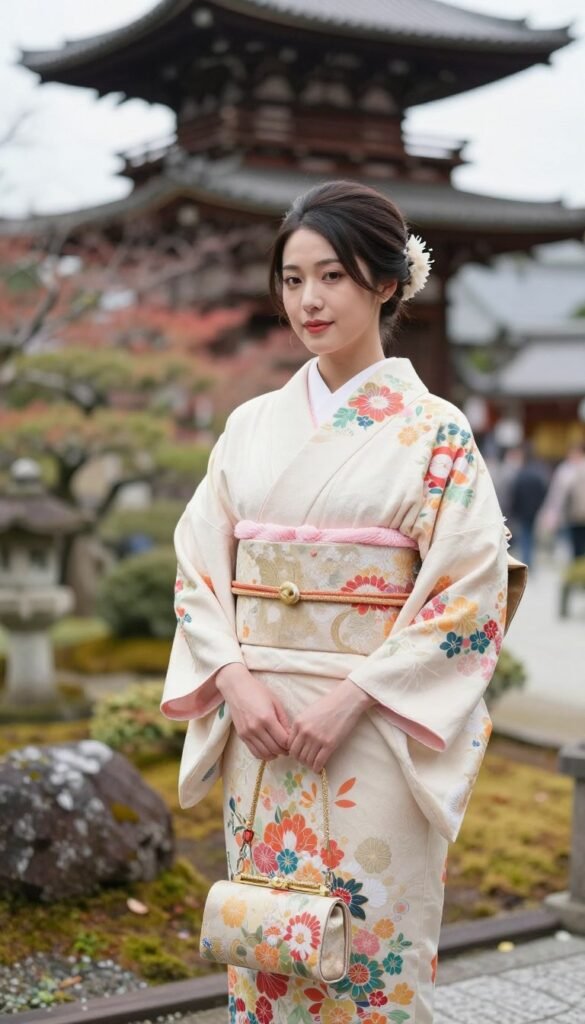
Wearing kimono while exploring Kyoto creates memorable experiences and photographs. Numerous kimono rental shops, particularly in the Gion and Higashiyama areas, offer half-day or full-day rentals including dressing services. Professional staff help select appropriate kimono and accessories, then expertly dress clients in traditional style.
Rental packages typically cost $40-100 depending on kimono quality and included services. Basic packages include kimono, obi (sash), accessories, and dressing. Premium options add elaborate hairstyling, additional accessories, and higher-quality fabrics. Most shops provide translation services and understand tourist needs.
Wearing kimono all day requires adjustment. Movement becomes more restricted, and traditional footwear (zori sandals) takes getting used to. Despite these challenges, most visitors find the experience worthwhile. The elegant garments photograph beautifully against temple backgrounds, and locals appreciate seeing visitors honoring traditional dress.
Popular rental areas become crowded with kimono-clad tourists during peak seasons. For more authentic experiences, visit less-touristy temples or walk residential neighborhoods where locals still occasionally wear kimono for special occasions.
Zen Meditation Sessions
Several Kyoto temples offer zazen (seated Zen meditation) sessions for visitors. These sessions provide authentic experience of Buddhist practice in temples where monks have meditated for centuries. Sessions typically last 30-60 minutes, including instruction in proper posture and breathing.
Expect discomfort. Zazen requires maintaining still seated positions (usually on cushions on the floor) for extended periods. Some temples include kinhin (walking meditation) to break up sitting periods. Monks may use a wooden stick (kyosaku) to gently strike shoulders of meditators who request it, helping maintain focus.
Many temples offer English-language zazen sessions for tourists. Kennin-ji Temple in Gion, Shunkoin Temple in northwestern Kyoto, and several other temples schedule regular sessions. Some require advance reservation while others accept walk-in participants. Sessions typically cost $10-30 per person.
Wear comfortable, loose-fitting clothing that allows sitting cross-legged. Arrive early to receive instruction before the session begins. Even brief experiences of Zen meditation provide glimpses into Buddhist practice and offer moments of peace amid busy sightseeing schedules.
Traditional Crafts Workshops
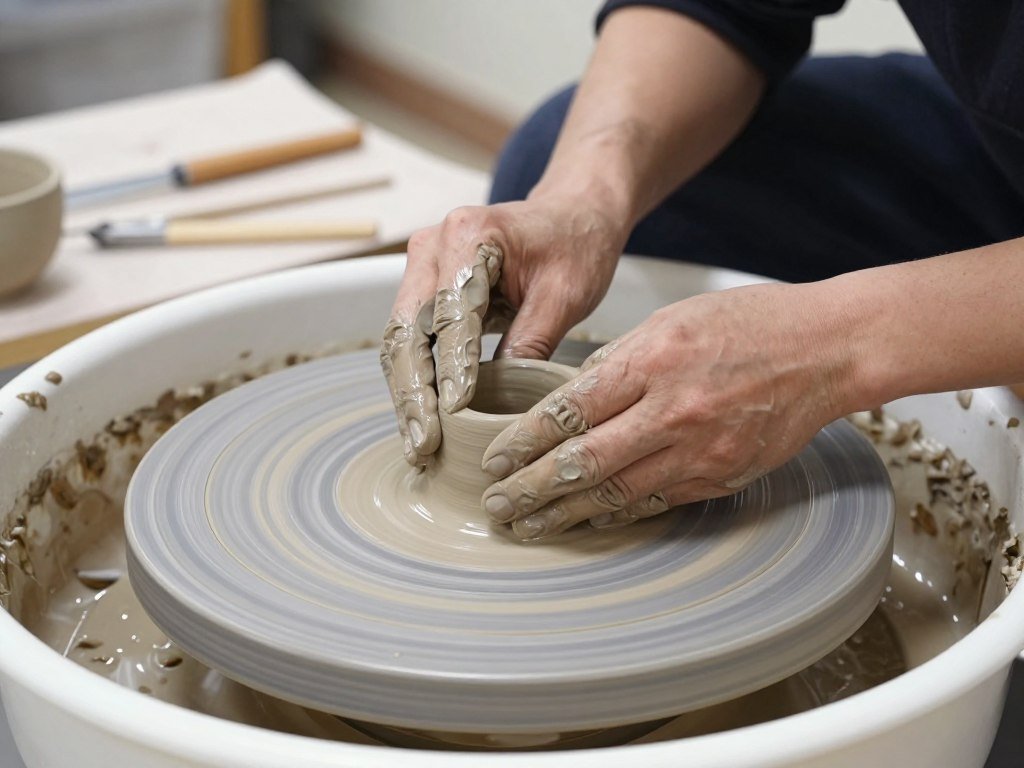
Kyoto’s craft traditions span centuries. Workshops offering hands-on experience in traditional arts let visitors create their own souvenirs while learning from master craftspeople. Popular options include pottery, indigo dyeing, gold leaf application, and Japanese paper making.
Pottery workshops particularly appeal to many visitors. Create your own tea cup, bowl, or sake cup under expert guidance. Many studios fire and ship completed pieces to participants’ homes several weeks after workshops. The making process itself provides satisfaction, and finished pieces become meaningful mementos.
Workshops typically last 1.5-3 hours and cost $40-120 depending on craft and complexity. Most require advance booking, especially during busy seasons. English instruction is commonly available, and studios provide all necessary materials and tools.
Additional craft options include calligraphy lessons, yuzen silk painting, and wagashi sweet making. Research options based on personal interests and book ahead to secure preferred time slots.
Book Authentic Cultural Experiences
From tea ceremonies to samurai lessons, experience traditional Japanese culture with expert guides. Small group sessions ensure personalized attention and meaningful engagement.
Geisha District Walking Tours
The Gion district remains one of Japan’s most famous geisha neighborhoods. Evening walking tours offer chances to explore atmospheric lanes and potentially glimpse geisha and maiko (apprentice geisha) traveling to appointments. Knowledgeable guides explain the history, traditions, and ongoing reality of geisha culture.
Evening tours (around 6-8 PM) offer the best chances of geisha sightings as they travel between tea houses. Morning tours explore the same streets without crowds, focusing on architecture and history. Tours typically last 90-120 minutes and cost $25-60 per person.
Respectful behavior remains essential. Photographing geisha requires permission, and blocking their path or following them is considered extremely rude. Good tours emphasize proper etiquette while providing historical context that enhances appreciation of this unique cultural tradition.
Private geisha performances and dinners are possible but expensive, typically costing $300-500 per person or more. These require advance booking through specialized agencies and offer intimate introductions to geisha arts including dance, music, and conversation.
Food and Dining in Kyoto
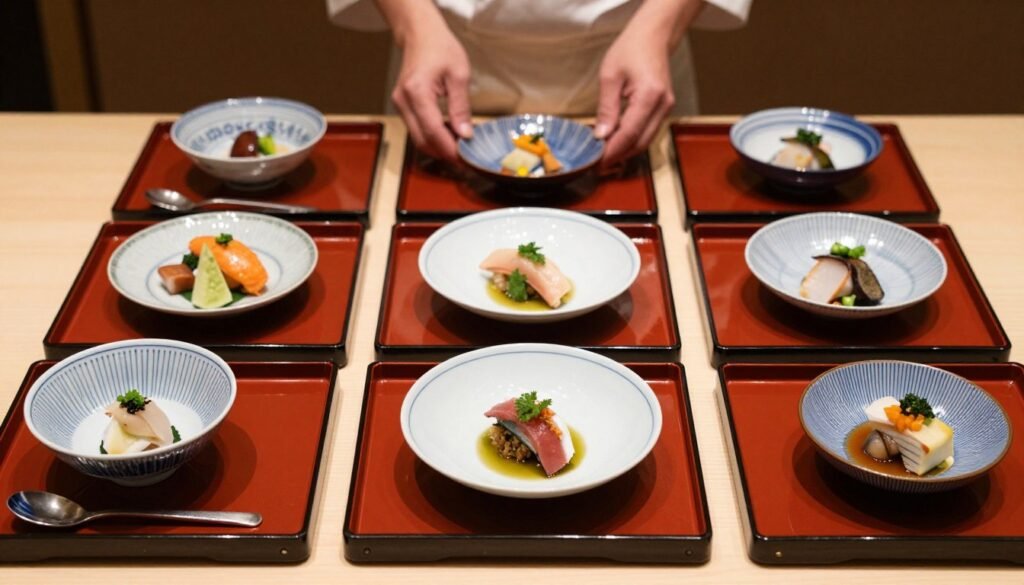
Kyoto’s food culture rivals its temples for cultural significance. The city pioneered kaiseki cuisine, refined Buddhist vegetarian cooking (shojin ryori), and created distinctive preparations using local vegetables. Dining experiences range from humble street food to multi-Michelin-starred restaurants, all reflecting centuries of culinary refinement.
Kaiseki Cuisine
Kaiseki represents Japanese haute cuisine at its finest. Multi-course meals showcase seasonal ingredients through precise preparation and artistic presentation. Each dish arrives in specifically chosen ceramics, with portions sized for appreciation rather than filling stomachs. Kaiseki meals can include 7-15 courses, progressing through appetizers, soups, sashimi, grilled items, simmered dishes, and desserts.
Traditional kaiseki evolved from tea ceremony meals, emphasizing harmony between food, season, and setting. Kyoto restaurants offer the most authentic kaiseki experiences, with many establishments occupying historic buildings or traditional gardens. Prices range from $80 per person for lunch kaiseki at accessible restaurants to $300-500+ for dinner at prestigious establishments.
Recommended kaiseki experiences include Kikunoi (Michelin three-star), Gion Karyo (more accessible luxury), and Yoshikawa (tempura-focused kaiseki in a historic inn). Make reservations weeks or months in advance for top restaurants. Some high-end establishments require Japanese-speaking intermediaries for bookings.
Lunch kaiseki provides more affordable entry points to this cuisine, often costing half the dinner price while offering similar quality and presentation. Many prestigious restaurants offer lunch-only kaiseki options unavailable in evening menus.
Nishiki Market: Kyoto’s Kitchen
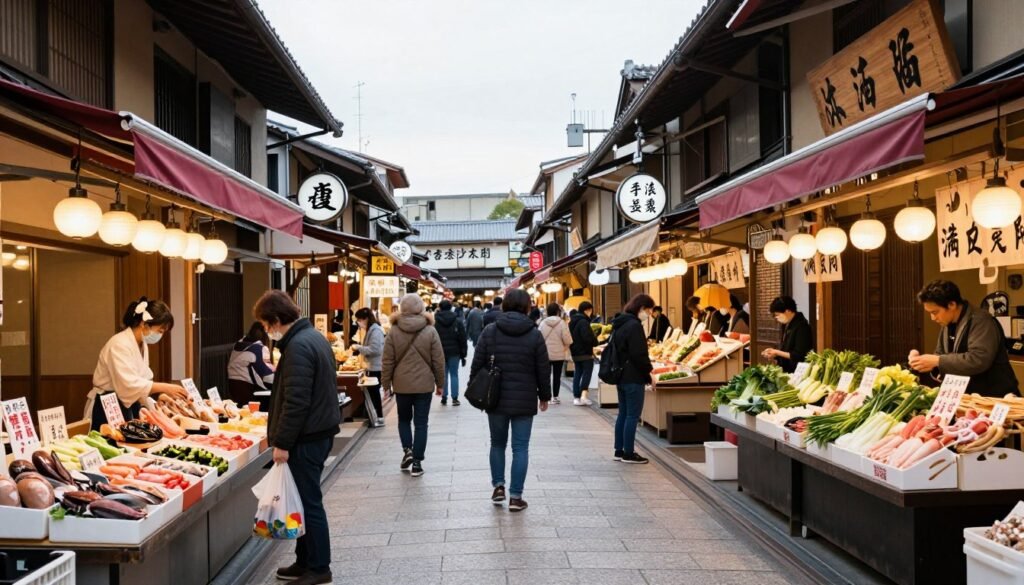
Nishiki Market stretches for five blocks through central Kyoto, offering incredible food diversity in a narrow covered arcade. Over 100 specialty shops and stalls sell everything from fresh seafood to pickled vegetables, traditional sweets to kitchen tools. The market functions as both working food market for local chefs and tourist attraction offering ready-to-eat samples and street food.
Visit mid-morning to see the market at its liveliest. Many stalls close by evening, and some close entirely on Wednesdays or Thursdays. The narrow arcade becomes extremely crowded during peak tourist hours (11 AM – 2 PM). Early morning visits offer better shopping experiences with fewer crowds.
Must-try items include fresh yuba (tofu skin), tsukemono (pickled vegetables in countless varieties), and seasonal mochi sweets. Several stalls offer tastings, and vendors generally welcome curious visitors. Prices reflect tourist area premiums but remain reasonable compared to restaurant meals.
The market sits in downtown Kyoto within walking distance from most central hotels. Plan 1-2 hours for leisurely exploration. Several restaurants occupying market buildings serve excellent meals using market ingredients.
Ramen in Kyoto
Kyoto’s ramen scene emphasizes rich, creamy tonkotsu (pork bone) broths and unique regional variations. The city’s ramen differs from Tokyo-style shoyu or Sapporo miso ramen, developing distinctive character through local preferences and ingredients.
Ichiran operates multiple locations offering customizable tonkotsu ramen in individual booths. Gogyo specializes in “burnt” miso ramen with intensely flavored black garlic oil. Tenkaippin represents Kyoto-style kotteri (extra-rich) ramen, with thick, almost gravy-like broth.
Ramen shops typically cost $8-12 per bowl, making them excellent budget dining options. Most shops operate limited hours, often 11 AM – 3 PM and 6 PM – 11 PM, with some closing between lunch and dinner. Lines form at popular shops during meal times, but waits rarely exceed 20-30 minutes.
The concentrated ramen district near Kyoto Station offers numerous options within walking distance. Try multiple shops to compare styles and discover personal favorites.
Traditional Japanese Breakfast
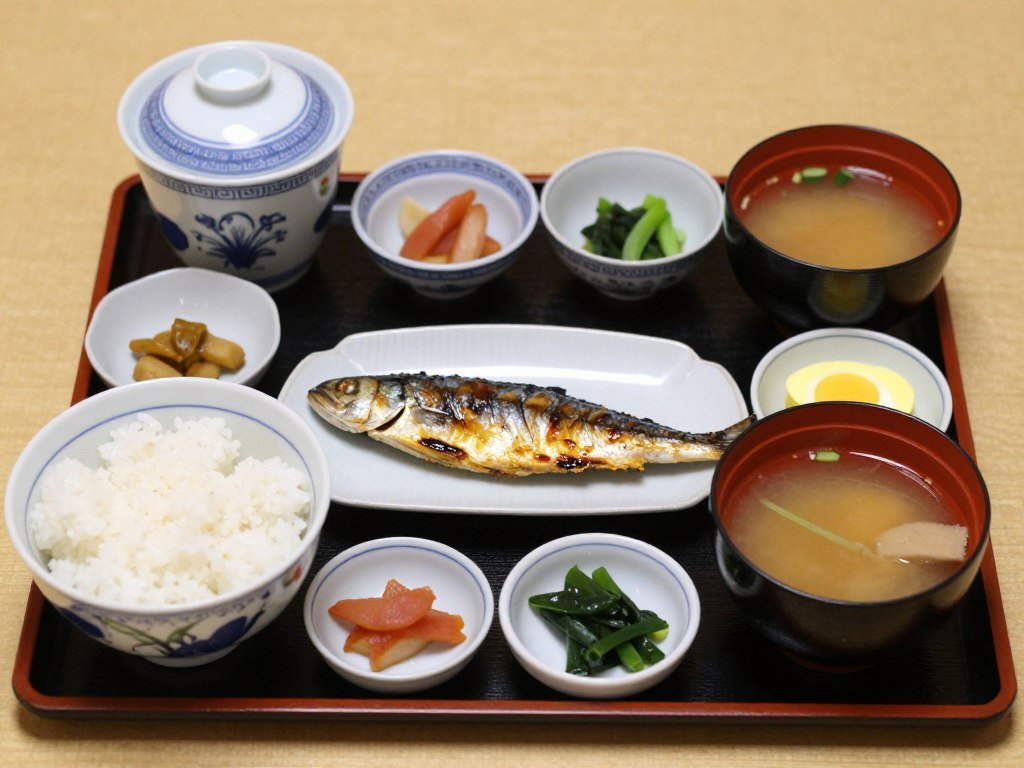
Traditional Japanese breakfast centers on rice, miso soup, grilled fish, pickles, and various small side dishes. This substantial morning meal provides balanced nutrition and introduces travelers to Japanese breakfast culture. Many ryokan include elaborate traditional breakfasts as part of overnight stays.
Hotel breakfasts in Kyoto often include both Western and Japanese options. Choose the Japanese breakfast to experience this traditional meal even when staying at modern hotels. The meal appears complex initially but follows simple patterns: eat rice with side dishes, use soup to cleanse your palate, and finish with tea.
Several restaurants specialize in traditional breakfasts for non-hotel guests. Ippudo and several cafes near Kyoto Station offer morning sets. Prices range from $8-15 for standard breakfasts to $20-30 for elaborate presentations at upscale establishments.
Vegetarian and Vegan Dining
Kyoto offers excellent options for vegetarian and vegan travelers, thanks to the Buddhist temple tradition of shojin ryori (vegetarian cuisine). This sophisticated cooking style creates elaborate meals without meat, fish, or animal products, using seasonal vegetables, tofu, and mountain vegetables.
Several temples serve shojin ryori to visitors, including Tenryu-ji in Arashiyama and Daigo-ji in southern Kyoto. Specialized restaurants like Shigetsu (at Tenryu-ji) and Izusen (near Daitoku-ji Temple) offer authentic temple food in beautiful settings. Expect to pay $30-60 per person for complete shojin ryori meals.
Modern vegan restaurants increasingly appear throughout Kyoto, particularly in downtown and student areas. Mumokuteki offers organic vegan meals, while Ain Soph serves vegan sweets and coffee. Happy Cow and similar apps help locate vegetarian and vegan options throughout the city.
Be aware that “vegetarian” in Japan sometimes includes fish-based dashi stock. Specify “vegan” or “complete vegetarian” when ordering to avoid animal products. Showing cards with dietary restrictions written in Japanese helps communicate needs clearly.
Taste Kyoto’s Culinary Heritage
Join expert-led food tours exploring Nishiki Market, hidden izakaya, and traditional sweets shops. Taste authentic Kyoto cuisine while learning cultural and historical context from local guides.
Kyoto Specialty Foods
Several foods define Kyoto’s culinary identity. Yudofu (tofu hot pot) showcases the city’s excellent tofu, served in simple preparations highlighting ingredient quality. The Nanzen-ji Temple area specializes in yudofu restaurants, with Okutan operating since 1635.
Kyoto vegetables (Kyo-yasai) include distinctive varieties grown using traditional methods. These vegetables appear in kaiseki meals and specialty restaurants. Winter brings senmai-zuke pickles, spring features takenoko bamboo shoots, and summer brings Kamo eggplant.
Matcha desserts reach peak refinement in Kyoto. The city’s tea culture means matcha ice cream, parfaits, and cakes achieve superior quality compared to other destinations. Tsujiri and Nakamura Tokichi offer excellent matcha sweets in atmospheric settings.
Yatsuhashi represent Kyoto’s signature souvenir sweet. These cinnamon-flavored rice flour confections come in baked and raw versions, with endless flavor variations. Purchase them throughout the city, particularly near temples and at Kyoto Station.
Day Trips from Kyoto
Kyoto’s central location makes it an excellent base for exploring the Kansai region. Several outstanding destinations sit within an hour or two, easily visited as day trips while maintaining your Kyoto accommodation. These excursions add variety to temple-focused Kyoto itineraries.
Nara: Ancient Capital and Sacred Deer
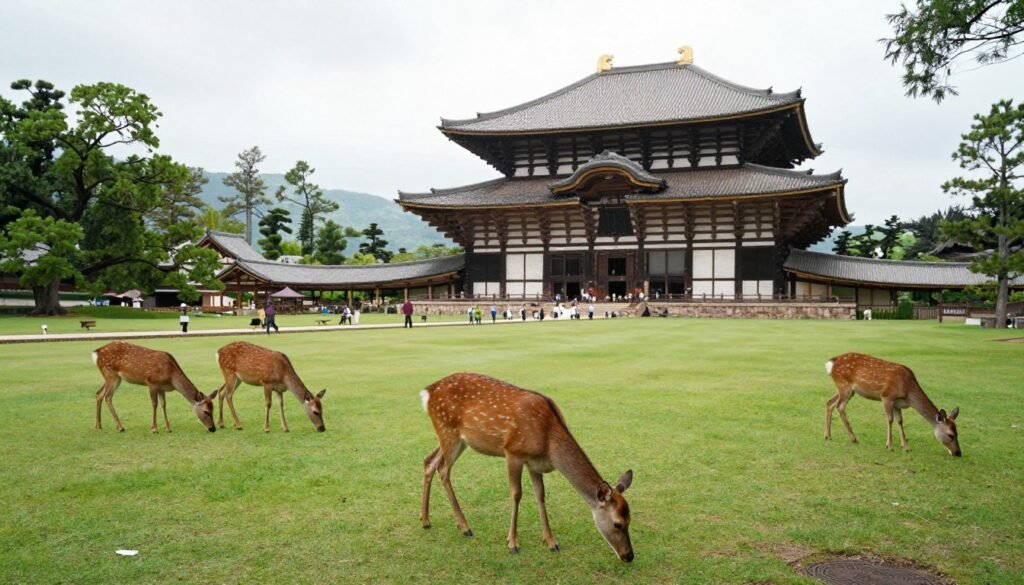
Nara served as Japan’s capital before Kyoto, creating its own collection of historic treasures. The city’s main attraction combines temples and nature in Nara Park, where over 1,000 wild deer roam freely. These sacred deer, considered messengers of the gods, approach visitors seeking specially-sold deer crackers.
Todai-ji Temple houses the Daibutsu, a massive bronze Buddha statue standing 15 meters tall. The temple building ranks among the world’s largest wooden structures. The approach road, lined with shops and restaurants, creates a festive atmosphere contrasting with Kyoto’s more sedate temple districts.
Additional Nara highlights include Kasuga Taisha Shrine, famous for thousands of bronze and stone lanterns, and Kofuku-ji Temple with its iconic five-story pagoda. The entire park area rewards leisurely walking, with deer encounters providing memorable photo opportunities.
Trains reach Nara from Kyoto in 35-45 minutes, depending on the line chosen. JR Nara Line offers direct service covered by JR passes, while Kintetsu Line provides faster limited express trains. Plan a full day for Nara, allowing 4-6 hours exploring the park and temples.
Osaka: Urban Energy and Street Food
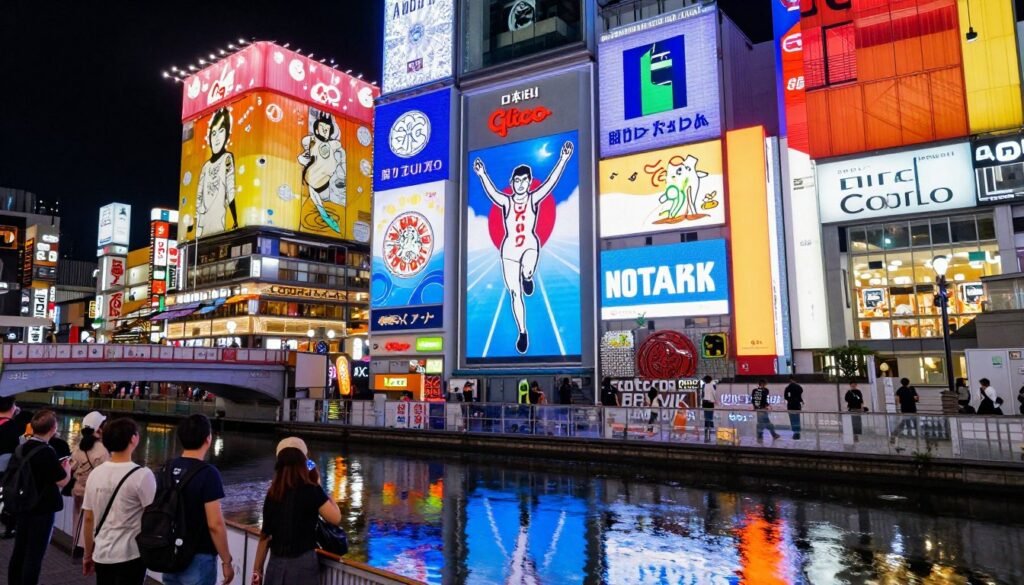
Osaka provides complete contrast to Kyoto’s refined culture. This energetic city emphasizes food, entertainment, and commerce over temples and tradition. Osaka’s street food culture earned it the nickname “nation’s kitchen,” with takoyaki octopus balls and okonomiyaki savory pancakes defining local cuisine.
Dotonbori district epitomizes Osaka energy. Neon signs, street food vendors, and entertainment venues create sensory overload along the canal. Try takoyaki from vendors who have perfected recipes over generations. Explore covered shopping arcades selling everything from clothes to quirky gadgets.
Osaka Castle offers historical counterpoint to food-focused activities. This reconstruction of a 16th-century castle includes museums explaining Osaka’s role in Japanese unification. The surrounding park provides pleasant walking, particularly beautiful during cherry blossom season.
Trains connect Kyoto and Osaka in 30-50 minutes depending on the service. Multiple lines serve this route, including JR, Hankyu, and Keihan railways. The cities sit close enough that some travelers choose Osaka hotels while visiting Kyoto, trading atmosphere for lower rates and urban energy.
Himeji Castle: Japan’s Most Spectacular Castle
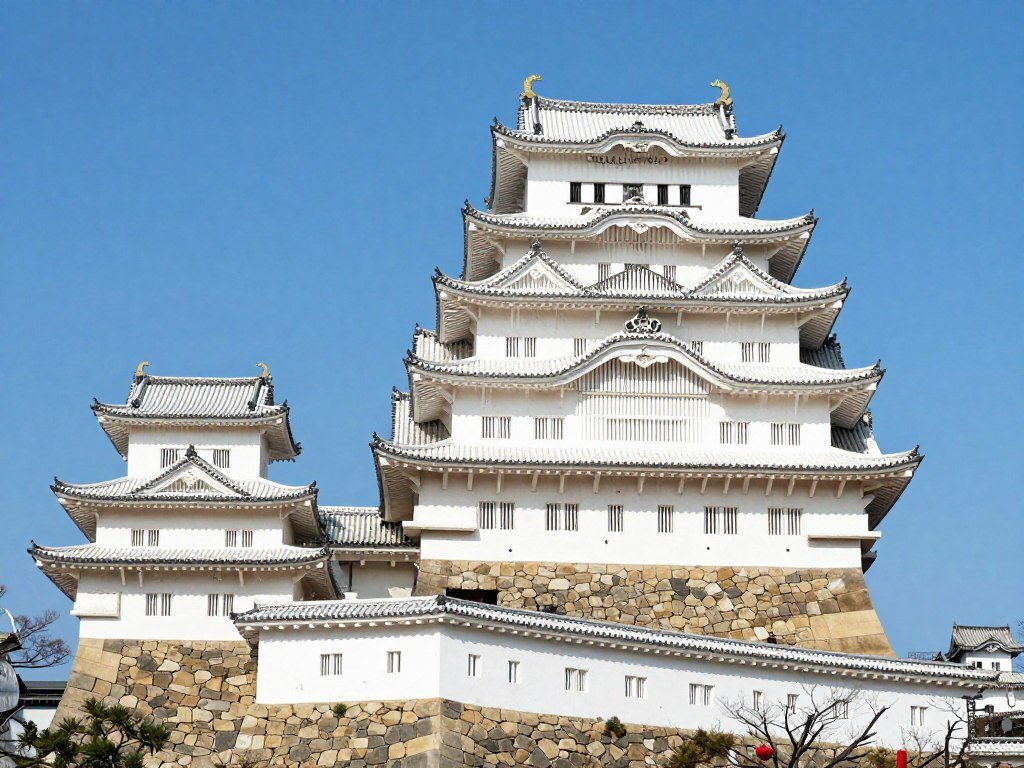
Himeji Castle ranks as Japan’s most impressive castle, with pristine white walls earning it the nickname “White Heron Castle.” Unlike many reconstructions, this castle survived wars and natural disasters, maintaining original structures from the 17th century. UNESCO World Heritage status recognizes both architectural achievement and historical importance.
The castle rewards thorough exploration. Climb through the main keep’s six floors, experiencing original defensive features including stone-dropping holes and firing positions. The maze-like approach paths deliberately confuse attackers while channeling them toward defensive strong points.
Recent restoration completed in 2015 returned the castle to brilliant white condition. The work sparked debates about historical accuracy versus visitor expectations, as centuries of weathering had darkened the original white walls. Today’s pristine appearance likely better reflects the castle’s original glory.
The shinkansen reaches Himeji from Kyoto in about 45 minutes, with local trains taking about 90 minutes. The castle sits 15 minutes walk from Himeji Station. Plan a half-day for this excursion, or combine it with a visit to nearby Koko-en Garden, a beautiful modern reconstruction of Edo-period garden styles.
Mount Koya: Sacred Mountain Monastery Complex
Mount Koya (Koya-san) offers one of Japan’s most spiritual experiences. This mountain-top complex of over 100 temples serves as headquarters for Shingon Buddhism. Visitors can stay overnight in temple lodgings (shukubo), participating in morning prayers and eating vegetarian temple meals.
The main attractions include Okunoin Cemetery, one of Japan’s most sacred sites, with countless memorial stones and monuments lining forest paths to Kobo Daishi’s mausoleum. Evening walks through this mystical forest, lit by stone lanterns, create unforgettable experiences. The Garan temple complex showcases beautiful architecture and offers insight into mountain monastery life.
Reaching Mount Koya requires a 2-hour journey from Kyoto, including train and cable car connections. The journey itself enhances the sense of ascending to a sacred mountain realm separate from everyday life. Many visitors stay overnight in temple lodgings, making this more than a day trip destination.
Day visitors should plan at least 5-6 hours on the mountain to properly experience Okunoin and the main temple areas. The journey back to Kyoto takes another 2 hours, making this a long but rewarding day trip.
Practical Information for Kyoto Travelers
Understanding practical details helps avoid common frustrations and makes your Kyoto trip smoother. These tips cover money, communication, etiquette, and other essential information for first-time visitors to Japan.
Money and Payment
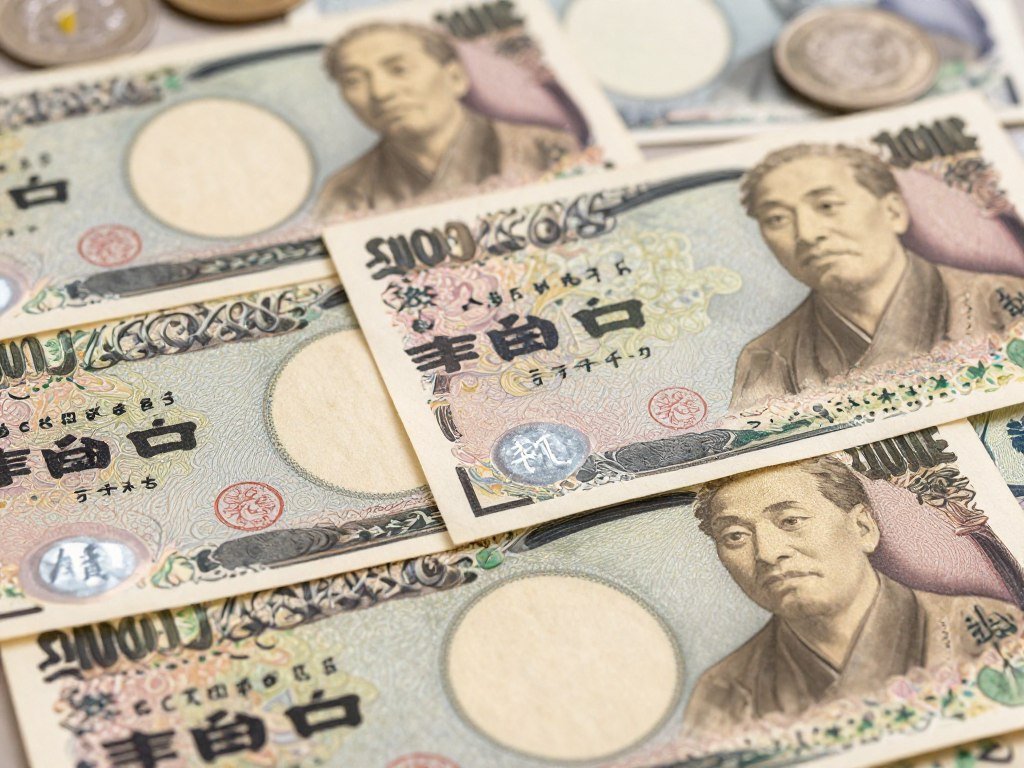
Japan remains primarily a cash society, though credit cards gain acceptance in tourist areas. Carry sufficient cash for daily expenses including admission fees, local transportation, and meals at smaller restaurants. Many temples, shrines, and shops accept only cash.
ATMs at 7-Eleven convenience stores and post offices accept international cards, providing reliable cash access throughout Kyoto. Hotel ATMs and bank ATMs often reject foreign cards outside business hours. Withdraw larger amounts to minimize ATM fees, but balance this against carrying too much cash.
Expect to spend $100-200 per person daily on a moderate budget, including accommodation, food, transportation, and attraction admissions. Budget travelers can manage on $50-80 daily, while luxury travel easily exceeds $300-500 daily per person.
Tipping does not exist in Japanese culture and can cause confusion or offense. Excellent service is standard expectation, included in prices. The one exception involves high-end ryokan, where leaving a small gift for staff is acceptable (place it in an envelope rather than handing cash directly).
Communication and Language
English proficiency varies widely in Kyoto. Major hotels and tourist attractions generally have English-speaking staff. Smaller restaurants, shops, and local areas may have no English speakers. This language barrier causes fewer problems than many travelers fear.
Download Google Translate offline language packs before arriving. The app’s camera translation function reads signs and menus, providing instant translation. Learn basic Japanese phrases like “excuse me” (sumimasen), “thank you” (arigatou gozaimasu), and “delicious” (oishii) to show respect and facilitate basic interactions.
Many restaurants display plastic food samples in windows, making menu selection possible without reading. Pointing to samples works effectively. Several translation apps specialize in food and menu items, helping identify dishes and ingredients.
WiFi availability varies. Hotels provide free WiFi, major attractions increasingly offer it, but public WiFi remains less common than in Western countries. Consider renting a portable WiFi device or purchasing a prepaid SIM card for constant connectivity. These options cost $5-15 daily and provide reliable internet access for maps, translations, and communication.
Cultural Etiquette
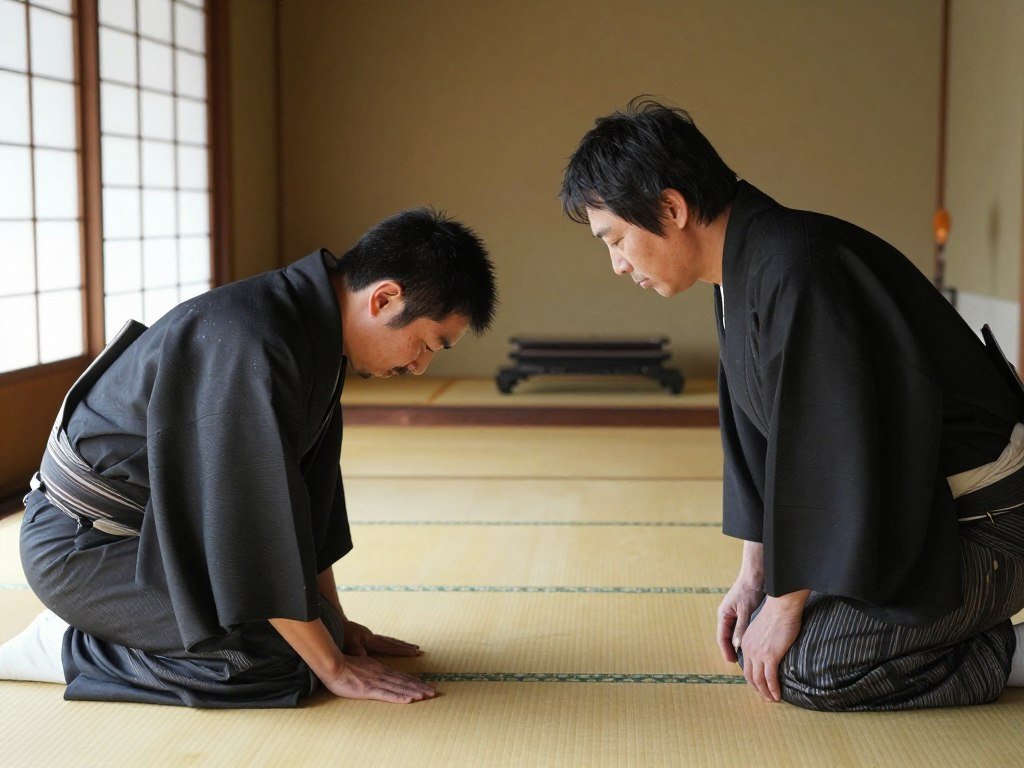
Japanese culture emphasizes respect, consideration for others, and following social norms. Understanding basic etiquette helps avoid inadvertently causing offense and earns respect from locals.
Remove shoes when entering temples, traditional restaurants, ryokan, and some other establishments. Look for shoe racks or slippers near entrances as signals. In temples, walk clockwise around main buildings and avoid photographing worshippers or ceremonies without permission.
Eating and drinking while walking on the street is considered poor manners. Stop at vending machines or shop fronts to consume purchases before continuing. The exception involves festival or market areas where vendors sell street food for immediate consumption.
Speak quietly on public transportation. Phone conversations on trains and buses disturb others and violate social norms. Elderly and disabled passengers receive priority seating, and passengers waiting to board line up orderly rather than crowding doors.
Tattoos carry negative associations in Japan due to their connection with organized crime. Many public baths, hot springs, and pools refuse entry to visibly tattooed guests. Cover tattoos with adhesive bandages or patches when using these facilities, or specifically seek tattoo-friendly establishments.
Safety and Health
Kyoto ranks among the world’s safest cities. Violent crime rarely affects tourists. Lost items often get turned in to police or establishment staff. Nevertheless, practice normal precautions with valuables and documents.
Japan’s national health insurance doesn’t cover foreign tourists. Purchase travel insurance including medical coverage before arrival. Medical care meets high standards but costs can be substantial without insurance. Many hospitals have limited English-speaking staff; your hotel can help arrange medical visits if needed.
Tap water is safe to drink throughout Japan. Restaurants serve free water with meals. Public restrooms maintain high cleanliness standards, though toilet paper isn’t always provided. Carry pocket tissues.
Natural disasters including earthquakes occasionally occur in Japan. Buildings meet strict earthquake safety codes. Learn basic earthquake safety: drop, cover, and hold on during shaking. Follow local guidance during emergencies.
Internet and Connectivity
Staying connected in Kyoto requires planning. Portable WiFi device rentals provide the most convenient option for groups or families. Reserve devices online before arrival, pick them up at the airport, and return them when departing. Daily costs run $8-15 with unlimited data.
Prepaid SIM cards work for travelers with unlocked phones. Major carriers offer tourist SIM cards with data-only service lasting 7-30 days. Purchase at airports or electronics stores. Prices range from $20-50 depending on data allowance and duration.
Free WiFi appears at major hotels, some restaurants, and tourist information centers. Connection quality varies, and requirements to register create inconvenience. Don’t depend solely on free WiFi for navigation and communication.
Best Apps for Kyoto Travel
- Google Maps – Comprehensive mapping with public transportation directions
- Japan Transit Planner (Jorudan) – Detailed train and bus routing
- Kyoto Travel Guide by Navi – Official city guide with offline maps
Useful Travel Apps
- Google Translate – Essential for communication and reading signs
- Tabelog – Restaurant reviews and rankings (in Japanese)
- PayPay – Mobile payment app accepted at many stores
Luggage and Storage
Traveling with large suitcases creates challenges in Kyoto’s narrow streets and crowded buses. Ship luggage between hotels using takkyubin delivery services. Drop luggage at your hotel or convenience store in the morning, and it arrives at your next destination the following day. This service costs about $15-20 per bag.
Coin lockers appear throughout Kyoto Station and at major tourist sites. Sizes accommodate various luggage sizes, with prices from $3-7 daily. Popular locations fill quickly, especially during peak seasons. Have backup storage options if you rely on lockers.
Many hotels store luggage before check-in and after checkout. Ask your hotel to hold bags while you continue sightseeing on arrival or departure days. This free service provides convenient alternatives to coin lockers.
Suggested Kyoto Itineraries
These itineraries balance major attractions with cultural experiences, practical transportation, and realistic pacing. Adjust based on personal interests, energy levels, and season. Remember that quality experiences trump quantity – visiting fewer sites thoroughly beats rushing through packed schedules.
Three-Day Kyoto Itinerary
Day One: Eastern Kyoto Highlights
Begin at Fushimi Inari Shrine early (7-8 AM) to experience the torii gates before crowds arrive. Spend 1-2 hours climbing through the gates – you don’t need to reach the summit to appreciate the experience. Return via the same route or complete the full loop if time and energy allow.
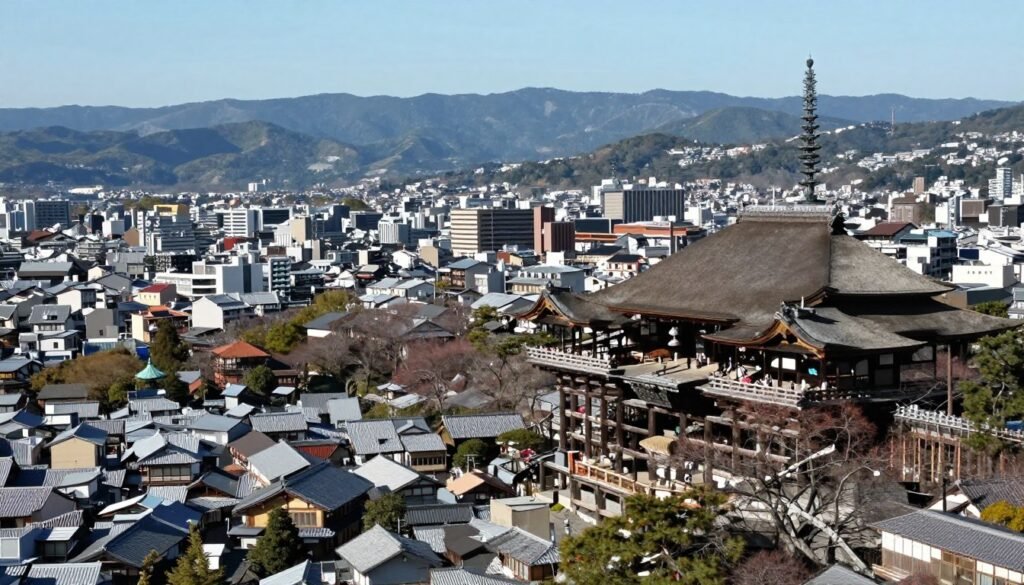
Travel to Kiyomizu-dera area for mid-morning exploration. Walk up through the historic Higashiyama lanes, exploring shops and photographing traditional architecture. Visit Kiyomizu-dera Temple, spending time on the wooden stage and exploring sub-temples within the complex.
Lunch in the Higashiyama district at one of many traditional restaurants. Walk north along the Philosopher’s Path after lunch, visiting small temples and cafes along the way. The walk takes 30-45 minutes at leisure pace.
Visit Ginkaku-ji (Silver Pavilion) at the path’s northern end, allowing an hour for the temple and gardens. Return downtown via bus or taxi, arriving with time to rest before dinner.
Evening exploration of Gion district, walking atmospheric lanes and potentially glimpsing geisha. Dinner in Pontocho alley along the Kamo River, where restaurants offer riverfront seating during summer months.
Day Two: Western Kyoto and Arashiyama
Start early at Kinkaku-ji (Golden Pavilion) to avoid peak crowds. Arrive by 9 AM for the best light on the gold leaf and manageable visitor numbers. Spend 45 minutes walking the temple grounds and gardens.
Visit nearby Ryoan-ji Temple to see the famous rock garden. The contrast between golden opulence and Zen minimalism illustrates Kyoto’s aesthetic range. Allow 60-90 minutes including the pond garden.
Travel to Arashiyama for lunch and afternoon exploration. Visit Tenryu-ji Temple and gardens, then walk through the bamboo grove. Consider riding the scenic railway or crossing Togetsukyo Bridge for riverside walks.
Optional activities include visiting the Monkey Park (steep climb but fun experience) or Okochi Sanso Villa (beautiful gardens with matcha tea included in admission). Return to the city by mid-evening.
Dinner in downtown Kyoto, perhaps exploring Nishiki Market area or trying yakitori at one of many casual restaurants near Kawaramachi.
Day Three: Central Kyoto Culture
Visit Nijo Castle at opening time (8:45 AM) to appreciate the nightingale floors and painted interiors without crowds. Budget 90 minutes for thorough exploration of buildings and gardens.
Participate in a mid-morning tea ceremony experience (pre-booked). These typically last 60-90 minutes and provide cultural insight complementing temple visits. Numerous venues operate throughout the city.
Spend afternoon exploring Nishiki Market, tasting local specialties and shopping for souvenirs. Several good restaurants surround the market for lunch. Browse downtown shopping districts or visit additional temples based on remaining energy and interest.
Consider evening kaiseki dinner at a traditional restaurant (requires advance booking) or explore more casual dining options. Final evening walk along the Kamo River provides peaceful closure to three busy days.
Five-Day Kyoto Itinerary
A five-day visit allows more relaxed pacing and inclusion of additional experiences. Follow the three-day itinerary above, then add these options:
Day Four Options
Day trip to Nara to see Todai-ji Temple and interact with sacred deer in Nara Park. Alternative: day trip to Osaka for urban energy and street food contrast. Or stay in Kyoto visiting secondary temples like Tofuku-ji, Daitoku-ji temple complex, or exploring the Ohara area north of the city.
Day Five Options
Take a cultural workshop (pottery, calligraphy, or other craft), visit additional gardens like Kokedera (moss temple – requires advance application), or explore neighborhoods like Kurama and Kibune north of the city. Alternatively, day trip to Himeji Castle or enjoy a slower day revisiting favorite areas without rushing.
One-Week Kyoto Itinerary
Week-long stays allow deep exploration including day trips and special experiences. Follow the five-day framework, adding:
Mount Koya overnight temple stay (requires 2 days). Alternative longer day trips to areas like Ise Shrine or Kinosaki Onsen. Additional days in Kyoto allow seasonal experiences (fall foliage temple illuminations, spring cherry blossom special viewings), special workshops, or simply enjoying the city’s atmosphere without constant sightseeing pressure.
Download Your Complete Kyoto Trip Planner
Get our comprehensive 30-page PDF guide with detailed itineraries, transportation maps, restaurant recommendations, and daily checklists. Plus bonus packing lists and cultural etiquette guide.
Seasonal Experiences in Kyoto
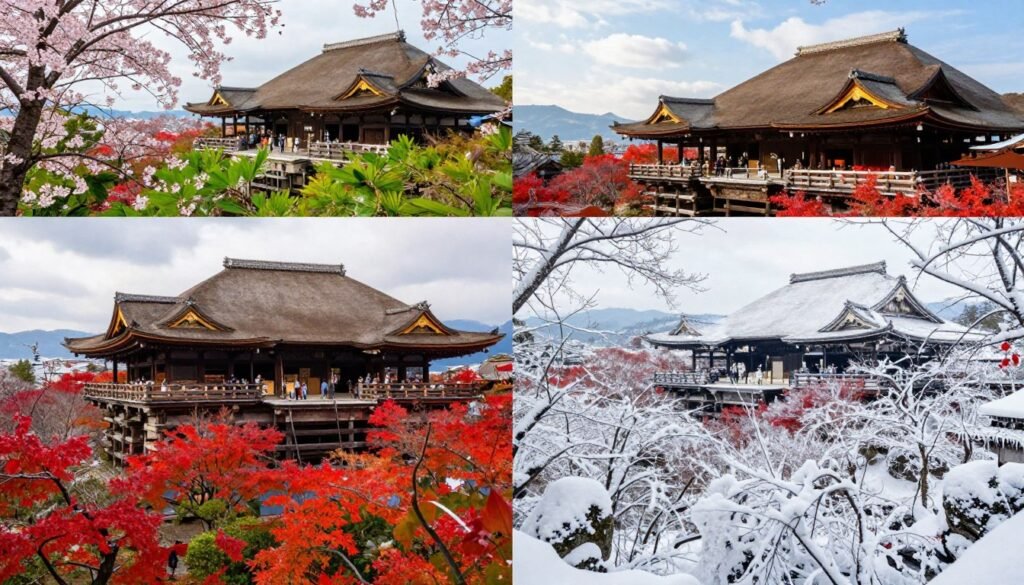
Each season transforms Kyoto’s temples and gardens, creating distinct experiences throughout the year. Understanding seasonal highlights helps plan activities and manage expectations around crowd levels and special events.
Spring Festivals and Events
Cherry blossom season dominates spring travel. The brief blooming period (typically late March through mid-April) sees gardens transform into pink and white wonderlands. Popular viewing spots include Maruyama Park, the Philosopher’s Path, and along the Kamo River. Many temples hold special evening illuminations during peak bloom.
The Miyako Odori dance performances by Gion geisha run throughout April, offering rare opportunities to see geisha arts. Tickets ($30-70) require advance booking for this annual spring tradition. The performances combine traditional dance, music, and elaborate costumes.
Aoi Matsuri festival (May 15) recreates imperial Heian period processions with participants in elaborate historical costumes. This festival offers spectacular photography opportunities and glimpses into ancient court culture. Arrive early to secure good viewing positions along the parade route.
Summer Festivals and Activities
Gion Matsuri (throughout July, parade on July 17) ranks among Japan’s most famous festivals. Elaborate floats parade through downtown streets, and evening celebrations fill the city with festive energy. Evening strolls among the displayed floats (July 14-16) let you appreciate intricate craftsmanship up close.
Kibune and Kurama provide mountain escapes from summer heat. Kawadoko riverside dining platforms over the Kibune River offer natural air conditioning while enjoying traditional meals. The mountain area stays noticeably cooler than central Kyoto.
Mitarashi Festival at Shimogamo Shrine (late July) involves wading through a pond holding candles in a purification ritual. This unusual ceremony attracts both participants and observers, offering insight into ongoing religious practices rather than mere historical reenactment.
Autumn Colors and Events
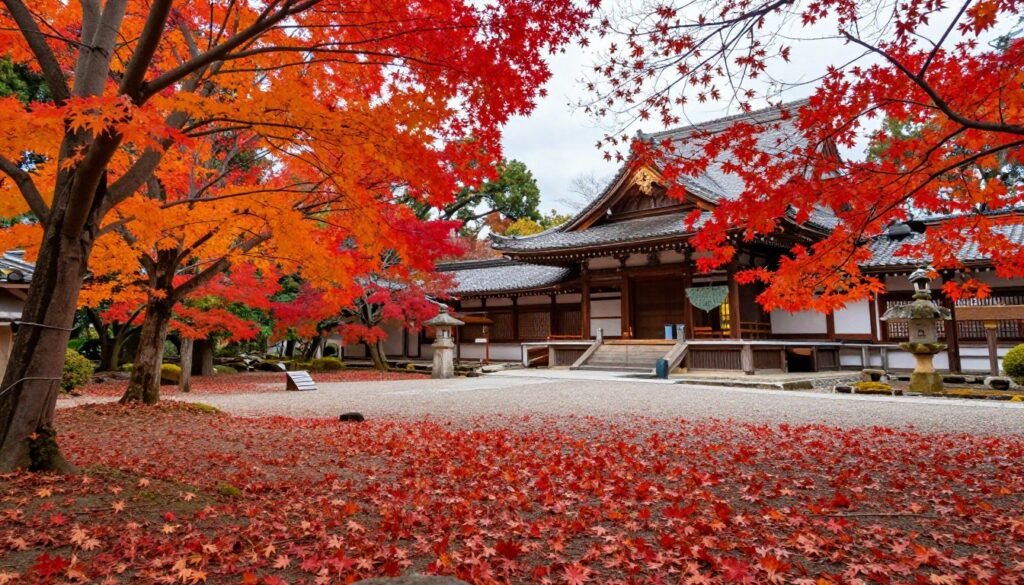
Fall foliage rivals spring cherry blossoms for visual drama. Peak colors typically arrive mid to late November, though timing varies by elevation and temple. Tofuku-ji, Eikando, and Kiyomizu-dera particularly excel during autumn.
Many temples offer special night illuminations during peak foliage. These require separate admission and see large crowds, but the illuminated maple trees create magical experiences. Advance tickets are sometimes required for popular evening viewings.
Jidai Matsuri (October 22) celebrates Kyoto’s history with another costumed procession. Less elaborate than Aoi Matsuri but still impressive, this festival moves from the Imperial Palace to Heian Shrine.
Winter Tranquility and Events
Winter in Kyoto means few tourists, affordable hotel rates, and peaceful temple visits. Snow occasionally dusts gardens, creating photogenic scenes. Kinkaku-ji under snow becomes even more magical, though snow accumulation is unreliable.
New Year (Shogatsu) sees temples crowded with Japanese visitors making first shrine visits. Experience local traditions but expect crowds at major temples during the first three days of January. Smaller neighborhood temples provide calmer New Year atmosphere.
Omizutori ceremony at Todai-ji in Nara (March 1-14) marks spring’s approach. This 1,250-year-old Buddhist ritual includes impressive fire ceremonies and draws significant crowds during evening performances.
Shopping in Kyoto
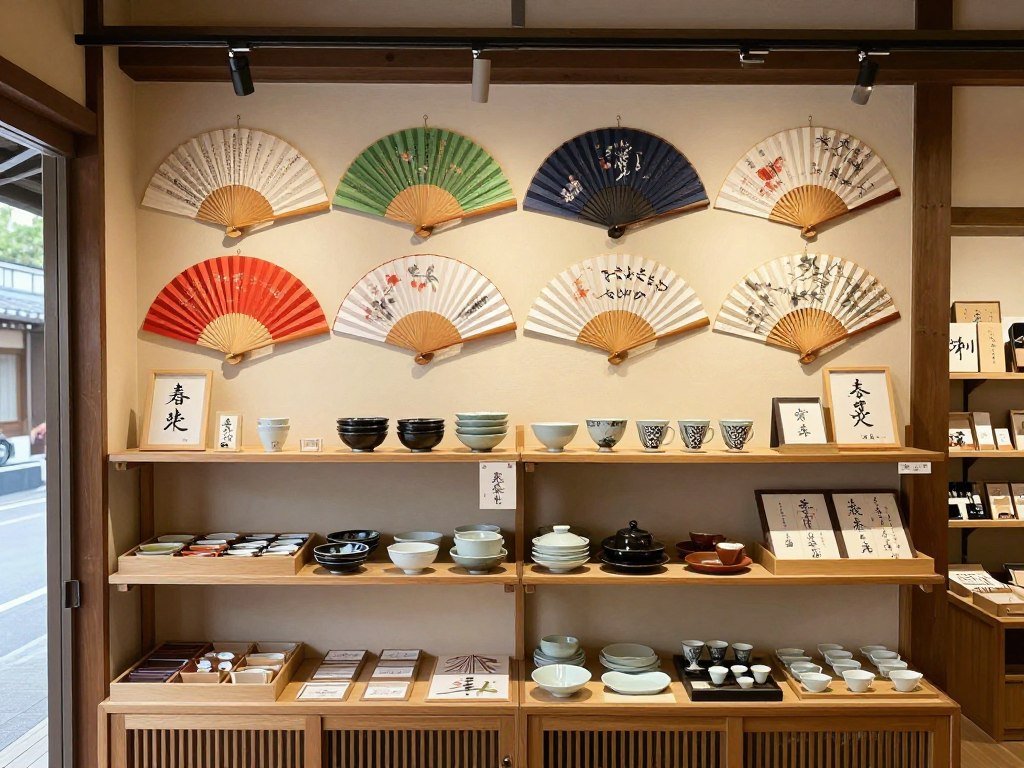
Shopping in Kyoto ranges from traditional craft shops to modern department stores. The city specializes in high-quality crafts, textiles, and food products making meaningful souvenirs. Understanding where to shop for different items helps maximize both budget and luggage space.
Traditional Crafts and Souvenirs
Kyoto excels in traditional crafts including ceramics, textiles, lacquerware, and paper goods. Shops throughout tourist areas sell these items, though quality and price vary dramatically. Researching reputable shops ensures authentic products at fair prices.
Kiyomizu-yaki pottery from the Kiyomizu-dera area represents Kyoto’s ceramic tradition. Shops near the temple sell everything from affordable tea cups to museum-quality art pieces. Many offer shipping services for fragile purchases. Prices reflect craftsmanship levels, with simple pieces starting around $20-30 and fine art reaching thousands.
Nishijin textiles showcase Kyoto’s weaving traditions. Obi (kimono sashes), table runners, and decorative pieces feature intricate patterns created on traditional looms. The Nishijin Textile Center offers demonstrations and sales of both antique and contemporary pieces.
Japanese knives attract many shoppers. Kyoto shops sell high-quality kitchen knives crafted by traditional methods. Aritsugu near Nishiki Market specializes in professional-grade knives. Expect to invest $100-300 for quality knives, which require special packing for air travel.
Modern Shopping Districts
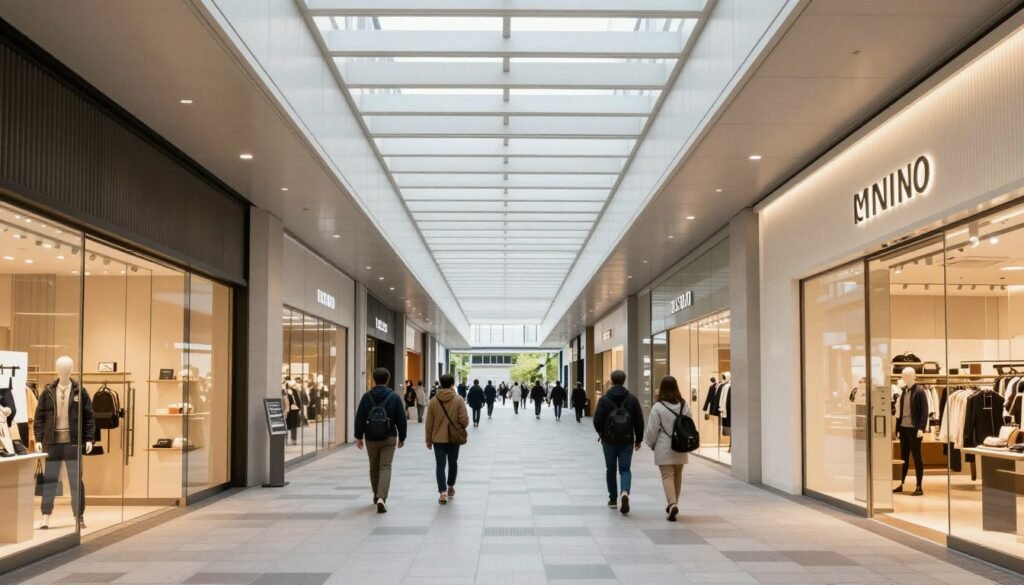
Downtown Kyoto centers on Shijo-Kawaramachi intersection. Department stores including Takashimaya and Daimaru anchor the district, offering tax-free shopping for tourists. Underground shopping arcades connect major stations, providing weather-protected browsing.
Teramachi and Shinkyogoku shopping arcades run parallel north of Shijo Street. These covered streets mix traditional shops with modern boutiques, electronics stores, and restaurants. The arcades particularly appeal during rain or extreme heat, offering comfortable shopping regardless of weather.
Book-lovers appreciate Kyoto’s many bookstores, including large chains and specialist shops. Maruzen & Junkudo near Karasuma Station stocks English books alongside Japanese titles. Used bookstores in the university area offer treasures for patient browsers.
Food and Culinary Souvenirs
Edible souvenirs range from traditional sweets to specialty ingredients. Yatsuhashi (cinnamon rice sweets) represent classic Kyoto omiyage (souvenirs), sold throughout tourist areas. Multiple brands compete, with blind taste tests helping determine favorites.
Matcha green tea from Kyoto represents the finest quality available. Tea shops near temples and in Nishiki Market sell various grades from daily drinking tea to ceremonial grade. Staff typically explain differences and brewing methods. Quality matcha starts around $15-20 per small tin.
Kyoto pickles (tsukemono) make unique gifts for food enthusiasts. Nishiki Market vendors sell countless varieties. Most pickles keep several weeks without refrigeration when properly packed. Sample before buying to ensure you enjoy the often-strong flavors.
Sake from local breweries makes memorable gifts. Gekkeikan Okura Sake Museum in Fushimi sells their products and offers tastings. Many liquor shops provide tax-free shopping and can arrange international shipping for larger purchases.
Antiques and Vintage Items
Kyoto’s antique markets and shops sell everything from kimono to furniture. Monthly markets at temples including Toji Temple (21st of each month) and Kitano Tenmangu (25th of each month) attract dealers and bargain hunters. Early arrival yields the best selection before picked-over afternoon hours.
Vintage kimono offer affordable ways to own traditional garments. Prices start around $30-50 for simple pieces in good condition. Chicago Thrift Store chain operates multiple locations specializing in vintage and antique kimono, obi, and accessories. Staff help select appropriate pieces and explain proper wearing.
Tansu (traditional wooden chests) and other furniture appeal to serious collectors. Shipping costs often exceed purchase prices for large items, but reputable dealers arrange international shipping and handle export paperwork. Researching dealers’ reputations before making major purchases protects against problems.
Visiting Kyoto with Children
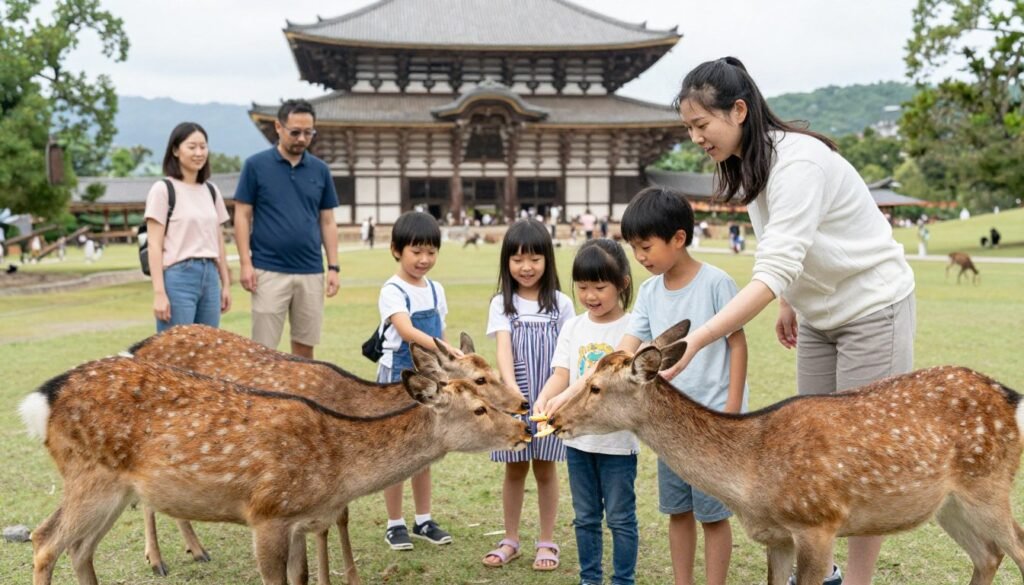
Kyoto welcomes families, though temple-heavy itineraries sometimes challenge young children’s patience. Balancing cultural sites with kid-friendly activities creates enjoyable experiences for all ages. These suggestions help families explore Kyoto while keeping children engaged.
Kid-Friendly Attractions
Fushimi Inari’s thousands of torii gates fascinate children, turning temple visits into tunnel exploration adventures. The shrine’s free admission and 24-hour access provide flexibility for families with unpredictable schedules. Pack snacks and drinks for energy during the climb.
Arashiyama Monkey Park requires a steep 20-minute climb but rewards families with close monkey encounters. Children can feed monkeys through wire mesh in the feeding station at the summit. The experience combines hiking, wildlife viewing, and city views in one exciting package.
Kyoto Railway Museum appeals to train-enthusiastic children and adults. Interactive exhibits, historic locomotives, and train simulators fill several hours. The museum sits near Kyoto Station, making it a convenient rainy-day option.
The Kyoto Aquarium provides another weather-independent option. While smaller than major international aquariums, it offers dolphin shows and interactive touch pools children enjoy. Combine with nearby Umekoji Park for outdoor play space.
Family-Friendly Experiences
Kimono wearing appeals to many children, transforming sightseeing into dress-up adventure. Many rental shops offer children’s sizes and family packages. Keep rental periods shorter for young children who may tire of traditional garments’ restrictions.
Traditional craft workshops work well with older children and teenagers. Pottery painting, origami lessons, and simple cooking classes provide hands-on cultural experiences. Search for family-friendly workshops that accommodate various ages and skill levels.
Parks throughout Kyoto offer space for children to run and play between temple visits. Maruyama Park includes playgrounds alongside cherry trees. The Kamo River banks provide perfect spots for breaks, with local families often picnicking and playing.
Family Tip: Build significant downtime into itineraries. Children need breaks from constant sightseeing. Afternoon rest at hotels or parks prevents meltdowns and lets everyone recharge for evening activities.
Practical Considerations for Families
Many restaurants welcome children, though high-end kaiseki establishments often prefer adult diners. Casual restaurants, food courts, and chain restaurants reliably accommodate families. Department store restaurant floors (usually top floors) offer multiple options in one location.
Public transportation works well for families. Buses and trains have designated spaces for strollers, and children under 6 ride free. Purchase IC cards for older children to simplify payment. Avoid rush hours when crowding makes navigating with children difficult.
Diaper changing facilities appear in major stations, department stores, and many attractions. Nursing rooms provide private space for feeding babies. Convenience stores sell diapers, wipes, and other baby supplies, though selection may differ from home products.
Hotels near Kyoto Station provide convenient bases for families, offering easy access to shopping, dining, and transportation. Many hotels provide connecting rooms or larger family rooms. Ryokan with private bathing facilities work well for families wanting traditional experiences without communal bath concerns.
Sustainable and Responsible Travel in Kyoto
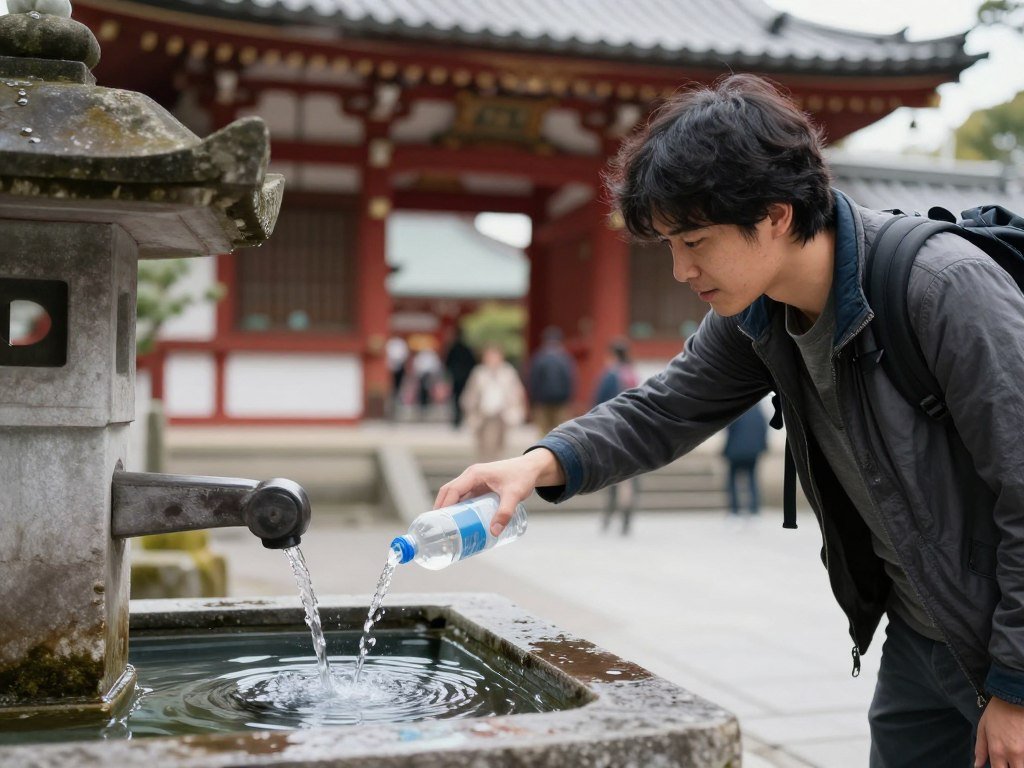
Tourism impacts Kyoto significantly, with overtourism straining popular sites and affecting local quality of life. Responsible visitors can minimize negative impacts while supporting local communities and cultural preservation. Small actions collectively create meaningful differences.
Respecting Sacred Spaces
Temples and shrines remain active religious sites serving local communities. Visitors sometimes forget these spaces prioritize worship over tourism. Observe ongoing ceremonies quietly without photographing participants. Follow posted rules about photography restrictions in temple buildings.
Dress respectfully when visiting temples. While Japan’s summer heat challenges modest dress standards, shoulders and knees should remain covered in main temple buildings. Remove hats in prayer halls. Speak quietly, and keep phone conversations for outside spaces.
Stay on designated paths in gardens. These landscapes represent artistic achievements refined over centuries. Walking on moss or cutting across garden areas damages fragile ecosystems and disrespects design intentions. Admire gardens from proper viewing positions.
Supporting Local Communities
Shop at independent businesses rather than only chains and tourist shops. Local craft shops, family restaurants, and neighborhood stores provide authentic experiences while keeping money in local hands. Ask hotel staff for neighborhood restaurant recommendations frequented by residents.
Learn basic Japanese phrases showing respect for local culture. Even imperfect attempts demonstrate effort and consideration. Carry a phrasebook or translation app, and ask permission before photographing people, especially geisha who navigate public spaces as working professionals.
Visit lesser-known temples and neighborhoods, reducing pressure on over-visited sites. Kyoto contains countless beautiful temples beyond the famous dozen. Exploring secondary sites reveals authentic atmosphere while spreading tourism benefits more evenly across the city.
Environmental Considerations
Carry reusable water bottles. Japan’s excellent tap water eliminates need for bottled water. Many temples and public spaces provide water fountains for refills. This simple action reduces plastic waste significantly.
Use public transportation rather than taxis when practical. Kyoto’s efficient buses and trains reduce environmental impact while providing authentic local experiences. Walk or bicycle when covering shorter distances, enjoying neighborhood atmosphere impossible to appreciate from vehicle windows.
Refuse unnecessary packaging and bags. Japan’s retail culture emphasizes elaborate packaging, but politely declining excess wrapping reduces waste. Bring reusable shopping bags to markets and stores. Many establishments now charge for plastic bags, encouraging customers to bring their own.
Choose accommodations with environmental initiatives. Many Kyoto hotels implement recycling programs, reduce water usage, and source local products. Supporting these businesses encourages sustainable practices throughout the hospitality industry.
Interactive Kyoto Map
This map shows key locations throughout Kyoto, including major temples, transportation hubs, and recommended neighborhoods. Use it to plan your itinerary and understand distances between attractions.
Map showing major attractions and districts in Kyoto. Click markers for information about specific locations.
Kyoto Travel Videos and Virtual Tours
These carefully selected videos provide visual previews of Kyoto’s attractions, helping you plan your visit and build excitement for your trip. From comprehensive city guides to specific temple tours, these resources offer valuable insights.
Comprehensive Kyoto City Guide
This detailed video tour covers Kyoto’s top attractions, transportation tips, and cultural experiences. Perfect for first-time visitors planning their itinerary.
Cherry Blossom Season in Kyoto
Experience Kyoto during peak cherry blossom season, with footage of the most beautiful viewing spots and timing recommendations for your spring visit.
Arashiyama Bamboo Forest Walking Tour
Walk through the iconic bamboo grove and explore the surrounding Arashiyama district with this immersive walking tour video.
Traditional Japanese Kaiseki Dinner Experience
Discover the art of kaiseki cuisine, Kyoto’s refined multi-course dining tradition, with this detailed explanation and visual tour of a traditional meal.
Kyoto Photo Gallery
These authentic photographs showcase Kyoto’s diverse beauty across seasons, neighborhoods, and experiences. Each image represents real locations you’ll visit during your trip.
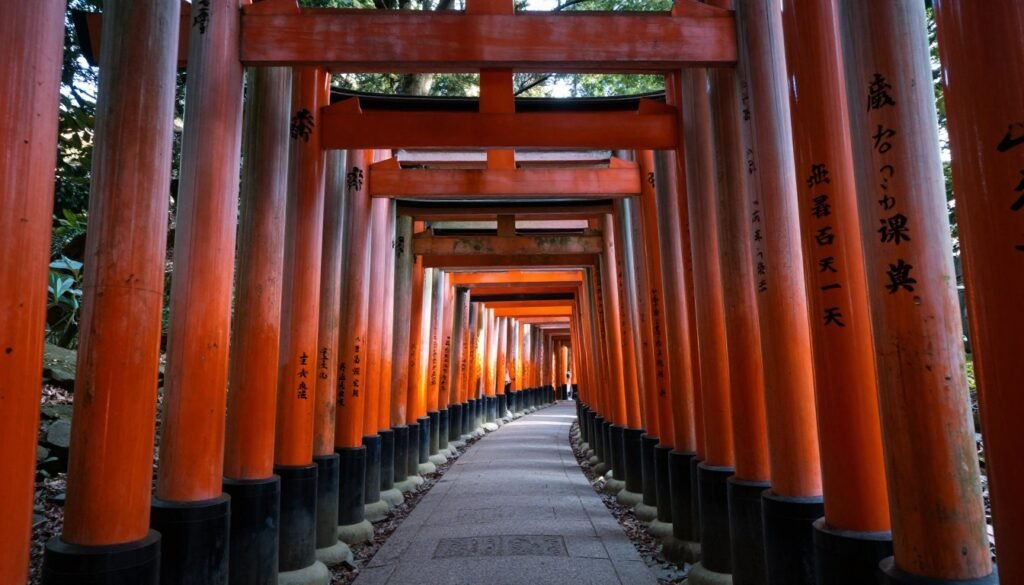
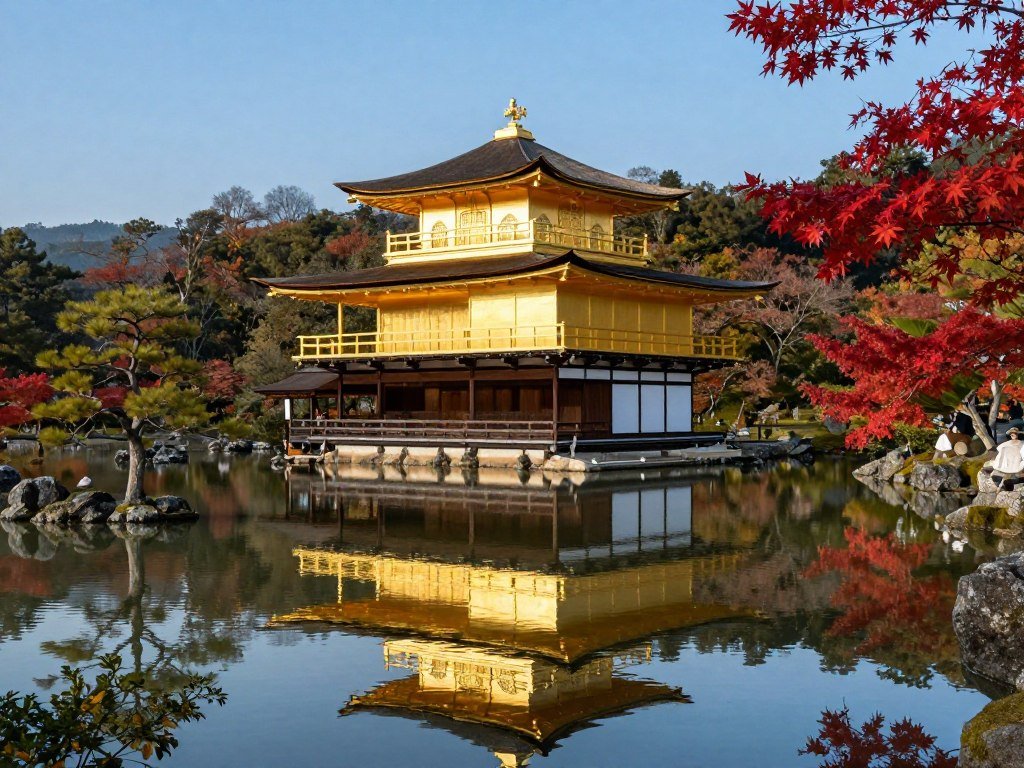
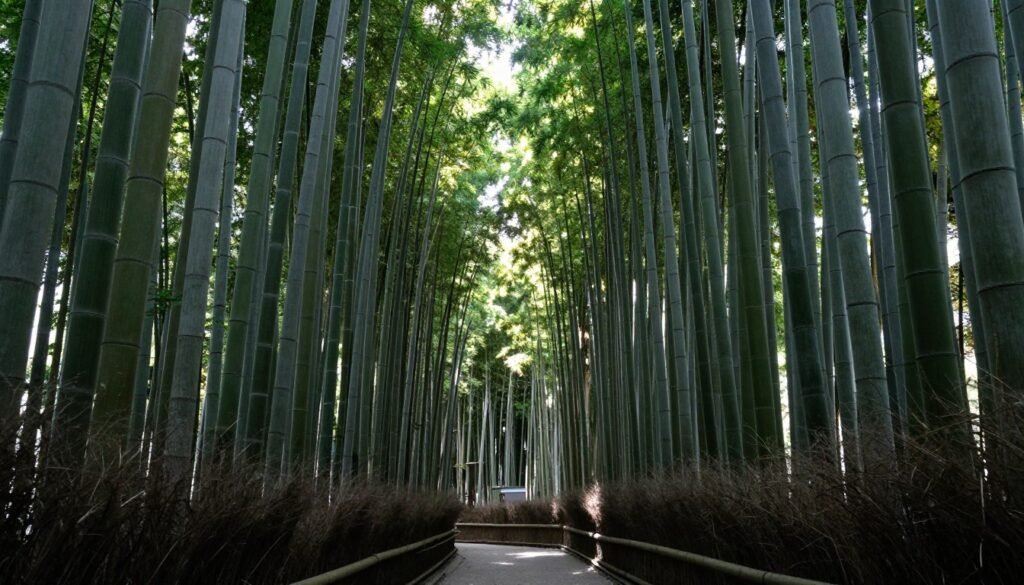
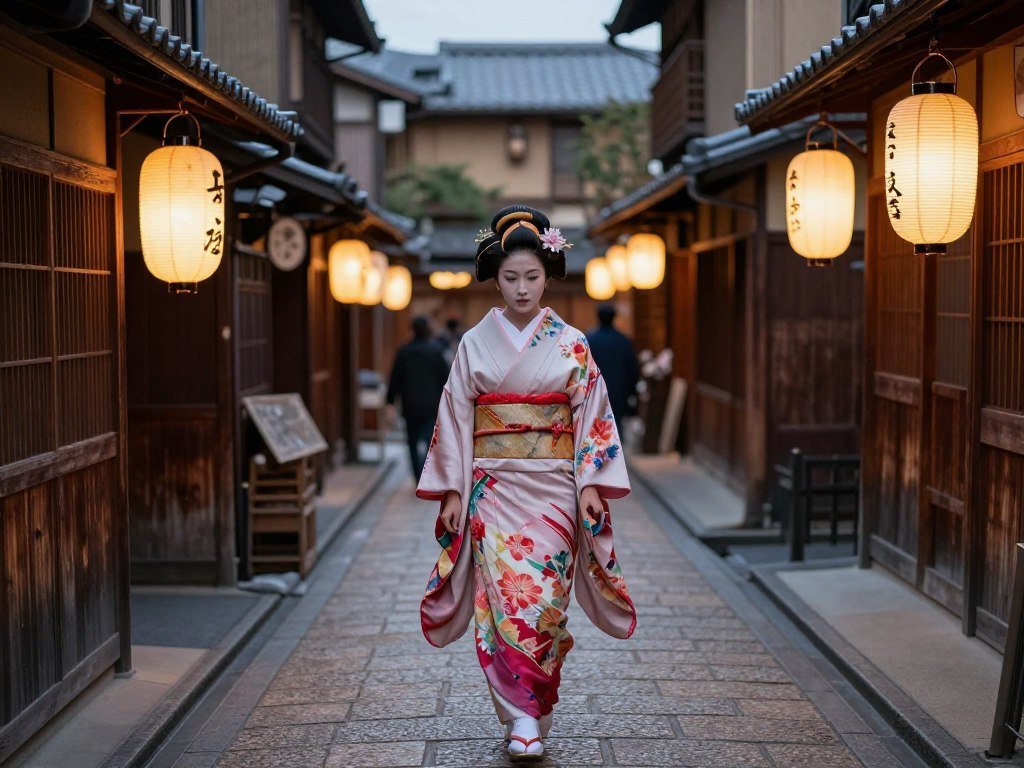
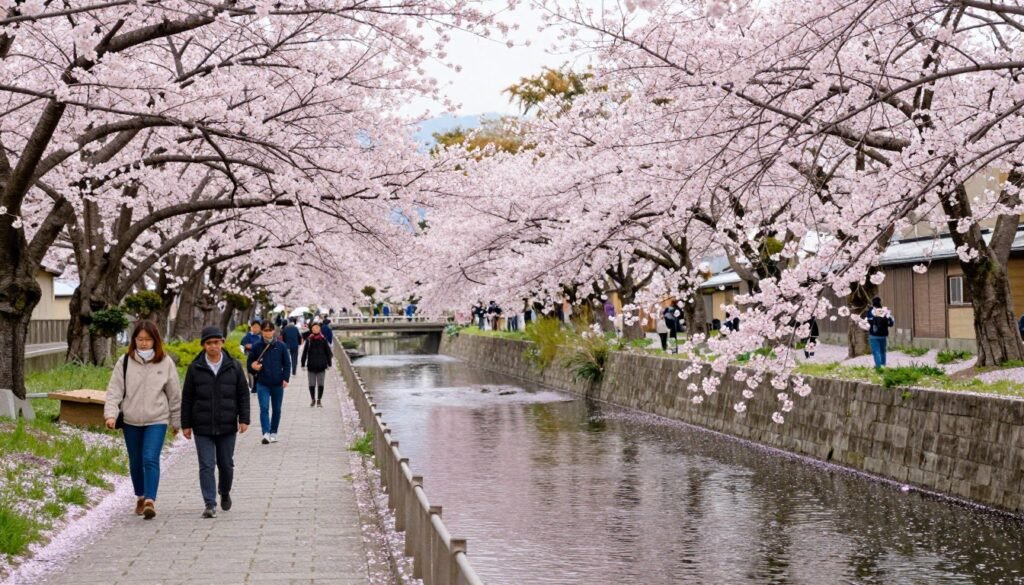
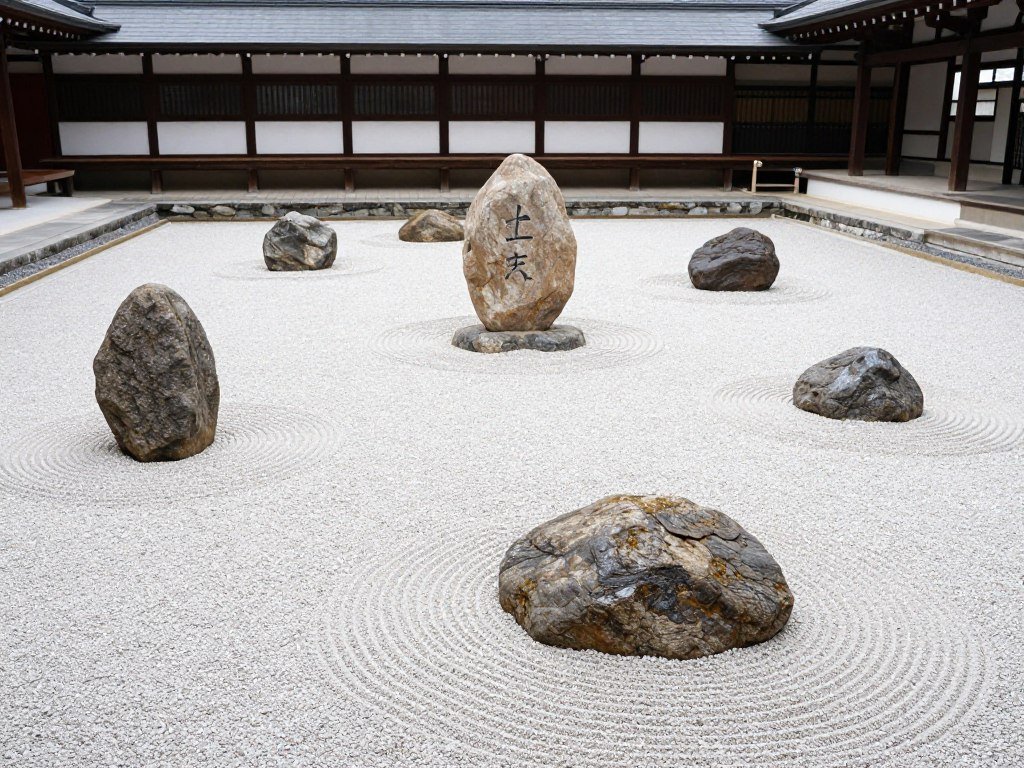
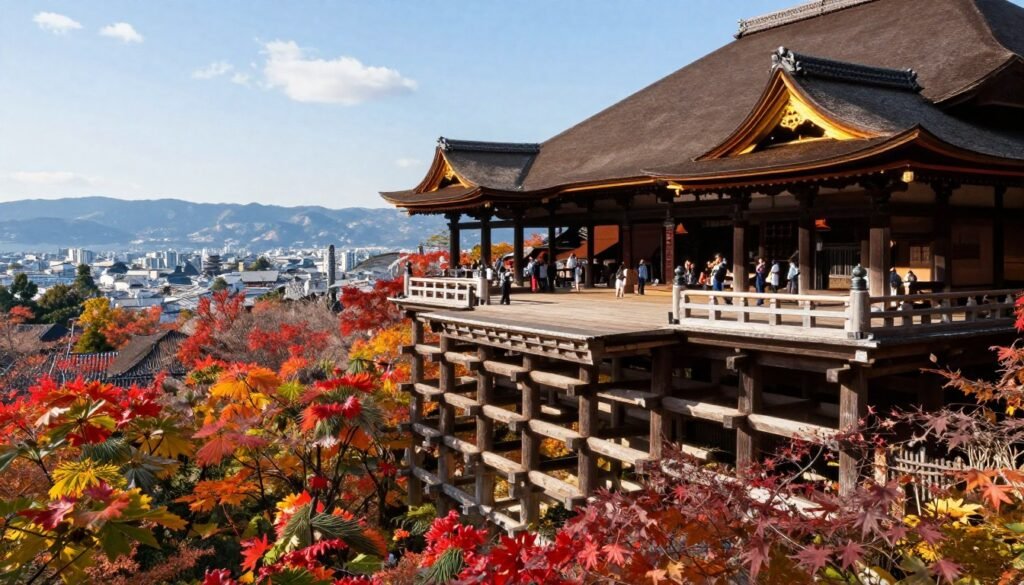
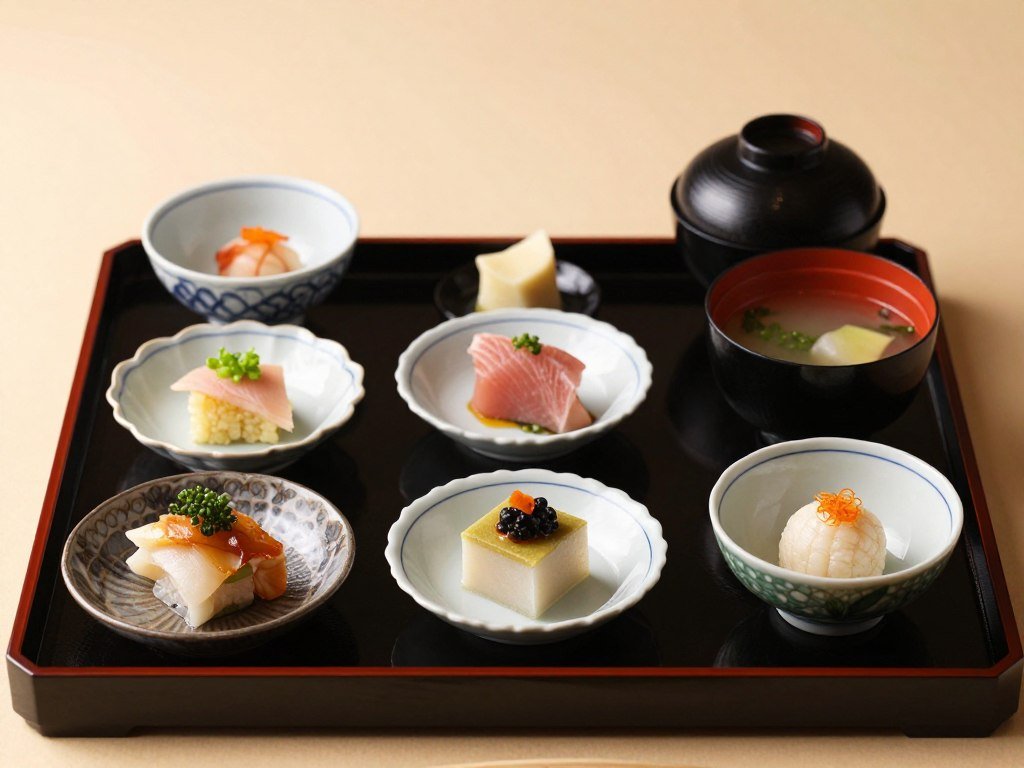
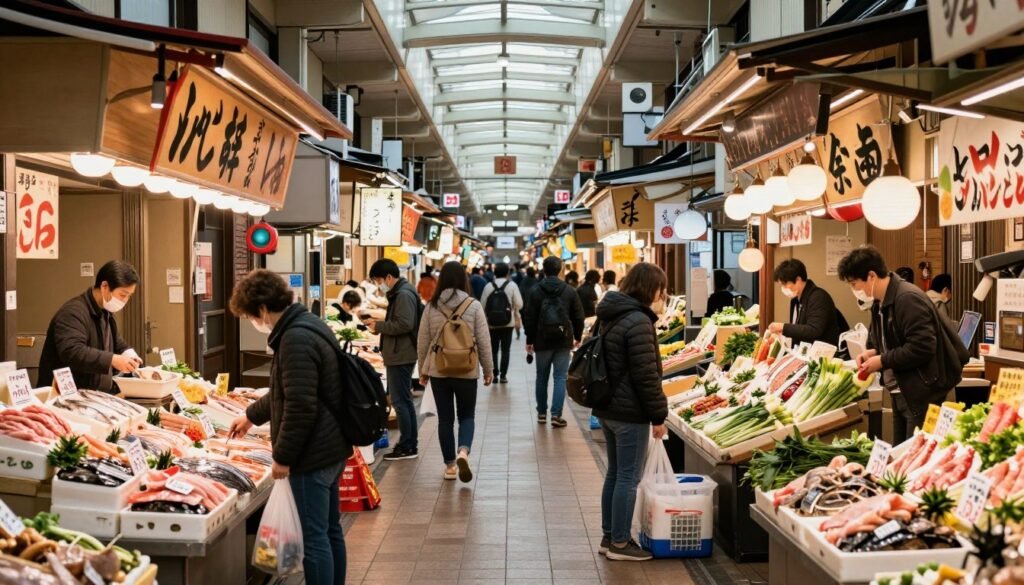
Planning Your Unforgettable Kyoto Journey
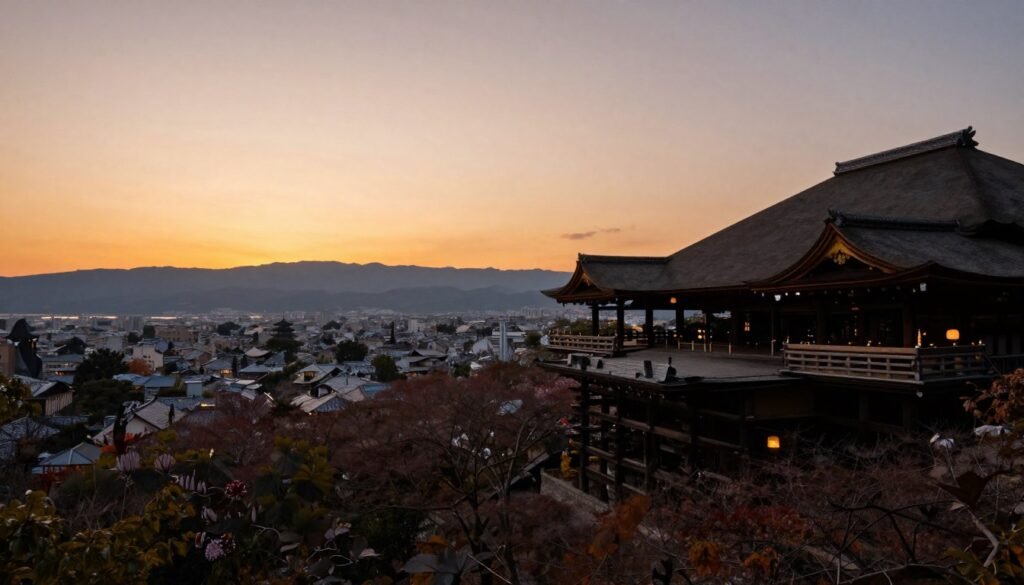
Kyoto rewards thoughtful planning with experiences that resonate long after returning home. The city’s temples, gardens, cultural traditions, and culinary achievements create layers of discovery impossible to fully exhaust in a single visit. Each season offers different perspectives, every neighborhood reveals unique character, and countless details reward patient observation.
Your 2026 trip to Kyoto represents an opportunity to engage with Japanese culture at its most refined. Beyond checking famous sites off lists, allow time for wandering quiet temple grounds, sipping tea while watching gardens, and tasting local specialties in neighborhood restaurants. These unplanned moments often become the most memorable parts of Kyoto trips.
The information in this guide provides foundation for your journey. Adapt suggestions to personal interests, energy levels, and travel style. Some visitors thrive on packed itineraries visiting multiple temples daily. Others prefer slower exploration, spending entire mornings in single gardens. Neither approach is superior – successful trips match activities to travelers’ preferences.
Book key elements well in advance, particularly accommodation during cherry blossom and fall foliage seasons. Research transportation options and consider purchasing rail passes if visiting multiple cities. Download helpful apps, arrange connectivity solutions, and prepare for language barriers. These practical preparations create space for spontaneity and flexibility during your actual trip.
Kyoto’s essence emerges through accumulated small experiences rather than spectacular individual moments. The way light falls through temple gates. Unexpected encounters with craftspeople in their workshops. Tastes of seasonal ingredients prepared with centuries of culinary knowledge. These details, individually modest, collectively create profound appreciation for Japanese culture and aesthetic principles.
Approach Kyoto with curiosity and respect. The city opens itself to visitors willing to engage beyond surface-level tourism. Your 2026 journey promises discoveries both expected and surprising, combining iconic landmarks with personal moments of connection to this remarkable destination.
Start Planning Your 2026 Kyoto Adventure
Ready to experience Kyoto’s temples, gardens, and cultural treasures? Let us help you create the perfect itinerary with customized planning services, tour bookings, and accommodation recommendations.
Prefer to speak with a Japan travel specialist? Call us:
Monday-Friday, 9 AM – 6 PM EST