

Bangkok, the vibrant capital of Thailand, is a city of contrasts where ancient temples stand alongside modern skyscrapers, and traditional floating markets operate in the shadow of luxury shopping malls. This complete travel guide to Bangkok will help you navigate this fascinating metropolis, from its iconic temples and bustling markets to its world-renowned street food and exciting nightlife. Whether you’re planning a short city break or using Bangkok as a gateway to explore Thailand, this guide covers everything you need to know to make the most of your visit.
Best Time to Visit Bangkok
Bangkok has a tropical climate with three distinct seasons. Understanding the weather patterns will help you plan your trip for the most comfortable experience.
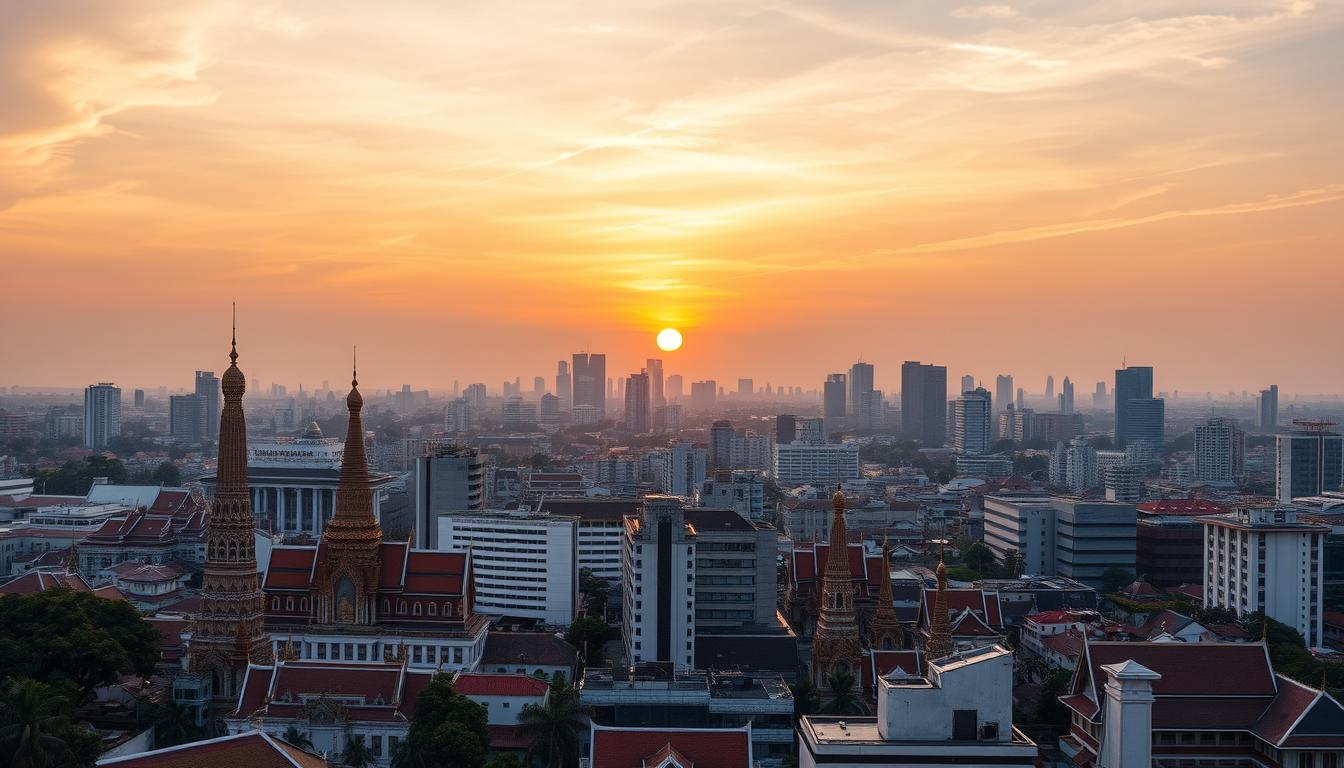
Bangkok’s stunning skyline is best enjoyed during the cool season from November to February
Cool Season (November to February)
The cool season is widely considered the best time to visit Bangkok. Temperatures range from 21°C to 32°C (70°F to 90°F), with lower humidity and minimal rainfall. This is peak tourist season, so expect more crowds and higher prices, but the pleasant weather makes it worth it for exploring the city on foot.
Hot Season (March to May)
March to May brings intense heat, with temperatures often exceeding 35°C (95°F). April is typically the hottest month and coincides with Songkran, the Thai New Year water festival. If you visit during this time, plan indoor activities during midday heat and stay well-hydrated.
Rainy Season (June to October)
The rainy season sees frequent but usually brief downpours, typically in the afternoon. September tends to have the heaviest rainfall and occasional flooding. While humidity is high, you’ll find fewer tourists and better hotel rates. Many attractions remain accessible, and the rain brings vibrant greenery to the city’s parks.
Festivals and Events
Consider timing your visit to coincide with one of Bangkok’s colorful festivals:
- Songkran (Thai New Year) – Mid-April
- Loy Krathong (Festival of Lights) – November (full moon)
- Chinese New Year – January/February (Chinatown)
- Royal Plowing Ceremony – May
- Bangkok’s Birthday Celebrations – April
Top Attractions in Bangkok
Bangkok offers an incredible array of attractions that showcase both its ancient heritage and modern development. Here are the must-visit sites to include in your Bangkok itinerary.
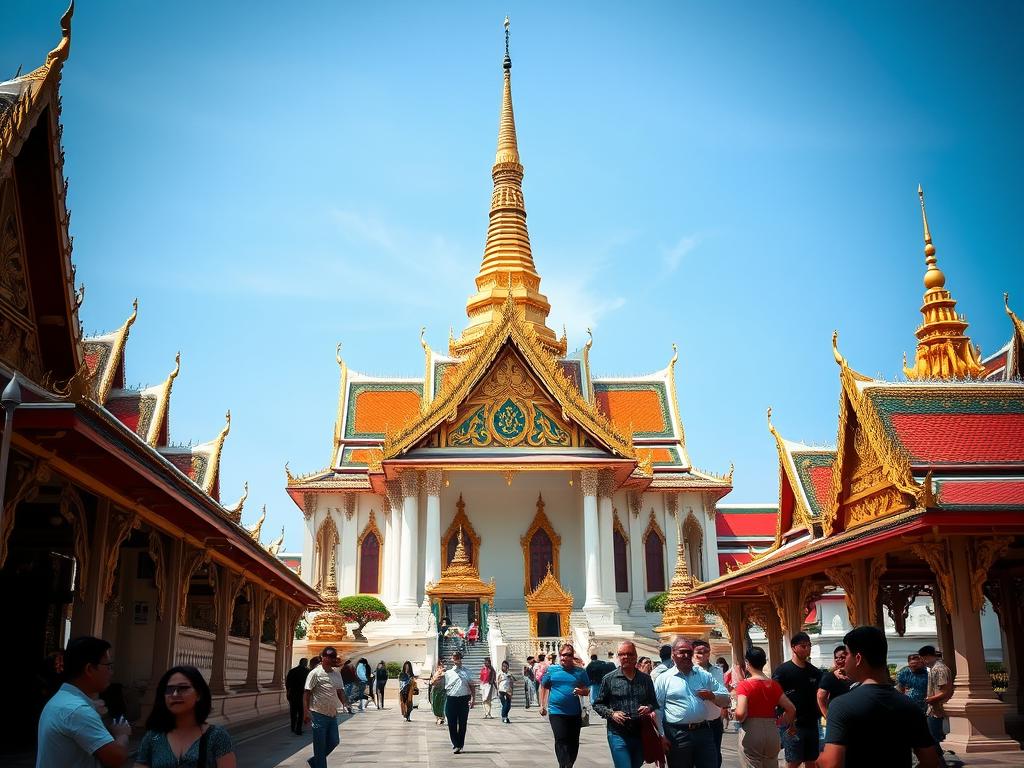
The Grand Palace is Bangkok’s most iconic attraction with its dazzling architecture
The Grand Palace and Wat Phra Kaew
The Grand Palace is Bangkok’s most famous landmark and a must-visit attraction. Built in 1782, this sprawling complex served as the royal residence for generations and continues to impress visitors with its intricate architecture and historical significance. Within the palace grounds, you’ll find Wat Phra Kaew (Temple of the Emerald Buddha), housing Thailand’s most revered Buddha image carved from a single block of jade.
Experience the Grand Palace with Expert Guidance
Skip the lines and gain deeper insights into Thai history and culture with a knowledgeable local guide.
Visitor Tips: The Grand Palace has a strict dress code. Shoulders and knees must be covered, and proper footwear (no flip-flops) is required. Arrive early to avoid crowds and the midday heat. The entrance fee is 500 baht (~$15 USD) and includes access to both the palace and Wat Phra Kaew.
Wat Pho (Temple of the Reclining Buddha)
Located just south of the Grand Palace, Wat Pho is home to the magnificent 46-meter-long reclining Buddha covered in gold leaf. This temple is also considered the birthplace of traditional Thai massage and houses Thailand’s first public university. The temple complex features beautiful gardens, intricate murals, and over 1,000 Buddha images.
Visitor Tips: The entrance fee is 200 baht (~$6 USD). Consider visiting in the late afternoon when the crowds thin out and the light is perfect for photography. Don’t miss the opportunity to experience a traditional Thai massage at the temple’s massage school.
Wat Arun (Temple of Dawn)
Situated on the west bank of the Chao Phraya River, Wat Arun is one of Bangkok’s most recognizable landmarks. Its distinctive prang (spire) rises 70 meters high and is beautifully decorated with colorful porcelain and seashells. The temple is particularly stunning at sunset when the fading light reflects off its surface.
Visitor Tips: The entrance fee is 100 baht (~$3 USD). You can climb the steep steps of the central prang for panoramic views of the river and city. To reach Wat Arun, take a cross-river ferry from Tha Tien Pier near Wat Pho.
Chatuchak Weekend Market
With over 15,000 stalls spread across 35 acres, Chatuchak is one of the world’s largest weekend markets. Here you’ll find everything from clothing and handicrafts to antiques, furniture, and live animals. It’s a shopper’s paradise and a fascinating glimpse into local commerce.
Visitor Tips: The market operates on Saturdays and Sundays from 9 am to 6 pm, with some sections also open on Friday evenings. Arrive early to avoid the worst of the crowds and heat. Bring water, wear comfortable shoes, and be prepared to haggle.
Chao Phraya River and Canals
The Chao Phraya River is Bangkok’s aquatic artery, offering a different perspective on the city. A river cruise or canal tour provides a glimpse into the city’s past when Bangkok was known as the “Venice of the East” due to its extensive canal network.
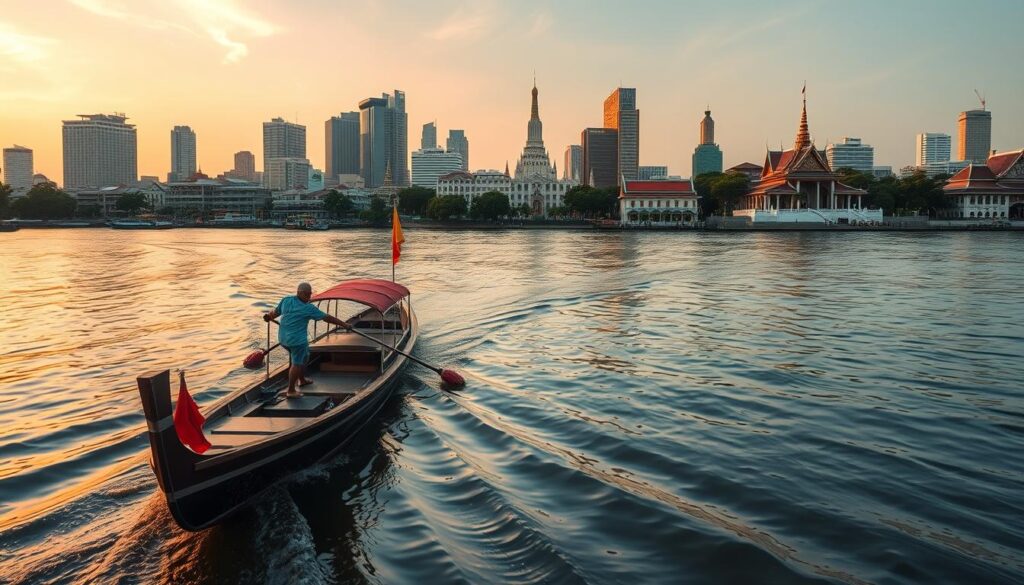
Exploring Bangkok’s waterways offers a unique perspective of the city
Discover Bangkok from the Water
Experience the charm of Bangkok’s waterways with a long-tail boat tour through the historic canals.
Jim Thompson House
This museum houses the art collection of American businessman Jim Thompson, who revitalized the Thai silk industry before his mysterious disappearance in 1967. The traditional Thai house is a serene oasis in the heart of the city, showcasing exquisite Asian art and antiques.
Visitor Tips: The entrance fee is 200 baht (~$6 USD), which includes a guided tour. Tours are conducted in several languages throughout the day. Photography is not permitted inside the buildings.
Lumphini Park
This 142-acre oasis in central Bangkok offers a respite from the city’s hustle and bustle. The park features a lake, jogging paths, and open spaces where locals practice tai chi in the early morning. You might even spot a water monitor lizard sunning itself by the water.
Visitor Tips: Visit early morning or late afternoon to see locals exercising and to avoid the midday heat. The park is easily accessible via the MRT subway (Lumphini or Silom stations).
Food and Dining in Bangkok
Bangkok is a food lover’s paradise, offering everything from humble street food to Michelin-starred restaurants. Thai cuisine is known for its balance of sweet, sour, salty, and spicy flavors, and Bangkok is the perfect place to experience it in all its glory.
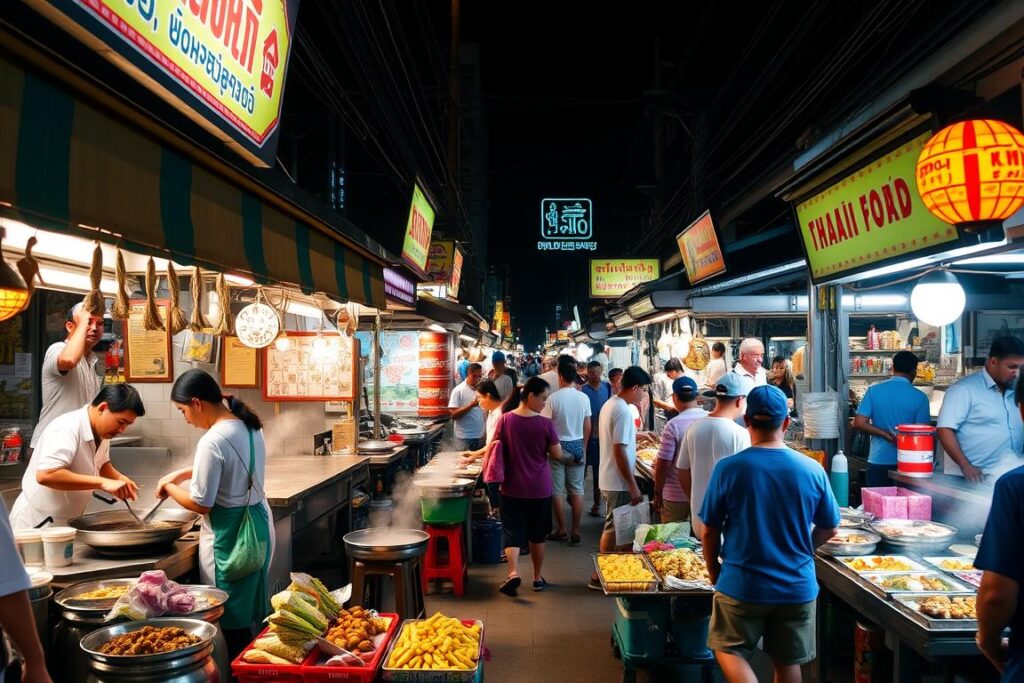
Bangkok’s street food scene is world-renowned for its variety and flavor
Must-Try Thai Dishes
- Pad Thai – Stir-fried rice noodles with egg, tofu, bean sprouts, and peanuts
- Tom Yum Goong – Spicy and sour shrimp soup with lemongrass and lime leaves
- Som Tam – Spicy green papaya salad with lime, chili, and fish sauce
- Mango Sticky Rice – Sweet sticky rice with fresh mango and coconut cream
- Massaman Curry – Rich, mild curry with potatoes, peanuts, and meat
- Pad Krapow – Stir-fried meat with holy basil, chili, and garlic
- Boat Noodles – Rich, flavorful noodle soup traditionally sold from boats
Street Food Hotspots
Bangkok’s street food scene is legendary, offering authentic flavors at affordable prices. Here are some of the best areas to sample street food:
Chinatown (Yaowarat Road)
Bangkok’s Chinatown comes alive at night with food stalls lining the streets. Seafood, noodles, and Chinese-influenced Thai dishes are specialties here. Don’t miss the famous crab curry, oyster omelets, and sweet desserts.
Sukhumvit Soi 38
This popular street food destination offers a variety of Thai classics. Though smaller than it once was due to development, it still features excellent pad thai, mango sticky rice, and satay stalls that open in the evening.
Or Tor Kor Market
Located near Chatuchak, this is one of Bangkok’s highest quality fresh markets with an excellent food court. It’s known for premium ingredients and prepared foods like curry, grilled river prawns, and Thai desserts.
Ratchawat Market
This local market in the Dusit district is less touristy but offers authentic Thai street food including crispy pork, Thai sweets, and fresh fruit. It’s a great place to experience how locals shop and eat.
Discover Bangkok’s Culinary Secrets
Join a guided food tour to sample the best street food with insights from a local expert.
Restaurants Worth Visiting
For those times when you want to sit down and enjoy a meal in air-conditioned comfort, Bangkok offers countless excellent restaurants:
Budget-Friendly
- Som Tam Nua (Siam Square)
- Pe Aor Tom Yum Goong (Phetchaburi)
- Thipsamai Pad Thai (Old City)
Mid-Range
- Err Urban Rustic Thai (Old City)
- Supanniga Eating Room (Sathorn)
- Baan (Wireless Road)
Fine Dining
- Gaggan Anand (Lumpini)
- Bo.lan (Sukhumvit)
- Sühring (Sathorn)
Dining Etiquette
When dining in Thailand, it’s helpful to know a few customs:
- Thais typically eat with a spoon in the right hand and fork in the left, using the fork to push food onto the spoon
- Chopsticks are generally used only for noodle dishes
- It’s polite to finish all the food on your plate
- In upscale restaurants, a service charge is usually included
- At street food stalls, there’s no need to tip, but rounding up the bill is appreciated
Where to Stay in Bangkok
Bangkok offers accommodation options for every budget and preference, from luxury riverside hotels to budget-friendly hostels. Each neighborhood has its own character and advantages, so consider what you want to be close to when choosing where to stay.
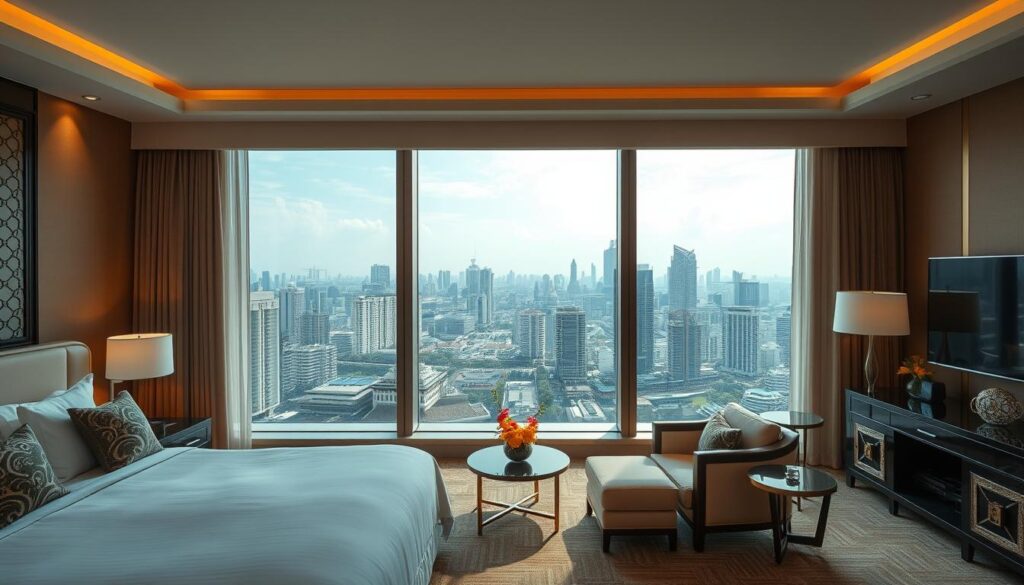
Bangkok offers a wide range of accommodation options with stunning city views
Best Areas to Stay
Riverside
Staying along the Chao Phraya River offers stunning views and easy access to major attractions via river ferries. This area is home to many luxury hotels and provides a more relaxed atmosphere away from the city’s traffic.
Perfect for: Luxury travelers, couples, and those who want scenic views
Sukhumvit
This long road and its numbered side streets (sois) form a modern, cosmopolitan area with excellent shopping, dining, and nightlife. Well connected by the BTS Skytrain, it’s convenient for getting around the city.
Perfect for: Business travelers, shoppers, and nightlife enthusiasts
Silom/Sathorn
Bangkok’s financial district transforms into a vibrant area after dark. It offers a mix of corporate high-rises, upscale restaurants, and the famous Patpong night market. Lumphini Park provides green space for morning jogs.
Perfect for: Business travelers and those who want a central location
Old City (Rattanakosin)
The historical heart of Bangkok contains most of the city’s famous temples and the Grand Palace. Staying here puts you within walking distance of major cultural attractions.
Perfect for: First-time visitors and culture enthusiasts
Chinatown
One of Bangkok’s most vibrant and authentic neighborhoods, Chinatown offers incredible street food, bustling markets, and a glimpse into the city’s multicultural heritage.
Perfect for: Foodies and photographers
Khao San Road Area
Famous backpacker hub with budget accommodation, lively bars, and travel agencies. While not the most authentic part of Bangkok, it’s convenient and affordable for budget travelers.
Perfect for: Backpackers and budget travelers
Accommodation Recommendations
Luxury
- Mandarin Oriental Bangkok (Riverside)
- The Peninsula Bangkok (Riverside)
- Kimpton Maa-Lai Bangkok (Lumphini)
Mid-Range
- Riva Arun Bangkok (Old City)
- Novotel Bangkok Sukhumvit 20
- Avani+ Riverside Bangkok Hotel
Budget
- Casa Nithra Bangkok (Old City)
- Ibis Bangkok Riverside
- Lub d Bangkok Silom (Hostel)
Booking Tip: Bangkok hotels often offer significantly better rates when booked in advance, especially during the high season (November to February). Many hotels also provide free airport shuttle services if you book directly through their website.
Getting Around Bangkok
Bangkok’s traffic congestion is legendary, but the city has developed several efficient public transportation options that make getting around easier than you might expect. Understanding your options will save you time and frustration during your visit.
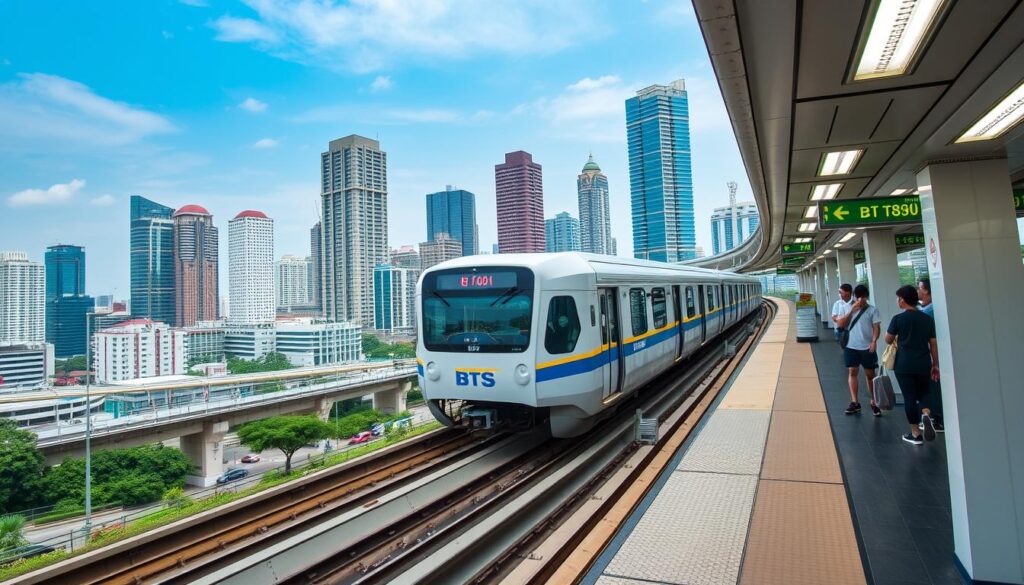
The BTS Skytrain is one of the most efficient ways to navigate Bangkok’s traffic
From the Airport to the City
Bangkok has two airports: Suvarnabhumi Airport (BKK) for most international flights and Don Mueang Airport (DMK) for many domestic and regional flights.
From Suvarnabhumi Airport
- Airport Rail Link: The fastest option during rush hour, connecting to the MRT and BTS systems. Cost: 45 baht (~$1.50 USD).
- Taxi: Use the official taxi stand on Level 1. Expect to pay the meter fare plus a 50 baht airport surcharge and tolls. Total cost typically 300-400 baht (~$9-12 USD).
- Airport Limousine: Pre-paid service with fixed rates based on your destination. More expensive but comfortable.
From Don Mueang Airport
- Taxi: Similar to Suvarnabhumi, use the official taxi stand. Expect to pay 250-350 baht (~$7-10 USD) to most areas.
- Bus: Several public bus routes connect to the city. The A1 bus goes to the BTS at Mo Chit. Cost: 30 baht (~$1 USD).
- Grab: Southeast Asia’s equivalent to Uber is widely available and often convenient.
Public Transportation
BTS Skytrain
Bangkok’s elevated train system is fast, clean, and avoids traffic. It has two lines (Sukhumvit and Silom) covering much of central Bangkok. Fares range from 16-59 baht depending on distance.
Operating hours: 6:00 AM to midnight
MRT Subway
The underground system complements the BTS and reaches areas the Skytrain doesn’t cover. Fares range from 16-70 baht based on distance traveled.
Operating hours: 6:00 AM to midnight
River Boats
The Chao Phraya Express Boat is both practical transportation and a scenic way to reach riverside attractions. Look for boats with orange, yellow, or no flags, each with different stopping patterns.
Fare: 15-20 baht per trip
Road Transportation
Tuk-Tuks
These iconic three-wheeled vehicles offer an exciting way to travel short distances. Always negotiate the fare before getting in, typically 60-150 baht for short trips. Be wary of drivers offering unusually low fares who may take you to commission-paying shops.
Taxis
Metered taxis are abundant and affordable. Insist on using the meter (starting at 35 baht) and have your destination written in Thai if possible. During rush hour, some drivers may refuse certain destinations due to traffic.
Motorcycle Taxis
Recognizable by their colorful vests, these are the fastest way through traffic but not for the faint-hearted. Agree on a price before riding, typically 20-100 baht depending on distance.
Ride-Hailing Apps
Grab is widely used in Bangkok and often more convenient than hailing a street taxi. The app provides fare estimates, driver information, and eliminates language barriers.
Transportation Tip: Purchase a Rabbit Card for the BTS and MRT to avoid queuing for tickets each time. These stored-value cards can be bought at any BTS station and topped up as needed.
Map of Bangkok showing major transportation routes and attractions
Local Tips and Etiquette
Understanding Thai customs and etiquette will enhance your experience in Bangkok and help you navigate the city like a local. Here are some essential tips to keep in mind during your visit.
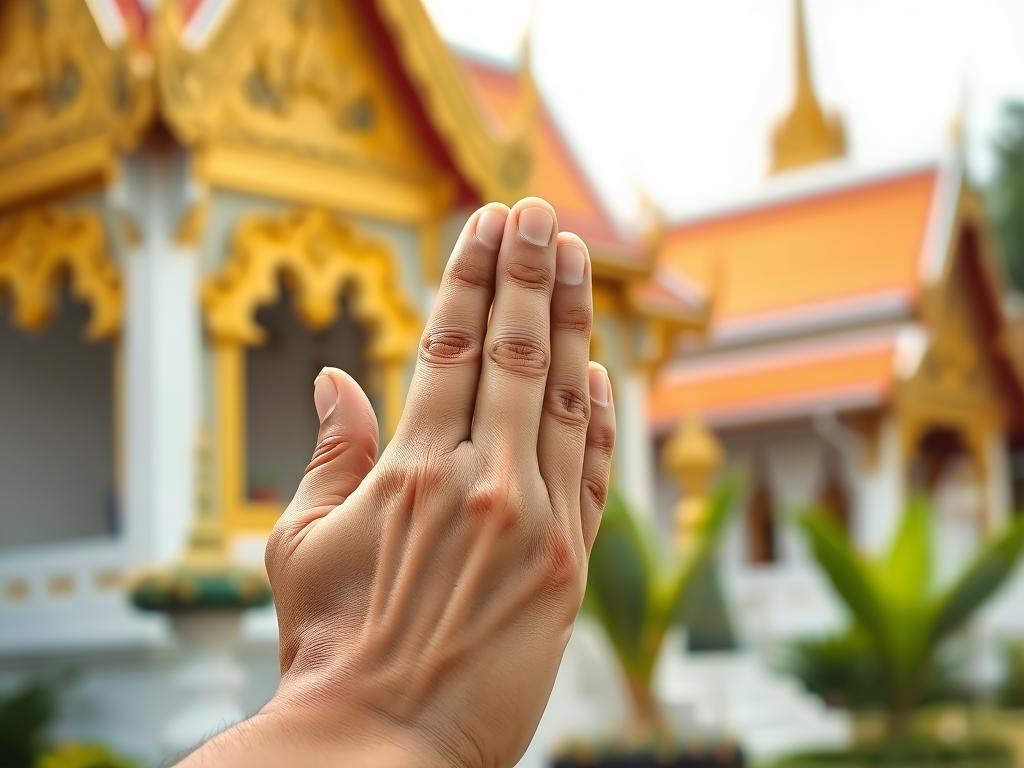
The wai is the traditional Thai greeting gesture showing respect
Cultural Etiquette
- The Wai: The traditional Thai greeting involves pressing your palms together at chest level and slightly bowing your head. It’s polite to return a wai, though foreigners aren’t expected to initiate it.
- Royal Respect: The Thai royal family is deeply revered. Always stand when the national anthem is played (at 8 AM and 6 PM in public spaces) and show respect when passing royal portraits.
- Temple Etiquette: Dress modestly (covered shoulders and knees), remove shoes before entering buildings, and never climb on Buddha images for photos. Women should never touch or hand items directly to monks.
- Head and Feet: The head is considered sacred, and feet are considered unclean. Avoid touching someone’s head or pointing your feet at people or Buddha images.
- Public Behavior: Thais value emotional restraint in public. Avoid raising your voice or showing anger, as this causes both parties to “lose face.”
Practical Tips
Money Matters
- The local currency is the Thai Baht (THB). ATMs are widely available but charge a 220 baht fee per foreign card transaction.
- Always carry some cash, as many small vendors don’t accept cards.
- Tipping isn’t mandatory but is appreciated. Round up taxi fares, leave 5-10% at restaurants if no service charge is included.
- Bargaining is expected at markets but not in department stores or restaurants.
Health and Safety
- Drink bottled water and be cautious with ice in smaller establishments.
- Street food is generally safe if it’s freshly cooked and served hot.
- Bangkok is relatively safe, but be aware of common scams targeting tourists.
- Carry a hotel card with the address in Thai to show taxi drivers.
- Use sunscreen and stay hydrated, especially during the hot season.
Common Scams to Avoid
Be wary of these common tourist scams in Bangkok:
- “The Grand Palace is closed today” – Tuk-tuk drivers or “helpful” locals may claim attractions are closed and offer to take you elsewhere (usually to commission-paying shops).
- Gem scams – Avoid “special government sales” or “export centers” promising investment-quality gems at low prices.
- Rigged meters – Some taxis have tampered meters that run faster than normal. If the fare seems to increase unusually quickly, consider getting out and finding another taxi.
- Rental scams – Some jet ski or motorbike rental operations claim damage upon return to extract additional fees.
Communication
While English is widely spoken in tourist areas, learning a few Thai phrases will be appreciated:
- Hello – Sawadee khrap (male) / Sawadee kha (female)
- Thank you – Khob khun khrap/kha
- How much? – Tao rai?
- Too expensive – Paeng pai
- Delicious – Aroi
- No, thank you – Mai, khob khun khrap/kha
Day Trips from Bangkok
While Bangkok offers enough attractions to fill a week or more, several fascinating destinations lie within easy reach of the city. These day trips provide a welcome contrast to urban life and showcase different aspects of Thai culture and history.
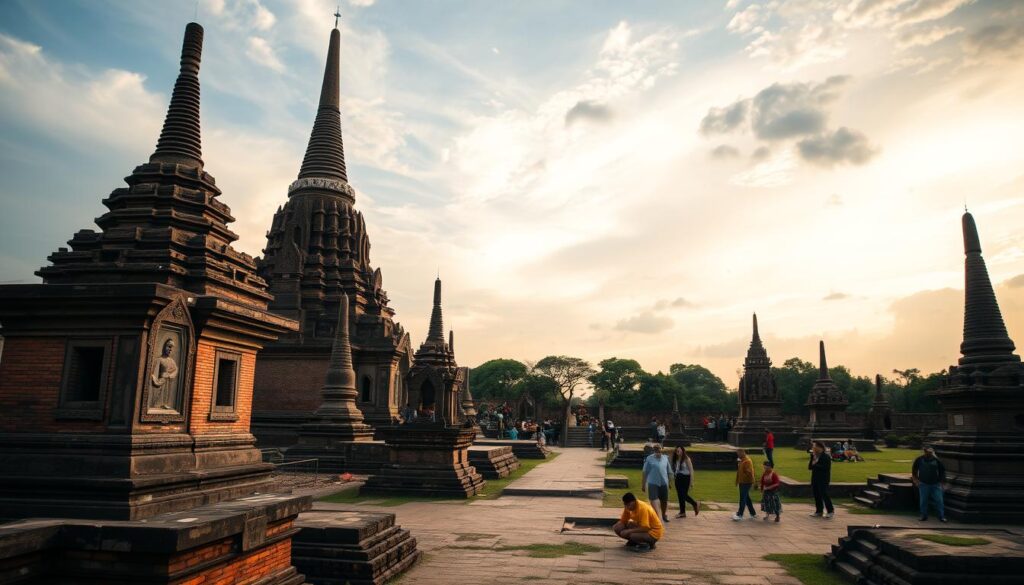
The ancient capital of Ayutthaya is the most popular day trip from Bangkok
Ayutthaya Historical Park
Just 80 km north of Bangkok, the ancient capital of Ayutthaya was once one of the world’s greatest cities before being destroyed by the Burmese in 1767. Today, its impressive ruins form a UNESCO World Heritage Site with temples, palaces, and Buddha statues scattered throughout the historical park.
How to Get There
- Train: Regular trains depart from Bangkok’s Hua Lamphong station (60-100 baht, 1.5-2 hours)
- Minivan: Depart from Victory Monument (60-80 baht, 1-1.5 hours)
- Organized Tour: Many companies offer day trips including transportation and guide
Highlights
- Wat Mahathat – Famous for the Buddha head entwined in tree roots
- Wat Phra Si Sanphet – The largest temple in Ayutthaya
- Wat Chaiwatthanaram – Beautiful riverside temple best visited at sunset
- Elephant rides (though ethical concerns exist about elephant tourism)
Explore the Ancient Capital of Ayutthaya
Join a guided day trip to Ayutthaya with hotel pickup, expert commentary, and a river cruise back to Bangkok.
Damnoen Saduak Floating Market
Located about 100 km southwest of Bangkok, this is Thailand’s most famous floating market. While somewhat touristy, it offers a colorful glimpse into traditional riverside commerce, with vendors selling fruits, vegetables, and prepared foods from wooden boats.
How to Get There
- Organized Tour: The easiest option, as early morning departure is necessary
- Public Transport: First bus to Damnoen Saduak from Southern Bus Terminal, then local transport to the market
- Private Taxi: Negotiate a day rate (approximately 2,000-3,000 baht)
Tips
- Arrive early (before 8 AM) to see the market at its most active
- Negotiate boat rental prices before boarding
- Bring small bills for purchases
- Consider visiting the less touristy Amphawa Floating Market (weekends only) as an alternative
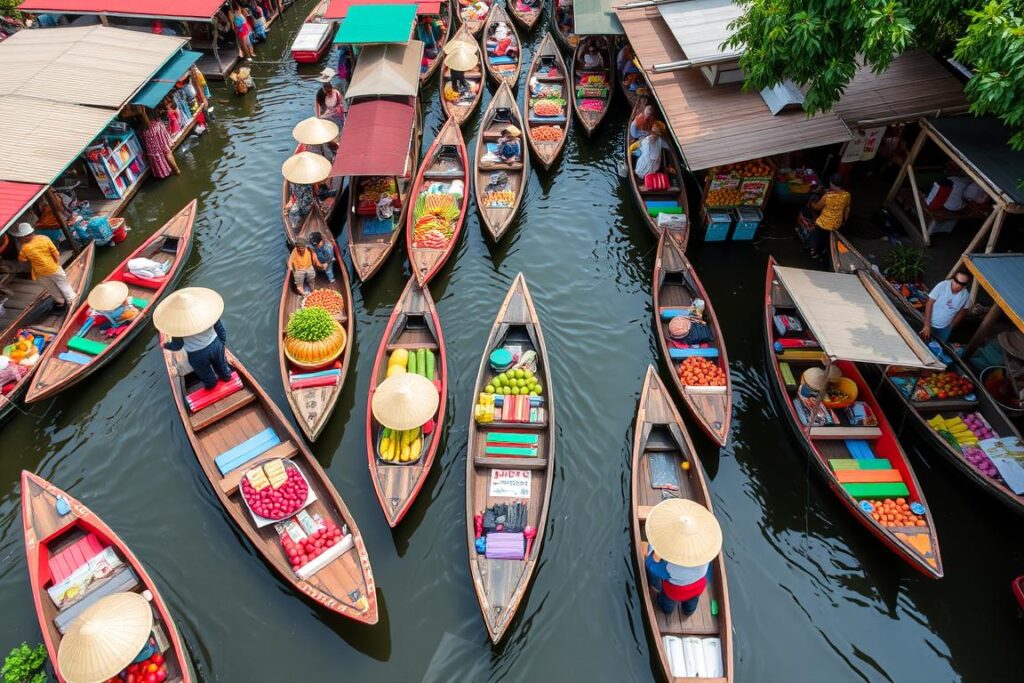
The vibrant Damnoen Saduak Floating Market offers a glimpse of traditional riverside commerce
Kanchanaburi and the Bridge over the River Kwai
About 130 km west of Bangkok, Kanchanaburi is known for its World War II history, particularly the infamous Death Railway built by Allied prisoners of war under Japanese occupation. The area also offers natural beauty with waterfalls, national parks, and river activities.
How to Get There
- Train: Daily trains from Thonburi station (100 baht, 3 hours)
- Bus: Regular buses from Southern Bus Terminal (120 baht, 2-3 hours)
- Organized Tour: Many companies offer day trips or overnight excursions
Highlights
- Bridge over the River Kwai
- JEATH War Museum
- Hellfire Pass Memorial
- Erawan National Park with its seven-tiered waterfall
- Elephant sanctuaries (choose ethical operations that don’t offer riding)
Ancient City (Muang Boran)
Located in Samut Prakan province just outside Bangkok, this open-air museum features replicas of Thailand’s most important historical buildings and monuments in a park shaped like the country itself. It’s a good option when you’re short on time but want to see Thailand’s architectural highlights.
How to Get There: Taxi or Grab from Bangkok (30-45 minutes), or take the BTS to Kheha station and then a taxi.
Visitor Tips: The park is large, so consider renting a bicycle or golf cart to get around. Allow at least half a day to explore.
Shopping in Bangkok
Bangkok is a shopper’s paradise, offering everything from luxury malls to bustling markets. Whether you’re looking for designer brands, local handicrafts, or quirky souvenirs, you’ll find it in Thailand’s capital.
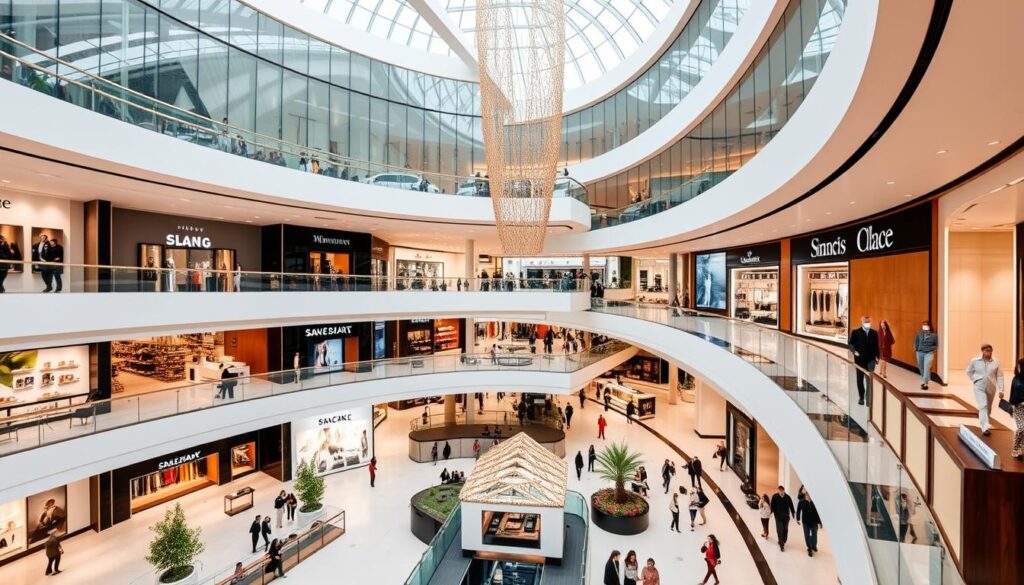
Bangkok’s modern shopping malls offer world-class retail experiences
Shopping Malls
Bangkok’s air-conditioned malls provide a welcome respite from the heat while offering international brands, local designers, and excellent food courts.
Siam Paragon
One of Bangkok’s most upscale malls featuring luxury brands, an aquarium, and a gourmet market. The food hall offers everything from Thai street food to fine dining.
Location: Connected to Siam BTS station
IconSiam
This riverside mega-mall houses Thailand’s first Apple Store, a floating market, and a spectacular multimedia fountain show. The view from the riverside promenade is stunning at sunset.
Location: Free shuttle boat from Sathorn Pier
Terminal 21
Each floor of this themed mall represents a different world city, from Tokyo to London to Istanbul. It offers mid-range brands and one of the city’s best food courts with affordable prices.
Location: Connected to Asok BTS/Sukhumvit MRT stations
Markets
For a more authentic shopping experience, explore Bangkok’s vibrant markets where you can practice your bargaining skills.
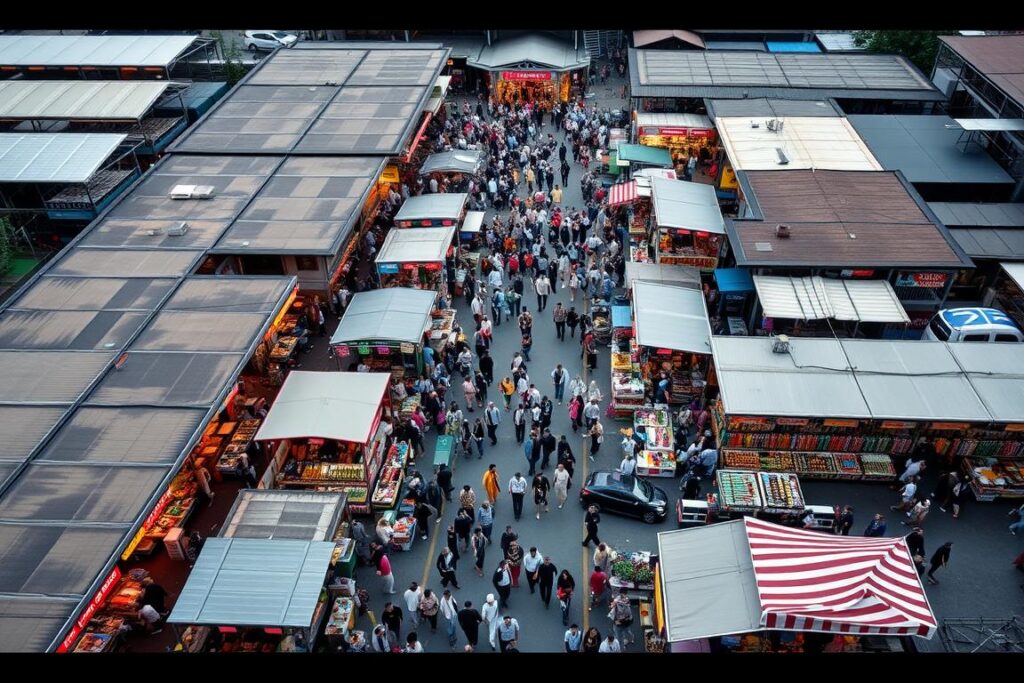
Chatuchak Weekend Market is one of the world’s largest with over 15,000 stalls
Chatuchak Weekend Market
With over 15,000 stalls selling everything imaginable, this is a must-visit for serious shoppers. Sections are organized by product type, from clothing and handicrafts to plants and antiques.
When: Saturday and Sunday, 9 AM to 6 PM
Pratunam Market
Bangkok’s largest clothing market specializes in wholesale fashion at retail prices. Great for trendy clothes, accessories, and textiles at bargain prices.
When: Daily, with most shops open 10 AM to 9 PM
Talad Rot Fai (Train Market)
This night market specializes in vintage collectibles, antiques, and retro items alongside fashion and food stalls. The original Srinakarin location is larger, while the Ratchada location is more accessible.
When: Thu-Sun, 5 PM to midnight
What to Buy
- Thai Silk – Jim Thompson shops offer high-quality silk products
- Handicrafts – Wood carvings, lacquerware, and hill tribe textiles
- Spa Products – Natural soaps, oils, and beauty products
- Amulets – Buddhist amulets from the specialized market near the Grand Palace
- Custom Tailoring – Bangkok is famous for affordable custom clothing (research reputable tailors first)
- Thai Snacks – Dried fruits, spices, and packaged treats make great souvenirs
Shopping Tips:
- Bargaining is expected at markets but start at 50-70% of the initial price
- Be polite when bargaining – it should be good-natured
- Check for export restrictions on Buddha images and antiques
- Keep receipts for potential VAT refunds (minimum 2,000 baht per store, 5,000 baht total)
Bangkok Nightlife
When the sun sets, Bangkok transforms into one of Asia’s most exciting nightlife destinations. From sophisticated rooftop bars to energetic night markets, there’s something for every taste and budget.
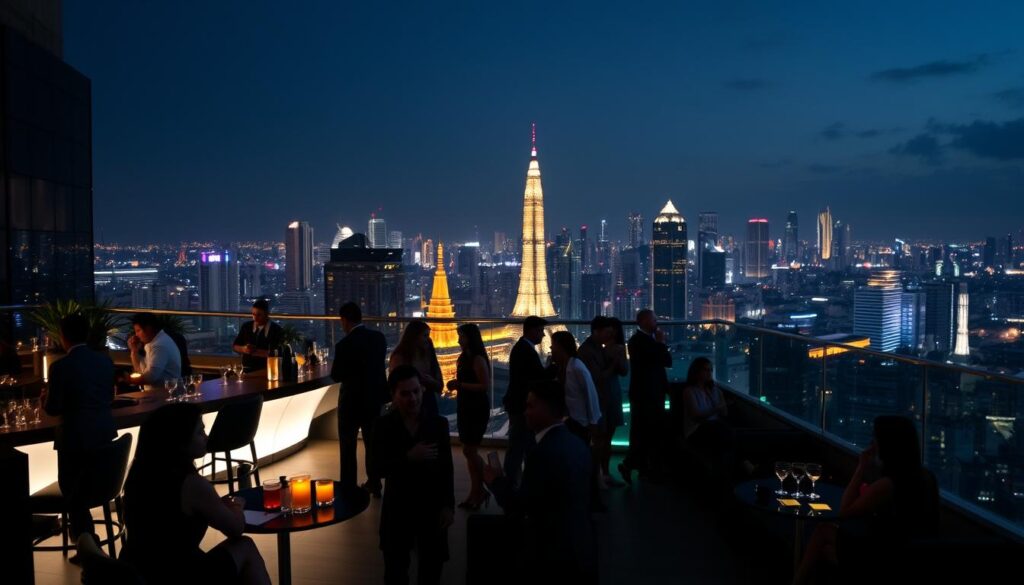
Bangkok’s rooftop bars offer spectacular views of the illuminated city
Rooftop Bars
Bangkok’s skyline is best appreciated from one of its many rooftop bars, where you can enjoy creative cocktails with panoramic views.
Sky Bar at Lebua
Made famous by “The Hangover Part II,” this 63rd-floor bar offers breathtaking views and premium cocktails. Dress code enforced (no shorts, flip-flops, or athletic wear).
Location: Lebua at State Tower, near Saphan Taksin BTS
Octave Rooftop Bar
This 360-degree rooftop bar spans the 45th-49th floors of the Marriott Hotel Sukhumvit. More relaxed than some other sky bars with reasonable prices and a great sunset happy hour.
Location: Near Thong Lo BTS
Moon Bar at Banyan Tree
One of Bangkok’s highest open-air bars with unobstructed views. The adjacent Vertigo restaurant offers fine dining under the stars.
Location: Sathorn area, near Lumphini MRT
Entertainment Districts
Sukhumvit
Bangkok’s most cosmopolitan nightlife area features everything from upscale lounges to lively pubs. Soi 11 is popular with expats and tourists, while Thonglor (Soi 55) offers more sophisticated venues popular with trendy locals.
Silom and Sathorn
This area contains the famous Patpong night market and entertainment zone, alongside more upscale options in Sathorn. Soi 4 is home to many LGBT-friendly venues that welcome everyone.
Khao San Road
Bangkok’s backpacker hub offers budget-friendly bars, live music, and a youthful atmosphere. While touristy, it’s a fun place to meet fellow travelers and enjoy cheap drinks.
Chinatown (Yaowarat)
Recently emerged as a hip nightlife area with speakeasy-style bars hidden among the traditional shophouses. Soi Nana (not to be confused with Sukhumvit’s Nana) is the center of this scene.
Cultural Shows
Experience traditional Thai culture through these evening performances:
Muay Thai (Thai Boxing)
Watch Thailand’s national sport at Rajadamnern or Lumpinee Stadium. The electric atmosphere and pre-fight rituals make this a cultural experience beyond just sport.
Traditional Dance Performances
Several venues offer dinner shows featuring classical Thai dance, including the Sala Rim Naam at the Mandarin Oriental and the Thai dinner show at Silom Village.
Nightlife Tips:
- Many upscale venues enforce dress codes (no shorts, sandals, or sleeveless shirts for men)
- Drink prices vary dramatically – from 80 baht beers at casual places to 500+ baht cocktails at rooftop bars
- Most bars close by 1-2 AM due to regulations, though some stay open later
- Always take a metered taxi or use Grab for late-night transportation
Practical Information
Here’s some essential information to help you plan your trip to Bangkok and ensure everything goes smoothly during your visit.
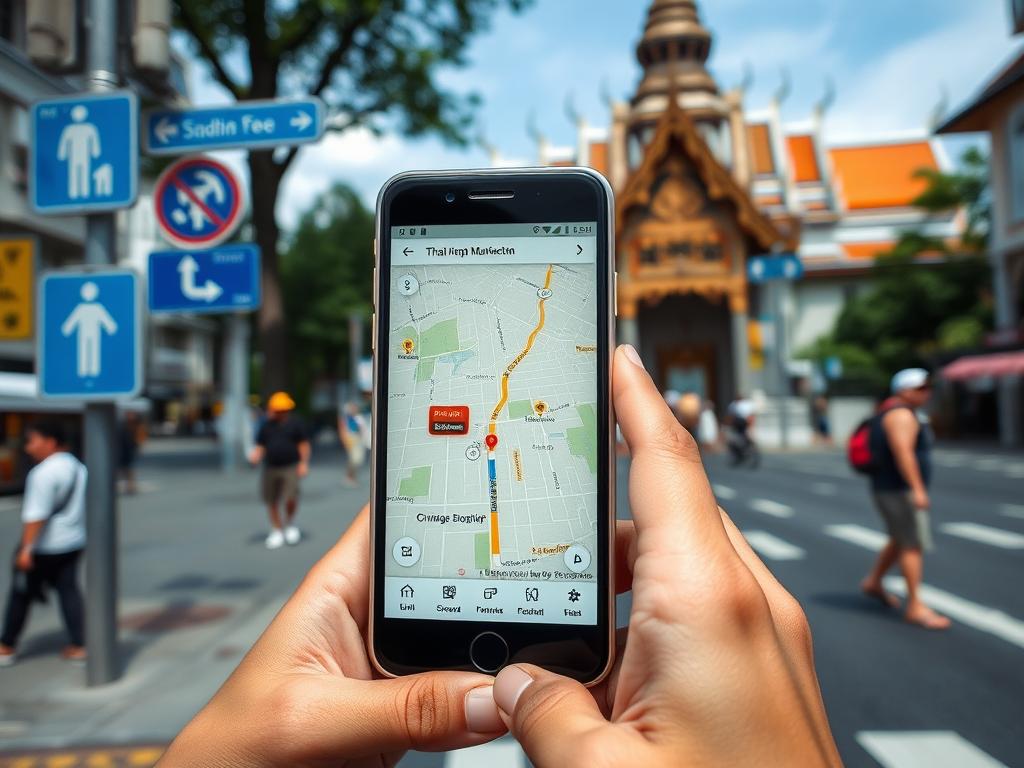
Having the right apps and information makes navigating Bangkok much easier
Visa Information
Many nationalities receive a 30-day visa exemption when arriving in Thailand by air. Check the latest requirements for your country before traveling, as policies can change. If you plan to stay longer, you can apply for a tourist visa at a Thai embassy or consulate before your trip.
Money and Costs
The Thai currency is the Baht (THB). ATMs are widely available but charge a 220 baht fee per foreign card transaction. Consider bringing some cash to exchange or withdrawing larger amounts less frequently to minimize fees.
Approximate Costs
- Budget meal: 50-150 baht
- Mid-range restaurant meal: 200-500 baht
- Local beer: 60-120 baht
- Coffee: 60-120 baht
- BTS/MRT fare: 16-59 baht
- Tuk-tuk ride: 60-150 baht
- Budget hotel: 600-1,500 baht
- Mid-range hotel: 1,500-4,000 baht
Tipping
- Restaurants: 5-10% if no service charge is included
- Taxis: Round up to the nearest 20 baht
- Hotels: 20-50 baht for porters
- Massage: 50-100 baht for a good service
- Tour guides: 200-300 baht per day
Health and Safety
Bangkok is generally safe for tourists, but take normal precautions against petty theft in crowded areas. The most common health issues are heat-related problems, food-related stomach upsets, and mosquito-borne illnesses.
Health Tips
- Drink bottled water and be cautious with ice
- Use mosquito repellent, especially at dawn and dusk
- Protect yourself from the sun and stay hydrated
- Bring basic medications and any prescriptions you need
- Consider travel insurance with good medical coverage
Emergency Contacts
- Tourist Police: 1155
- Emergency Medical Services: 1669
- General Emergency: 191
- Recommended Hospitals: Bumrungrad International, Bangkok Hospital, Samitivej Hospital
Weather and What to Pack
Bangkok is hot year-round, with temperatures typically ranging from 25-35°C (77-95°F). Pack light, breathable clothing, but also bring some modest options for visiting temples.
Essential Items
- Lightweight, modest clothing (covering shoulders and knees for temples)
- Comfortable walking shoes
- Hat, sunglasses, and sunscreen
- Portable fan or cooling towel
- Reusable water bottle
- Power adapter (Thailand uses 220V, Type A, B, and C plugs)
Useful Apps
- Grab – For ride-hailing
- Google Maps – Works well in Bangkok
- BTS/MRT apps – For public transport navigation
- Google Translate – With Thai language downloaded
- XE Currency – For currency conversion
Internet and Connectivity
WiFi is widely available in hotels, cafes, and shopping malls. For mobile data, you can purchase a tourist SIM card at the airport or any convenience store. Major providers include AIS, DTAC, and True Move, all offering affordable packages for travelers.
Conclusion
Bangkok is a city of fascinating contrasts that rewards exploration. From magnificent temples and palaces to modern shopping malls, from serene parks to bustling markets, Thailand’s capital offers experiences to satisfy every traveler. While the city can initially seem overwhelming with its size, traffic, and sensory stimulation, taking the time to discover its hidden corners and embrace its unique rhythm will reveal why Bangkok remains one of the world’s most captivating destinations.
This complete travel guide to Bangkok should help you navigate the City of Angels with confidence, but remember that some of the best experiences come from spontaneous discoveries and unexpected encounters. Allow yourself time to wander, sample unfamiliar foods, chat with locals, and absorb the vibrant energy that makes Bangkok truly special.
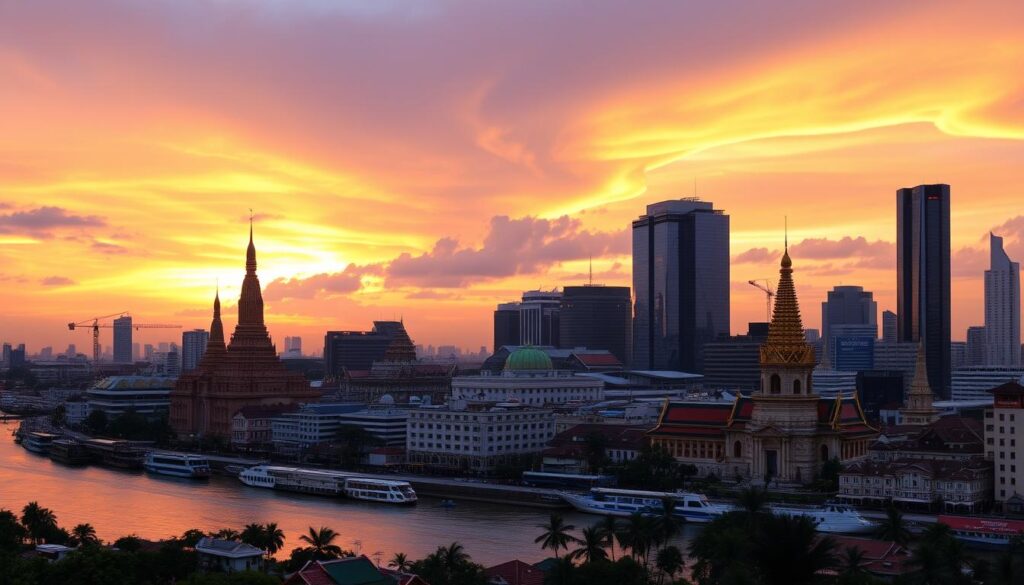
Bangkok’s unique blend of ancient and modern creates an unforgettable cityscape
Ready to Experience Bangkok?
Start planning your trip with our recommended tours and accommodations.